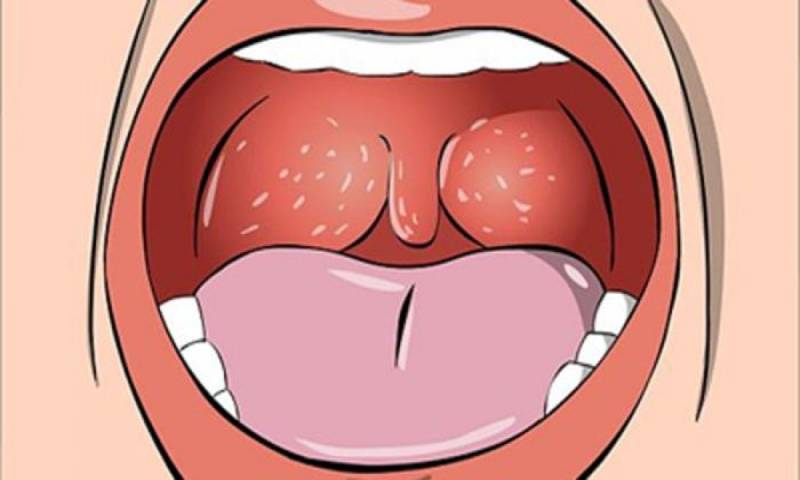

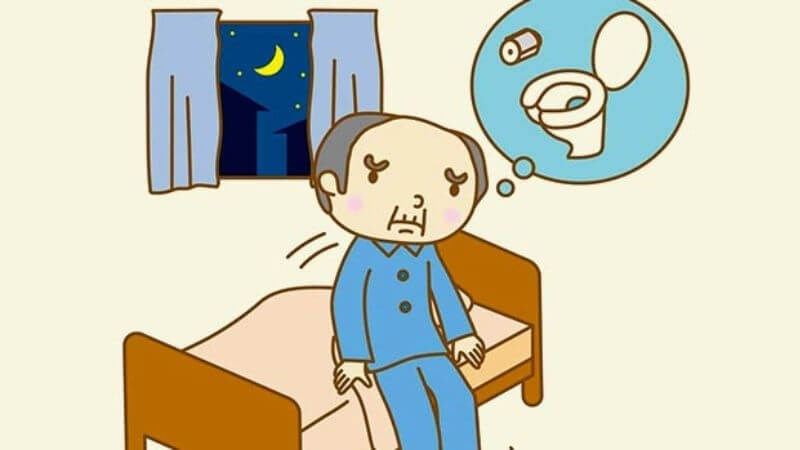
Frequent nocturia in men is a condition characterized by waking up to urinate twice or more per night, causing sleep disruption, chronic fatigue, and a reduced quality of life. This is not simply a lifestyle habit or a sign of aging; rather, it often reflects underlying medical conditions such as benign prostatic hyperplasia (BPH), overactive bladder (OAB), endocrine disorders, or cardiovascular-renal diseases. Accurately identifying the cause through specialist examination helps men establish a safe treatment regimen and protect their long-term health.
1. What is Frequent Nocturia in Men?
Nocturia is defined as an individual waking up at least once to urinate during the main sleep period at night, with each episode preceded by wakefulness. When this condition occurs two or more times per night and persists continuously, it is considered a clinical symptom requiring medical evaluation.
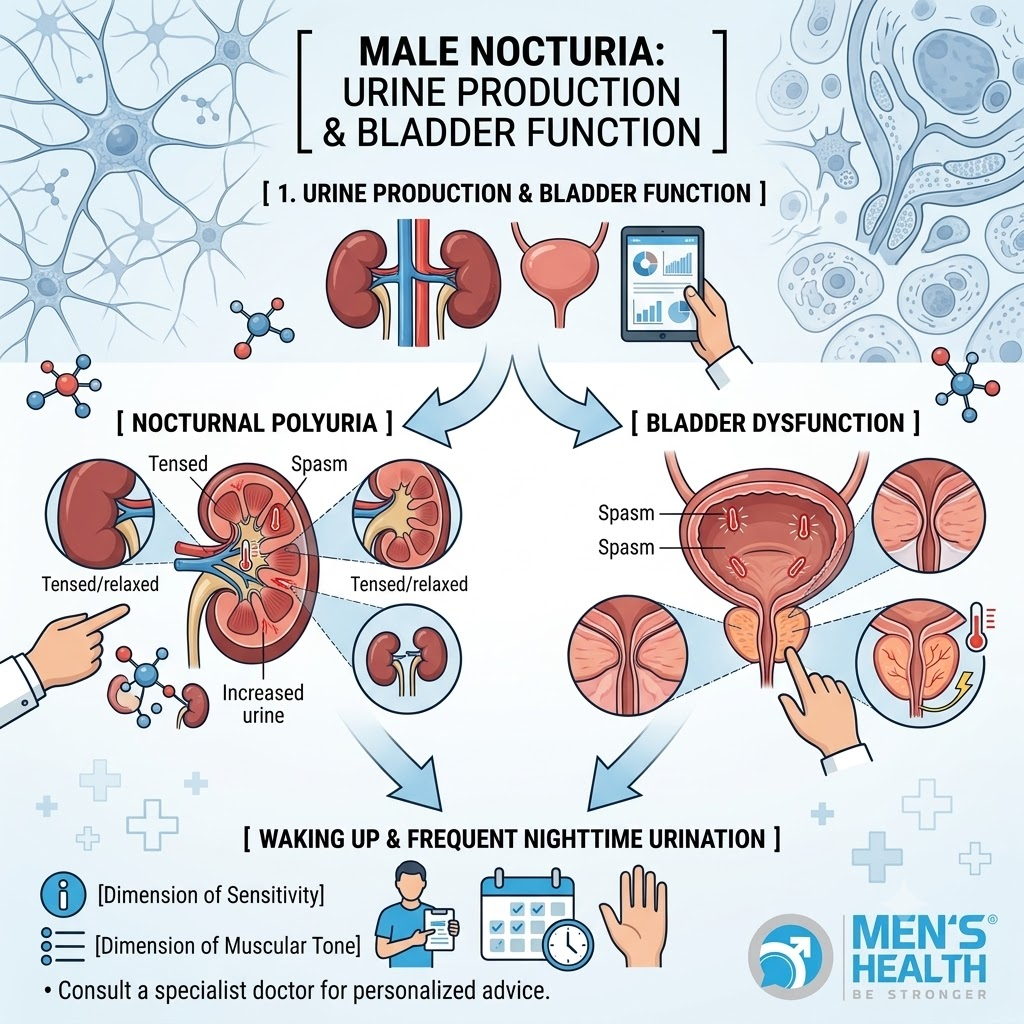
From a physiological perspective, nighttime urination results from an imbalance between the volume of urine produced by the kidneys at night and the storage capacity of the bladder. In healthy adults, antidiuretic hormone (ADH/Vasopressin) is secreted in greater amounts at night to concentrate urine, allowing the bladder to store enough volume for an uninterrupted 6 to 8-hour sleep. When this mechanism is disrupted or the urinary tract is obstructed, men experience frequent nocturia.
2. Causes and Risk Factors for Nocturia in Men
Understanding the categories of causes helps men avoid self-misdiagnosis and adopt appropriate management strategies. Clinical studies classify the causes of nocturia in men into four main groups:
- Benign Prostatic Hyperplasia (BPH) and Lower Urinary Tract Obstruction:
- The prostate surrounds the initial segment of the male urethra. When men enter middle age, an increase in prostate size due to benign enlargement compresses the urethra, impeding urine flow.
- The bladder must contract harder to expel urine, gradually leading to detrusor muscle hypertrophy and a reduced storage capacity.
- Incomplete bladder emptying (post-void residual urine) causes the bladder to refill quickly, triggering a continuous urge to urinate at night.
- Overactive Bladder (OAB) and Infections:
- Overactive Bladder: The detrusor muscle contracts abruptly and uncontrollably even when the bladder is not full, creating an urgent desire to urinate.
- Chronic prostatitis or urinary tract infections: Inflammation stimulates sensory nerve endings at the bladder neck and urethra, causing the brain to continually receive false urgency signals.
- Systemic and Endocrine Disorders:
- Decreased nocturnal ADH secretion: Reduced ADH production due to aging prevents the kidneys from concentrating urine at night, causing nocturnal polyuria.
- Uncontrolled diabetes mellitus: High blood glucose levels cause osmotic diuresis, increasing urine production day and night.
- Chronic heart failure or venous insufficiency: During the day, fluid accumulates in the legs due to gravity. When lying down to sleep at night, this fluid returns to the general circulation, passing through the kidneys and converting into a large volume of urine.
- Lifestyle Factors and Habits:
- Drinking excessive amounts of water, tea, coffee, beer, alcohol, or eating soup/congee late in the evening close to bedtime.
- Side effects of medications for chronic conditions, especially diuretics taken late in the afternoon or evening.
- Sleep disorders and chronic insomnia (patients wake up due to anxiety, snoring, or sleep apnea before feeling the urge to urinate).
3. Concomitant Symptoms Requiring Attention
Frequent nocturia in men rarely occurs in isolation; it is frequently accompanied by other lower urinary tract symptoms (LUTS):
- Voiding Symptoms: Difficulty urinating, straining to initiate urination, weak urine stream, intermittent flow, spraying, or terminal dribbling.
- Storage Symptoms: Urinary frequency (urinating frequently during the day), urgency (inability to defer urination), and a feeling of incomplete emptying.
- Painful Sensations: Burning pain along the urethra, discomfort in the suprapubic region, perineum, or testicles during urination.
- Systemic Impact: Fatigue, lethargy, reduced daytime concentration, decreased libido, and neurasthenia due to prolonged sleep deprivation.
4. When Should Men See a Doctor Promptly?
Men should never ignore or endure nocturia, nor should they dismiss it as an untreatable sign of aging. Seek immediate consultation at a specialized Andrology-Urology medical facility if the following warning signs appear:
- Frequency of nocturia suddenly increases to 3–4 times or more per night.
- Hematuria (pink, red, or blood-clot-tinged urine), cloudy urine, or abnormally strong-foul odor.
- Severe burning pain during urination, high fever, chills, or colicky flank pain (signs of upper urinary tract infection/pyelonephritis).
- Acute urinary retention: Intense urge to urinate but completely unable to pass urine.
- Nocturia causing severe health deterioration, orthostatic hypotension due to frequent nighttime awakenings, or nocturnal falls in elderly individuals.
5. Diagnostic Methods for Nocturia in Men
An accurate medical diagnostic process helps properly categorize the underlying cause to establish an optimal treatment regimen.

Among these, the Micturition Diary (kept for 3 consecutive days) is a vital medical tool. Patients record the timing and volume of each fluid intake and urination over 24 hours, helping physicians determine whether the patient suffers from global polyuria, nocturnal polyuria, or reduced bladder storage capacity.
6. Treatment of Nocturia in Men and the Role of Medication
Treating nocturia requires addressing the root cause. Medication usage must strictly adhere to the prescription of a specialist physician after thorough examination and diagnosis.
Prescription Medical Treatment (Pharmacology)
Medications for treating nocturia in men are divided into multiple groups depending on the underlying pathophysiology:
- Benign Prostatic Hyperplasia (BPH) Medications:
- Alpha-1 Blockers (Tamsulosin, Alfuzosin, Silodosin): Relax smooth muscle in the bladder neck and prostate, reducing urethral obstruction, facilitating easier urination, and lowering post-void residual urine volume. Potential side effects: Orthostatic hypotension, dizziness, retrograde ejaculation.
- 5-Alpha Reductase Inhibitors (Finasteride, Dutasteride): Lower Dihydrotestosterone (DHT) levels, shrinking enlarged prostate size after 3 – 6 months of treatment. Side effects: Reduced libido, mild erectile dysfunction. Physicians often combine these two drug classes in patients with large prostate sizes.
- Overactive Bladder (OAB) Medications:
- Antimuscarinic / Anticholinergic Drugs (Solifenacin, Darifenacin, Oxybutynin): Inhibit muscarinic receptors on the detrusor muscle, reducing abnormal contractions and increasing bladder storage capacity. Side effects: Dry mouth, constipation, blurred vision, mild urinary retention.
- Beta-3 Adrenergic Agonists (Mirabegron): Relax the bladder muscle during the storage phase without causing severe anticholinergic side effects. Use with caution in patients with uncontrolled hypertension.
- Nocturnal Urine Regulation Medications:
- Desmopressin (Synthetic analog of ADH): Enhances water reabsorption in the renal tubules at night, helping reduce nighttime urine production.
- Mandatory safety requirement: Physicians must check blood sodium levels before and during treatment to avoid acute hyponatremia (which can cause confusion and seizures in the elderly).
Advanced Procedures and Surgery
For severe benign prostatic hyperplasia cases unresponsive to medical therapy, physicians may indicate interventional procedures or surgery, such as Laser prostate vaporization, Transurethral Resection of the Prostate (TURP), or endoscopic surgery.
7. Side Effects, Contraindications, and Warnings in Medication Use
Medications for nocturia are STRICTLY PRESCRIPTION-ONLY. Self-purchasing and using medications without an examination carries serious medical risks:
- Do not arbitrarily use someone else’s prescription: Each patient has a different underlying cause of nocturia (e.g., giving alpha-1 blockers to someone whose nocturia is caused by heart failure or diabetes will be ineffective and potentially harmful).
- Avoid unverified sources or unverified herbal remedies: Many floating products contain corticosteroids or banned substances that cause kidney failure, adrenal insufficiency, and hypertension.
- Risk of falls in the elderly: The orthostatic hypotension side effect of alpha-1 blockers combined with dizziness from waking up at night can lead to falls and musculoskeletal injuries.
- Contact a physician immediately if: Complete urinary retention, severe dizziness, swelling in both legs, or abnormal confusion and fatigue (signs of hyponatremia) occur.
8. Lifestyle Modifications and Prevention Tips for Nocturia
Alongside a physician’s treatment regimen, lifestyle modifications account for 30 – 40% of symptom control efficacy.
| DAILY LIFESTYLE MODIFICATION MEASURES |
| 1. Limit fluid intake 2 – 3 hours before bedtime (drink adequate fluids during the day). |
| 2. Cut back on caffeine, strong tea, beer, alcohol, and spicy foods in the evening. |
| 3. Double Voiding: Urinate, wait 1 – 2 minutes, then try to urinate again. |
| 4. Elevate legs for 30 – 45 minutes in the late afternoon if mild leg swelling is present. |
| 5. Engage in gentle exercise and pelvic floor muscle exercises (Kegel) for men. |
| 6. Keep the bedroom dark, warm, and with easy access to the restroom. |
9. Common Pitfalls for Men Experiencing Nocturia
- Completely refraining from drinking water all day: Restricting water intake excessively causes urine to become overly concentrated, irritating the bladder mucosa and increasing urgent urinary reflexes.
- Assuming nocturia is due to “kidney weakness” and self-purchasing kidney tonic supplements: Nocturia in men is largely related to the prostate, bladder, or hormones. Self-administering soaked herbal wines or unverified tonics can increase the burden on the liver and kidneys.
- Abusing sleeping pills to avoid waking up: Sleeping pills do not reduce nighttime urine production. Instead, they cause the bladder to over-distend without waking the patient, leading to acute urinary retention, bedwetting, or bladder muscle damage.
- Dropping the medication regimen when symptoms improve: Medications for prostate enlargement or overactive bladder must be maintained stably according to physician instructions to prevent recurrence.
10. Healthcare Solutions at the Men’s Health Ecosystem
Frequent nocturia in men requires a systematic examination process, accurate cause analysis, and personalized monitoring. Patients should choose specialized medical facilities focusing on Andrology and Urology for comprehensive support.
Men’s Health Andrology Pharmacy is a unit within the Men’s Health Center ecosystem founded by Assoc. Prof. Dr. Tra Anh Duy. Here, patients always receive guidance, explanations, and support from physicians and pharmacists in selecting appropriate healthcare solutions. Men’s Health emphasizes professionalism, safety, discretion, information privacy, and respect for individual privacy throughout examination, treatment, and follow-up.

Within the Men’s Health ecosystem, patients with nocturia undergo modern diagnostic procedures (ultrasound for post-void residual urine, PSA testing, micturition diary analysis) and receive a tailored treatment protocol combining genuine prescription drugs, lifestyle counseling, and close clinical progression monitoring.
11. Detailed Comparison Table of Nocturia Treatment Medications in Men
| Drug Group | Common Representative | Main Mechanism of Action | Important Medical Notes |
| Alpha-1 Blockers | Tamsulosin, Alfuzosin | Relaxes smooth muscle of the bladder neck & prostate | Monitor orthostatic hypotension; take after meals. |
| 5-Alpha Reductase Inhibitors | Finasteride, Dutasteride | Shrinks enlarged prostate size | Requires prolonged use for 3 – 6 months; monitor PSA levels. |
| Antimuscarinics | Solifenacin, Oxybutynin | Reduces overactive detrusor muscle contractions | Use with caution in patients with constipation, dry mouth, glaucoma. |
| Beta-3 Agonists | Mirabegron | Relaxes bladder muscle during the storage phase | Monitor blood pressure periodically during use. |
| Vasopressin Agonists | Desmopressin | Reduces nighttime urine production volume | Mandatory blood sodium check to avoid hyponatremia. |
Frequent Nocturia in Men: Frequently Asked Questions (FAQs)
How many times waking up to urinate per night in men is considered abnormal?
Waking up to urinate two or more times per night is considered abnormal nocturia. If this condition occurs frequently and affects your sleep and daytime mental state, you should consult a Urology-Andrology specialist.
Is frequent nocturia a sign of prostate cancer?
Nocturia is most commonly associated with benign prostatic hyperplasia or overactive bladder. However, advanced prostate cancer can also cause similar symptoms. Therefore, men over 50 experiencing nocturia should undergo a PSA blood screening test to rule out malignancy.
Should I completely cut down on drinking water to stop nocturia?
No, you should not. You only need to adjust the timing of your fluid intake: drink an adequate 1.5 – 2 liters of water during the day and limit fluid intake within 2 – 3 hours before bedtime. Excessive fluid restriction concentrates urine, irritates the bladder, and increases the risk of kidney stones and urinary tract infections.
What causes nocturia in young men?
In young men (under 40), nocturia is rarely caused by prostate enlargement; rather, it typically stems from drinking excessive water/alcohol in the evening, chronic prostatitis, overactive bladder, psychological stress, or type 1/type 2 diabetes mellitus.
How long does it take for BPH medications to reduce nocturia?
Alpha-1 blockers (such as Tamsulosin) typically begin improving urine flow and reducing nocturia within a few days to 2 weeks. Meanwhile, prostate-shrinking medications (such as Finasteride) require 3 to 6 months of continuous use to show clear efficacy.
What does nighttime urination accompanied by burning pain indicate?
Nocturia accompanied by a burning sensation, urethral pain, or urinary frequency is a classic sign of urinary tract infections (cystitis, urethritis) or acute/chronic prostatitis. Patients should seek immediate examination for urinalysis and appropriate antibiotics.
Do Kegel exercises help reduce nocturia in men?
Yes, they do. Pelvic floor muscle (Kegel) exercises strengthen the muscles supporting the bladder and improve bladder neck control, thereby helping reduce urinary urgency and improving nighttime urine retention capability.
Conclusion
Frequent nocturia in men is an important clinical symptom reflecting various underlying urogenital-reproductive disorders and systemic metabolic diseases. Early recognition of signs, avoiding self-medication via word-of-mouth, and proactively seeking medical consultation are key to protecting health and restoring sleep quality.
Men should never feel hesitant or endure this symptom. When persistent nocturia arises, visit the Men’s Health Center for an accurate diagnostic evaluation by specialist physicians and receive a safe, professional, discreet, and personalized treatment protocol.