

Low-dose amitriptyline in chronic pain in men is a widely applied medical treatment method aimed at controlling persistent neuropathic pain syndromes such as chronic pelvic pain syndrome, pudendal neuralgia, and chronic orchialgia. Through the mechanism of serotonin and norepinephrine reuptake inhibition, low-dose amitriptyline (typically ranging from 10 mg to 25 mg) helps soothe central nervous system sensitization, reduces burning sensations, and improves sleep quality. The use of this medication strictly requires a prescription from a specialist physician to ensure efficacy and safety.
1. What is Low-Dose Amitriptyline in Chronic Pain Treatment?
Amitriptyline is originally a classical tricyclic antidepressant (TCA). However, when used at very low doses—only 1/10 to 1/5 of standard antidepressant treatment doses—amitriptyline functions as a specialized neuromodulator to control chronic pain conditions.
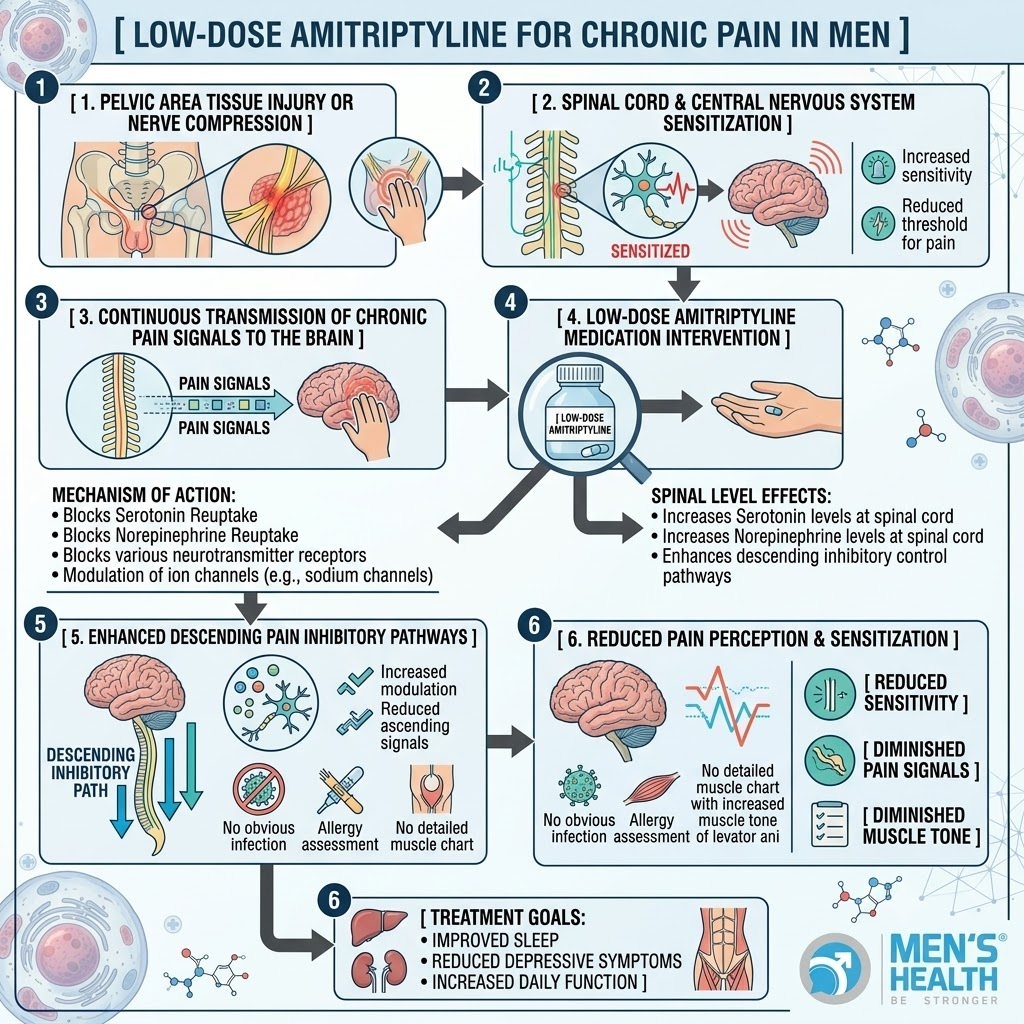
From a medical mechanism standpoint, the analgesic effect of amitriptyline is entirely independent of its antidepressant action. The drug blocks the reuptake process of two key neurotransmitters, serotonin and norepinephrine, at the synaptic clefts in the spinal cord. This enhances the “descending inhibitory pain pathway,” helping the brain block abnormal pain signals originating from the genital organs and pelvis.
2. Chronic Pain Syndromes in Men Indicated for Amitriptyline
Chronic pain in men often stems from a combination of peripheral nerve injury and central nervous system hypersensitization. Clinical studies note that low-dose amitriptyline delivers pronounced efficacy in the following cases:
- Chronic Pelvic Pain Syndrome (CP/CPPS): Persistent dull ache or burning discomfort in the perineum, base of the scrotum, anus, or suprapubic region lasting over 3 to 6 months.
- Pudendal Neuralgia: Compression of the pudendal nerve causing sharp, chili-like burning pain and paresthesia in the perineum, worsening when sitting and improving when standing or lying down.
- Chronic Orchialgia: Persistent aching pain in one or both testicles without identifiable bacteria or acute structural injury.
- Diabetic Neuropathy: Numbness, tingling, and burning pain in both feet in men with chronic diabetes mellitus.
3. Causes and Signs of Pain Neurological Sensitization in Men
Understanding the triggering factors and clinical manifestations enables men to seek early medical examination, preventing pain from becoming chronic and difficult to treat.
- Causes and Risk Factors:
- Lifestyle habits and occupational traits: Sitting continuously for many hours (office workers, drivers, long-distance cyclists) causes compression of blood vessels and the pudendal nerve.
- History of pelvic infections: Previous episodes of prostatitis, cystitis, or orchitis that have resolved but left behind a “pain memory” imprint in the nervous system.
- Trauma or surgery: History of inguinal hernia repair, bladder surgery, prostate surgery, or perineal trauma.
- Chronic psychological stress: Prolonged stress and anxiety activate the sympathetic nervous system, increasing pelvic floor muscle spasms and lowering the body’s pain threshold.
- Characteristic Recognition Signs:
- Neuropathic pain characteristics: Burning pain, electric shock-like pain, throbbing aches, or a feeling of a tight foreign body in the anus/perineum.
- Hyperalgesia: Even light friction from underwear can trigger discomfort or burning pain.
- Concomitant disorders: Often accompanied by sleep disturbances, chronic fatigue, urinary frequency, nocturia, or pain during ejaculation.
4. Treatment Goals and How to Use Low-Dose Amitriptyline
When prescribed for chronic pain, low-dose amitriptyline targets specific goals and requires a strict administration protocol.
- Treatment Goals:
- Reduce pain intensity: Lower pain levels to a threshold where the patient can tolerate and perform daily activities normally.
- Restore sleep: Due to mild histamine H1-blocking effects, amitriptyline helps patients fall asleep easier and sleep deeper, thereby breaking the “pain – insomnia – increased pain sensitivity” loop.
- Functional rehabilitation: Create favorable conditions for patients to participate in pelvic floor rehabilitation therapies and exercises.
- Standard Medical Administration Principles:
- Initial dosage: Typically starts at a very low dose (10mg to 12.5mg daily), taken 1 – 2 hours before bedtime.
- Dose titration: The physician monitors the body’s response and may adjust the dose upward to 25mg or a maximum of 50mg/day if necessary.
- Onset of action: The drug does not provide immediate pain relief. Patients must persevere with use for 2 – 4 weeks to notice clear improvement.
5. Anticholinergic Effects, Contraindications, and Important Drug Interactions
Amitriptyline is a STRICTLY PRESCRIPTION MEDICATION. Patients must thoroughly understand its pharmacological properties to proactively manage abnormalities.
- Common Adverse Reactions: Due to anticholinergic properties, the drug may cause several unwanted side effects:
- Dry mouth, thirst, constipation.
- Morning drowsiness and mild lethargy upon waking.
- Mild weight gain, temporary blurred vision.
- Mild urinary hesitation or difficulty urinating (requires special attention in men with benign prostatic hyperplasia).
- Absolute Contraindications and Precautions:
- Absolute contraindications: Patients who have recently experienced acute myocardial infarction, those taking MAOI preparations (within 14 days), individuals with angle-closure glaucoma, or severe cardiac arrhythmias.
- Special precautions: Elderly men, individuals with hepatic or renal impairment, or those with prostate disorders causing urinary retention.
- Important Drug Interactions:
- Alcohol, beer, and sedatives: Strongly enhance central nervous system depressant effects, causing deep sedation and respiratory depression risks.
- Other serotonergic drugs (Tramadol, SSRIs…): Increase the risk of Serotonin Syndrome (life-threatening).
- Antihypertensive drugs: The drug may enhance orthostatic hypotension effects.
| CRITICAL MEDICAL WARNING |
| • ABSOLUTELY DO NOT STOP AMITRIPTYLINE ABRUPTLY. |
| • Abrupt discontinuation can trigger withdrawal syndrome: headaches, nausea, severe insomnia, anxiety, and a violent resurgence of pain. |
| • When wishing to discontinue treatment, the physician will plan a step-by-step dose reduction (tapering) over a period of $2 – 4$ weeks. |
| • Do not self-change dosages or share prescriptions with others. |
6. Diagnostic Methods for Chronic Pain in Men
To achieve the highest treatment efficacy, accurately diagnosing the cause of pain is a mandatory step before prescribing amitriptyline.
- Specialized clinical examination: Andrologist/urologist examines the pelvis, groin, scrotum, performs a rectal examination to assess the prostate, and identifies trigger points in the pelvic floor muscles.
- Pain scoring assessment: Utilizing the NIH-CPSI questionnaire or VAS/NPRS pain scales to record the impact on daily activities.
- Exclusionary tests: Urinalysis, sediment analysis, and fresh genital discharge smears to completely rule out acute or chronic bacterial infections.
- Diagnostic imaging: Color Doppler ultrasound of the urogenital system, pelvic magnetic resonance imaging (MRI) when evaluating pudendal nerve compression is necessary.
7. Multimodal Treatment Regimen for Chronic Pain in Men
Locking down chronic pain requires synchronized coordination between medication, physical therapy, and psychological-lifestyle adjustments.
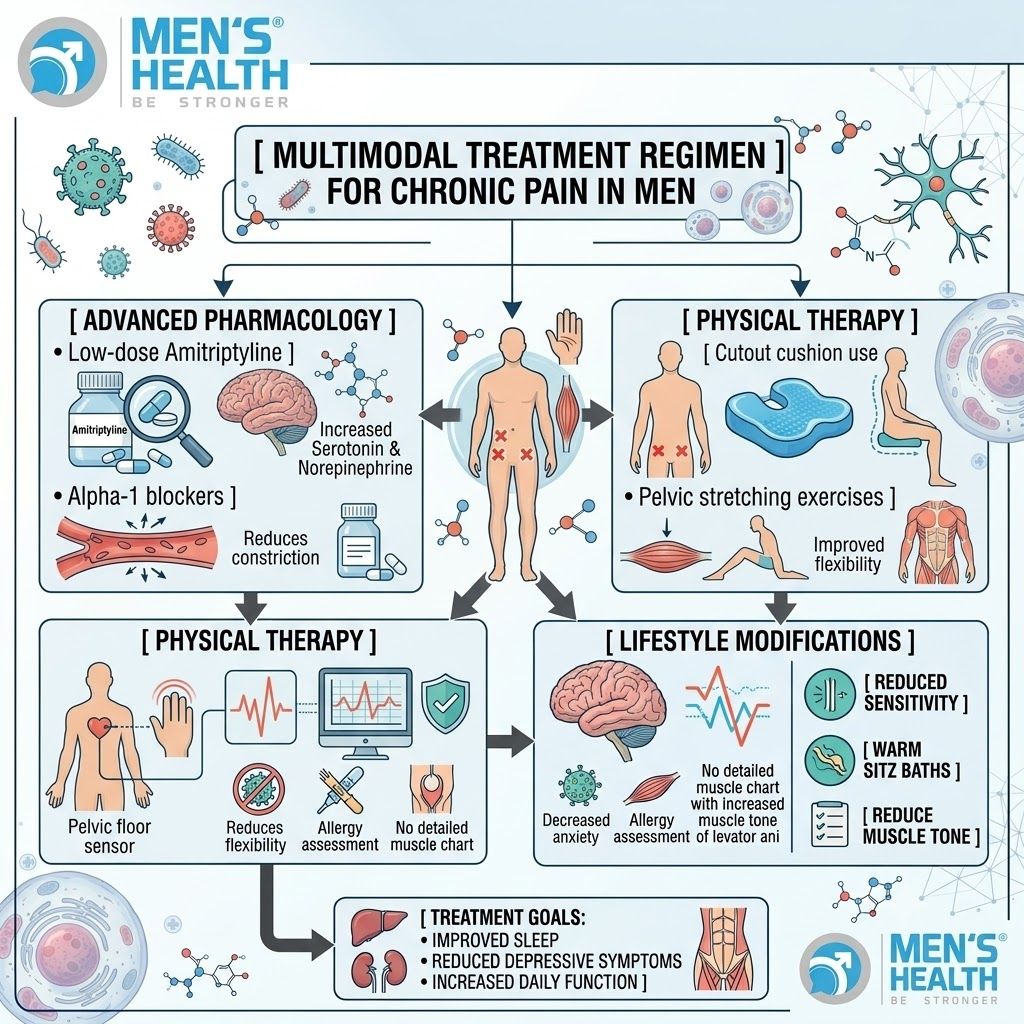
- Multi-Target Pharmacological Combination
- Alpha-1 blockers (Tamsulosin, Silodosin): Help relax the bladder neck and prostate smooth muscle, improving urinary difficulties.
- Other neuromodulators (Pregabalin/Gabapentin): Combined when neuropathic burning pain evolves complexly.
- Pelvic Floor Physical Therapy
- Therapists perform trigger point release techniques on the levator ani muscle group.
- Biofeedback training helps men recognize and completely relax the pelvic floor muscles.
- Lifestyle Adjustments at Home
- Cutout cushion use: Reduces pressure on the perineum when sitting for work.
- Warm sitz baths: 15 – 20 minutes daily helps increase blood circulation and reduce muscle spasms.
- Gentle exercise: Walking, yoga, avoiding sports that exert direct pressure such as long-distance cycling.
8. Common Pitfalls for Men Treating Chronic Pain
- Apprehension upon seeing amitriptyline is an antidepressant: Many patients drop out of treatment thinking the physician assumes they have a “mental illness.” In reality, the drug is used at low doses in the role of an analgesic neuromodulator.
- Impatience for immediate results: Amitriptyline requires 2 – 4 weeks to adjust neurotransmitter systems. Dropping the drug after a few days because “pain hasn’t decreased yet” is a common mistake.
- Arbitrarily using prolonged antibiotics: Mistaking chronic pelvic pain for bacterial infection and self-purchasing antibiotics, causing antimicrobial resistance and hepatic/renal damage.
- Abruptly stopping medication when feeling better: Leads to withdrawal syndrome and triggers pain flare-ups worse than before.
9. Introduction to the Men’s Health Center Healthcare Ecosystem
Chronic pelvic and genital pain in men is a sensitive condition that heavily impacts psychological well-being and quality of life. Finding a specialized, discreet medical facility with standardized treatment protocols is critically urgent.
Men’s Health Andrology Pharmacy is a unit within the Men’s Health Center ecosystem founded by Assoc. Prof. Dr. Tra Anh Duy. Here, patients always receive guidance, explanations, and support from physicians and pharmacists in selecting appropriate healthcare solutions. Men’s Health emphasizes professionalism, safety, discretion, information privacy, and respect for individual privacy throughout examination, treatment, and follow-up.

Within the Men’s Health ecosystem, patients with chronic pain undergo examination via standardized protocols, comprehensively evaluated from neural, musculoskeletal, to psychological factors, thereby optimizing recovery efficacy for men’s health.
10. Detailed Comparison Table of Common Chronic Neuropathic Pain Medications
| Drug Name | Pharmacological Class | Commonly Used Initial Dose | Characteristic Side Effects |
| Amitriptyline | Tricyclic Antidepressant (TCA) | 10mg – 25mg/day (Nighttime) | Dry mouth, constipation, morning drowsiness, mild urinary retention |
| Pregabalin | Gabapentinoid | 50mg – 75mg/day | Dizziness, drowsiness, weight gain, mild peripheral edema |
| Gabapentin | Gabapentinoid | 100mg – 300mg/day | Dizziness, fatigue, mild loss of balance |
| Duloxetine | SNRI | 30mg/day | Nausea, anorexia, mild insomnia, loss of appetite |
Low-Dose Amitriptyline in Chronic Pain in Men: Frequently Asked Questions (FAQs)
Does taking low-dose amitriptyline make me addicted to the drug? Clinical studies show that low-dose amitriptyline does not cause psychological addiction like narcotics or opioids. However, the body can adapt to the presence of the drug, so patients must not stop the medication abruptly but taper the dose gradually under a physician’s guidance.
Does using amitriptyline for chronic pain affect erectile function? At high doses for depression, the drug can cause side effects on sexual function. However, at low doses (10 – 25mg) used for chronic pain treatment, this impact is very low. Even when chronic pain is controlled, men’s sexual capability and self-confidence improve markedly.
At what time of day should I take amitriptyline? The medication should be taken in the evening, approximately 1 – 2 hours before bedtime. The sedative property of the drug will help you fall asleep easier while minimizing daytime grogginess.
How long on low-dose amitriptyline can I stop the medication? Treatment duration typically lasts from 3 to 6 months or longer depending on each patient’s response level. When pain has been stably controlled for a prolonged period, the physician will guide gradual dose reduction before stopping entirely.
Can I self-purchase amitriptyline at a pharmacy to take? Absolutely not. Amitriptyline is a strict prescription medication. Self-administration can lead to dangerous events such as hypotension, cardiac arrhythmias, acute urinary retention, or unfavorable drug interactions.
Can benign prostatic hyperplasia patients use low-dose amitriptyline? Men with benign prostatic hyperplasia must exercise extreme caution when using amitriptyline because the anticholinergic properties of the drug can increase the risk of acute urinary retention. The physician will carefully weigh benefits and risks or select a more suitable alternative drug class.
Why haven’t I noticed pain relief after taking amitriptyline for 3 days? Low-dose amitriptyline is not an immediate fast-acting painkiller. The drug works by re-regulating the neurotransmitter system, thereby requiring an accumulation time of 2 – 4 weeks to yield clear efficacy. You should continue to adhere strictly to your physician’s instructions.
Conclusion
Low-dose amitriptyline in chronic pain in men represents a medically sound solution with solid scientific backing, helping to soothe persistent neuropathic pain, improve sleep quality, and enhance quality of life for men. However, the medication only delivers optimal efficacy and safety when used at the right dosage, for the right indication, and within a comprehensive multimodal treatment regimen.
Men should not endure chronic pelvic-genital pain in silence or arbitrarily use unverified painkillers. When persistent symptoms arise, proactively visit the Men’s Health Center for accurate diagnosis of the cause and receive an in-depth, safe, discreet, and confidential treatment regimen.