
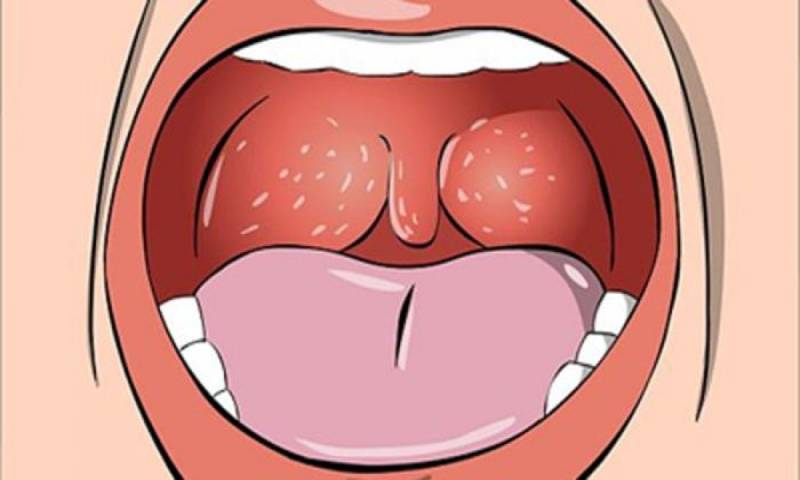
Pharyngeal gonorrhea is an increasingly common sexually transmitted infection that is easily mistaken for a routine sore throat. The majority of infected individuals do not exhibit clear symptoms, leading to inadvertent transmission to sexual partners and an increased risk of antibiotic resistance. Therefore, timely pharyngeal gonorrhea testing in men is a decisive step for accurate diagnosis and definitive treatment. The following article provides in-depth medical information regarding the signs, testing procedures, and safe treatment regimens.
What is pharyngeal gonorrhea in men?
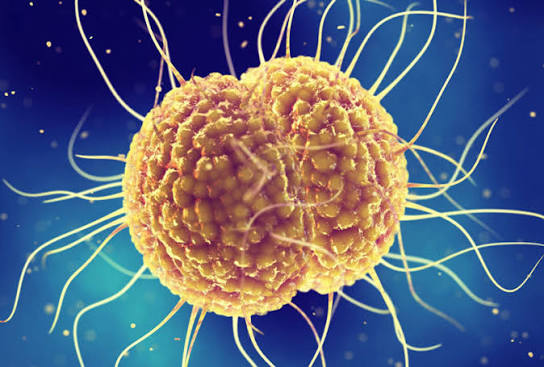
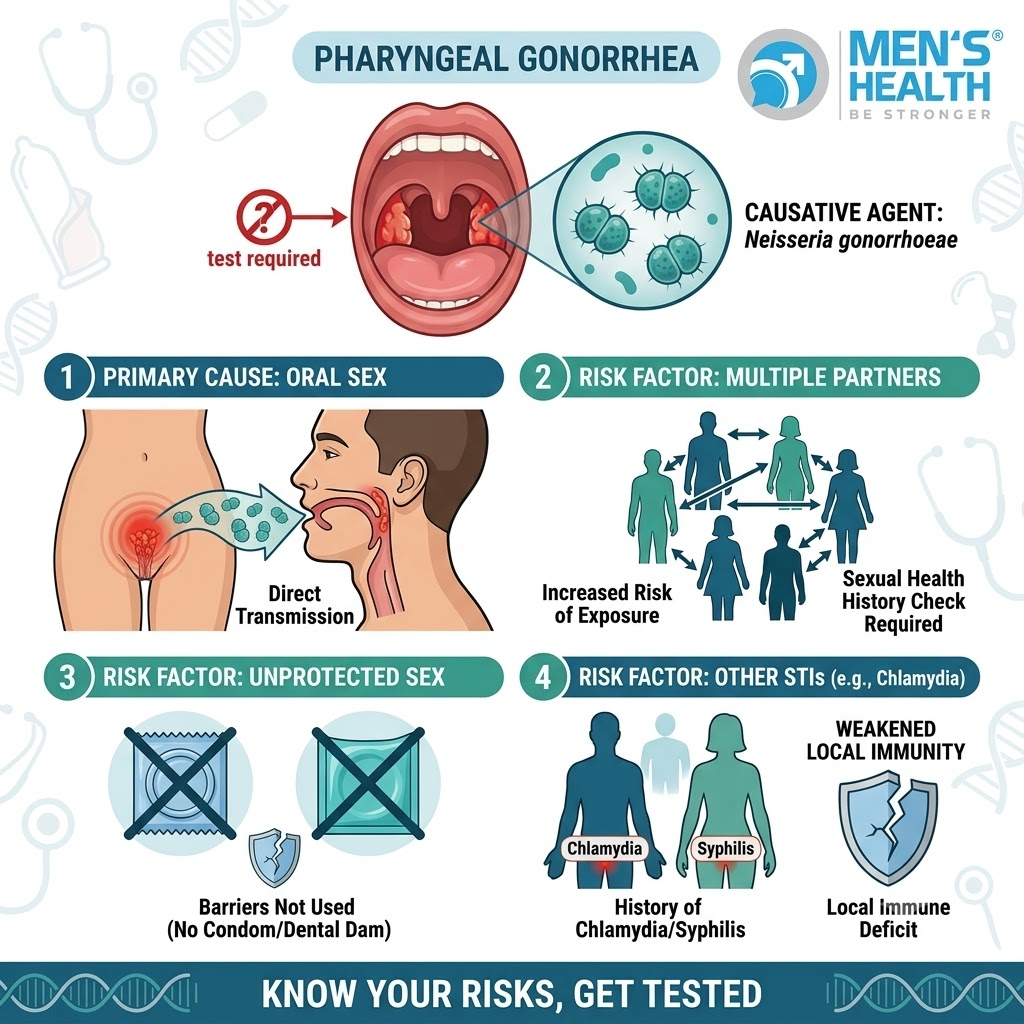
Pharyngeal gonorrhea is the infection of the oropharyngeal mucosa by the bacterium Neisseria gonorrhoeae (gonococcus). This is a Gram-negative bacterium capable of rapidly multiplying and thriving in warm, moist environments of the body, such as the urethra, rectum, and throat. According to current specialized guidelines, pharyngeal gonorrhea is classified as a sexually transmitted infection (STI) with high latent risks. The reason is that the throat can act as a “reservoir” for gonococcal bacteria to reside silently. Here, gonococci can exchange genetic material with other common bacteria in the throat, leading to the emergence of highly drug-resistant strains (Super gonorrhea), which poses immense challenges for treatment.
Causes and Risk Factors of Pharyngeal Gonorrhea
The sole cause of this pathology is the invasion of Neisseria gonorrhoeae. However, the transmission routes and risk factors are highly specific:
- Oral sex: This is the primary route of transmission. When a man performs oral sex on a partner (male or female) who has genital or anorectal gonorrhea, the bacteria spread directly to the pharyngeal mucosa.
- Multiple sexual partners: The risk of exposure increases proportionally with the number of sexual partners, especially when the partner’s sexual health history is unknown.
- Unprotected sex: The failure to use condoms or dental dams during oral sex creates ideal conditions for gonococcal transmission.
- Co-infection with other STIs: Individuals with compromised local immunity due to other sexually transmitted infections (such as Chlamydia or syphilis) are more susceptible to gonococcal invasion.
Signs and Symptoms of Pharyngeal Gonorrhea in Men
Clinical studies indicate that up to 90% of pharyngeal gonorrhea cases are asymptomatic. This causes patients to become complacent and unknowingly spread the infection to others. When symptoms do occur, pharyngeal gonorrhea closely mimics viral pharyngitis or infections caused by common bacteria (such as streptococcus). Below are some signs that men should note:
- Persistent sore throat, dysphagia (difficulty swallowing).
- Erythematous (red) and inflamed pharyngeal mucosa.
- Swollen tonsils, possibly presenting with white or yellow purulent exudate (pus spots) in the throat.
- Swollen, painful cervical lymph nodes (lymphadenopathy) upon palpation.
- Low-grade fever (less common).
Crucial medical note: Pharyngeal gonorrhea cannot be diagnosed based solely on clinical symptoms. Self-diagnosing it as a common sore throat and self-medicating will mask the symptoms, promote antibiotic resistance, and allow the disease to progress silently.
When should men get tested for pharyngeal gonorrhea?
Screening and testing for pharyngeal gonorrhea in men should be conducted in the following scenarios:
- Post-exposure: After engaging in unprotected oral sex, particularly with a new partner or someone with multiple sexual partners.
- Partner tested positive for gonorrhea: Regardless of whether you have symptoms or not, if your partner informs you they have gonorrhea, you are required to get tested at all sites of contact (urethra, throat, rectum).
- Prolonged sore throat symptoms: If a sore throat or purulent tonsillitis has been treated with common pharyngitis antibiotics (prescribed at general clinics) for 5-7 days without improvement.
- Routine screening: Men with an active sexual lifestyle, multiple partners, or those in high-risk groups should proactively undergo STI screening every 3-6 months, including pharyngeal swabs.
Current Pharyngeal Gonorrhea Testing Methods for Men
To accurately diagnose gonococcus in the oropharyngeal region, specialists typically indicate the following methods:
1. Nucleic Acid Amplification Testing (NAAT) This is currently the gold standard in diagnosing pharyngeal gonorrhea due to its exceptionally high sensitivity and specificity.
- Procedure: A doctor or healthcare professional uses a specialized sterile swab to gently sweep the tonsils and posterior pharyngeal wall of the patient to collect exudate samples.
- Advantages: Capable of detecting the genetic material (DNA/RNA) of the gonococcal bacteria even when the bacterial load is very low. Provides rapid results.
- Note: Testing for gonorrhea via urine or blood samples has no diagnostic value for pharyngeal gonorrhea. Urine only helps detect urethral gonorrhea; therefore, direct sampling of pharyngeal exudate is mandatory.
2. Bacterial Culture and Antibiogram (Antimicrobial Susceptibility Testing)
- Procedure: The collected pharyngeal swab sample is streaked onto specialized agar plates to facilitate bacterial growth into colonies in a laboratory setting.
- Core role: This method takes more time (2-3 days) and has slightly lower sensitivity than NAAT, but it holds immense value in performing an antibiogram. Through culture, the physician can determine exactly which antibiotics the specific strain of gonorrhea the patient carries is susceptible or resistant to, thereby formulating the most targeted treatment regimen.
Treatment of Pharyngeal Gonorrhea and the Role of Medication
Pharyngeal gonorrhea is considered harder to treat than genital gonorrhea because the dense vascular network in the throat reduces the penetrating concentration of antibiotics. However, the disease is entirely curable if detected early and treated with the correct regimen.
Principles of Medication Use
- Treatment goals: To completely eradicate Neisseria gonorrhoeae, prevent complications, and break the chain of transmission in the community.
- Mandatory prescription drugs: Antibiotics for gonorrhea are strictly prescription-only. Patients must absolutely not use over-the-counter drugs, traditional herbal remedies, or someone else’s prescription.
- Specific regimen: According to current specialized guidelines, pharyngeal gonorrhea is typically treated with new-generation Cephalosporin antibiotics as a single intramuscular injection, with or without a combined oral antibiotic (Macrolide or Tetracycline group) depending on updated health authority protocols and local antibiotic resistance patterns.
Side Effects, Contraindications, and Drug Interactions
When using antibiotics, men should note the following:
- Adverse effects: Pain at the injection site, nausea, mild diarrhea, or temporary gastrointestinal disturbances.
- Contraindications/Precautions: You must inform your doctor if you have a history of allergies to antibiotics (especially Penicillin or Cephalosporins) or underlying liver and kidney conditions.
- When to contact a doctor: If, after receiving an injection/oral medication, you experience generalized rash, shortness of breath, or facial swelling (signs of anaphylaxis), or if throat symptoms do not subside after 7 days, immediate re-examination is required.
Choosing a Reputable Healthcare and Medication Provider
The treatment process for sexually transmitted infections does not stop at medication but also requires close accompaniment and monitoring from medical professionals. Men’s Health Andrology Pharmacy is a unit within the Men’s Health Center ecosystem founded by Dr. Tra Anh Duy, MD, PhD. Here, patients are consistently counseled, educated, and assisted by doctors and pharmacists in choosing the appropriate healthcare solutions following an accurate diagnosis.

Men’s Health prioritizes professionalism, safety, discretion, strict confidentiality, and respect for individual needs throughout the examination, treatment, and follow-up process. Specific antibiotics for gonorrhea require a strict doctor’s prescription after clinical evaluation and test results. The tight coordination between physicians and pharmacists here ensures patients use the correct medication and dosage, minimizing the risk of drug resistance and promptly managing side effects. You absolutely should not purchase medications of unknown origin online to self-treat at home.
Common Mistakes When Suspecting Pharyngeal Gonorrhea
- Self-medicating with antibiotics for a sore throat: Many men visit pharmacies to buy standard antibiotics for sore throats (such as Amoxicillin). The majority of gonococcal bacteria are now resistant to these older antibiotics. Using the wrong medication provides temporary symptom relief, but the disease continues to spread silently.
- Relying only on urine tests: Assuming that screening for “social diseases” only requires urinating in a cup. Urine cannot detect bacteria harboring in the throat.
- Having sex as soon as symptoms resolve: Even if the throat is no longer painful, the bacteria may still survive. Patients must abstain from sexual intercourse for at least 7 days after finishing the last dose of medication and ideally have a negative test result confirming the infection is cured.
Lifestyle Changes and Prevention
To protect yourself and your partners from the risk of pharyngeal gonorrhea, men should adhere to the following principles:
- Use condoms or dental dams correctly during all forms of sexual activity, including oral sex.
- Maintain a monogamous relationship with a partner who has been tested for sexual health.
- Communicate openly with partners about STI medical history and undergo routine screening together.
- Build a strong immune system and quit smoking (smoking damages the pharyngeal mucosa, facilitating bacterial invasion).
Pharyngeal Gonorrhea Testing in Men and Frequently Asked Questions
Does testing for pharyngeal gonorrhea hurt? The pharyngeal gonorrhea testing procedure primarily uses a soft swab to collect exudate from the tonsillar mucosa and posterior pharyngeal wall. This process is very rapid (only a few seconds) and completely painless. You may feel a slight tickle or a brief, mild gag reflex, but it causes no trauma or bleeding.
How long after exposure should I get tested for pharyngeal gonorrhea? The incubation period for pharyngeal gonorrhea usually ranges from 2 to 14 days, most commonly 3 to 5 days. However, using the molecular biology method (NAAT), you can get tested approximately 3 to 5 days after exposure to obtain highly accurate results.
Can pharyngeal gonorrhea go away on its own without medication? No. Gonococcal bacteria cannot be completely eradicated by the body’s natural immune resistance alone. Without specific antibiotic intervention, the bacteria will persist in the pharyngeal mucosa, transmit to others, and may invade the bloodstream, causing gonococcal bacteremia or gonococcal arthritis (though this rate is rarer).
Can pharyngeal gonorrhea be transmitted through kissing? Although gonococcal bacteria reside in the throat, the likelihood of transmission through social kissing or closed-mouth kissing is virtually zero. However, with vigorous “deep kissing” (French kissing) that causes micro-abrasions in the oropharyngeal mucosa between an infected and a healthy person, the theoretical risk of transmission still exists, although the rate is extremely low compared to oral sex.
Can a blood test detect pharyngeal gonorrhea? No. Blood tests are typically used to screen for syphilis, HIV, or Hepatitis B and C. Gonococcal bacteria localize at mucosal sites (throat, urethra, rectum); therefore, direct swabbing of the pharynx is required to detect the disease.
Conclusion and Medical Advice
Pharyngeal gonorrhea testing in men is a necessary medical indication, especially for individuals who engage in oral sex. Because the symptoms are easily confused with common pharyngitis and tend to progress silently, proactive screening is the only way to protect personal and public health. Strictly refrain from self-diagnosing online or self-administering partial courses of antibiotics. Whenever there are abnormal signs in the oropharyngeal region after risky behaviors, or simply for routine health screening, you should seek out specialized medical facilities. With the accompaniment of a professional, safe, and discreet medical ecosystem like Men’s Health, men will receive in-depth examinations, counseling for the correct type of tests, and an accurate, personalized medical treatment regimen.