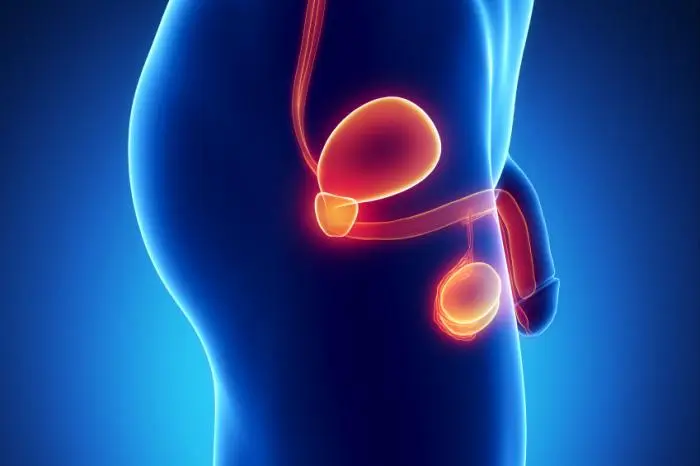


Urinary incontinence in men involves involuntary urine leakage stemming from structural, neurological, or prostatic disorders. While incontinence does not directly destroy testicular germ cells, its underlying etiologies and surgical interventions can significantly impair erectile capacity, ejaculatory integrity, and overall reproductive potential.
1. Clinical Overview and Pathophysiology
What is Male Urinary Incontinence?
Male urinary incontinence (UI) is defined by the International Continence Society (ICS) as any involuntary loss of urine. Rather than being an isolated disease, UI represents a clinical manifestation of detrusor muscle dysfunction, urethral sphincter incompetence, prostatic obstruction, or neurological impairment.
Anatomical and Physiological Coordination
Urinary storage and micturition require seamless coordination between the autonomic nervous system and lower urinary tract smooth/striated structures. During storage, sympathetic stimulation via β3-adrenergic receptors relaxes the detrusor muscle while α1A-adrenoceptors constrict the internal bladder neck. Simultaneously, somatic innervation via the pudendal nerve maintains tonic contraction of the external striated urethral sphincter.
Involuntary leakage occurs through two primary pathophysiological states:
- Intravesical Storage Pressure Exceeding Closure Resistance: Driven by uninhibited detrusor overactivity (DO) or impaired bladder compliance.
- Sphincter Incompetence: Structural damage or denervation of the urethral sphincter mechanism resulting in low leak-point pressures during physical exertion.
2. Does Male Urinary Incontinence Affect Reproductive Function and Fertility?
Urinary incontinence and male reproductive dysfunction frequently overlap because micturition, erection, and ejaculation share common pelvic neural pathways, vascular networks, and anatomical structures.
Impact on Erectile Function and Pelvic Hemodynamics
Erectile dysfunction (ED) coexists in a high percentage of men suffering from lower urinary tract symptoms (LUTS) and incontinence:
- Pelvic Ischemia: Chronic vascular insufficiency reducing microvascular perfusion to the bladder wall similarly impairs cavernous arterial inflow required for erection.
- Autonomic Neural Injury: Surgical procedures (such as radical prostatectomy) or spinal cord trauma damaging parasympathetic cavernous nerves impair nitric oxide release, hindering corporal smooth muscle relaxation.
- Psychological Distress: Fear of leakage during coitus (coital incontinence) creates severe performance anxiety, diminishing libido and erectile firmness.
Effects on Ejaculation and Seminal Emission
- Retrograde Ejaculation: Surgical resection of the bladder neck or prostatic stroma (e.g., TURP) or pharmacological blockade of α1A-adrenoceptors prevents internal sphincter closure during orgasm. Seminal fluid takes the path of least resistance backward into the bladder rather than through the meatus.
- Anejaculation and Dysorgasmia: Radical pelvic surgery or severe neurogenic disease can completely interrupt symapthetic signaling responsible for seminal emission from the vas deferens and seminal vesicles.
Consequences for Male Fertility
- Sub-epithelial and Seminal Infections: Chronic retention or incontinence secondary to obstruction often predisposes patients to recurrent prostatitis or epididymoorchitis, increasing reactive oxygen species (ROS) in semen and damaging sperm motility and DNA integrity.
- Systemic Stress and HPT Axis Suppression: End-stage renal impairment resulting from severe unmanaged overflow incontinence suppresses gonadotropin-releasing hormone (GnRH), reducing serum testosterone levels and spermatogenesis.
3. Subtypes and Clinical Manifestations
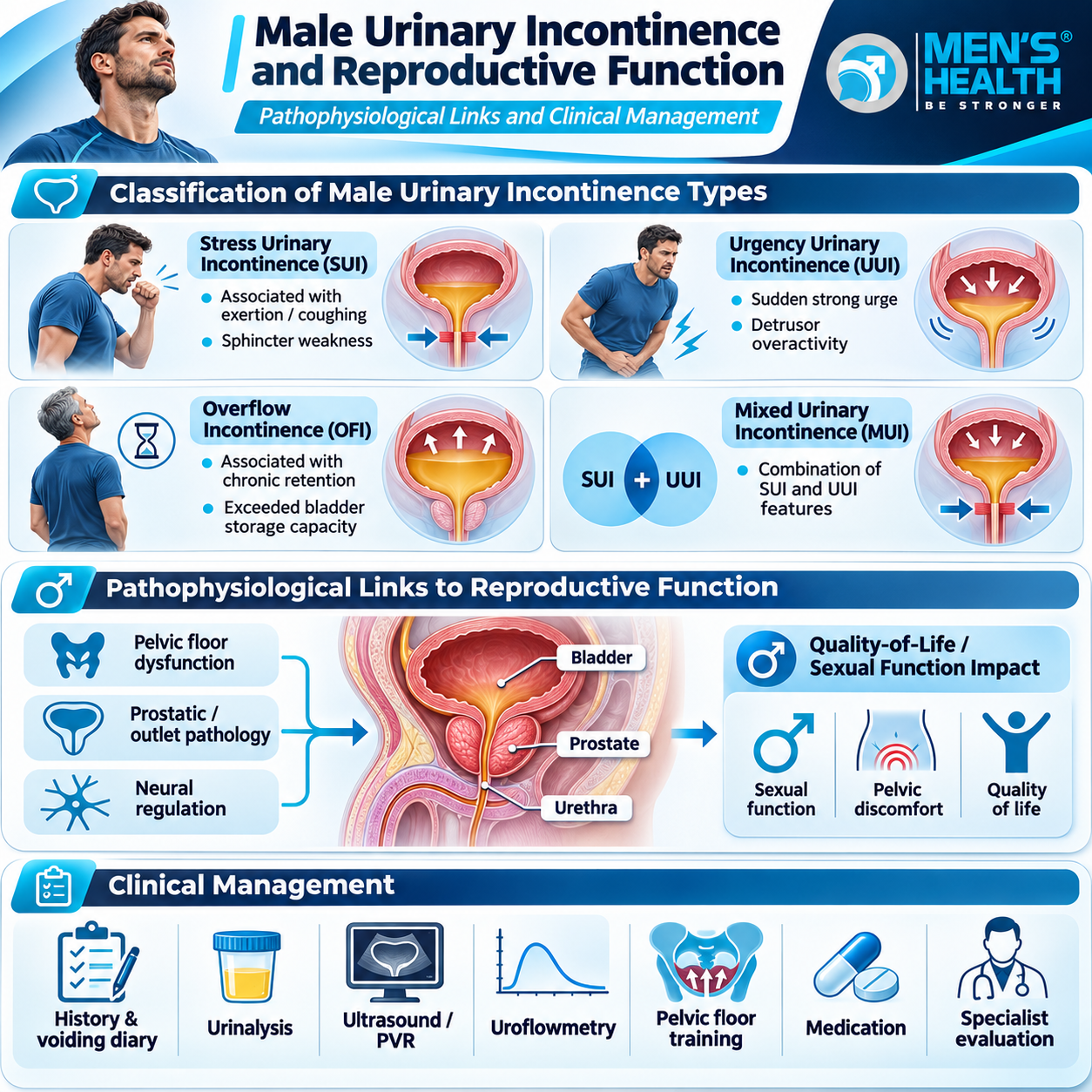
Subtype Features Matrix
| Incontinence Subtype | Clinical Presentation | Primary Pathophysiological Driver | Impact on Sexual / Reproductive Function |
| Stress (SUI) | Leakage with coughing, lifting, exertion | External urethral sphincter trauma | Coital incontinence during intercourse |
| Urgency (UUI) | Involuntary loss with sudden urge | Involuntary detrusor overactivity | Anxiety, diminished libido, erectile impairment |
| Overflow (OFI) | Continuous dribbling, post-void fullness | Bladder overdistension / High PVR | Post-renal kidney stress, erectile dysfunction |
| Mixed (MUI) | Exertional leakage combined with urgency | Combined sphincter defect & detrusor DO | Comprehensive sexual dysfunction |
Red Flag Symptoms Requiring Immediate Evaluation
- Gross hematuria or passage of blood clots.
- Acute voiding cessation accompanied by severe suprapubic pain.
- Fever, rigors, or flank pain indicating complicated upper tract infection.
- Acute neurological deficits, including saddle anesthesia or sudden leg weakness.
4. Diagnostic Assessment Framework
Systematic evaluation is essential to differentiate between detrusor failure, sphincter damage, and mechanical obstruction.
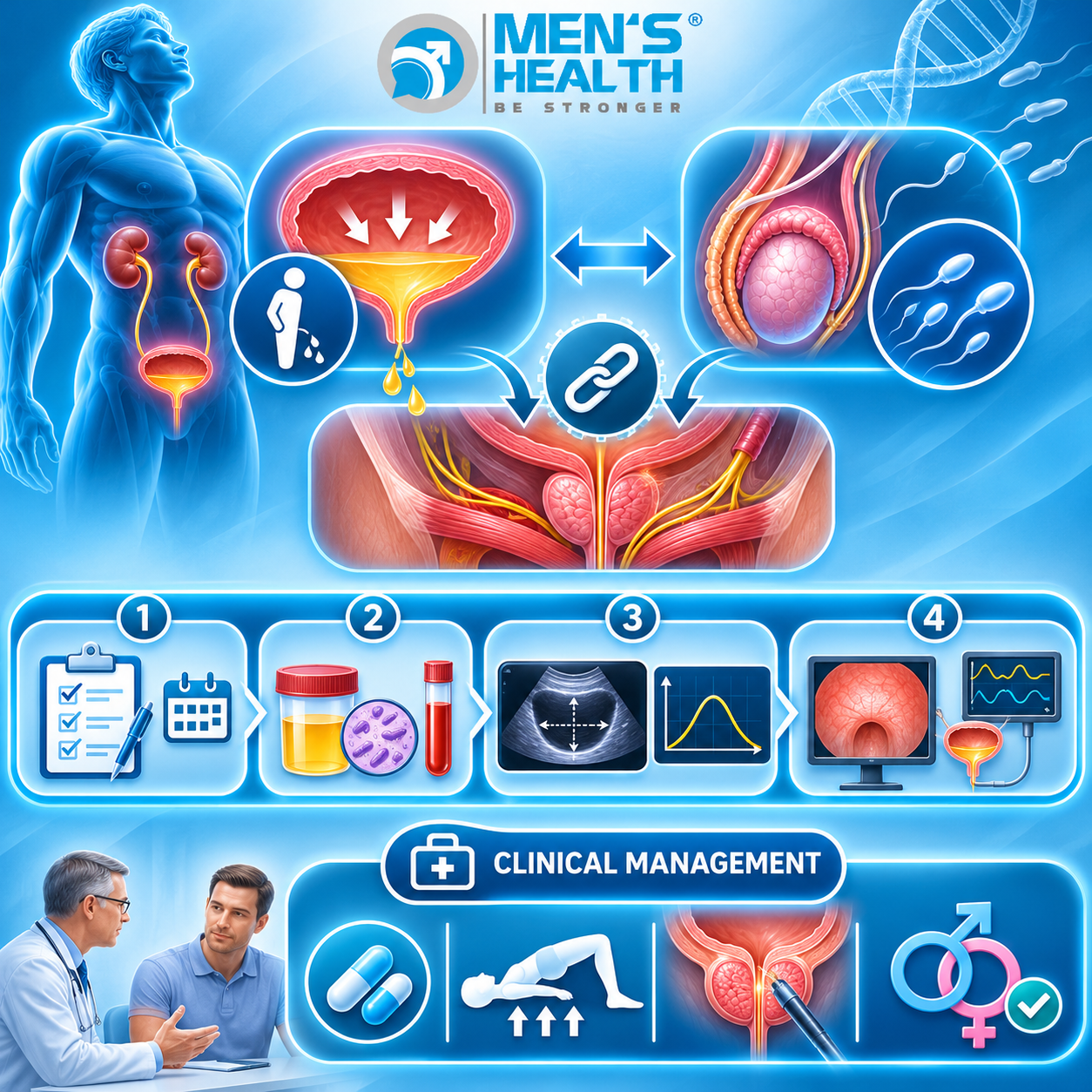
- 3–7 Day Voiding Diary: Quantifies daily fluid intake, voiding intervals, incontinence events, and pad consumption.
- Physical and Digital Rectal Examination (DRE): Assesses prostate contour and volume while testing sacral nerve reflexes (S2 – S4) through anal sphincter tone and bulbocavernosus reflex.
- Urinalysis and Urine Culture: Excludes infection, pyuria, and microscopic hematuria.
- Post-Void Residual (PVR) Scan: Non-invasive abdominal ultrasound. A PVR > 150-200 mL confirms retention-driven overflow leakage.
- Multi-Channel Urodynamic Studies (UDS): Evaluates detrusor leak-point pressure (DLPP), filling compliance, and pressure-flow curves to differentiate sphincter weakness from detrusor overactivity.
- Flexible Cystourethroscopy: Endoscopic visualization of the bulbar/membranous urethra, bladder neck, and vesical mucosa to identify strictures or sphincter incompetence.
5. Comparative Pharmacology and Therapeutic Options
Pharmacological management aims to suppress detrusor overactivity, reduce bladder outlet resistance, or improve smooth muscle tone.
Core Drug Classes
Antimuscarinic Agents
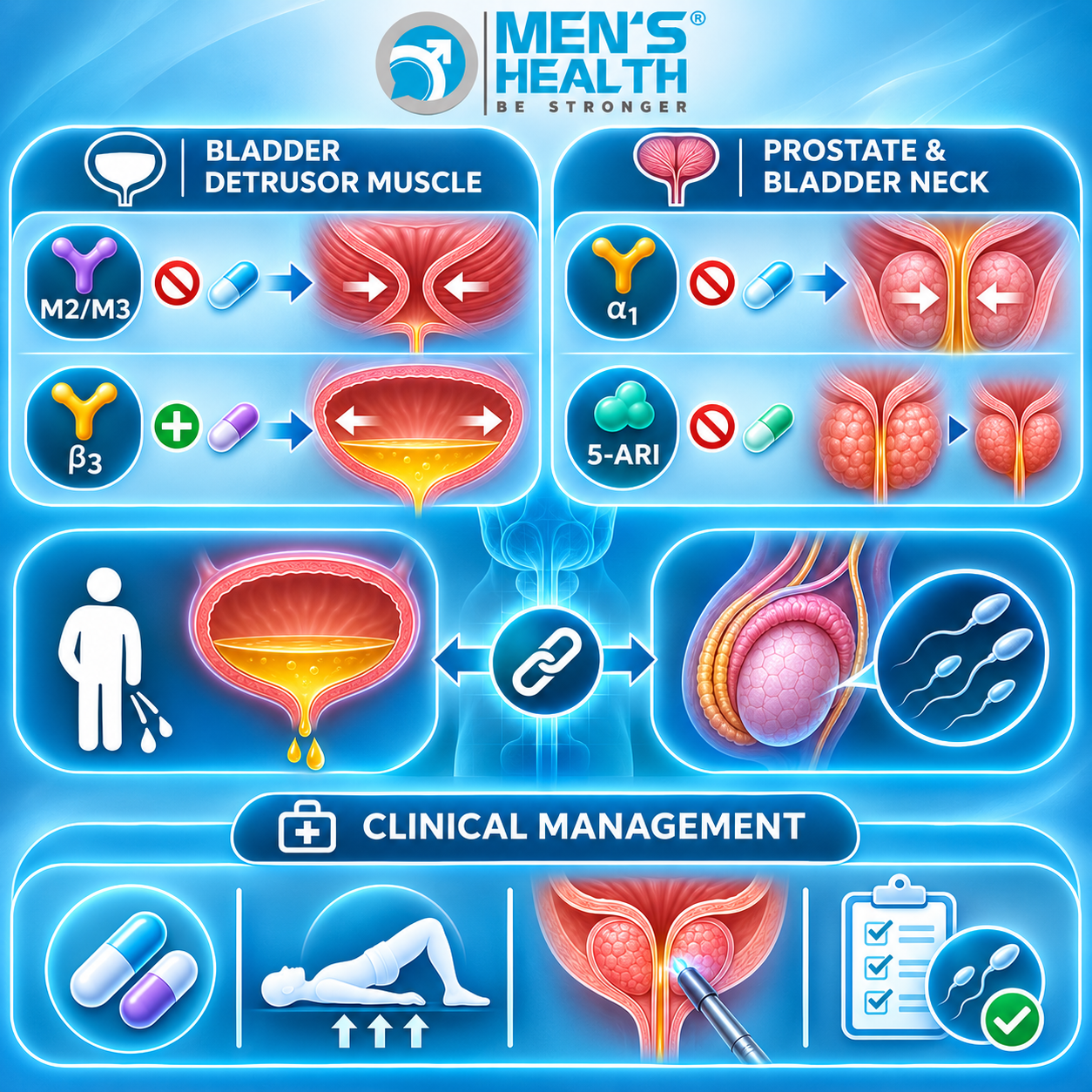
- Mechanism: Block muscarinic M2/M3 receptors on detrusor smooth muscle, inhibiting involuntary uninhibited contractions.
- Agents: Solifenacin, Tolterodine, Fesoterodine, Oxybutynin.
- Indication: Urgency Urinary Incontinence (UUI).
- Adverse Effects & Precautions: Dry mouth, constipation, cognitive burden. Contraindicated in elevated PVR and uncontrolled narrow-angle glaucoma.
Beta-3 Adrenoceptor Agonists
- Mechanism: Selectively activate β3-adrenergic receptors on detrusor muscle cells, promoting bladder relaxation during the storage phase.
- Agents: Mirabegron, Vibegron.
- Indication: First- or second-line UUI therapy, suitable for elderly men or those sensitive to anticholinergic side effects.
- Adverse Effects: Mild blood pressure elevation, headache.
Alpha-1 Adrenoceptor Antagonists (α1-Blockers)
- Mechanism: Inhibit α1A-adrenoceptors in the prostate stroma and bladder neck, reducing outflow resistance.
- Agents: Tamsulosin, Silodosin, Alfuzosin.
- Indication: Overflow or urgency symptoms secondary to benign prostatic hyperplasia.
- Adverse Effects: Orthostatic hypotension, retrograde ejaculation (which can impact fertility).
Phosphodiesterase-5 (PDE5) Inhibitors
- Mechanism: Preserve intracellular cGMP, inducing smooth muscle relaxation across the prostate, bladder neck, and pelvic vasculature.
- Agents: Tadalafil (5 mg once daily).
- Indication: Concurrent LUTS/UI and Erectile Dysfunction.
Comparative Drug Matrix
| Property | Antimuscarinics (e.g., Solifenacin) | β3-Agonists (e.g., Mirabegron) | α1-Blockers (e.g., Tamsulosin) | PDE5 Inhibitors (e.g., Tadalafil) |
| Primary Target | M2/M3 Muscarinic Receptors | β3-Adrenergic Receptors | α1A-Adrenoceptors | PDE5 Enzyme |
| Primary Site | Detrusor Muscle | Detrusor Muscle | Prostate & Bladder Neck | Pelvic Vasculature & Prostate |
| PVR Impact | May Increase PVR | Neutral / Minimal Effect | Reduces PVR | Neutral / Minimal Effect |
| Impact on Sexual Function | Minimal direct impact | Minimal direct impact | Risk of retrograde ejaculation | Improves erectile function |
| Primary Clinical Focus | Storage Urgency | Storage Urgency | Outflow Obstruction | Combined LUTS & Erectile Dysfunction |
6. Procedural and Surgical Interventions
When conservative and pharmacological therapies are insufficient, procedural options can restore continence:
- Artificial Urinary Sphincter (AUS): The gold-standard surgical therapy for severe post-prostatectomy stress incontinence, utilizing a cuff around the bulbar urethra connected to a scrotal control pump.
- Male Slings (Transobturator / Retrobulbar): Synthetic mesh placed beneath the bulbar urethra to provide relocation and passive compression for mild-to-moderate SUI.
- Sacral Neuromodulation (SNM): Electrical stimulation of the S3 sacral nerve root to re-establish neural regulation in refractory urgency incontinence.
7. Comprehensive Clinical Care at Men’s Health Center and Men’s Health Pharmacy
Managing male urinary incontinence and its underlying impact on sexual and reproductive health requires meticulous diagnosis and individualized clinical oversight.
Men’s Health Pharmacy, an integral unit within the Men’s Health Center ecosystem founded by Dr. Tra Anh Duy (MD, PhD, Spec. II), delivers clinical pharmacy support tailored to male urological care. Patients receive comprehensive consultations from experienced urologists and clinical pharmacists to ensure that prescribed medical therapies – such as α1-blockers, antimuscarinics, β3-agonists, or PDE5 inhibitors – align with diagnostic findings and fertility considerations. The facility prioritizes professional safety, patient privacy, absolute confidentiality, and evidence-based practice across all stages of management and follow-up care.

8. Lifestyle Interventions and Self-Management Guidelines
- Fluid Optimization: Maintain balanced fluid intake (1.5 – 2.0 L/day); avoid extreme fluid restriction which can concentrate urine and trigger urothelial irritation.
- Dietary Modifications: Reduce consumption of bladder irritants, including caffeine, alcohol, carbonated drinks, and artificial sweeteners.
- Pelvic Floor Muscle Training (PFMT): Perform structured Kegel exercises guided by biofeedback to reinforce the striated external urethral sphincter.
- Timed Voiding: Practice scheduled micturition every 2 to 3 hours to prevent excessive bladder filling and reduce overflow risk.
9. Common Clinical Pitfalls
- Administering Antimuscarinics Without Measuring PVR: Prescribing bladder suppressants to a patient with unrecognized overflow incontinence can trigger complete acute urinary retention.
- Ignoring Ejaculatory Changes from Medication: Failing to counsel patients that α1-blockers can cause retrograde ejaculation, leading to unnecessary fertility concerns.
- Overlooking Underlying Neurological Signs: Treating new-onset incontinence without screening for central or spinal nerve compromise delays essential medical evaluation.
- Unsupervised Self-Medication: Relying on unverified supplements or unprescribed medications risks masking progressive prostatic disease or renal impairment.
10. Frequently Asked Questions
Does urinary incontinence directly cause permanent male infertility?
No. Incontinence itself does not damage sperm production in the testes. However, underlying causes (such as neurological damage) or surgical/pharmacological treatments (such as α1-blockers causing retrograde ejaculation) can impair fertility.
Can drugs used to treat male urinary incontinence affect sexual performance?
Some medications, such as α1-blockers, can cause retrograde ejaculation. Conversely, daily PDE5 inhibitors (such as Tadalafil) can treat both lower urinary tract symptoms and coexisting erectile dysfunction.
How does post-prostatectomy stress incontinence impact sexual intimacy?
Damage to the external urethral sphincter during radical prostatectomy can cause stress incontinence during physical exertion or sexual intercourse (climacturia), creating emotional distress that secondary impairs erectile performance.
What is the role of post-void residual (PVR) testing in evaluating male incontinence?
PVR testing via ultrasound determines whether the bladder empties completely. Differentiating storage failure (e.g., detrusor overactivity) from emptying failure (e.g., overflow retention) is vital to avoid inappropriate drug selection.
Can male incontinence be successfully treated?
Yes. Most forms of male urinary incontinence can be managed or cured through behavioral modifications, targeted pharmacotherapy, or surgical procedures such as artificial urinary sphincter implantation or male sling placement.
Conclusion and Expert Clinical Advice
Male urinary incontinence is a complex clinical condition that extends beyond urinary leakage, often overlapping with erectile capacity, ejaculatory integrity, and overall reproductive health. Accurate diagnosis—utilizing voiding diaries, PVR ultrasound, and urodynamic assessments—is essential for guiding safe, targeted management.
Patients experiencing involuntary leakage, sudden urgency, or voiding difficulty should avoid self-diagnosis or unprescribed medications. Seeking clinical evaluation at a specialized facility such as the Men’s Health Center ensures precise diagnostic assessment, specialist physician management, and dedicated clinical pharmacy support for long-term urological and reproductive health.