
Urinary incontinence in men involves the involuntary loss of urine resulting from lower urinary tract dysfunction. Pharmacotherapy targets specific receptors in the bladder and prostate to reduce involuntary detrusor contractions, decrease outflow resistance, or enhance pelvic muscle tone.
1. Understanding Male Urinary Incontinence: Pathophysiology and Mechanisms
What is Male Urinary Incontinence?
Urinary incontinence (UI) is defined by the International Continence Society (ICS) as any involuntary leakage of urine. In men, UI is not an isolated condition but a clinical manifestation of detrusor muscle dysfunction, urethral sphincter weakness, prostatic obstruction, or neurogenic impairment.
Pathophysiological Mechanisms
Micturition relies on a balance between urinary storage and voluntary voiding:
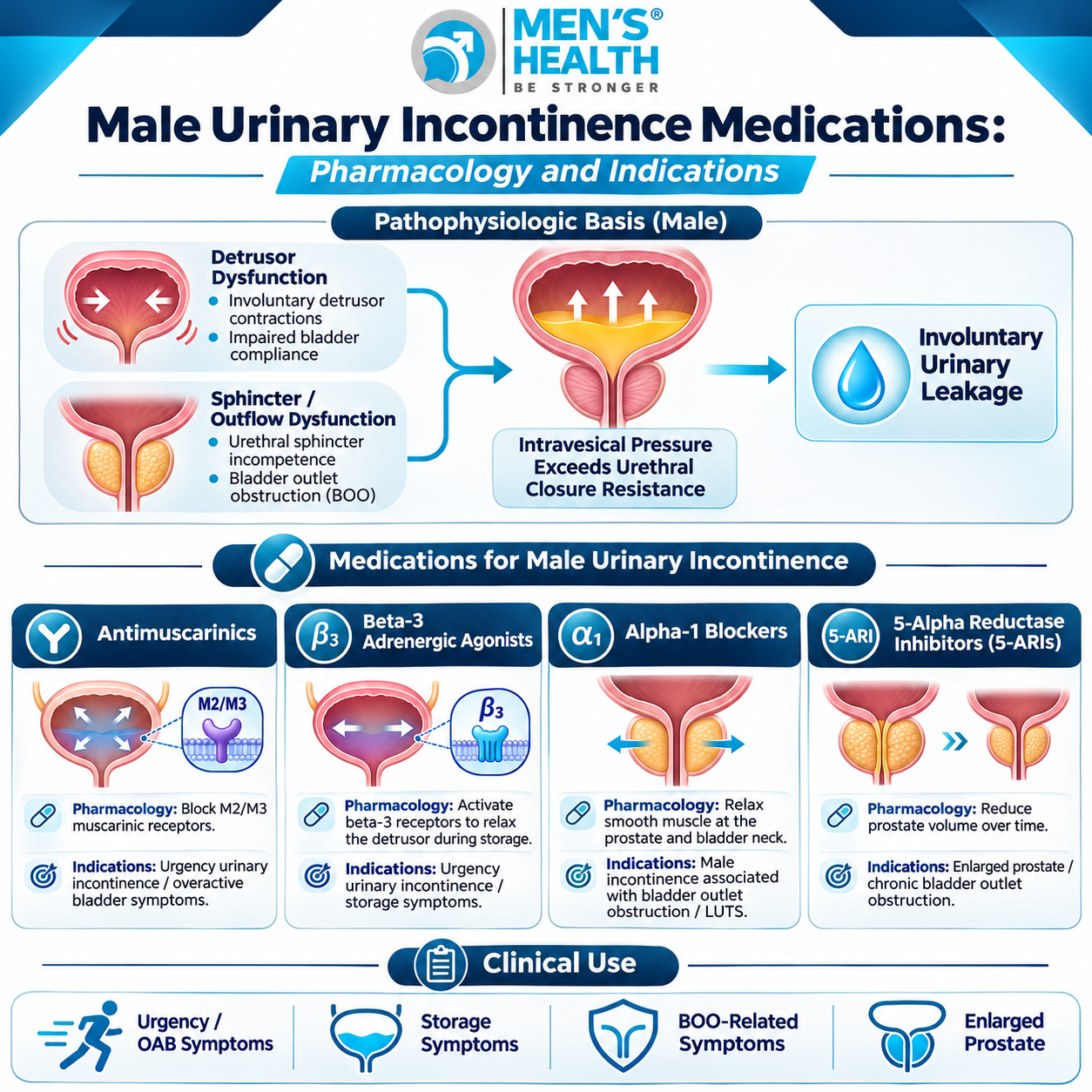
Involuntary leakage occurs through two main mechanisms:
- Intravesical Pressure Exceeding Closure Resistance: Involuntary detrusor contractions generate excessive storage pressure, overriding an intact sphincter.
- Incompetent Urethral Sphincter Mechanism: Structural damage or denervation prevents the sphincter from maintaining adequate closure resistance against normal storage pressures.
2. Main Types of Male Urinary Incontinence
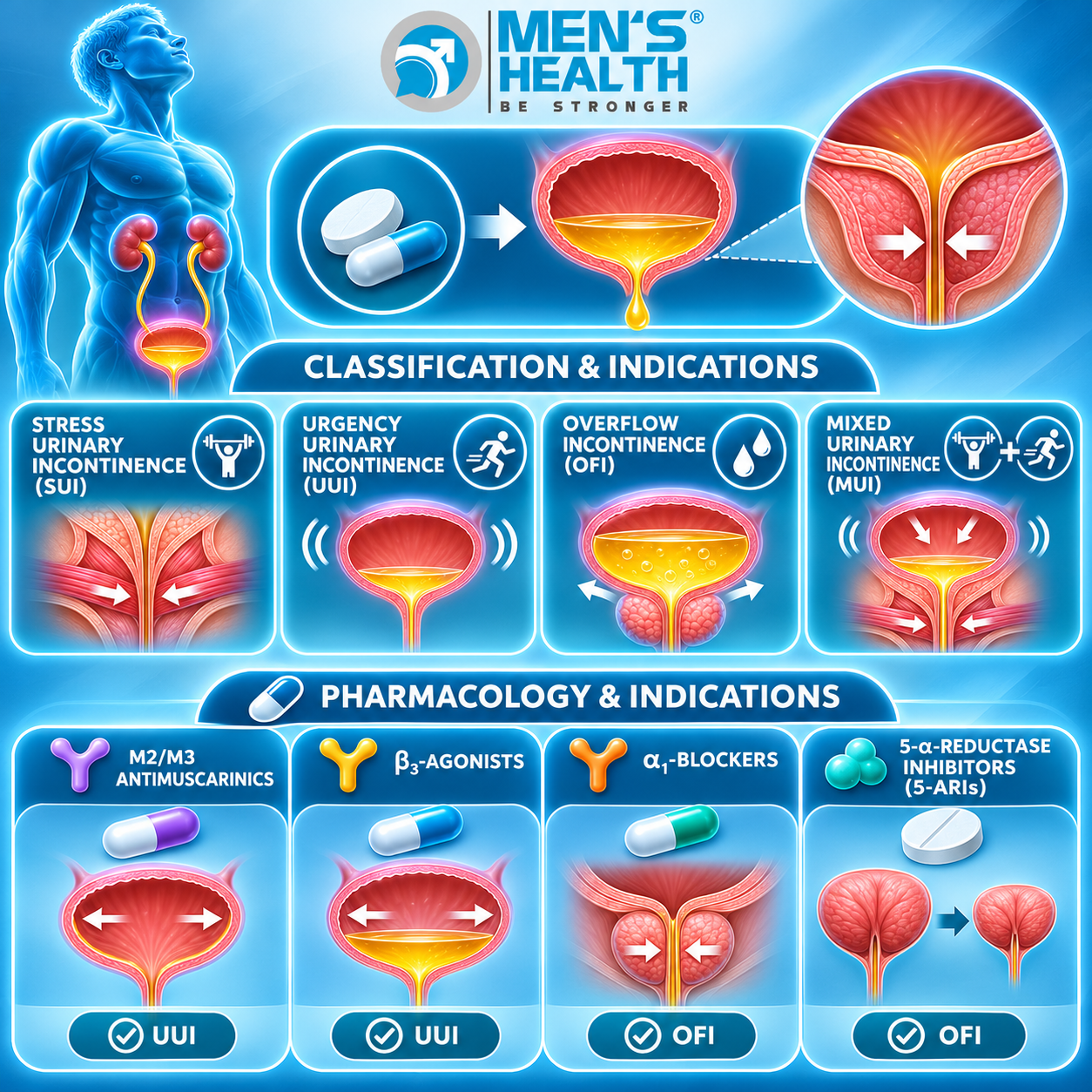
- Stress Urinary Incontinence (SUI): Leakage during physical exertion, coughing, or sneezing due to external urethral sphincter weakness (most commonly post-prostatectomy).
- Urgency Urinary Incontinence (UUI): Sudden, compelling urge to void followed by involuntary leakage, driven by detrusor overactivity.
- Overflow Incontinence (OFI): Continuous dribbling associated with incomplete emptying and chronic urinary retention, caused by bladder outlet obstruction (e.g., BPH) or detrusor underactivity.
- Mixed Urinary Incontinence (MUI): A combination of urgency and stress incontinence features.
3. Recommended Drug Classes for Male Urinary Incontinence
Pharmacotherapy is selected based on the underlying subtype and urodynamic findings.
Class 1: Antimuscarinic (Anticholinergic) Agents
- Primary Indications: Urgency Urinary Incontinence (UUI) and overactive bladder without elevated post-void residual volume.
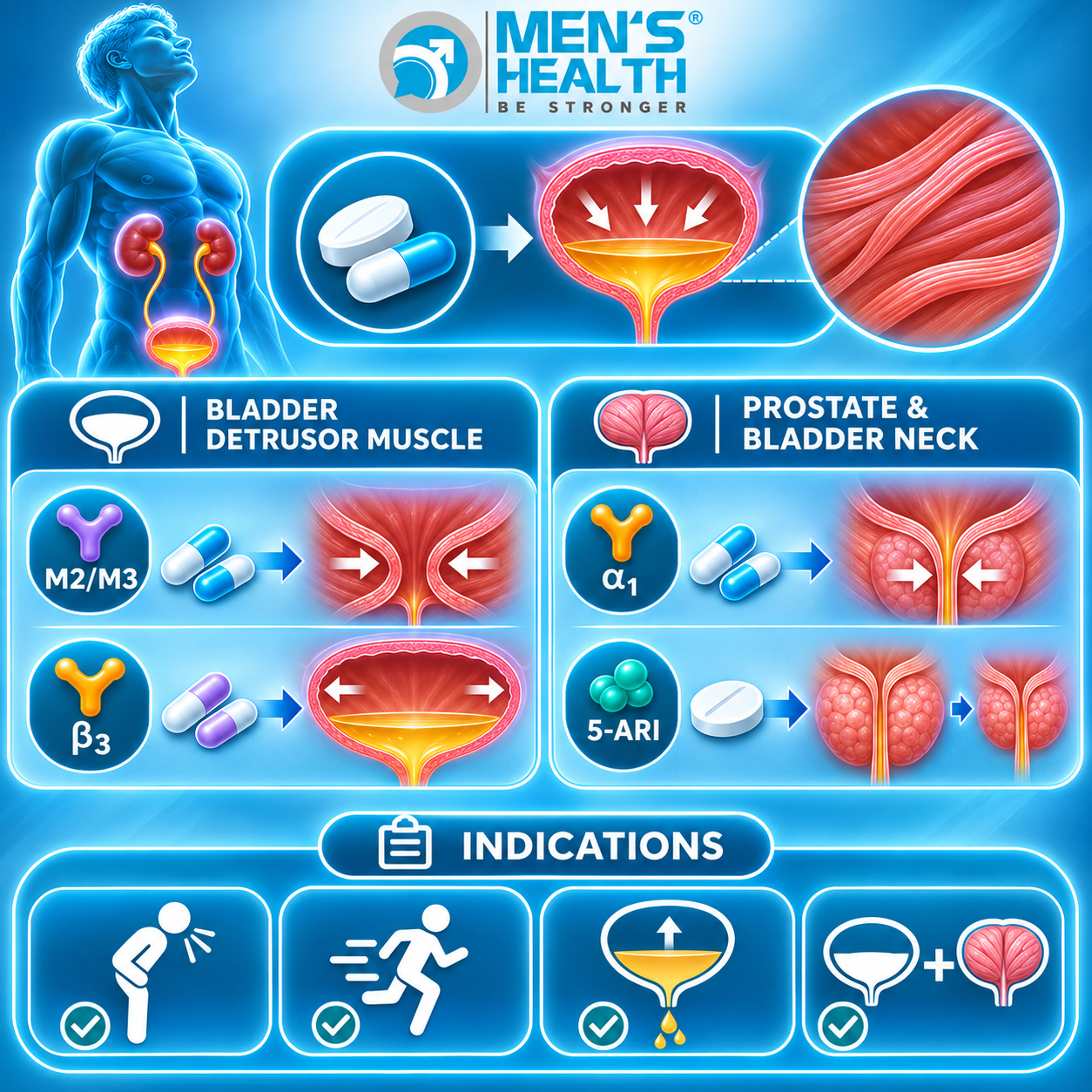
- Mechanism of Action: Competitive antagonism at muscarinic acetylcholine receptors (M2 and M3 subtypes) on detrusor smooth muscle, inhibiting uninhibited detrusor contractions during the filling phase.
- Representative Medications: Solifenacin, Tolterodine, Fesoterodine, Oxybutynin, Trospium.
- Prescription Status: Prescription-Only Medications (POM).
- Adverse Effects: Dry mouth, constipation, blurred vision, somnolence, urinary retention, and cognitive impairment.
- Contraindications & Precautions: Angle-closure glaucoma, severe gastric retention, urinary retention (PVR > 150-200 mL), and cognitive impairment.
Class 2: Beta-3 Adrenoceptor Agonists
- Primary Indications: Urgency Urinary Incontinence (UUI), particularly in elderly patients or those sensitive to anticholinergic side effects.
- Mechanism of Action: Selective agonist activity at β3-adrenergic receptors on detrusor smooth muscle, stimulating adenylyl cyclase and increasing cAMP to promote bladder relaxation during storage without impairing voiding contractility.
- Representative Medications: Mirabegron, Vibegron.
- Prescription Status: Prescription-Only Medications (POM).
- Adverse Effects: Mild elevation in blood pressure, tachycardia, headache, nasopharyngitis.
- Contraindications & Precautions: Severe uncontrolled hypertension (systolic ≥ 180 mmHg or diastolic ≥ 110 mmHg).
Class 3: Alpha-1 Adrenoceptor Antagonists (α1-Blockers)
- Primary Indications: Overflow incontinence or urgency leakage secondary to Benign Prostatic Hyperplasia (BPH) or bladder outlet obstruction.
- Mechanism of Action: Blockade of α1A-adrenoceptors in the prostate stroma, prostatic capsule, and bladder neck, reducing smooth muscle tone and lowering outflow resistance.
- Representative Medications: Tamsulosin, Silodosin, Alfuzosin, Doxazosin.
- Prescription Status: Prescription-Only Medications (POM).
- Adverse Effects: Orthostatic hypotension, dizziness, fatigue, retrograde ejaculation, Intraoperative Floppy Iris Syndrome (IFIS).
- Contraindications & Precautions: Concomitant use of potent CYP3A4 inhibitors, severe hepatic impairment, planned cataract surgery.
Class 4: 5-Alpha Reductase Inhibitors (5-ARIs)
- Primary Indications: BPH-induced overflow incontinence or storage symptoms in men with enlarged prostates (>30 mL).
- Mechanism of Action: Inhibits the conversion of testosterone to dihydrotestosterone (DHT), inducing apoptosis of prostatic epithelial cells and reducing gland volume over 3 to 6 months.
- Representative Medications: Finasteride, Dutasteride.
- Prescription Status: Prescription-Only Medications (POM).
- Adverse Effects: Reduced libido, erectile dysfunction, ejaculatory dysfunction, gynecomastia.
- Contraindications & Precautions: Reduces baseline PSA by approximately 50%; requires adjustment during prostate cancer screening.
Class 5: Serotonin-Norepinephrine Reuptake Inhibitors (SNRIs)
- Primary Indications: Selected cases of post-prostatectomy Stress Urinary Incontinence (SUI) (off-label or specific regional guidelines).
- Mechanism of Action: Inhibits reuptake of 5-HT and norepinephrine in Onuf’s nucleus in the sacral spinal cord, increasing pudendal nerve stimulation to the striated external urethral sphincter.
- Representative Medications: Duloxetine.
- Prescription Status: Prescription-Only Medications (POM).
- Adverse Effects: Nausea, dry mouth, insomnia, fatigue, dizziness.
- Contraindications & Precautions: Concomitant MAOIs, uncontrolled narrow-angle glaucoma, severe hepatic impairment.
4. Comprehensive Drug Comparison Matrix
| Medication Class | Primary Target | Mechanism | Primary Indication | Key Side Effects | PVR Impact |
| Antimuscarinics | M2/M3 Receptors | Inhibits detrusor contraction | Urgency Incontinence | Dry mouth, constipation, cognitive risk | May increase PVR |
| β3-Agonists | β3-Adrenoceptors | Promotes storage relaxation | Urgency Incontinence | Hypertension, headache, tachycardia | Neutral / Minimal |
| α1-Blockers | α1A-Adrenoceptors | Relaxes prostatic muscle tone | Overflow / BPH-LUTS | Orthostasis, retrograde ejaculation | Reduces PVR |
| 5-ARIs | 5α-Reductase | Reduces prostate volume | Large BPH with overflow | Low libido, erectile dysfunction | Reduces PVR long-term |
| SNRIs | 5-HT / NE Reuptake | Increases sphincter tone | Stress Incontinence | Nausea, insomnia, dizziness | Neutral |
5. Clinical Diagnostic Protocol Before Initiating Pharmacotherapy
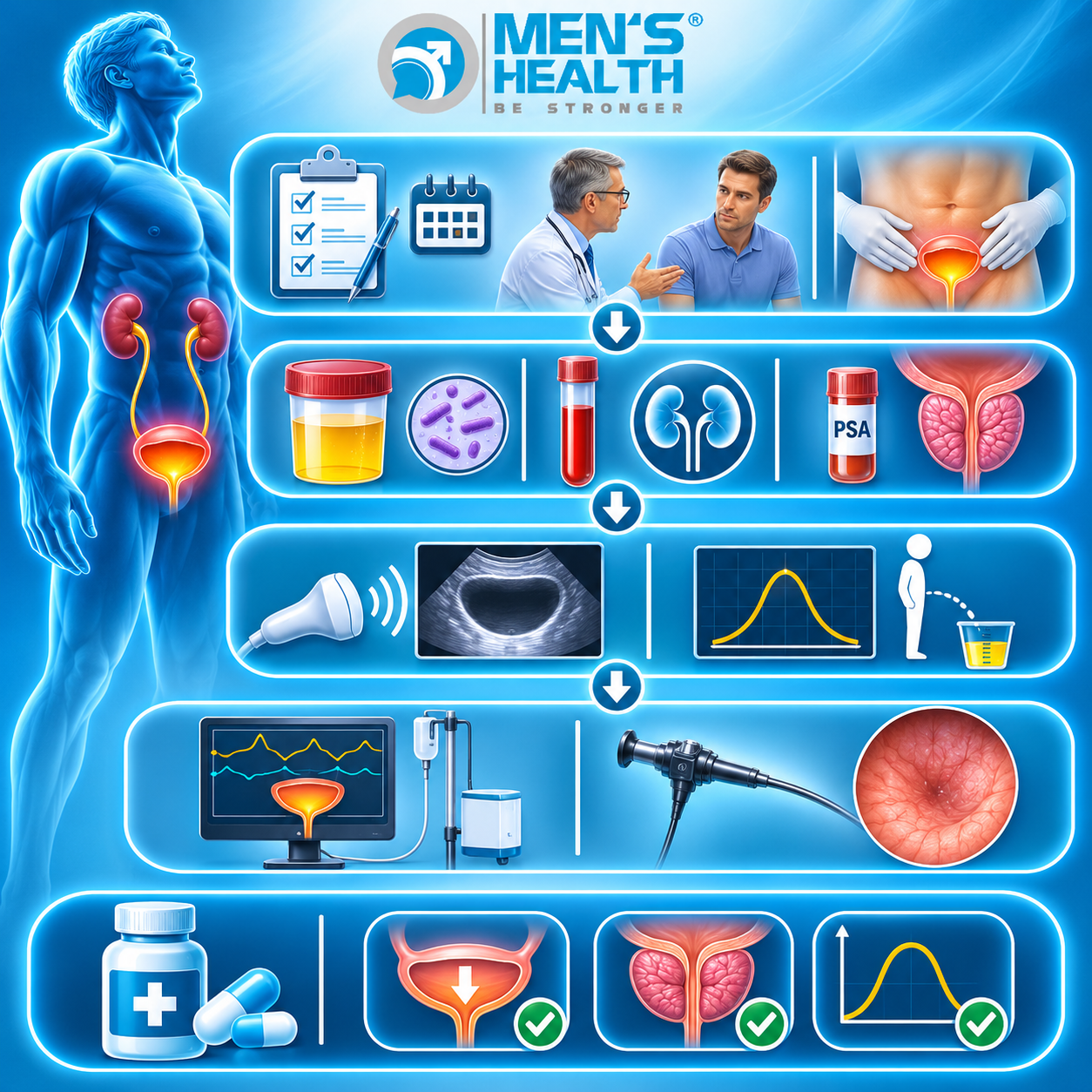
Before starting medication, a thorough urological evaluation is required:
- 3–7 Day Voiding Diary: Documents fluid intake, micturition frequency, leakage episodes, and pad usage.
- Digital Rectal Examination (DRE): Assesses prostate volume and symmetry while evaluating sacral reflexes (S2 – S4).
- Urinalysis & Urine Culture: Excludes infection, pyuria, and microhematuria.
- Post-Void Residual (PVR) Ultrasound: Quantifies residual volume post-voiding. Measuring PVR is essential before starting antimuscarinics to prevent acute urinary retention.
- Multi-Channel Urodynamic Studies (UDS): Evaluates detrusor leak-point pressure and pressure-flow dynamics to differentiate detrusor overactivity from sphincter weakness.
6. Procedural and Surgical Options
When conservative and pharmacological therapies are insufficient, procedural interventions offer definitive treatment:
- Artificial Urinary Sphincter (AUS): The gold-standard surgical procedure for moderate-to-severe post-prostatectomy stress urinary incontinence.
- Male Slings (Transobturator / Retrobulbar): Synthetic mesh placed beneath the bulbar urethra for passive compression in mild-to-moderate SUI.
- Sacral Neuromodulation (SNM): Electrical stimulation of the S3 sacral nerve root for refractory urgency incontinence.
7. Professional Care at Men’s Health Center and Men’s Health Pharmacy
Managing male urinary incontinence requires accurate diagnosis and tailored medical management.
Men’s Health Pharmacy, a specialized unit within the Men’s Health Center ecosystem founded by Dr. Tra Anh Duy (MD, PhD, Spec. II), provides clinical pharmacy support for male urological health. At Men’s Health, patients consult with experienced urologists and clinical pharmacists to ensure that prescribed therapeutic regimens – including antimuscarinics, β3-agonists, α1-blockers, or 5-ARIs – are customized to diagnostic findings and urodynamic profiles. The facility emphasizes professional safety, patient privacy, absolute confidentiality, and evidence-based practice across all stages of treatment and follow-up.

8. Lifestyle Modifications and Self-Management Guidelines
- Fluid Optimization: Maintain balanced fluid intake (1.5 – 2.0 L/day) while avoiding evening fluid overloading.
- Dietary Adjustments: Limit bladder irritants, including caffeine, alcohol, carbonated beverages, and spicy foods.
- Pelvic Floor Muscle Training (PFMT): Perform structured Kegel exercises guided by biofeedback to reinforce external urethral sphincter control.
- Timed Voiding: Practice scheduled voiding every 2 to 3 hours to prevent bladder overdistension.
9. Common Clinical Pitfalls in Management
- Prescribing Antimuscarinics Without Measuring PVR: Administering anticholinergic drugs to a patient with unrecognized high residual volume can precipitate complete acute urinary retention.
- Misdiagnosing Overflow Incontinence as Pure Urgency: Treating continuous leakage from an overdistended bladder with bladder relaxants worsens retention.
- Ignoring Ejaculatory Changes from Medication: Failing to counsel patients that α1-blockers can cause retrograde ejaculation.
- Unsupervised Self-Medication: Using unprescribed medications without formal evaluation risks masking underlying prostate malignancy or renal impairment.
10. Frequently Asked Questions
Which medication is best for male urgency urinary incontinence?
Beta-3 agonists (e.g., Mirabegron) and antimuscarinics (e.g., Solifenacin) are primary agents for urgency incontinence. Beta-3 agonists are often preferred in older adults due to a lower risk of cognitive side effects, dry mouth, and constipation.
Can medications for male incontinence cause urinary retention?
Yes. Antimuscarinic agents reduce detrusor contraction force. If prescribed to a patient with unrecognized bladder outlet obstruction or high post-void residual volume, they can induce acute urinary retention.
How do α1-blockers help with urinary incontinence?
Alpha-1 blockers relax smooth muscle in the prostate stroma and bladder neck. By reducing outflow resistance in men with BPH, they improve bladder emptying and relieve overflow or secondary urgency incontinence.
Why is PVR measurement required before starting OAB drugs?
Measuring PVR ultrasound volume confirms whether the bladder empties completely. It distinguishes storage failure from emptying failure, preventing inappropriate antimuscarinic use.
Do incontinence medications impact male sexual function?
Certain classes, such as α1-blockers (which can cause retrograde ejaculation) and 5-ARIs (which can lower libido), affect sexual function. Conversely, daily PDE5 inhibitors can improve both lower urinary tract symptoms and erectile dysfunction.
Conclusion and Expert Clinical Advice
Male urinary incontinence is a complex condition requiring accurate diagnosis to differentiate detrusor overactivity, sphincter incompetence, and outflow obstruction. Pharmacotherapy – including antimuscarinics, β3-agonists, α1-blockers, and 5-ARIs – must be tailored to patient-specific urodynamic findings and PVR levels.
Patients experiencing involuntary leakage, sudden urgency, or voiding difficulty should avoid self-diagnosis or unprescribed treatment regimens. Seeking clinical evaluation at a specialized facility such as the Men’s Health Center ensures precise diagnostic assessment, specialist physician management, and dedicated clinical pharmacy support for long-term urological health.