
HIV rapid testing in men is a screening method that allows for the detection of HIV antibodies or antigens in blood or oral fluid, with results delivered in just 15 to 30 minutes. This method offers exceptional advantages in convenience, privacy, and execution time, helping men proactively screen their reproductive health. However, rapid testing also has certain limitations, such as the risk of false negatives during the “window period” and the fact that it cannot be used for definitive disease diagnosis.
1. What Is HIV Rapid Testing in Men?
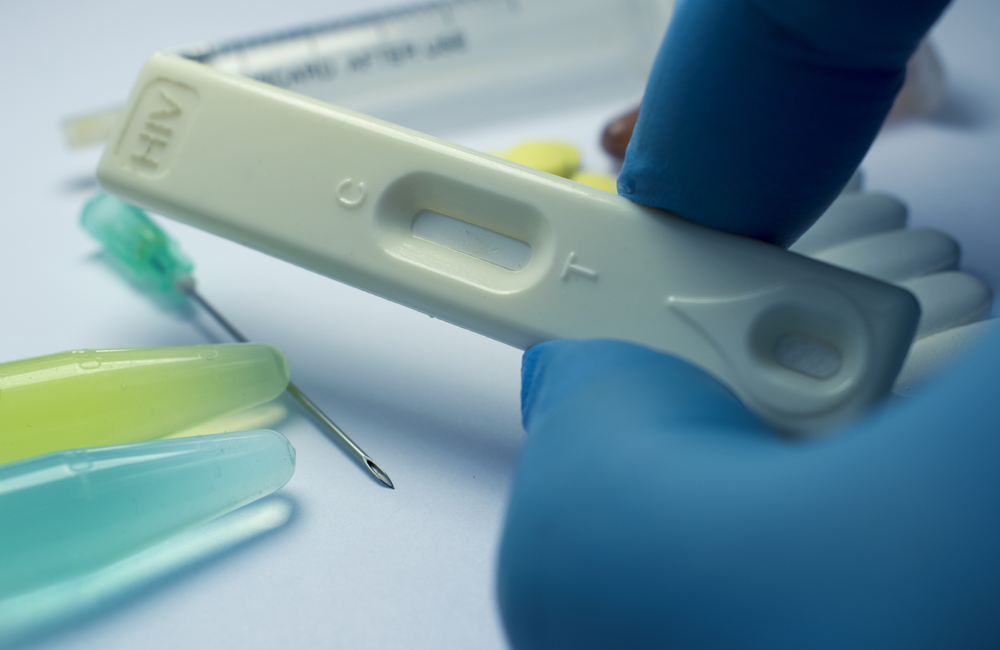
An HIV rapid test is an initial screening test using qualitative immunoassay techniques to detect the presence of anti-HIV antibodies or combined HIV p24 antigens in a specimen (fingerprick blood, venous blood, or oral mucosal fluid).
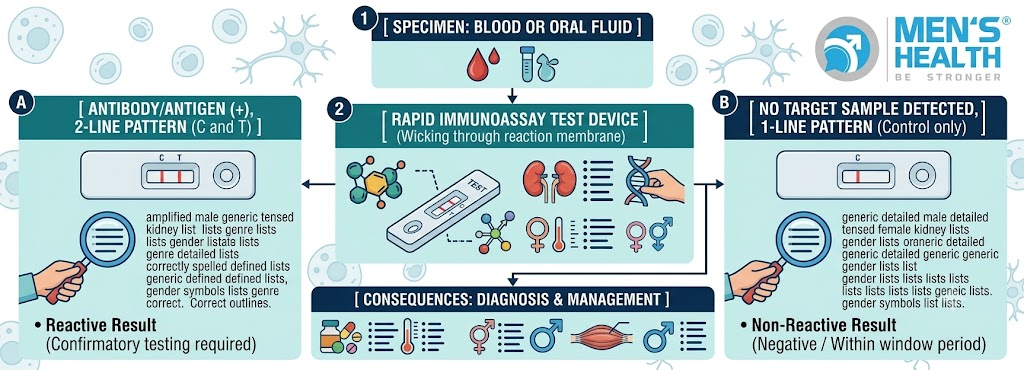
The mechanism of rapid tests relies on the principle of immunochromatographic assay. The biological sample is applied to the test cassette; if the sample contains HIV antibodies (produced by the body) or p24 antigens (viral structural components), they bind to color indicators on the test line (T-line). The control line (C-line) always appears to confirm that the test kit is functioning correctly from a technical standpoint.
2. Common Types of HIV Rapid Tests Available Today
Understanding test categories helps men choose the appropriate method aligned with the timing of potential exposure.
- Third-Generation Rapid Test (Antibody Detection):
- Target detection: Detects anti-HIV antibodies only (Anti-HIV IgG/IgM).
- Specimen: Fingerprick blood, serum/plasma, or oral fluid.
- Window period: 6 to 12 weeks post-exposure. Prior to this timeframe, antibody levels in the body have not reached the threshold for detection by test kits.
- Fourth-Generation Rapid Test (Ag/Ab Combo Test):
- Target detection: Simultaneously detects viral p24 antigen and anti-HIV antibodies.
- Specimen: Whole blood (fingerprick or venous) and serum preferred.
- Window period: Shortened to 14 to 28 days post-exposure. The p24 antigen appears very early in the blood during acute viral replication, facilitating significantly earlier risk detection compared to third-generation tests.
3. Pros and Cons of HIV Rapid Testing in Men
Every testing method possesses distinct diagnostic values and technical boundaries. Weighing pros and cons provides patients with a realistic medical perspective, preventing unnecessary panic.
| EVALUATION OF PROS AND CONS OF HIV RAPID TESTING |
| PROS: • Ultra-fast result delivery (15 – 30 minutes). • Simple procedure, low-pain fingerprick blood draw or oral fluid collection. • Ensures privacy and personal information confidentiality. • High sensitivity (> 99%), optimized for community screening roles. |
| CONS: • Heavily dependent on the “Window Period” (body has not yet generated sufficient antibodies). • Risk of false positives or false negatives. • DOES NOT have definitive diagnostic value for HIV infection. • Vulnerable to deviation if self-performed incorrectly regarding storage/handling procedures. |
Analysis of Advantages
- Rapid turnaround time: Patients do not need to wait multiple days like specialized confirmatory tests. This helps alleviate psychological stress and prolonged anxiety.
- Simple, minimally invasive procedure: Requires only 1–2 drops of blood from a fingertip or a gum swab, causing no pain or apprehension.
- Absolute confidentiality: Men can perform tests at private andrology clinics or self-test at home, maintaining complete discretion.
- Very high technical sensitivity: Standardized rapid test kits approved by the Ministry of Health achieve over $99\%$ sensitivity, ensuring true reactive cases are not missed.
Analysis of Disadvantages
- Limited by the “Window Period”: If tested too early (before the body has produced sufficient antibodies or while p24 antigen levels remain too low), results may return negative despite viral invasion.
- False positive phenomenon: Due to high sensitivity, rapid tests can cross-react with autoantibodies, other viruses, or autoimmune conditions.
- Not for definitive diagnosis: When a rapid test returns “Reactive,” patients cannot yet conclude they have contracted HIV. It is mandatory to undergo additional HIV confirmatory testing procedures as regulated by the Ministry of Health (utilizing 3 methods with distinct reaction principles).
4. Meaning of HIV Rapid Test Results and Action Steps
Rapid test results require readers to comprehend medical implications to determine the most accurate course of action.
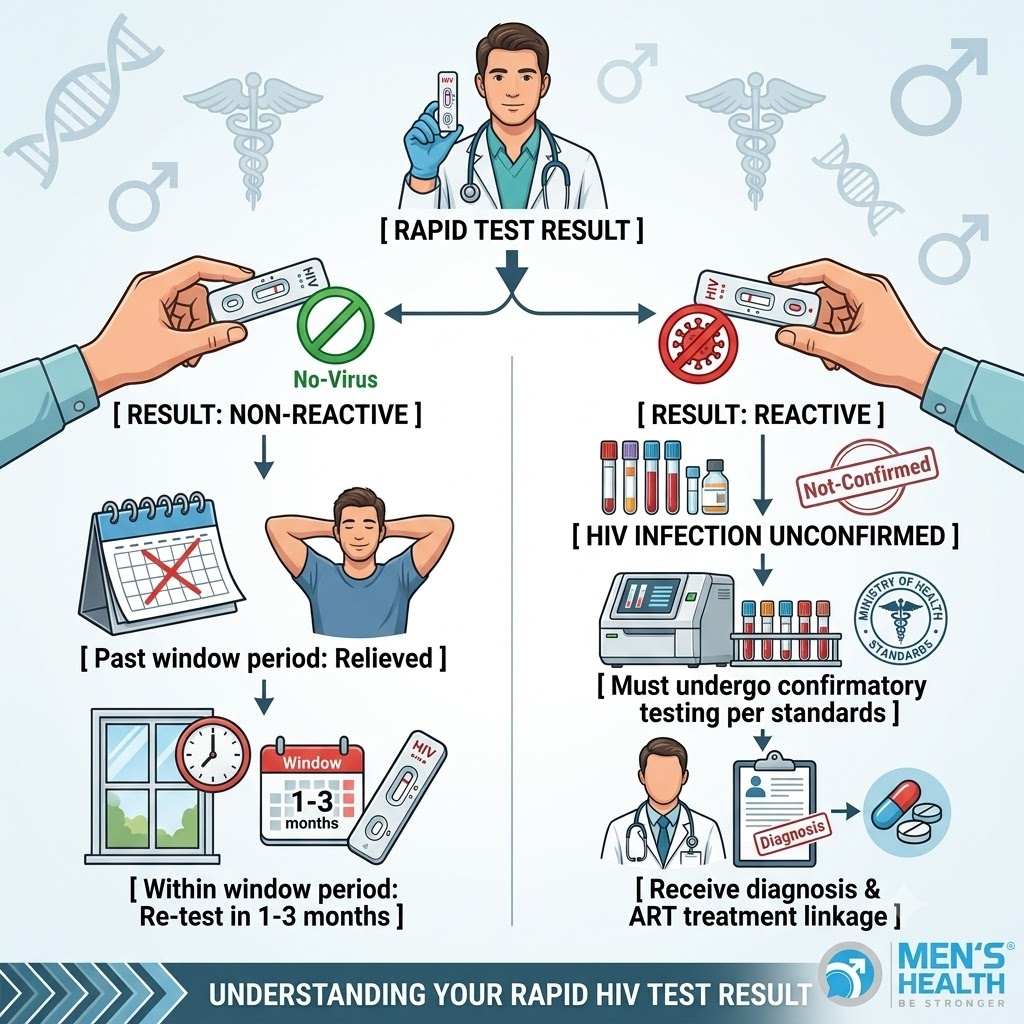
“Non-Reactive” (Negative) Result
- Meaning: No HIV antibodies or antigens found in the test sample at the time of testing.
- Action steps: If the test is performed more than 3 months past the final exposure incident, the patient can rest assured. If the risk behavior occurred within the past few days to weeks, the patient must repeat the test in 1 to 3 months to rule out risks during the window period.
“Reactive” (Positive on Test Cassette) Result
- Meaning: The sample demonstrated binding affinity with the test line. This does not automatically equate to a confirmed HIV diagnosis.
- Action steps: Maintain calmness, avoid panic. Patients should immediately visit authorized medical facilities or andrology-urology centers to provide a venous blood sample for HIV confirmatory testing.
“Invalid” (No Control Line) Result
- Meaning: The C (Control) line fails to appear, potentially due to an expired test kit, moisture exposure, or incorrect sample/buffer volume manipulation.
- Action steps: Discard the defective cassette and proceed to re-test using an entirely new kit.
5. When Should Men Visit a Doctor or Test Immediately?
Andrology specialists recommend that men undergo HIV screening tests or seek timely medical consultation under the following circumstances:
- Engaging in unprotected sexual intercourse (without condoms, broken/slipping condoms) with new partners or high-risk individuals.
- Men who have sex with men (MSM)—a demographic advised to undergo routine screening every $3 – 6$ months.
- Sharing needles, sharp instruments, or experiencing accidental punctures with sharp objects suspected of carrying blood.
- Experiencing symptoms of acute HIV infection (typically manifesting 2–4 weeks post-exposure): Unexplained prolonged fever, swollen neck/groin lymph nodes, skin rashes, muscle and joint aches, night sweats, prolonged diarrhea.
- Diagnosed with or suspected of having other sexually transmitted diseases (STDs) such as gonorrhea, genital warts, syphilis, or chlamydia.
6. Standardized Medical Testing and Counseling Process
To ensure accurate outcomes and safeguard patients’ psychological well-being, the HIV testing workflow at reputable medical facilities strictly follows structured steps:
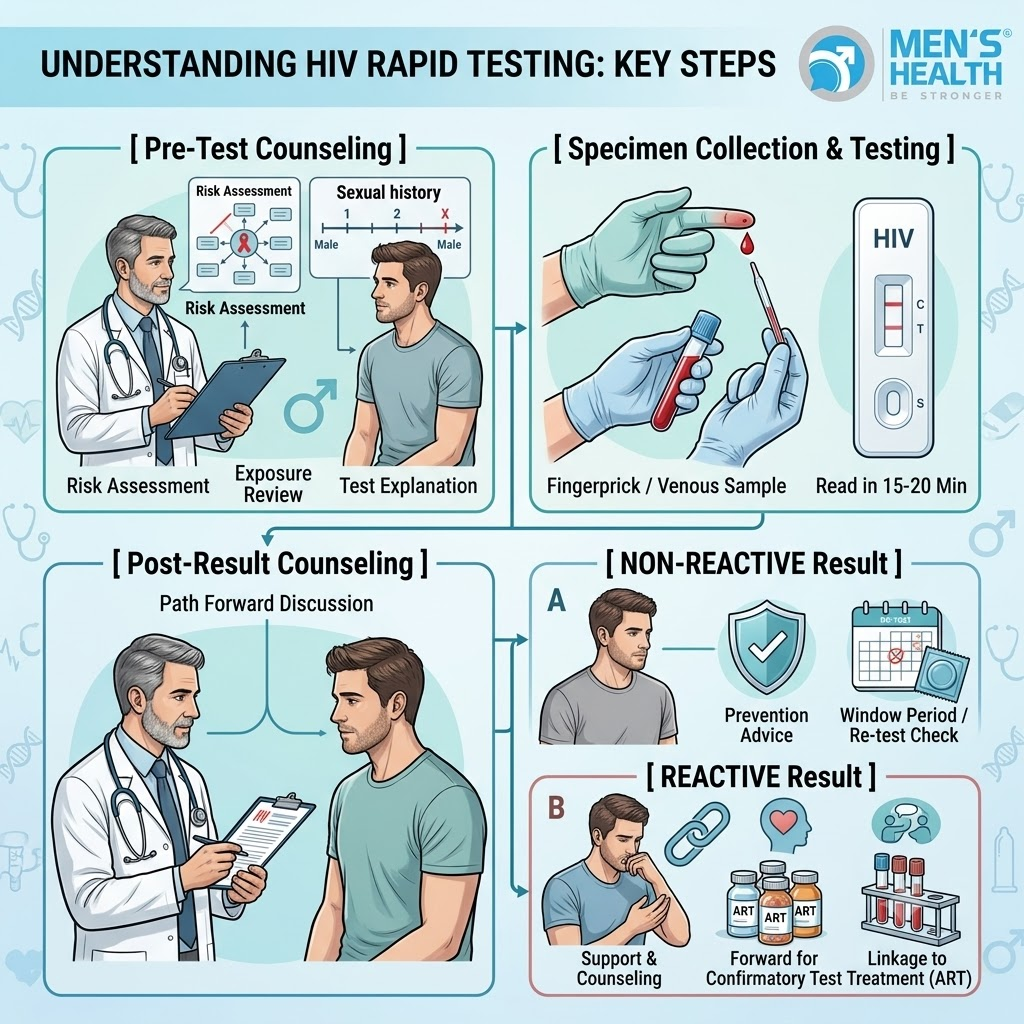
Pre- and post-test counseling are mandatory prerequisites to help patients alleviate anxiety, understand the nature of each result type, and adopt safe reproductive healthcare practices.
7. Safety Factors and Warnings for Home HIV Self-Testing
The utilization of home HIV self-testing kits is gaining popularity. Nevertheless, men must observe strict medical safety protocols:
- Only purchase test kits licensed by the Ministry of Health: Never purchase unverified products of unknown origin or advertised indiscriminately across unvetted social media platforms.
- Inspect expiration dates and storage conditions carefully: Test kits must remain factory-sealed and stored at correct room temperatures ($2 – 30^\circ\text{C}$).
- Read results within the designated timeframe: Read results strictly within the 15–20 minute window specified by the manufacturer. Any color shifts on the cassette past 30 minutes lose medical validity.
- Dispose of medical waste safely: Used cassettes, lancets, and blood-stained cotton must be placed inside tightly secured plastic bags prior to disposal, preventing infection risks for those nearby.
- Utilize PrEP / PEP prophylaxis correctly per prescription: If exposure occurred within the past 72 hours, patients must visit a medical facility promptly to receive Post-Exposure Prophylaxis (PEP) from a physician as early as possible, rather than solely waiting to perform rapid tests.
8. Lifestyle Considerations and Safe Prevention Advice
Proactive prevention and the maintenance of healthy lifestyle habits represent the most effective measures enabling men to protect themselves against HIV infection and other andrological conditions.
| DAILY PROTECTION AND PREVENTION MEASURES |
| 1. Always use condoms correctly during every sexual encounter. |
| 2. Undergo routine andrological health checks & STD screenings every 6 months. |
| 3. Communicate openly with partners regarding sexual health history. |
| 4. Do not share hypodermic needles, razors, or personal items stained with blood. |
| 5. Proactively explore pre-exposure prophylaxis (PrEP) solutions. |
| 6. Maintain a calm mindset, consulting specialist opinions when in doubt. |
9. Common Pitfalls for Men When Using HIV Rapid Tests
- Testing immediately after intercourse and trusting a negative result as absolute safety: This is the most prevalent misconception. Antibodies or antigens cannot materialize within mere hours or days. Testing at this point holds zero screening value.
- Assuming a faint T-line indicates no disease: Whether the T-line appears extremely faint or pale, the result is still classified as “Reactive” and mandates re-evaluation via confirmatory testing.
- Despairing and experiencing severe psychological breakdown upon seeing a reactive rapid test: Many individuals equate a reactive rapid test with a death sentence. In reality, rapid tests can yield false positives, and patients must remain calm while awaiting definitive laboratory confirmation.
- Neglecting screening for other sexually transmitted diseases: Many focus solely on HIV while overlooking that gonorrhea, syphilis, Chlamydia, or genital herpes also transmit via unprotected sexual behavior and require prompt detection and treatment.
10. Healthcare Solutions at the Men’s Health Ecosystem
Screening sexual health and diagnosing andrological pathologies demand coordination between precise medical workflows, psychological empathy, and absolute confidentiality for patients.
Men’s Health Andrology Pharmacy is a unit within the Men’s Health Center ecosystem founded by Assoc. Prof. Dr. Tra Anh Duy. Here, patients always receive guidance, explanations, and support from physicians and pharmacists in selecting appropriate healthcare solutions. Men’s Health emphasizes professionalism, safety, discretion, information privacy, and respect for individual privacy throughout examination, treatment, and follow-up.

Within the Men’s Health ecosystem, men undergoing examination will undergo modern andrological screening tests, receive structured medical counseling regarding sexually transmitted infections, and obtain guidance on care plans and proper prescription supplement usage.
11. Comparison Table of HIV Testing Methods in Men
| Testing Method | Specimen Type | Result Delivery Time | Estimated Window Period | Medical Screening Purpose |
| 3rd-Gen Rapid Test (Anti-HIV) | Fingertip blood / Oral fluid | 15 – 20 minutes | 6 – 12 weeks | Rapid community screening, self-testing. |
| 4th-Gen Rapid Test (Ag/Ab Combo) | Whole blood / Serum | 20 – 30 minutes | 14 – 28 days | Early screening for p24 antigen & antibodies. |
| ELISA / ECLIA Testing | Venous blood | 1 – 2 days | 3 – 4 weeks | Laboratory-scale screening, high accuracy. |
| Confirmatory Testing (Western Blot / 3 Assays) | Venous blood | 3 – 7 days | Per advanced guidelines | Definitive diagnosis of individual HIV infection status. |
| HIV PCR (Viral Load Quantification) | Venous blood | 3 – 5 days | 7 – 14 days | Early diagnosis in infants, monitoring ART treatment. |
Checklist for HIV Rapid Test Pros and Cons in Men: Frequently Asked Questions (FAQs)
Are oral fluid HIV rapid tests as accurate as blood tests?
Oral fluid rapid tests (primarily capturing antibodies in mucosal gum secretions) exhibit very high accuracy, reaching over $98 – 99\%$ when performed correctly. Nevertheless, fingertip/venous blood rapid tests remain preferred because antibody concentrations in blood are consistently higher and more stable than in oral fluid.
Is an HIV rapid test accurate 2 weeks post-exposure?
If you utilize a third-generation rapid test (detecting antibodies only), results at 2 weeks lack reliable value. However, if you use a fourth-generation rapid test (Combo Ag/Ab detecting p24 antigen), testing between day 14 and 28 can identify risks with relatively high accuracy, though re-testing at 3 months remains necessary for definitive confirmation.
Do two faint lines on an HIV rapid test mean I am infected?
A result displaying 2 lines (even with a faint T-line) is counted as “Reactive.” This cannot definitively confirm HIV infection because false positive scenarios can occur. You must visit a medical facility for venous blood collection to re-confirm per standard workflows.
Do alcohol consumption or antibiotics skew HIV rapid test results?
No. Alcohol, food, or standard antibiotics do not impact the appearance of HIV antibodies or p24 antigens in the blood. However, high-dose immunosuppressive medications can decelerate the body’s antibody generation process.
Can I purchase rapid test kits to perform at home?
Yes. You can completely self-test at home utilizing Ministry of Health-approved kits to maintain privacy. Nonetheless, you must read instructions carefully, manipulate procedures correctly, interpret results within the correct window, and consult a specialist physician regarding appropriate subsequent steps.
Can an HIV infection be completely cured if a rapid test is reactive?
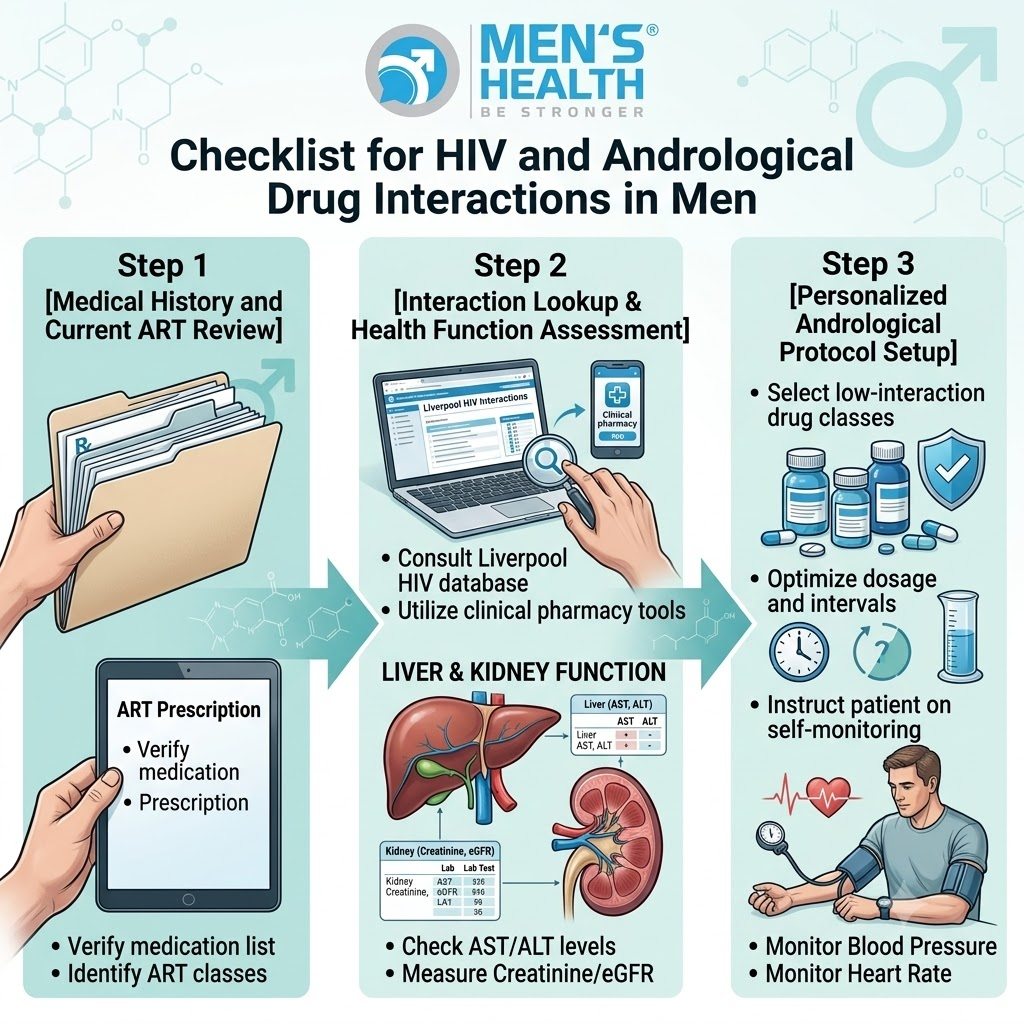
Currently, medicine lacks a complete cure for HIV. Nonetheless, if confirmatory testing returns positive, patients receive treatment via antiretroviral therapy (ART). Adhering to ART controls viral loads below detectable limits ($U=U$: Undetectable = Untransmittable), empowering individuals with HIV to maintain health, longevity, and a quality of life comparable to individuals without HIV.
Conclusion
HIV rapid testing in men represents a convenient, rapid, and confidential screening solution, empowering men to proactively manage sexual health and alleviate psychological pressure. Despite prominent advantages in sensitivity and usability, patients must account for the limitations of the “window period” and understand that rapid testing is not utilized for definitive diagnosis.
Men must never panic upon receiving a reactive rapid test, nor dismiss exposure risks if testing prematurely during the window period. When encountering any inquiries or uncertainties regarding reproductive health and sexually transmitted infections, visit the Men’s Health Center for comprehensive evaluations, accurate diagnoses, and safe, discreet, professional, and personalized care solutions.