
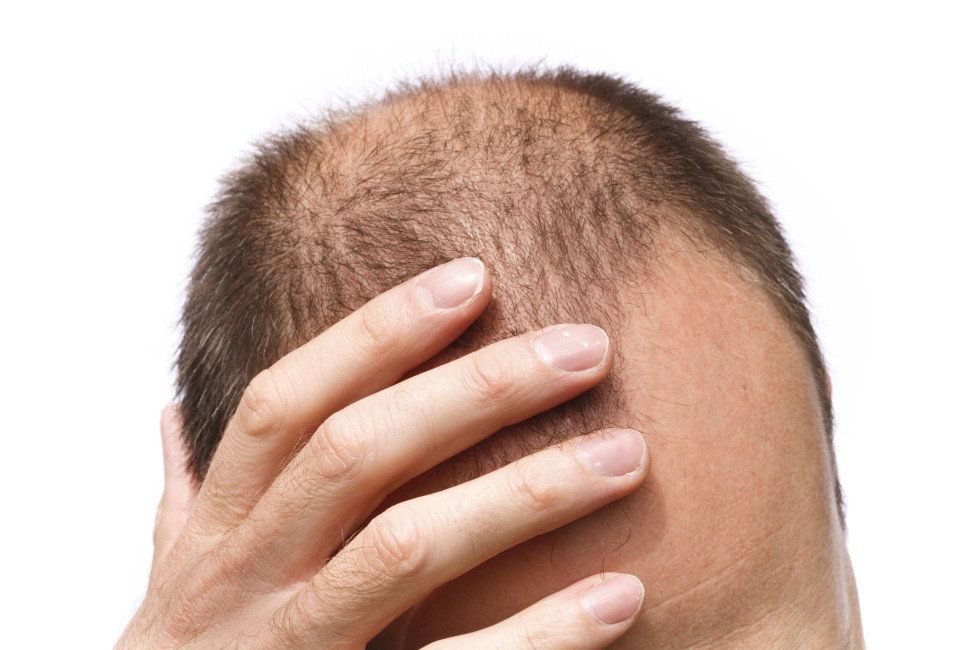
Hair loss and baldness are major concerns that drive many men to seek medical therapies. However, concerns about the interaction between hair loss medications and male sexual function often cause hesitation. Does regaining a thick head of hair mean sacrificing “bedroom prowess”? In reality, not all medications cause physiological decline, and side effects are entirely manageable with proper medical supervision. The following article provides a detailed analysis of the mechanisms, risks, and solutions to balance aesthetics and male sexual health.
Why are men prone to hair loss and baldness?
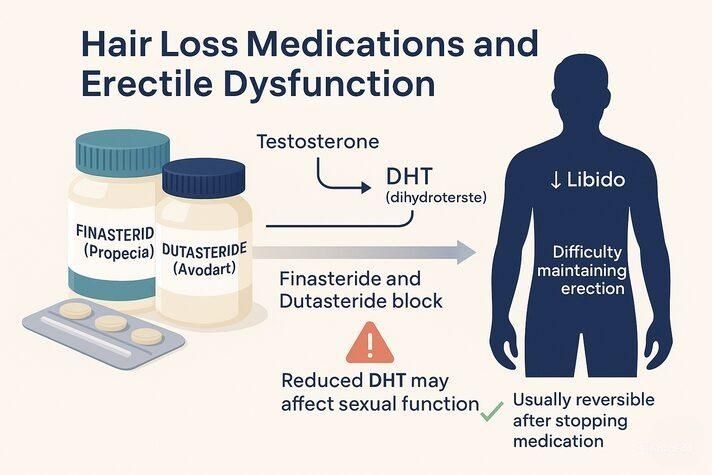
To understand how medications affect the body, we must grasp the core cause of male hair loss. The most prevalent (over 90%) is Androgenetic Alopecia (male pattern baldness). This condition is directly related to genetics and male hormonal changes, specifically Dihydrotestosterone (DHT). DHT is a derivative synthesized from Testosterone via the 5-alpha reductase (5-AR) enzyme. In genetically susceptible individuals, DHT binds to receptors at the hair follicles, causing miniaturization and shortening the hair’s growth cycle. Consequently, new hair becomes thinner, weaker, and prone to shedding, eventually leading the follicles to cease producing new hair, resulting in baldness.
Common hair loss medications and their mechanisms of action
Based on the mechanism of hair loss, modern medicine has developed specific medications to intervene in this process. The two most common groups are:
1. 5-alpha reductase enzyme inhibitors (Finasteride, Dutasteride)
These are oral medications that directly affect the endocrine system. They work by inhibiting the 5-alpha reductase enzyme, thereby preventing the conversion of Testosterone into DHT.
- Finasteride (1mg/day dosage): An FDA-approved medication for treating male pattern baldness. It can reduce serum and scalp DHT levels by up to 70%.
- Dutasteride: Inhibits both types of the 5-alpha reductase enzyme (Finasteride primarily inhibits type II), leading to a more potent DHT reduction (over 90%). However, this medication is often used off-label or prescribed for refractory hair loss based on a specialist’s assessment.
2. Topical hair growth stimulators (Minoxidil)
Minoxidil was originally an oral vasodilator for treating hypertension. Medicine later discovered its hypertrichosis (excessive hair growth) side effect, leading to the application of topical Minoxidil (2% or 5% solution/spray) for hair loss. It works by dilating the scalp’s microvasculature, enhancing blood flow, and delivering oxygen and nutrients to the follicles while prolonging the anagen (growth) phase of the hair cycle. This topical form does not interfere with the hormonal system.
The link between hair loss medications and male sexual function
The most debated and feared issue among men is the association between 5-alpha reductase inhibitors (Finasteride, Dutasteride) and sexual decline. The following are documented medical impacts:
- Low Libido (Decreased sexual desire) DHT not only affects hair follicles but also plays a role in maintaining male libido and sexual function. When DHT levels drop abruptly due to medication, a small percentage of men (about 1-2% in clinical studies) report decreased arousal and a lack of interest in sex.
- Erectile Dysfunction (ED) While Testosterone is the primary hormone governing erections, DHT is also involved in maintaining the structure and function of the erectile tissues (corpora cavernosa) in the penis. A prolonged reduction in DHT can affect smooth muscle relaxation and penile blood flow, causing difficulty in achieving or maintaining an erection. Additionally, erectile dysfunction can be a secondary consequence of psychological libido loss.
- Ejaculatory disorders and altered semen quality The prostate gland and seminal vesicles are highly dependent on male hormone stimulation to produce semen. Therefore, using Finasteride or Dutasteride can reduce ejaculatory volume or occasionally cause mild pain during ejaculation.
- Psychological impact (The Nocebo Effect) A crucial yet rarely discussed factor is the “Nocebo effect” (the opposite of the Placebo effect). Many studies indicate that when patients read extensively online about the sexual side effects of hair loss drugs, their anxiety, stress, and autosuggestion automatically trigger erectile dysfunction, even before the medication’s biological mechanism takes effect.
- Post-Finasteride Syndrome (PFS) This is an ongoing area of medical research. A very small number of men report that sexual dysfunction symptoms (low libido, ED), depression, or brain fog persist for months or even years after discontinuing Finasteride. Although the incidence is extremely rare, this risk necessitates strict medical supervision rather than self-medication.
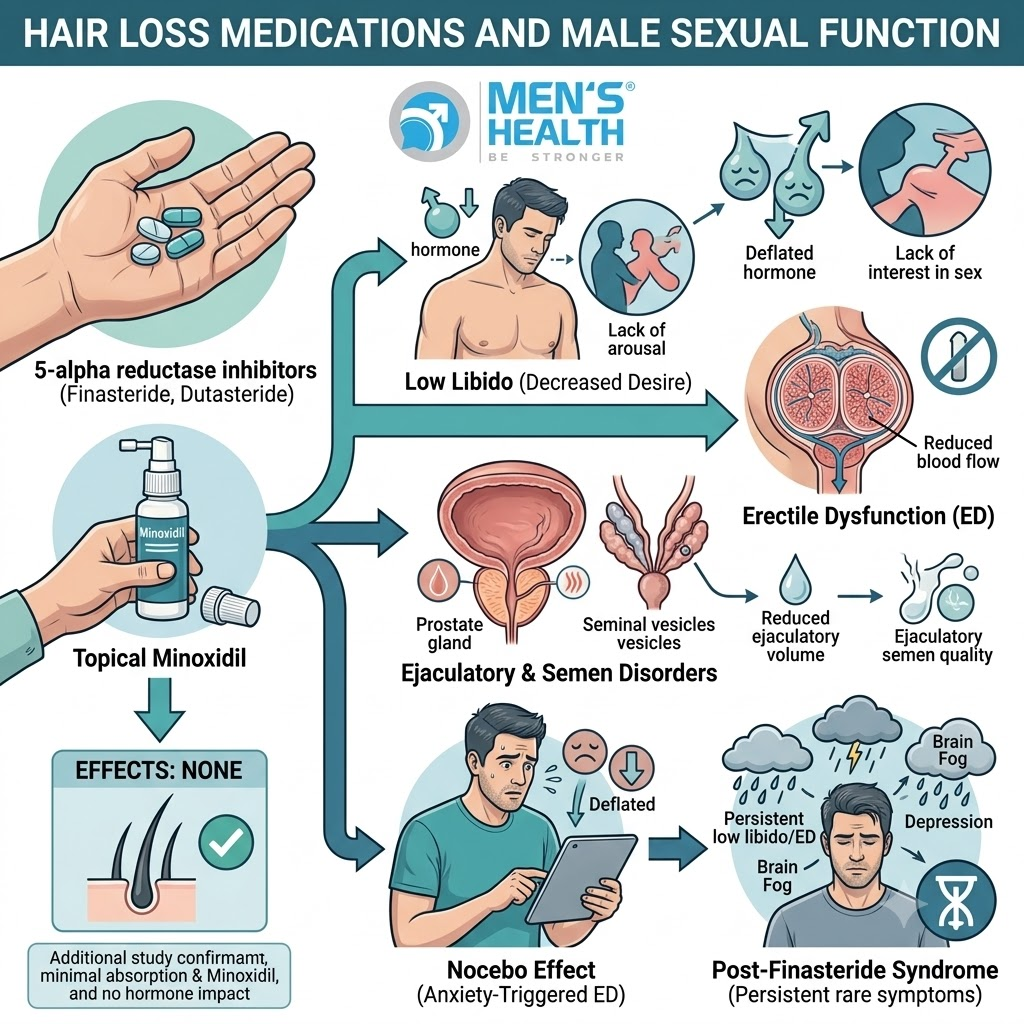
Note: For topical Minoxidil, because its action is localized and systemic absorption is minimal, current clinical studies confirm that it does not affect sex hormone levels or cause male sexual dysfunction.
Principles for the safe use of hair loss medications
The use of hormone-altering medications cannot be arbitrary. To ensure safety, men must strictly adhere to the following pharmacological and medical principles:
- Treatment goals: Halt follicular miniaturization, reduce hair shedding, reactivate dormant follicles, and improve overall hair density.
- Mandatory prescription: 5-alpha reductase inhibitors (Finasteride, Dutasteride) are prescription-only. Patients must never use non-prescription alternatives, rely on word-of-mouth recommendations, or share prescriptions. Topical Minoxidil may be over-the-counter but still requires professional guidance on the appropriate concentration.
- Cautionary groups: Patients with a history of hepatic impairment (as the drug is metabolized by the liver), those currently experiencing sexual issues (ED, premature ejaculation), or those planning to conceive must clearly inform their doctor before initiating treatment.
- Adverse effects: Beyond sexual issues, the medications can cause gynecomastia (breast swelling/tenderness), rashes, dizziness, or palpitations (with high-dose topical Minoxidil).
- Contraindications and interactions: The medication is absolutely contraindicated for pregnant women or women of childbearing potential (women should not even handle crushed or broken tablets due to the risk of male fetal abnormalities). Caution is required when co-administered with CYP3A4 enzyme inhibitors.
- When to contact a doctor: If evident signs of sexual decline, breast tenderness/swelling, allergic rashes, or symptoms of clinical depression appear, patients must stop the medication and contact a doctor immediately. Absolutely do not self-treat sexual dysfunction by purchasing unverified supplements online.

Men’s Health Andrology Pharmacy is a unit within the Men’s Health Center ecosystem founded by Dr. Tra Anh Duy, MD, PhD. Here, patients are consistently counseled, educated, and assisted by doctors and pharmacists in selecting suitable healthcare solutions, particularly regarding the balance between hair loss treatment and preserving sexual function. Men’s Health emphasizes professionalism, safety, discretion, confidentiality, and respect for individual needs throughout the examination, treatment, and monitoring process. The use of endocrine or andrological medications strictly requires identifying the root cause through medical evaluation, strict physician prescription, and coordination with pharmacists to minimize the risk of side effects.
Solutions to balance aesthetic hair and male virility
If men experience sexual dysfunction while taking hair loss medication, they do not necessarily have to resign themselves to baldness. Specialists can adjust the regimen through the following solutions:
- Dose adjustment: Reducing the Finasteride dose (e.g., from 1mg/day to alternate days, or 0.5mg/day) as prescribed by a doctor can mitigate physiological side effects while maintaining a degree of hair retention efficacy.
- Switching methods: Utilizing topical Finasteride instead of the oral route. The topical form concentrates the medication on the scalp, reducing systemic circulation, thereby significantly limiting physiological impacts.
- Alternative therapies: Increasing the use of topical Minoxidil, Platelet-Rich Plasma (PRP) scalp injections, or autologous hair transplantation if the patient is entirely intolerant to oral medications.
- Sexual function support: In some cases, if hair loss causes overwhelming psychological distress, doctors may maintain the hair loss medication while concurrently prescribing PDE5 inhibitors (such as Sildenafil, Tadalafil) to manage erectile dysfunction.
- Maintaining a healthy lifestyle: Ensure adequate intake of zinc, iron, and protein; get sufficient sleep; engage in exercise (weightlifting, cardio) to stimulate natural body Testosterone production, helping to compensate for any decline in virility.
Hair Loss Medications and Male Sexual Function: Frequently Asked Questions
Does taking Finasteride for hair loss cause infertility? The medication may decrease semen volume and, in a small subset of individuals, reduce sperm concentration or motility. However, it does not cause permanent infertility. In most cases, sperm quality will recover after discontinuing the medication under medical supervision. If you are planning to conceive, discuss a temporary cessation of the drug with your doctor.
Are the sexual side effects of hair loss medications permanent? According to clinical studies, in most men, sexual side effects will diminish and resolve as the body adjusts to the medication, or fully recover upon discontinuation. Post-Finasteride Syndrome (persistent side effects) is real but its incidence is extremely rare.
Can I self-administer herbal sexual enhancers while taking hair loss medication? You should not combine them arbitrarily. Certain unregulated herbs can interact with hepatic metabolism, increasing toxicity or nullifying the hair loss medication’s efficacy. Any combination requires consultation with a pharmacist or specialist.
Does using topical Minoxidil cause sexual weakness or decreased libido? No. Topical Minoxidil only induces localized vasodilation to stimulate hair follicles; systemic absorption is extremely low and does not affect the male sex hormone system. Therefore, topical Minoxidil does not cause sexual dysfunction.
Is there a way to know in advance if I will experience sexual dysfunction when taking baldness medication? Currently, there is no test that can predict with 100% accuracy who will experience side effects. However, if you have an underlying foundation of chronic anxiety, prolonged stress, or incipient erectile issues, the risk of experiencing side effects while taking the medication is higher due to the compounding of psychological and physiological factors.
Conclusion and Medical Advice
The link between hair loss medications and male sexual function is a genuine medical concern that requires a multidimensional assessment. Although 5-alpha reductase inhibitors like Finasteride are highly effective in salvaging hair, they carry a small latent risk of causing decreased libido or erectile dysfunction. The practical advice for men is to absolutely avoid self-diagnosing or self-purchasing prolonged oral/topical medications based on hearsay. Do not let fear-mongering on social media prevent you from seeking treatment, nor should impatience for hair growth drive you to disregard health risks. Upon noticing abnormal hair loss or experiencing physiological issues during medication use, proactively seek medical evaluation. A professional, safe, and discreet healthcare ecosystem offering in-depth consultation and monitoring, like Men’s Health, will help you find a personalized regimen, restoring your confidence from your hair to your masculinity in the most sustainable way.