

Cryptorchidism (undescended testis) and testicular positioning anomalies represent the most frequent congenital malformations of the male genitourinary tract, affecting to of full-term infants and up to of premature neonates. The condition is characterized by the failure of one or both testes to complete their embryonic migration from the retroperitoneum into the anatomical base of the scrotum. Misinterpreting clinical variants, delaying surgical referral, over-relying on non-invasive imaging, or inappropriately attempting primary hormonal therapies can lead to severe, irreversible consequences – including thermal germ cell loss, subfertility, heightened risk of testicular malignancy, and acute testicular torsion. Recognizing and avoiding these common diagnostic and therapeutic pitfalls is critical to preserving long-term reproductive and endocrine function.
1. Clinical Overview and Embryological Pathophysiology
What is Cryptorchidism and Testicular Maldescent?
Cryptorchidism refers strictly to the complete absence of the testis from its normal anatomical position within the scrotal sac. Testicular maldescent encompasses a broader spectrum of developmental anomalies, including ectopic testes, ascending (acquired) cryptorchidism, and hyperactive retractile testes.
Embryological Mechanisms of Testicular Migration
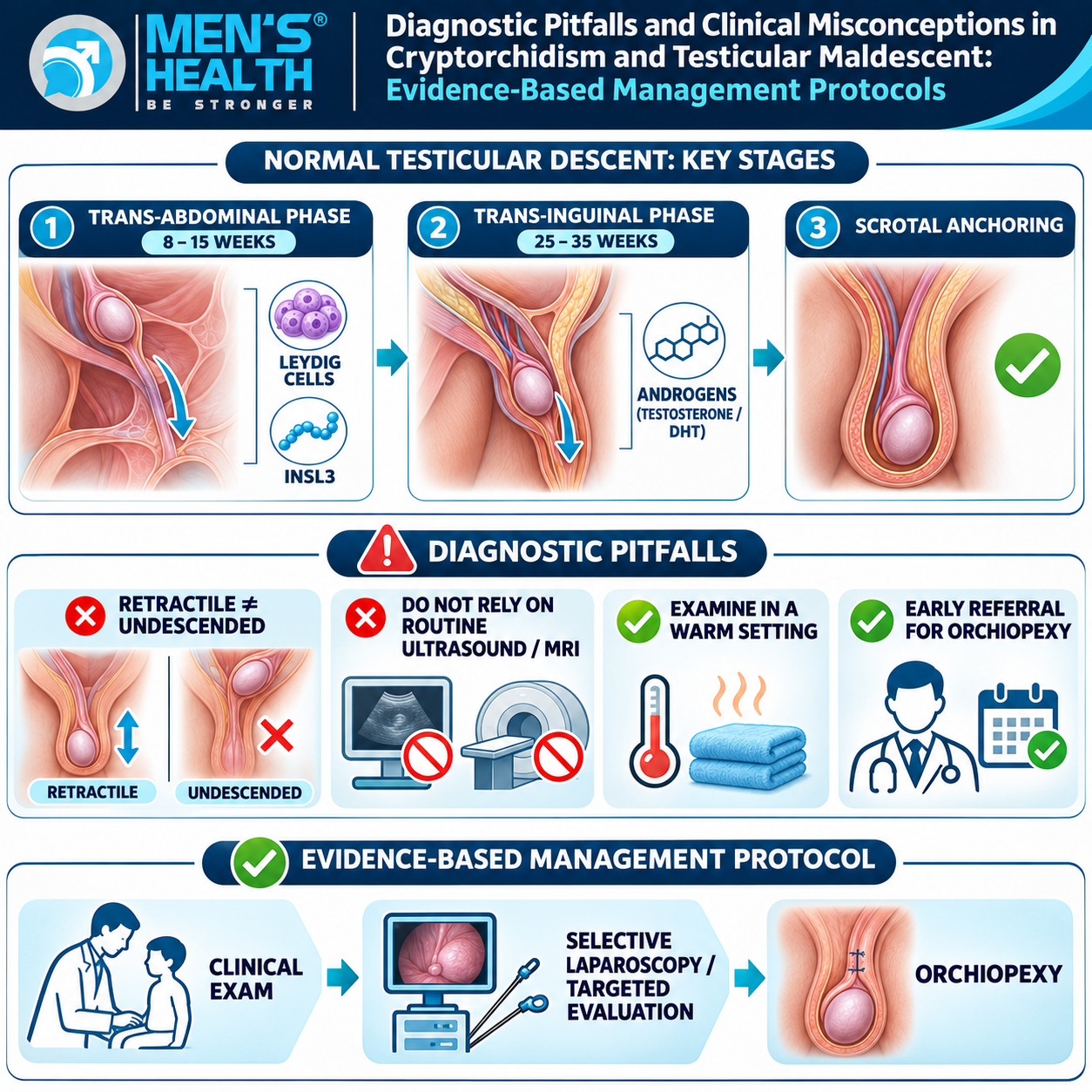
Under normal physiological conditions, testicular descent proceeds via a regulated two-stage process during fetal life:
- Trans-abdominal Phase (Weeks 8–15 of Gestation): Driven by Insulin-Like Peptide 3 (INSL3) secreted by fetal Leydig cells. INSL3 triggers gubernacular swelling, anchoring the testis near the internal inguinal ring.
- Trans-inguinal Phase (Weeks 25–35 of Gestation): Governed by androgen signaling (testosterone converted locally to dihydrotestosterone [DHT]) and Calcitonin Gene-Related Peptide (CGRP) released from the genitofemoral nerve. The gubernaculum contracts and guides the testis through the inguinal canal into the scrotal sac.
Disruption of these hormonal signaling pathways or mechanical obstruction leads to arrested migration (true cryptorchidism) or anatomical deviation outside the normal trajectory (ectopic testis).
2. Major Diagnostic Pitfalls and Clinical Misconceptions
Evaluating testicular position requires clear clinical distinction between true undescended testes, physiological variants, and ectopic locations.
Pitfall 1: Confusing Physiological Retractile Testes with True Cryptorchidism
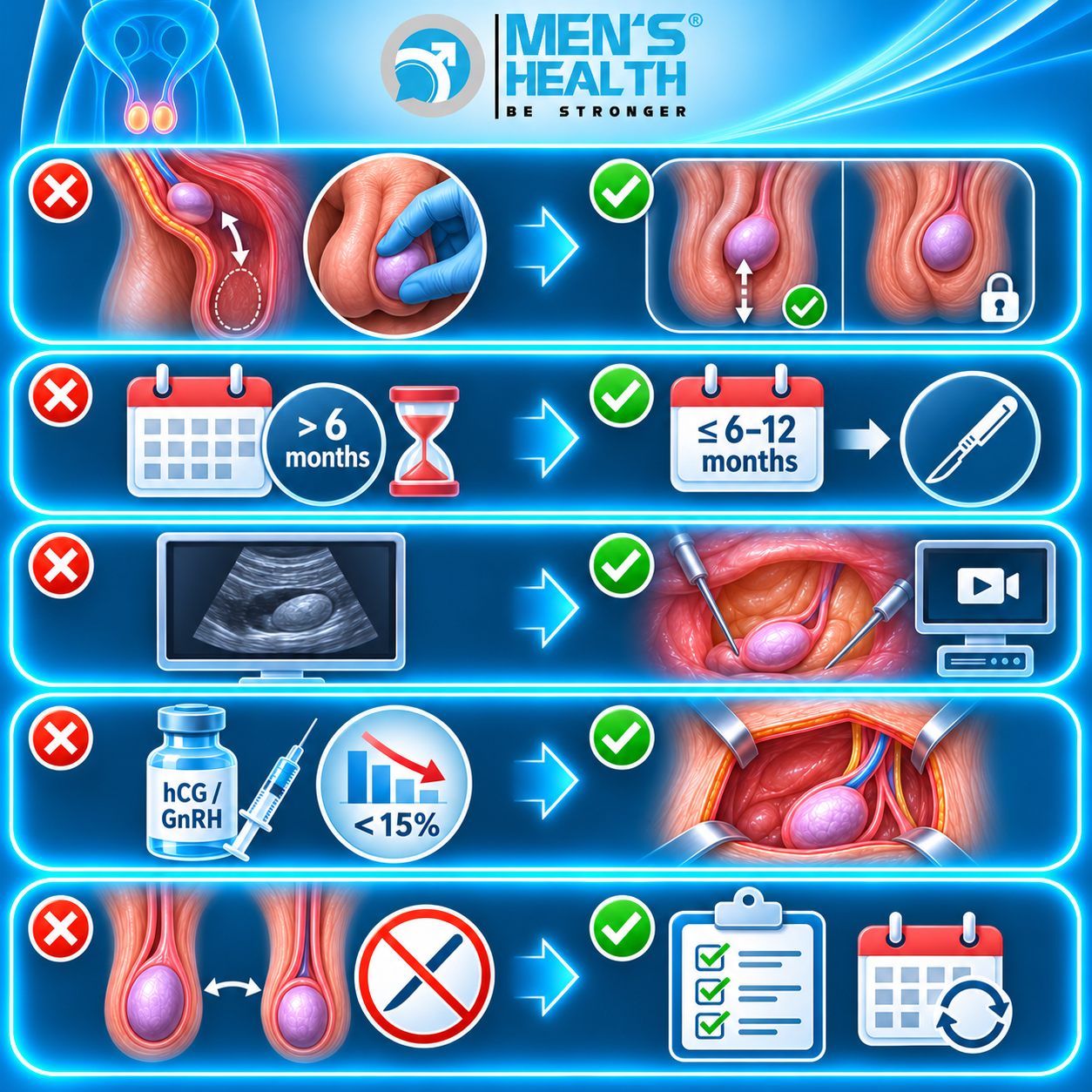
- The Diagnostic Error: Performing unindicated surgical orchiopexy on normal, highly mobile retractile testes.
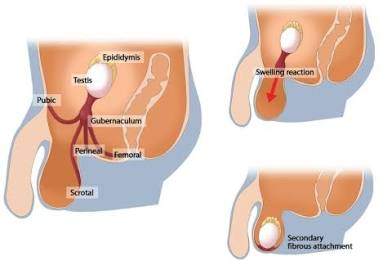
- Clinical Reality: A retractile testis is caused by an exaggerated cremasteric reflex. During physical examination in a warm environment, a retractile testis can be manually guided into the lower scrotal base without tension and will remain there temporarily after release. In contrast, a true undescended testis resists manual manipulation or immediately snaps back into the groin upon release.
- Correction Strategy: Examine the pediatric patient in a warm setting (e.g., sitting cross-legged or frog-legged). If the testis stays in the scrotum without tension after release, surgical intervention is contraindicated, though annual monitoring until puberty is recommended.
Pitfall 2: Delaying Surgical Referral Beyond 6 to 12 Months of Age
- The Diagnostic Error: Adopting a “wait-and-see” approach past 6 months of age in hopes of spontaneous testicular descent.
- Clinical Reality: Spontaneous descent frequently occurs during the first 3 to 6 months of life in response to the postnatal gonadotropin and testosterone surge (“mini-puberty”). However, spontaneous descent is extremely rare after 6 months of age. Exposing the testis to body core temperature ( vs. scrotal ) leads to progressive loss of primary germ cells (Adult Dark spermatogonia) starting as early as 6 to 12 months of age.
- Correction Strategy: Current clinical guidelines from the European Association of Urology (EAU) and American Urological Association (AUA) recommend prompt surgical referral if descent has not occurred by 6 months of age (corrected for prematurity), with orchiopexy completed between 6 and 18 months of age.
Pitfall 3: Over-Relying on Routine Ultrasonography for Non-Palpable Testes
- The Diagnostic Error: Ordering routine scrotal ultrasound, CT, or MRI to locate a non-palpable testis prior to surgical consultation.
- Clinical Reality: Routine ultrasound exhibits low diagnostic sensitivity () and specificity for non-palpable testes. It cannot reliably differentiate an intra-abdominal testis from an absent (vanishing) testis and frequently produces false-negative or false-positive results that delay definitive surgical evaluation.
- Correction Strategy: Do not order routine imaging for non-palpable testes. Diagnostic laparoscopy is the gold standard modality, providing near accuracy to confirm whether the testis is intra-abdominal, vanished, or entering the internal inguinal ring.
Pitfall 4: Utilizing Primary Hormonal Therapy (hCG or GnRH Analogs)
- The Diagnostic Error: Administering human chorionic gonadotropin (hCG) or gonadotropin-releasing hormone (GnRH) injections as a primary treatment to induce testicular descent.
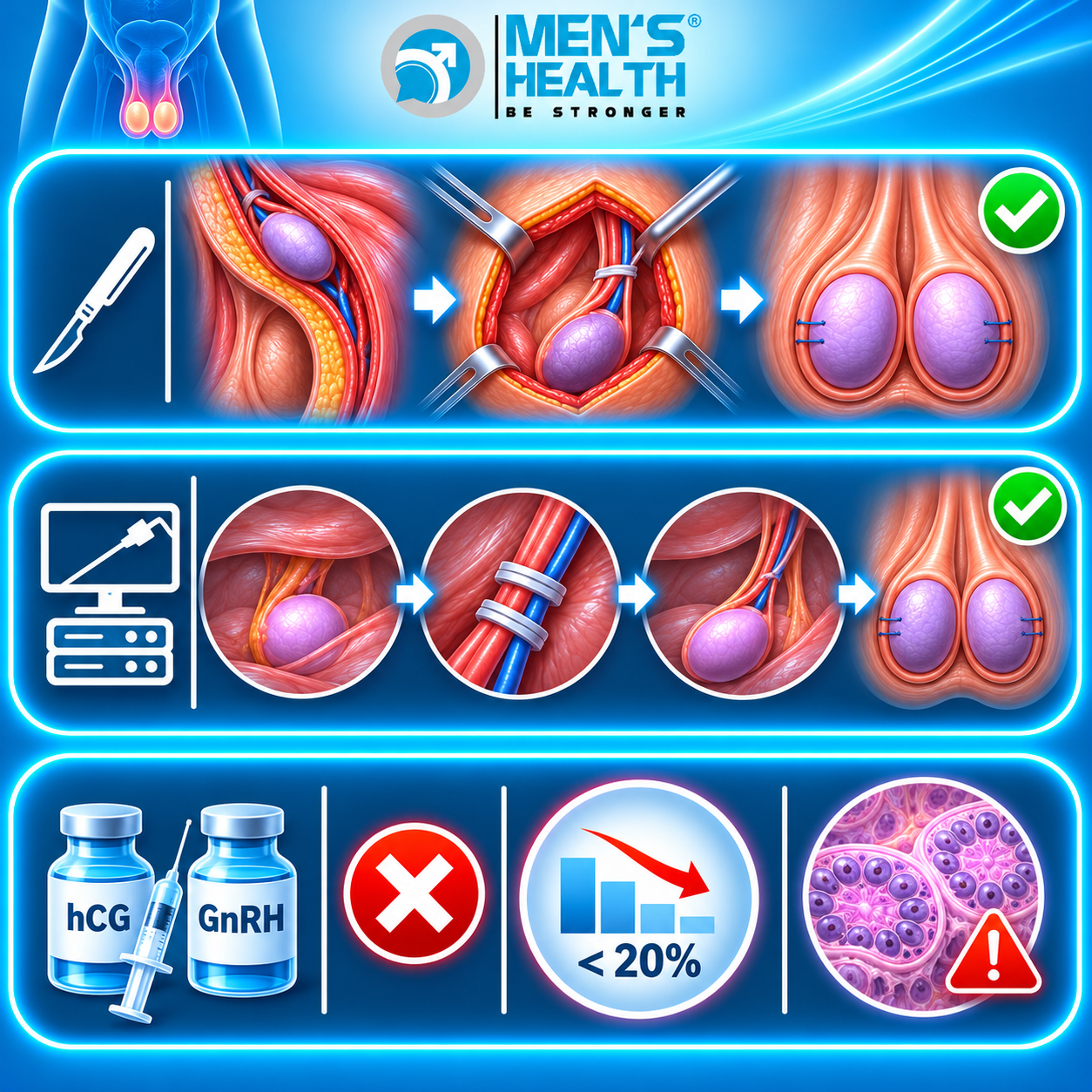
- Clinical Reality: Extensive clinical trials demonstrate that primary hormonal therapy yields low long-term success rates (), carries high re-ascent rates, and can induce inflammatory reactions that damage primary germ cells.
- Correction Strategy: International guidelines explicitly recommend against using primary hormonal therapy for testicular descent. Surgical orchiopexy remains the gold standard treatment.
Pitfall 5: Failing to Monitor Retractile Testes for Secondary Ascent (“Acquired Cryptorchidism”)
- The Diagnostic Error: Discharging patients with retractile testes from clinical follow-up under the assumption that the condition is permanently benign.
- Clinical Reality: Up to of retractile testes undergo secondary ascension into the inguinal canal over time due to persistent fibrous remnants, tight spermatic cords, or incomplete obliteration of the processus vaginalis.
- Correction Strategy: Schedule mandatory annual physical examinations for boys with retractile testes until puberty to ensure the testis maintains its scrotal position and growth trajectory.
3. Comparative Clinical Diagnostic Matrix
| Clinical Variant | Scrotal Appearance | Palpation Findings | Response to Manual Traction | Recommended Management |
|---|---|---|---|---|
| True Cryptorchidism | Hypoplastic hemiscrotum, minimal rugae | Testis felt in canal or suprascrotal area | Cannot reach base or snaps back immediately | Surgical Orchiopexy (at 6–18 months of age) |
| Retractile Testis | Normal scrotal development | Testis felt in high scrotum / suprascrotal | Moves easily to scrotal base, remains after release | Annual clinical observation until puberty |
| Ectopic Testis | Empty hemiscrotum | Testis felt in superficial inguinal, perineal area | Fixed in abnormal pocket, cannot be guided to scrotum | Surgical Ectopic Orchiopexy |
| Intra-Abdominal Testis | Hypoplastic hemiscrotum | Non-palpable on physical exam | Unexaminable via physical traction | Diagnostic Laparoscopy & Staged Orchiopexy |
| Bilateral Anorchia | Bilateral severe scrotal hypoplasia | Non-palpable bilaterally | Unexaminable; undetectable AMH/Inhibin B | Hormone Replacement Therapy (at puberty), Prostheses |
4. Evidence-Based Comprehensive Diagnostic Pathway
Establishing an accurate diagnosis requires a structured clinical workflow moving from physical examination to definitive surgical mapping.
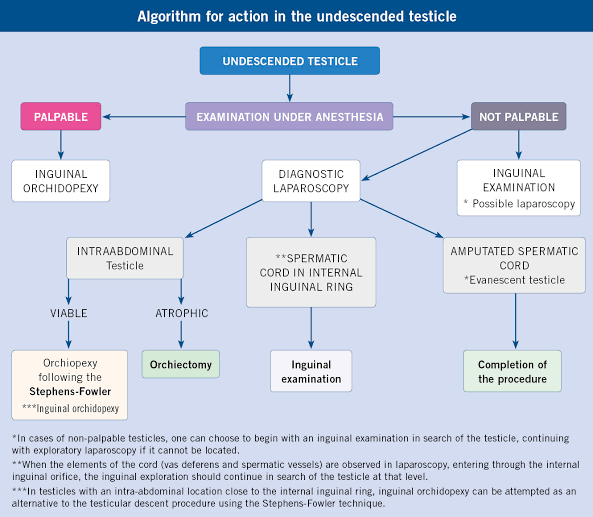
Source: Pediatría integral
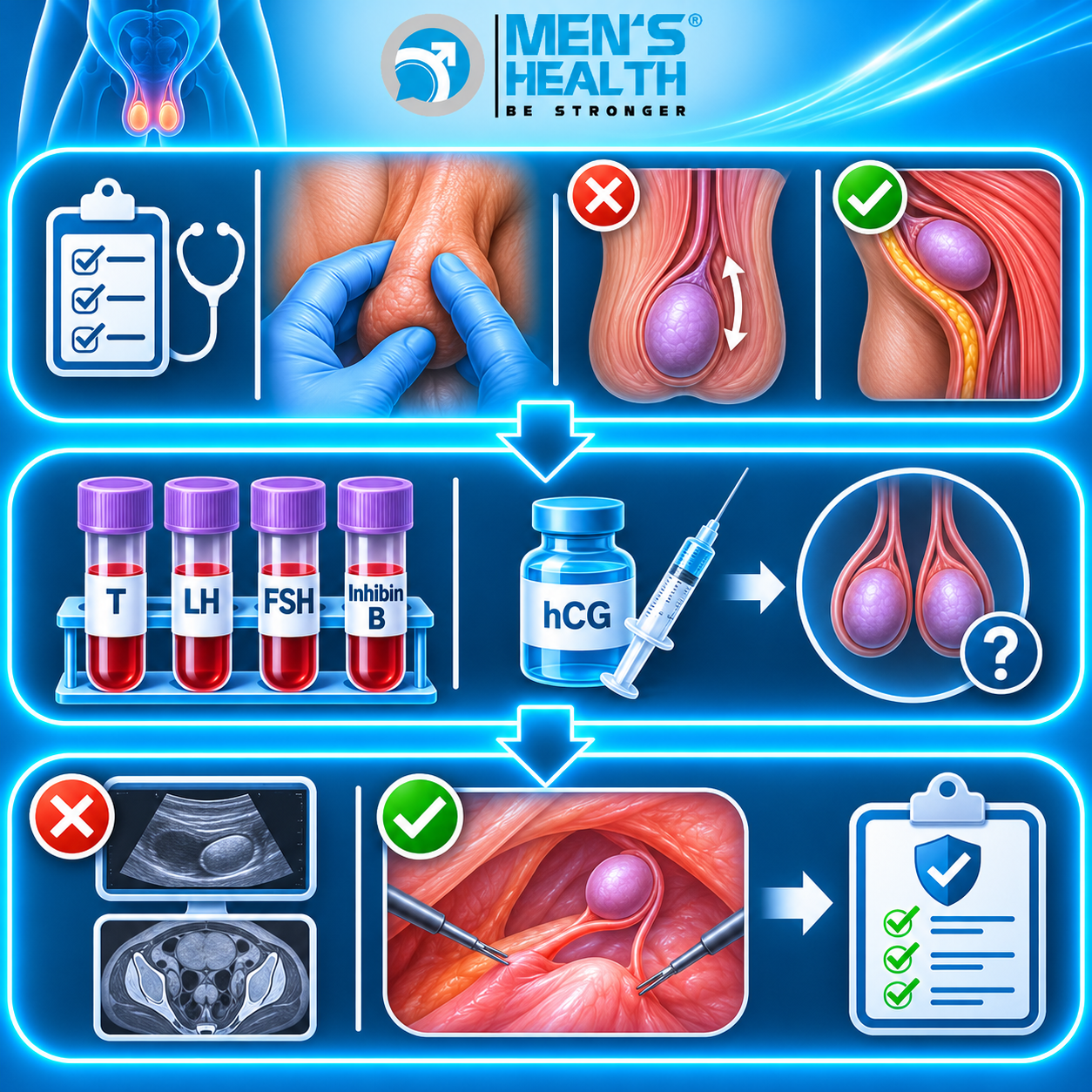
- Physical Examination: Bimanual palpation along the inguinal canal down to the scrotum performed with warm hands. Differentiating retractile testes from true cryptorchidism is critical.
- Endocrine Testing (Bilateral Non-Palpable Testes): Measuring Anti-Müllerian Hormone (AMH), Inhibin B, LH, FSH, and performing an hCG stimulation test helps differentiate bilateral intra-abdominal testes from true bilateral anorchia (vanishing testes).
- Diagnostic Laparoscopy: The gold standard for non-palpable testes ( diagnostic accuracy), allowing direct visualization of intra-abdominal structures and immediate surgical correction. Routine diagnostic imaging (ultrasound, CT, MRI) is not recommended due to low diagnostic sensitivity.
5. Surgical Modalities and Pharmacological Principles
Surgical correction (orchiopexy) is the definitive management for cryptorchidism.
Core Surgical Techniques
- Open Inguinal Orchiopexy (Palpable Testis): Performed via a small inguinal incision. The surgeon mobilizes the spermatic cord, divides cremasteric fibers, ligates any patent processus vaginalis, and secures the testis within a subdartos pouch in the scrotal wall ( success rate).
- Laparoscopic Fowler-Stephens Orchiopexy (Non-Palpable Testis): For high intra-abdominal testes, laparoscopy allows division of the primary testicular vessels, enabling the testis to descend based on collateral blood supply from the deferential and cremasteric arteries (performed in a single stage or staged across 6 months).
Supportive Pharmacotherapy and Analgesia
Pharmacological management plays a supportive role in post-operative care:
- Analgesics: Acetaminophen (Paracetamol) combined with NSAIDs (e.g., Ibuprofen) provides effective multimodal analgesia for pediatric patients post-orchiopexy.
- Local Anesthetic Blocks: Intra-operative ilioinguinal/iliohypogastric nerve blocks reduce post-operative systemic opioid requirements.
- Prophylactic Antibiotics: Short-course prophylactic antimicrobials may be administered in complex or re-do cases to prevent surgical site infections.
6. Professional Care at Men’s Health Center and Men’s Health Pharmacy
Navigating congenital urological anomalies, surgical planning, and long-term reproductive follow-up requires specialized medical and pharmaceutical care.
Nhà thuốc Nam khoa Men’s Health (Men’s Health Andrology Pharmacy), an integral unit within the Trung tâm Sức khỏe Nam giới Men’s Health (Men’s Health Center) ecosystem founded by TS.BS.CK2 Trà Anh Duy (Dr. Tra Anh Duy, MD, PhD, Spec. II), provides dedicated clinical pharmacy support for male reproductive and urological health. At Men’s Health, patients and families receive personalized consultations from experienced urologists and clinical pharmacists who provide clear guidance on post-operative recovery, medication compliance, and long-term reproductive tracking. The facility maintains strict clinical safety, privacy, absolute confidentiality, and evidence-based practice across all stages of care. Prescription medications and post-operative regimens are dispensed strictly under physician supervision, emphasizing the essential collaborative role between physicians and clinical pharmacists in ensuring optimal patient safety and therapeutic outcomes.

7. Common Clinical Pitfalls Summary
- Subjecting Retractile Testes to Surgery: Operating on normal retractile testes that can be manually brought into the scrotum without tension.
- Delaying Surgical Orchiopexy Past 18 Months: Exposing primary germ cells to body core temperatures, causing progressive germ cell loss and infertility.
- Ordering Routine Scrotal Ultrasound for Non-Palpable Testes: Relying on low-sensitivity imaging instead of proceeding directly to diagnostic laparoscopy.
- Using Primary Hormonal Injections (hCG/GnRH): Attempting hormonal therapy for testicular descent despite low efficacy and potential germ cell toxicity.
- Failing to Provide Long-Term Surveillance: Omitting annual follow-up for boys with retractile testes or cryptorchidism history.
Cryptorchidism Diagnostic Pitfalls: Frequently Asked Questions
What is the ideal age for surgical correction (orchiopexy) of an undescended testis?
International urological guidelines recommend performing orchiopexy between 6 and 18 months of age. Operating within this window minimizes progressive heat-induced germ cell damage and improves long-term fertility outcomes.
Can an undescended testis descend on its own after birth?
Spontaneous descent frequently occurs during the first 3 to 6 months of life in response to a temporary postnatal surge in gonadotropins and testosterone (“mini-puberty”). However, spontaneous descent is rare after 6 months of age.
Is an undescended testis the same as a retractile testis?
No. A retractile testis can be manually brought into the lower scrotum during physical examination and will remain there without tension after release. True cryptorchidism involves a testis that cannot be brought into the scrotal base or immediately snaps back into the groin upon release.
Why is routine scrotal ultrasound discouraged for non-palpable testes?
Scrotal ultrasound has low diagnostic sensitivity () for non-palpable or intra-abdominal testes. It cannot reliably rule out intra-abdominal tissue and delays definitive diagnostic laparoscopy.
Does early orchiopexy eliminate the risk of testicular cancer?
Early orchiopexy significantly reduces, but does not completely eliminate, the long-term risk of testicular germ cell tumors. Importantly, it places the testis in a palpable scrotal position, enabling clinical surveillance and self-examination.
Conclusion and Expert Medical Advice
Avoiding diagnostic pitfalls in cryptorchidism and testicular maldescent requires early physical evaluation, accurate differentiation of retractile variants, avoidance of unnecessary imaging, and timely surgical orchiopexy completed between 6 and 18 months of age. Adhering to evidence-based protocols protects germ cell viability, preserves fertility, and enables effective long-term oncological surveillance.
Parents who observe an empty or asymmetrical scrotal sac in an infant should seek specialized clinical evaluation promptly. Consultation at a dedicated facility such as the Trung tâm Sức khỏe Nam giới Men’s Health ensures accurate diagnostic assessment, expert surgical guidance, and professional clinical pharmacy support within a safe, professional, and confidential environment.