
Interactions between HIV medications and andrological drugs in men refer to alterations in treatment efficacy or increases in toxicity when antiretroviral therapy (ART) is combined with medications used to treat andrological conditions. Managing drug interactions plays a pivotal role in ensuring cardiovascular safety, maintaining stable ART levels to suppress the human immunodeficiency virus (HIV), and protecting male sexual function. Men must never combine medications arbitrarily; instead, they require careful examination, consultation, and close monitoring by a specialist physician.
1. What Are HIV and Andrological Drug Interactions? Why Must They Be Optimized?
Drug interactions between HIV medications (ART) and andrological drugs occur when two or more drug classes affect each other’s absorption, metabolism, distribution, or elimination within the body. These interactions can either increase blood concentrations of a drug, leading to toxicity, or reduce concentrations below therapeutic thresholds, resulting in ART regimen failure.
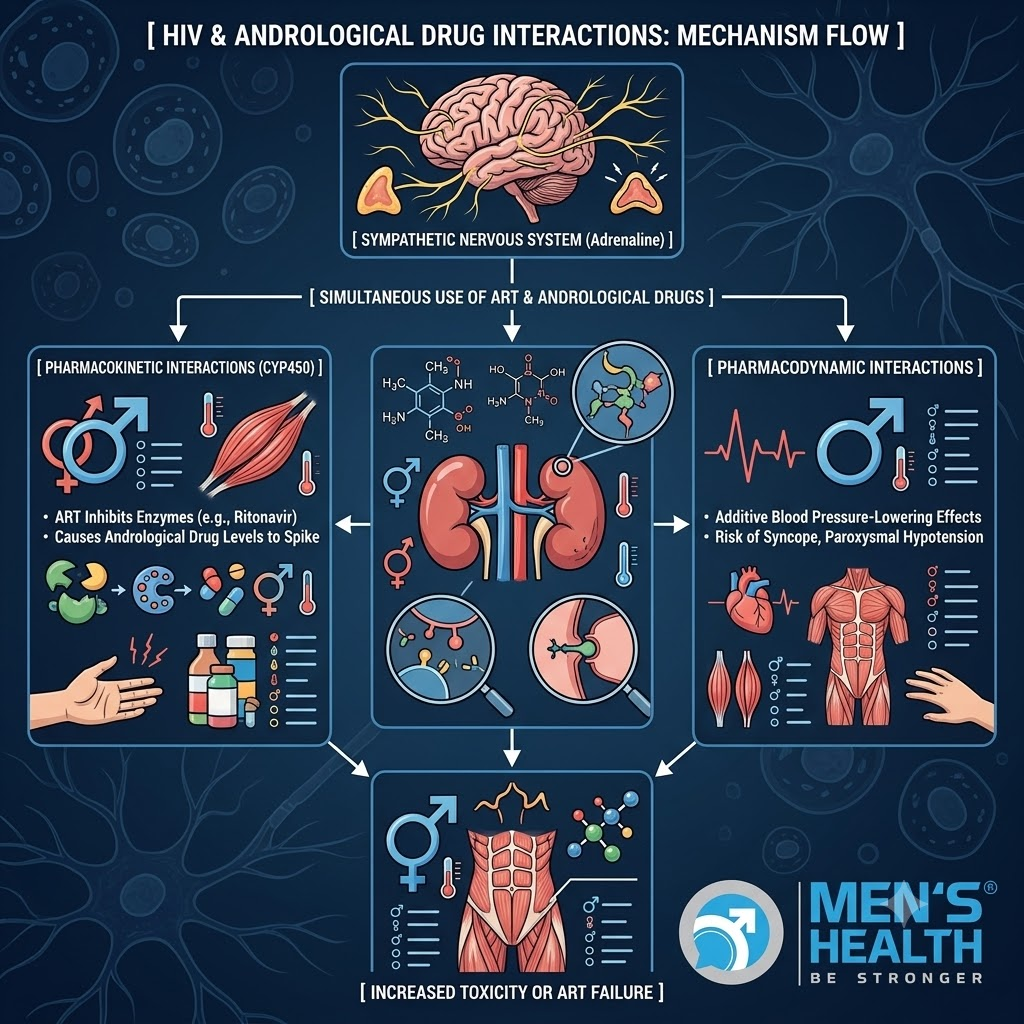
From a pharmacokinetic perspective, the hepatic Cytochrome P450 enzyme system (particularly the CYP3A4 isoenzyme) serves as a common metabolic pathway for many antiretroviral drugs and andrological treatments, such as phosphodiesterase type 5 (PDE5) inhibitors (Sildenafil, Tadalafil). When taken together, ART can strongly inhibit CYP3A4, causing andrological drugs to be cleared more slowly, accumulate in the body, and trigger severe adverse reactions affecting the cardiovascular and neurological systems.
2. Causes and Pharmacological Mechanisms of Drug Interactions
Understanding pharmacological mechanisms helps patients and physicians proactively prevent interaction risks. ART drug classes exert varying degrees of impact on the hepatic metabolic system:
- Protease Inhibitors (PIs) and Pharmacokinetic Boosters:
- Representative drugs: Ritonavir (RTV), Cobicistat (COBI), Lopinavir, Atazanavir, Darunavir.
- Mechanism: These are potent inhibitors of hepatic and intestinal CYP3A4 enzymes. When combined by men with erectile dysfunction medications like Sildenafil or Tadalafil, Ritonavir can increase blood concentrations of Sildenafil by 4 to 11 times.
- Consequence: Increased risk of acute hypotension, severe headaches, cardiac arrhythmias, and priapism—an andrological emergency that can cause necrosis of the corporeal smooth muscle tissue.
- Non-Nucleoside Reverse Transcriptase Inhibitors (NNRTIs):
- Representative drugs: Efavirenz, Nevirapine, Etravirine.
- Mechanism: This group acts as enzyme inducers (stimulators) of CYP3A4.
- Consequence: When CYP3A4 is stimulated, it accelerates the breakdown of andrological drugs or testosterone hormones. This lowers blood levels of andrological drugs, preventing erectile dysfunction or hypogonadism treatments from achieving clinical efficacy.
- Integrase Strand Transfer Inhibitors (INSTIs) and NRTIs:
- Representative drugs: Dolutegravir, Bictegravir, Tenofovir (TDF/TAF), Emtricitabine (FTC).
- Mechanism: Modern ART regimens containing INSTIs and NRTIs have minimal impact on the CYP3A4 enzyme system. Consequently, the risk of pharmacokinetic interactions with andrological drugs is significantly lower in this group, creating a more favorable and safer environment for combined treatment.
3. Detailed Interaction Checklist for Common Andrological Drug Classes
Below is a detailed lookup checklist for interaction levels between common andrological drug classes and HIV ART medications:
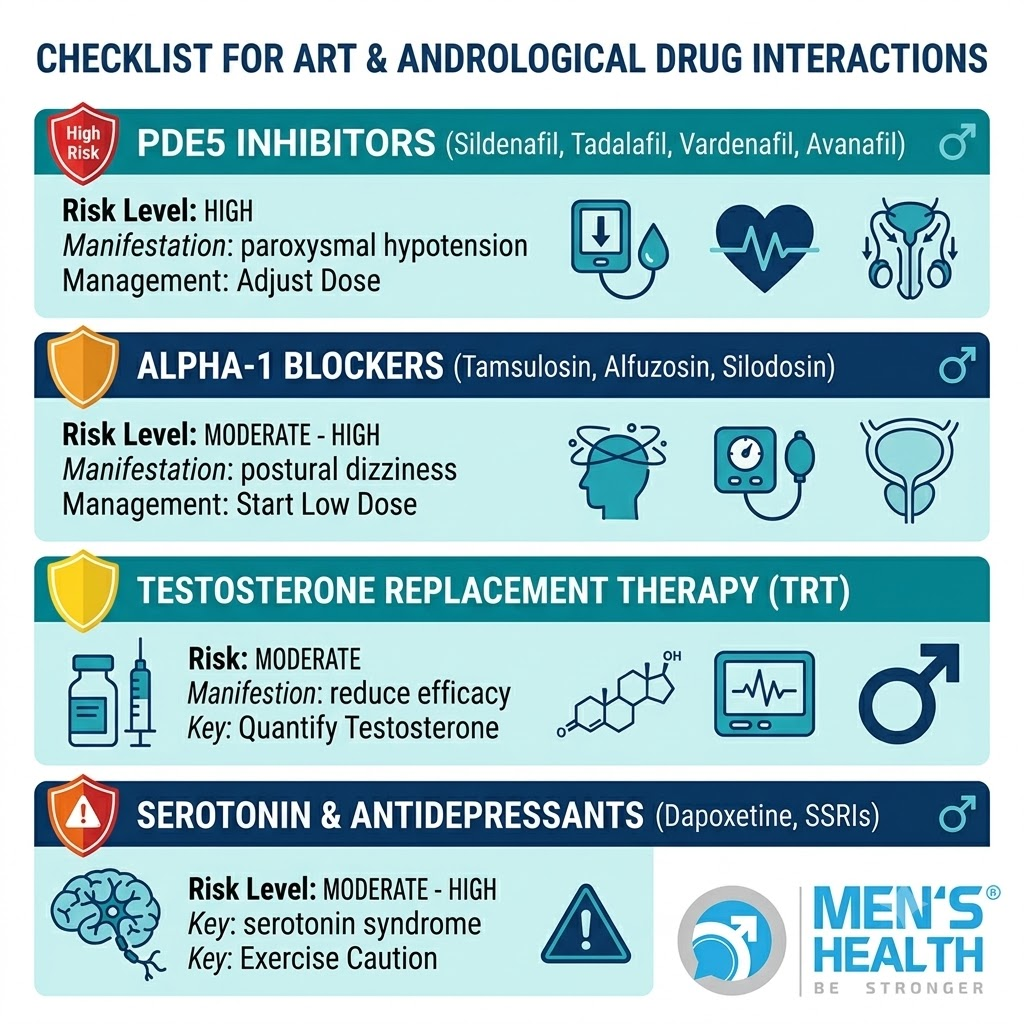
| CHECKLIST FOR ART & ANDROLOGICAL DRUG INTERACTIONS |
| [!] PDE5 INHIBITORS (Sildenafil, Tadalafil, Vardenafil, Avanafil) • Risk Level: HIGH (when combined with Ritonavir/Cobicistat regimens) • Manifestations: Paroxysmal hypotension, dizziness, tachycardia, priapism. • Management: Adjust and reduce starting dose (Sildenafil max 25mg/48h). |
| [!] ALPHA-1 BLOCKERS (Tamsulosin, Alfuzosin, Silodosin) • Risk Level: MODERATE – HIGH • Manifestations: Postural dizziness, orthostatic hypotension. • Management: Start with the lowest possible dose, monitor blood pressure closely. |
| [!] TESTOSTERONE REPLACEMENT THERAPY (TRT) • Risk Level: MODERATE • Manifestations: NNRTIs reduce TRT efficacy; PIs alter concentration levels. • Management: Periodically quantify testosterone to adjust dosage appropriately. |
| [!] SEROTONIN-ENHANCING & ANTIDEPRESSANT DRUGS (Dapoxetine, SSRIs) • Risk Level: MODERATE – HIGH • Manifestations: Serotonin syndrome, nausea, dizziness, deep somnolence. • Management: Exercise caution when combining with Ritonavir; requires physician prescription. |
1. Erectile Dysfunction Medications (PDE5 Inhibitors)
- Treatment goal: Increase blood flow to the penis to support erectile capability.
- Dangerous interaction: When combining Sildenafil, Tadalafil, or Vardenafil with ART regimens containing Ritonavir or Cobicistat, PDE5 inhibitor blood concentrations spike to very high levels.
- Medical note: Patients must not self-administer standard doses. Physicians typically reduce the starting dose to a minimum (e.g., Sildenafil not exceeding 25mg within a 48-hour window; Tadalafil not exceeding 10mg within a 72-hour window).
2. Benign Prostatic Hyperplasia Medications (Alpha-1 Blockers)
- Treatment goal: Relax smooth muscle in the bladder neck and prostate, facilitating easier urination.
- Dangerous interaction: Tamsulosin and Alfuzosin are metabolized primarily via CYP3A4. Using them concurrently with Ritonavir can increase the risk of severe orthostatic hypotension, dizziness, syncope, and falls.
- Medical note: Physicians may consider switching to 5-Alpha Reductase Inhibitors (Finasteride, Dutasteride) or selecting alpha-blocker regimens with less susceptibility to interaction.
3. Testosterone Replacement Therapy (TRT)
- Treatment goal: Supplement male sex hormones in patients with hypogonadism, chronic fatigue, or HIV-related wasting.
- Interaction: Certain ART medications can alter free testosterone blood levels.
- Medical note: Total testosterone, free testosterone, hematocrit (HCT), and PSA levels must be evaluated before and throughout treatment to avoid hemoconcentration or prostate impacts.
4. Warning Symptoms of Dangerous Drug Interactions
When unfavorable drug interactions occur, men’s bodies will display clinical warning signs. Early detection helps prevent life-threatening events:
- Paroxysmal Hypotension: Dizziness, lightheadedness, faintness upon standing, blurred vision, cold clammy skin, and even syncope.
- Cardiovascular Events: Abnormal rapid heart rate, palpitations, chest pain, or a feeling of chest pressure.
- Priapism (Prolonged Penile Erection): Erection persisting continuously for over 4 hours, accompanied by severe pain. This is an urgent medical emergency.
- Signs of Hepatic and Neurological Toxicity: Nausea, vomiting, right upper quadrant discomfort, severe headache, excessive sleepiness, or confusion.
5. When Should Men See a Doctor or Seek Emergency Care Promptly?
Men undergoing ART must never conceal their condition or self-manage when abnormalities arise. Visit a medical facility or emergency center immediately if:
- The penis remains erect for longer than 2–4 hours without subsiding.
- Chest pain, shortness of breath, or syncope occurs after using andrological drugs.
- Blood pressure drops profoundly, accompanied by severe dizziness preventing independent walking.
- Severe allergic manifestations appear: Swelling of the face, lips, tongue, generalized rash, or difficulty swallowing.
6. Diagnostic and Drug Interaction Management Process
To ensure absolute safety when managing andrological pathology and HIV concurrently, a standardized medical evaluation process includes:
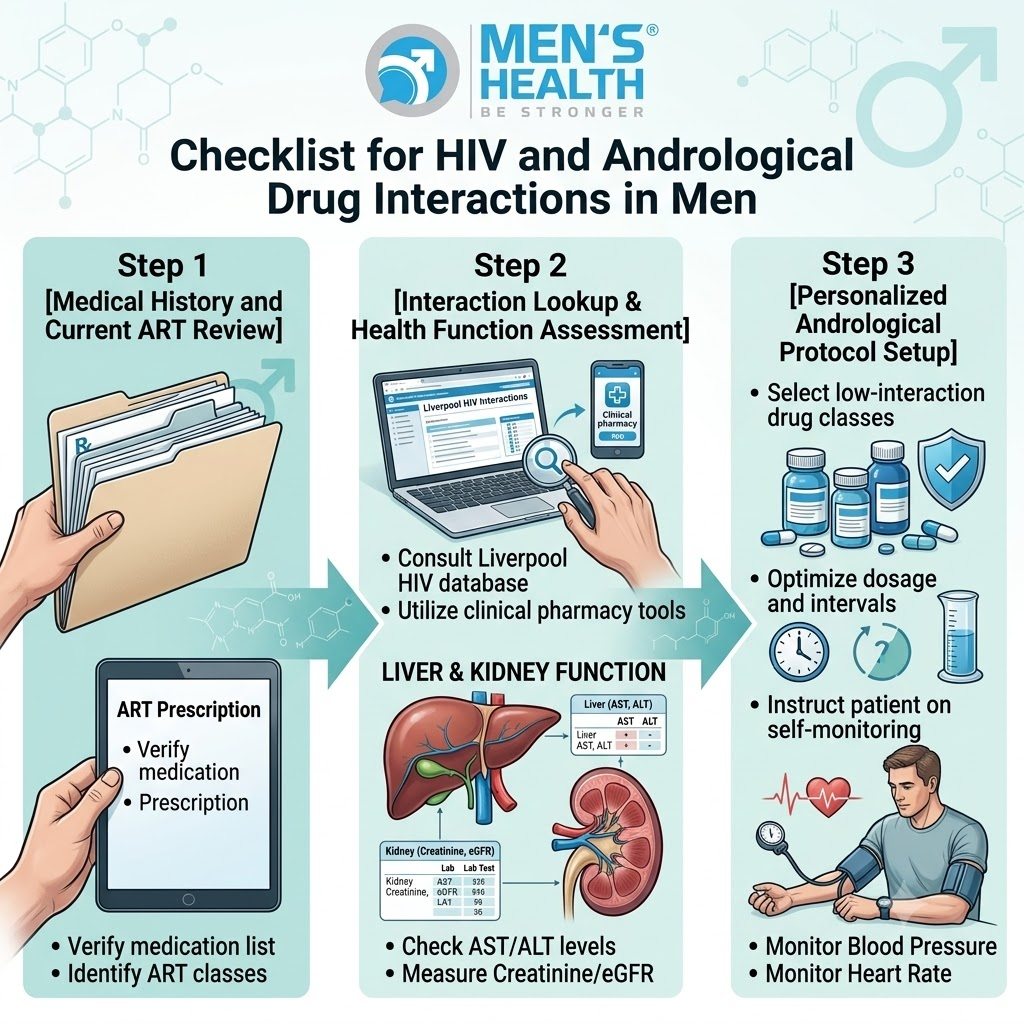
Evaluating hepatic and renal function allows physicians to accurately predict the body’s drug clearance rate, thereby making optimal clinical decisions.
7. Safety Requirements in Medication Use and Important Side Effects
Using medications for erectile dysfunction, premature ejaculation, endocrine therapy, or andrological infections in HIV patients requires special caution:
- Do not self-purchase medications based on rumors or social media: Unverified products labeled “kidney tonic” or “performance enhancers” are often illegally spiked with synthetic PDE5 inhibitors at uncontrolled dosages, which is extremely dangerous when combined with ART.
- Do not share prescriptions with others: Each patient has a unique ART regimen (containing or lacking enzyme inhibitors), meaning another person’s andrological prescription could be toxic to you.
- Respect dosing intervals: Strictly follow the timing and dosage prescribed by the physician.
- Inform the physician of all dietary supplements currently used: Certain herbs, such as St. John’s Wort, can drastically lower ART concentrations, leading to drug resistance.
8. Lifestyle Modifications and Drug Interaction Prevention Tips
Alongside adhering to the treatment regimen, adopting a scientific lifestyle improves natural sexual health and reduces drug dependency:
| DAILY CARE AND PREVENTION MEASURES |
| 1. Compile a complete list of current ART and andrological medications. |
| 2. Always carry your medical record book or photograph your ART prescription when visiting clinics. |
| 3. Minimize alcohol, beer, tobacco, and stimulants. |
| 4. Maintain a healthy diet, increasing green vegetables and physical activity. |
| 5. Relieve psychological stress and communicate openly with your partner. |
| 6. Attend periodic follow-up appointments scheduled by your Andrologist and Infectious Disease specialist. |
9. Common Pitfalls for Men When Self-Combining Medications
- Arbitrarily stopping ART for a few days to take “performance” drugs: This is an extremely dangerous mistake. Stopping ART for even a few days can cause HIV viral load to rebound, escalating viral concentrations in the blood and leading to severe drug resistance.
- Assuming herbal products have no interactions: Every substance introduced into the body orally is metabolized through the liver/kidneys and can fully interact with ART.
- Hesitating and hiding HIV status during andrological consultations: Self-stigma causes patients to withhold their ongoing ART regimen, leading physicians to prescribe standard doses of andrological medications and causing dangerous interactions.
- Arbitrarily increasing andrological drug doses when efficacy is not observed: Increasing doses when medications have not cleared due to ART inhibition leads to rapid toxicity accumulation.
10. Healthcare Solutions at the Men’s Health Ecosystem
Managing interactions between HIV and andrological pathologies requires close coordination between andrology and clinical pharmacy expertise to ensure safe therapeutic outcomes, protect sexual function without compromising the ART regimen.
Men’s Health Andrology Pharmacy is a unit within the Men’s Health Center ecosystem founded by Assoc. Prof. Dr. Tra Anh Duy. Here, patients always receive guidance, explanations, and support from physicians and pharmacists in selecting appropriate healthcare solutions. Men’s Health emphasizes professionalism, safety, discretion, information privacy, and respect for individual privacy throughout examination, treatment, and follow-up.
Physicians and pharmacists at Men’s Health will directly cross-reference patients’ active ART regimens with required andrological prescriptions, helping calibrate precise dosages, select the safest drug classes, and closely monitor patient health status.

11. Reference Table of Interactions Between Common ART Drugs and Andrological Medications
| ART Drug Class | Representative ART Drug | Andrological Drug Class | Interaction Level | Medical Treatment Recommendation |
| PIs / Boosters | Ritonavir, Cobicistat, Darunavir | PDE5 Inhibitors (Sildenafil, Tadalafil) | Dangerous (Very High) | Mandatory reduction of PDE5i starting dose to $1/4 – 1/2$; extend dosing intervals. |
| PIs / Boosters | Ritonavir, Cobicistat | Alpha-1 Blockers (Tamsulosin) | Severe | Increased risk of orthostatic hypotension; consider switching drug class or monitoring blood pressure closely. |
| NNRTIs | Efavirenz, Nevirapine | PDE5i / Testosterone | Moderate (Reduced Efficacy) | ART drugs lower andrological drug levels; physicians may need to increase andrological treatment doses. |
| INSTIs | Dolutegravir, Bictegravir | PDE5i / BPH Medications | Low | Safer regimen; minimal significant pharmacokinetic interaction via CYP3A4. |
| NRTIs | Tenofovir (TDF/TAF), FTC, 3TC | Andrological Drugs in general | Very Low | Almost no hepatic enzyme interactions; kidney function monitoring needed if using TDF. |
Checklist for HIV and Andrological Drug Interactions in Men: Frequently Asked Questions (FAQs)
I am taking the TLD ART regimen (Tenofovir + Lamivudine + Dolutegravir); can I take Tadalafil?
The TLD regimen containing Dolutegravir (INSTI) and NRTIs has very low pharmacokinetic interactions with Tadalafil. However, you still need an andrological examination to evaluate overall cardiovascular health and prescribe the most appropriate dosage for your physical condition.
Why does taking erectile dysfunction medication together with ART containing Ritonavir easily cause dizziness and facial flushing?
Ritonavir strongly inhibits the hepatic CYP3A4 enzyme, causing erectile dysfunction medications to degrade more slowly and accumulate at very high concentrations in the blood. High drug concentrations cause pronounced systemic vasodilation, leading to facial flushing, headaches, and blood pressure drops resulting in dizziness.
Can HIV-positive men undergoing ART use Testosterone Replacement Therapy (TRT)?
Yes, they can. HIV-infected men carry a higher risk of testosterone deficiency. However, TRT must be prescribed by a physician following blood testosterone quantification tests and prostate safety checks; never self-inject or self-administer testosterone.
Should I stop ART on days I plan to have sexual intercourse and take “performance” drugs?
Never stop ART. Discontinuing ART for even 1–2 days increases the risk of rebounding HIV viral load in the blood, driving drug resistance and raising transmission risks to your partner. Physicians can fully adjust andrological drug doses so you can use them safely alongside ART.
How can I know if an Oriental medicine or andrological dietary supplement interacts with ART?
It is very difficult to know on your own because many floating products fail to fully disclose ingredients or are illegally spiked with synthetic drugs. The safest approach is to bring the product to consult directly with a specialist physician or pharmacist before use.
I am concerned about privacy exposure when disclosing my HIV status at an andrology clinic; what should I do?
At reputable medical facilities like the Men’s Health Center, customer medical records are strictly protected under legal regulations and medical ethics. Full disclosure of your ART regimen enables physicians to protect your health and life.
How is priapism (prolonged penile erection) caused by drug interactions treated?
If the penis maintains an erection exceeding 2–4 hours accompanied by pain, you must immediately visit a medical facility with an Andrology-Urology department for emergency corporal aspiration or prompt medical management to avoid the risk of permanent fibrosis and penile deformity.
Conclusion
Interactions between HIV and andrological medications in men represent a vital clinical dimension requiring rigorous management. Proper coordination between ART and andrological treatments not only improves quality of life and restores sexual confidence but also ensures maximum cardiovascular safety and sustained HIV viral suppression efficacy.
Men must never self-diagnose, self-purchase word-of-mouth medications, or independently alter their ART regimens. When encountering andrological health issues, visit the Men’s Health Center for a comprehensive evaluation by specialist physicians and pharmacists, and receive safe, discreet, professional, and personalized interaction control solutions.