
The 24-hour urinary free cortisol test is a quantitative laboratory assessment measuring the total amount of cortisol hormone excreted in the urine over a full 24-hour day-and-night cycle. It serves as an essential diagnostic tool for physicians to evaluate adrenal gland function and screen for disorders related to hormonal imbalance within the body.
1. Definition and Diagnostic Mechanism
The 24-hour urinary free cortisol (UFC) test measures the total volume of unbound (free) cortisol filtered through the kidneys and excreted into the urine over 24 consecutive hours.
Cortisol is a glucocorticoid steroid hormone produced by the adrenal cortex (two small glands positioned above the kidneys). It plays a vital role in regulating carbohydrate, protein, and lipid metabolism, maintaining blood pressure, controlling inflammatory responses, and helping the body adapt to physical and psychological stress.
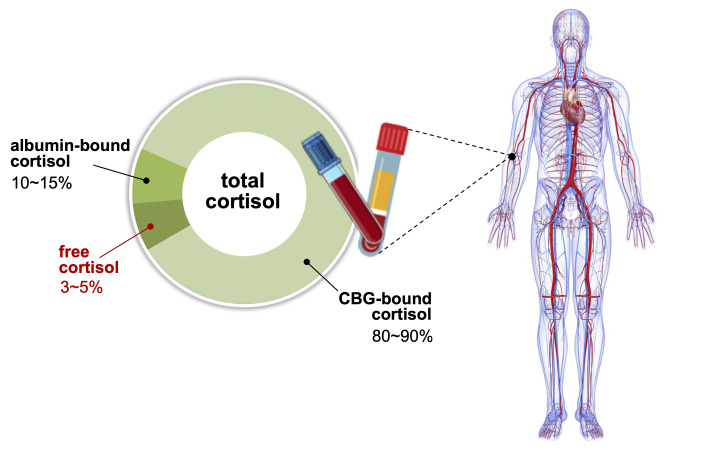
According to endocrine guidelines, cortisol secretion in the blood follows a circadian rhythm, fluctuating heavily based on physical or emotional states. Consequently, a single random blood cortisol measurement cannot accurately reflect actual daily production. By collecting all urine over 24 hours, this test overcomes these limitations, providing an accurate overview of free cortisol excretion (the fraction unbound to plasma proteins) unaffected by short-term hormonal spikes.
2. What Conditions Does a 24-Hour Urinary Free Cortisol Test Evaluate?
The primary purpose of this test is to help physicians screen for and diagnose disorders characterized by overproduction or underproduction of cortisol by the adrenal glands.
- Screening for Cushing’s Syndrome: Cushing’s syndrome results from prolonged exposure to excess cortisol. Causes include endogenous overproduction by the adrenal glands, an ACTH-secreting pituitary tumor (Cushing’s disease), or prolonged misuse of exogenous corticosteroid medications. When cortisol concentrations exceed physiological thresholds, urinary excretion spikes, making the 24-hour UFC test one of the three primary screening modalities recommended by endocrine societies.
- Screening for Addison’s Disease or Chronic Adrenal Insufficiency: Conversely, Addison’s disease or primary adrenal insufficiency occurs when the adrenal glands fail to produce sufficient cortisol. Although an ACTH stimulation test or morning serum cortisol is typically prioritized for diagnosing adrenal insufficiency, urinary cortisol quantification can still assist in evaluating low activity within the hypothalamic-pituitary-adrenal (HPA) axis.
3. Causes and Risk Factors Leading to Cortisol Abnormalities
Cortisol imbalances stem from various medical causes requiring in-depth clinical evaluation:
- Primary Causes of Elevated Cortisol (Cushing’s Syndrome):
- Pituitary adenoma (Cushing’s disease): A benign pituitary tumor secreting excess ACTH, stimulating adrenal hyperplasia and cortisol excess.
- Adrenal adenoma or carcinoma: A benign or malignant tumor directly within the adrenal gland producing excess cortisol independently of pituitary control.
- Ectopic ACTH syndrome: Tumors outside the pituitary/adrenal axis (commonly in the lungs) secreting ectopic ACTH.
- Prolonged corticosteroid use: The most common exogenous cause, resulting from chronic anti-inflammatory steroid therapy (e.g., dexamethasone, prednisolone) for autoimmune or musculoskeletal disorders.
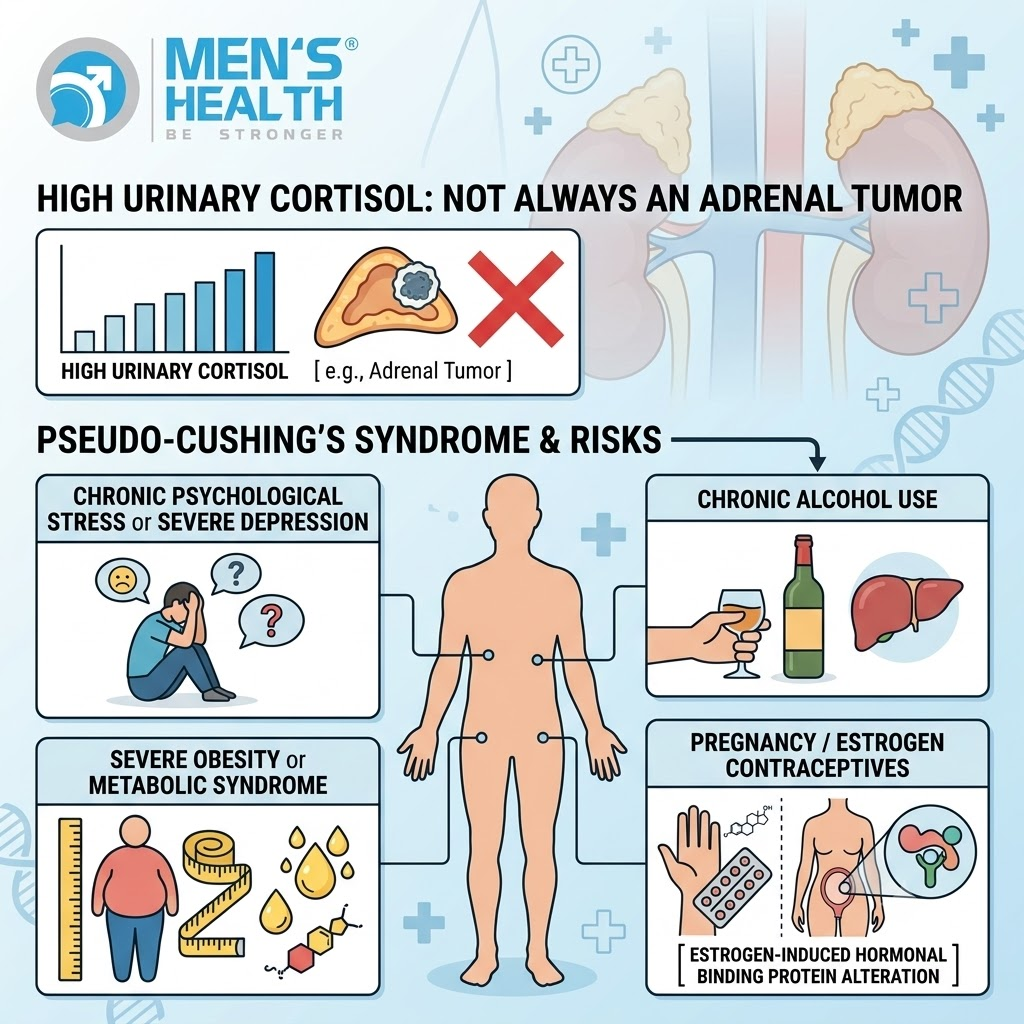
- Risk Factors and Conditions Altering Test Results: Not all elevated urinary cortisol levels indicate adrenal pathology. “Pseudo-Cushing” states can elevate cortisol due to:
- Chronic psychological stress or severe depression.
- Severe obesity or metabolic syndrome.
- Chronic alcoholism.
- Pregnancy or estrogen-containing oral contraceptives altering hormone-binding proteins.
4. Warning Signs and Symptoms of Cortisol Disorders
Clinical manifestations often develop insidiously and overlap with common health issues:
- Symptoms of Excess Cortisol (Cushing’s Syndrome):
- Rapid weight gain, particularly centralized fat accumulation in the face (“moon facies”), neck, and upper back (“buffalo hump”), contrasting with relatively thin limbs.
- Thinning skin, easy bruising, and purplish-pink striae (stretch marks) across the abdomen, thighs, and chest.
- Hard-to-control hypertension paired with elevated blood glucose levels.
- Proximal muscle weakness (difficulty standing from a low chair or fatigue while walking).
- Menstrual irregularities in women or decreased libido and erectile dysfunction in men.
- Symptoms of Cortisol Deficiency (Adrenal Insufficiency):
- Chronic fatigue and prolonged exhaustion of unexplained origin.
- Weight loss, anorexia, nausea, or abdominal pain.
- Low blood pressure, predisposing to orthostatic dizziness upon standing.
- Skin hyperpigmentation, particularly over exposed areas, palmar creases, elbows, or old scars.
5. When to See a Doctor
Individuals should proactively consult an endocrinology or andrology specialist if they notice the following warning signs:
- Unexplained weight gain accompanied by physical body changes (moon face, fat pads, purple striae) despite stable dietary habits.
- New-onset high blood pressure or elevated blood sugar in young individuals without conventional risk factors.
- Persistent fatigue, systemic weakness combined with hyperpigmentation or chronic hypotension.
- Male endocrine symptoms such as reduced libido or erectile dysfunction occurring alongside systemic signs.
Medical Warning: If an acute adrenal crisis occurs—manifested by severe abdominal pain, persistent vomiting, high fever, vascular collapse, profound hypotension, or altered mental status—the patient must be rushed to the nearest emergency department immediately, as this is a life-threatening emergency.
6. Diagnostic Methods and Testing Protocols
Achieving an accurate diagnosis requires combining clinical assessments with multiple laboratory procedures.
- Standard 24-Hour Urine Collection Protocol: To ensure diagnostic validity, patients must strictly follow collection instructions provided by medical staff:
- Day 1 (Start): Upon waking in the morning (e.g., 7:00 AM), empty the bladder completely into the toilet and discard this urine (this marks the 0-hour baseline).
- Collection Phase: From the very next urination onward throughout the day and night until exactly 7:00 AM the following morning, collect all voided urine into a specialized container provided by the clinic (containing a physician-prescribed preservative).
- Storage: Keep the collection container cold (stored inside a refrigerator’s main compartment or a cooler with ice packs) throughout the collection window to prevent hormone degradation.
- Completion: Empty the bladder one final time at the exact 24-hour mark (7:00 AM on Day 2) into the container, then transport the entire sample to the laboratory as soon as possible.
- Complementary Diagnostic Tests:
- Late-night salivary or serum cortisol: Measuring cortisol levels late at night (typically at 11:00 PM) to assess circadian rhythm disruption.
- Low-dose dexamethasone suppression test: Administering a dexamethasone dose the night before and measuring morning cortisol to check negative feedback suppression of the endocrine axis.
- Serum ACTH levels: Helping differentiate whether Cushing’s syndrome originates from a pituitary or adrenal source.
7. Treatment of Cortisol Disorders and the Role of Medication
Treatment strategies depend entirely on the root cause identified during specialist evaluations:
- Tumor-Induced Cortisol Excess: Physicians may indicate transsphenoidal microsurgery for pituitary tumors, surgical adrenalectomy, or medications inhibiting adrenal steroidogenesis when surgery is unfeasible.
- Cortisol Deficiency (Adrenal Insufficiency): Patients require lifelong or chronic hormone replacement therapy using oral glucocorticoids (such as hydrocortisone or fludrocortisone) under strict, personalized regimens.
Important Medication Safety Note: All endocrine regulatory drugs are strict prescription medications requiring direct evaluation, prescription, and monitoring by an endocrinologist. Patients must never self-prescribe, alter doses, or abuse unverified over-the-counter products marketed for “adrenal enhancement” or “hormone balancing” without an established diagnosis. Misusing corticosteroids or improper medications can induce acute adrenal atrophy, systemic exhaustion, and other severe complications.
8. Lifestyle Care, Modification, and Prevention
Alongside medical treatment regimens, maintaining a healthy lifestyle supports endocrine system stabilization:
- Adopt a balanced diet limiting excess sugars and sodium if managing hypertension or metabolic risks.
- Practice stress management techniques such as relaxation exercises, yoga, or meditation to mitigate the physiological impact of stress on hormone axes.
- Maintain a stable circadian rhythm with consistent, adequate sleep schedules.
- Undergo routine health examinations to screen early for endocrine and metabolic disorders.
9. Common Mistakes in Evaluating Urinary Cortisol
- Self-testing without a prescription: Testing urinary cortisol on one’s own without clear clinical symptoms often leads to unnecessary anxiety because results can be skewed by temporary stress.
- Incorrect urine sample collection technique: Forgetting to discard urine at the starting milestone, failing to collect the full volume of urine within exactly 24 hours, or failing to preserve the sample at the correct temperature will severely distort test results.
- Relying on a single test alone to conclude a disease: Endocrine disorders are complex conditions requiring the combination of multiple dynamic tests and imaging modalities to draw accurate conclusions.
Role of Men’s Health Andrology Pharmacy in the Healthcare Ecosystem
Within the comprehensive ecosystem of the Men’s Health Center founded by Assoc. Prof. Dr. Tra Anh Duy, Men’s Health Andrology Pharmacy serves as a crucial touchpoint supporting patients in accessing safe, professional treatment and healthcare solutions. Here, the dedicated team of pharmacists closely collaborates with medical specialists to advise and thoroughly explain drug usage methods, the importance of adhering to treatment regimens, and how to recognize adverse reactions.

Men’s Health Andrology Pharmacy strictly adheres to regulations on prescription drug management, committing to providing genuine products with clear origins while rejecting low-quality or unverified counterfeit products. With a patient-centric philosophy, the system places absolute focus on professional, safe, discreet standards, absolute information privacy, and respect for individual privacy throughout the men’s healthcare journey.
Frequently Asked Questions About the 24-Hour Urinary Cortisol Test
1. Do I need to fast before sample collection for the 24-hour urinary cortisol test? This test does not require patients to fast before starting urine collection. However, patients should avoid excessive physical exertion or enduring severe stress during the collection phase, as this can temporarily increase cortisol concentrations.
2. Does a 24-hour urinary cortisol result higher than normal definitively mean Cushing’s disease? Not necessarily. Elevated urinary cortisol concentrations can appear in functional hypercortisolism states such as chronic psychological stress, depression, obesity, or alcoholism. Physicians will need to perform further specialized tests to differentiate the exact cause.
3. Can the 24-hour urine sample be kept at room temperature during collection? Not recommended. During the 24-hour urine collection process, the sample must be kept cold (placed in a refrigerator or ice chest containing ice gel per instructions) to prevent the degradation of hormone components under room temperature.
4. Why is it necessary to execute the exact 24-hour time frame when collecting urine samples? Cortisol hormone is excreted through the kidneys in fluctuating amounts throughout day and night. Collecting precisely and completely within 24 hours helps accurately quantify the total free cortisol produced by the body, thus giving physicians a reliable basis for evaluation.
5. Do joint pain medications affect urinary cortisol results? Yes. Many anti-inflammatory or pain-relieving drugs containing corticosteroids (whether oral, topical, or intra-articular injections) can alter test results when used, causing elevated urinary cortisol or adrenal suppression. Therefore, patients must fully inform their doctor of all medications currently in use before taking the test.
10. Doctor’s Advice and Conclusion
The 24-hour urinary cortisol test is a highly valuable paraclinical tool helping physicians evaluate adrenal gland function and screen for important endocrine disorders such as Cushing’s syndrome or adrenal insufficiency. However, interpreting results and diagnosing diseases requires rigorous professional analysis based on the actual clinical presentation of each patient.
Readers must never self-diagnose diseases or arbitrarily use endocrine-regulating drugs without a physician’s prescription. When abnormal signs regarding weight, blood pressure, prolonged fatigue, or endocrine disorders appear, proactively visiting reputable medical facilities is the best way to protect one’s health. The Men’s Health Center system alongside Men’s Health Andrology Pharmacy are always ready to accompany, support specialized consultation, provide genuine medications, and monitor patient health in a professional, safe, and absolutely confidential space.