

Acute and chronic urinary retention represent critical lower urinary tract disorders requiring precise diagnostic evaluation and timely procedural or surgical intervention to prevent permanent detrusor decompensation, upper urinary tract deterioration, and post-renal acute kidney injury.
1. Understanding Acute and Chronic Urinary Retention: Definitions and Pathophysiological Mechanisms
Urinary retention is defined as the inability to voluntarily or completely evacuate urine from the urinary bladder despite active physiological effort. In male urology, retention is categorized into two distinct clinical presentations based on onset duration, symptom intensity, and residual urinary volume.
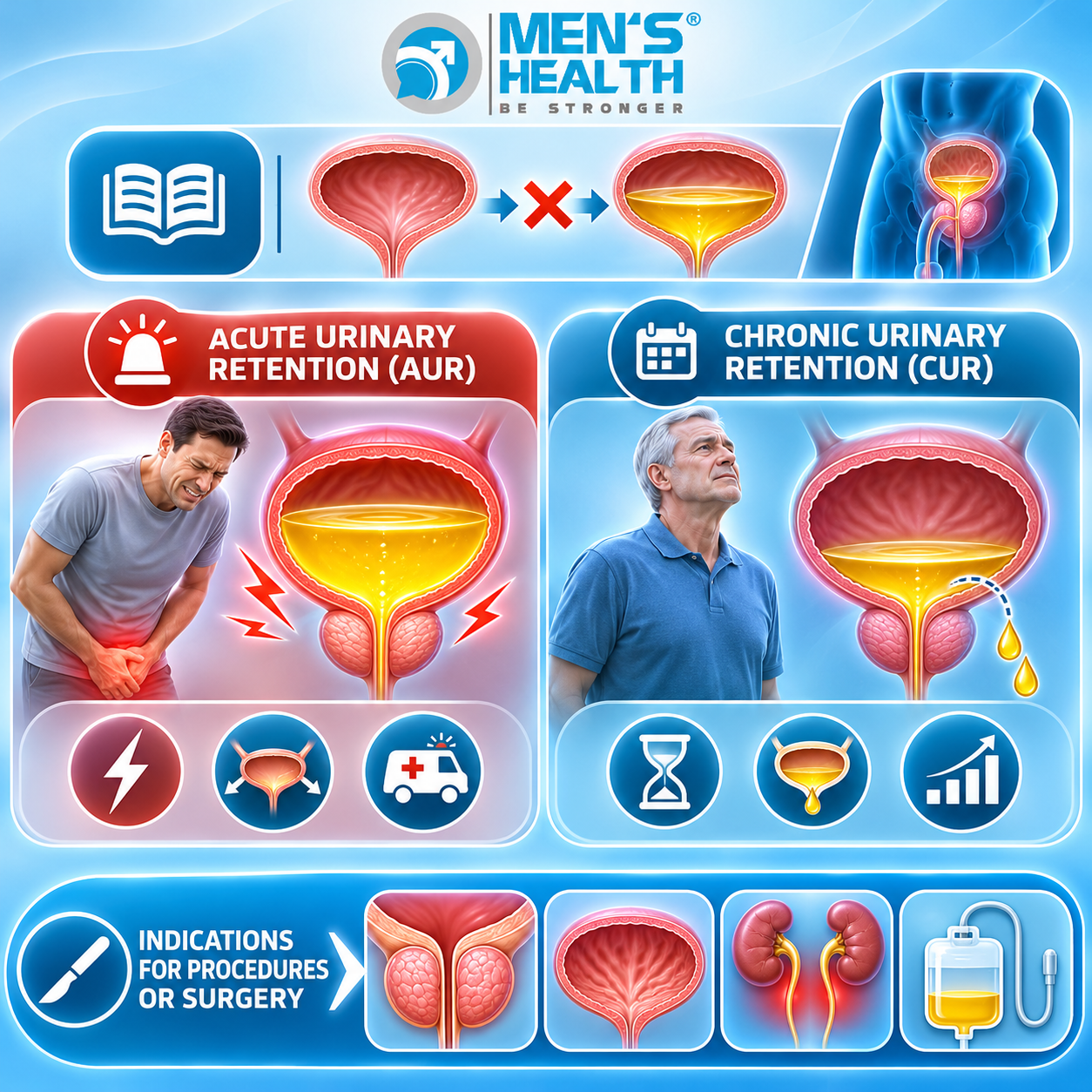
Acute Urinary Retention (AUR)
Acute urinary retention is characterized by a sudden, complete inability to pass urine accompanied by severe, agonizing suprapubic pain and a visibly or palpably distended, tender bladder. It constitutes a true urological emergency requiring immediate decompression.
Chronic Urinary Retention (CUR)
Chronic urinary retention presents as a persistent, progressive, and often painless or minimally symptomatic condition where incomplete bladder emptying leads to markedly elevated post-void residual (PVR) volumes (typically exceeding 300 mL) over an extended period. Because bladder compliance adapts gradually to increasing volume, patients frequently present with overflow incontinence, frequency, or weak stream rather than acute pain.
Underlying Pathophysiological Pathways
Normal micturition requires coordinated parasympathetic motor control via muscarinic (M2 and M3) receptors on the detrusor muscle, sympathetic storage regulation via α1A-adrenoceptors at the bladder neck and prostate, and somatic sphincter relaxation. Urinary retention develops through two primary mechanisms:
- Mechanical Outflow Obstruction: Physical narrowing of the prostatic urethra or bladder neck, most commonly caused by adenomatous transition zone enlargement in Benign Prostatic Hyperplasia (BPH), urethral stricture disease, bladder neck contracture, or prostate carcinoma.
- Functional and Neurogenic Detrusor Failure: Impairment of detrusor smooth muscle contractility (detrusor underactivity, DUA) resulting from chronic overdistension, neurogenic lesions (e.g., stroke, spinal cord injury, diabetic autonomic neuropathy), or myopathic degeneration.
2. Indications for Procedural and Surgical Interventions
Determining when a patient requires procedural decompression or definitive surgical correction depends on whether the retention is acute or chronic, the underlying etiology, and the presence of organ-threatening complications.
Absolute Indications for Emergency Procedural Decompression (AUR)
- Complete inability to void with severe suprapubic agony and physical bladder distension.
- Refractory acute urinary retention failing an initial Trial Without Catheter (TWOC) after α1-blocker administration.
- Gross hematuria with clot retention causing acute, mechanical secondary blockage.
- Associated acute urinary tract infection, acute bacterial prostatitis, or systemic sepsis.
Indications for Definitive Surgical Intervention in Chronic Urinary Retention (CUR)
- High-pressure chronic urinary retention associated with bilateral hydronephrosis, ureterectasia, and progressive post-renal renal impairment (elevated serum creatinine/reduced eGFR).
- Refractory overflow incontinence severely impairing quality of life.
- Recurrent, complicated urinary tract infections secondary to stagnant residual urine.
- Recurrent macroscopic hematuria originating from prostatic congestion or varices.
- Bladder calculi or secondary bladder diverticula resulting from chronic high-pressure outflow resistance.
3. Overview of Procedural and Surgical Options for Male Urinary Retention
Surgical and procedural management spans emergency drainage, minimally invasive endoscopic therapies, and definitive tissue ablation.
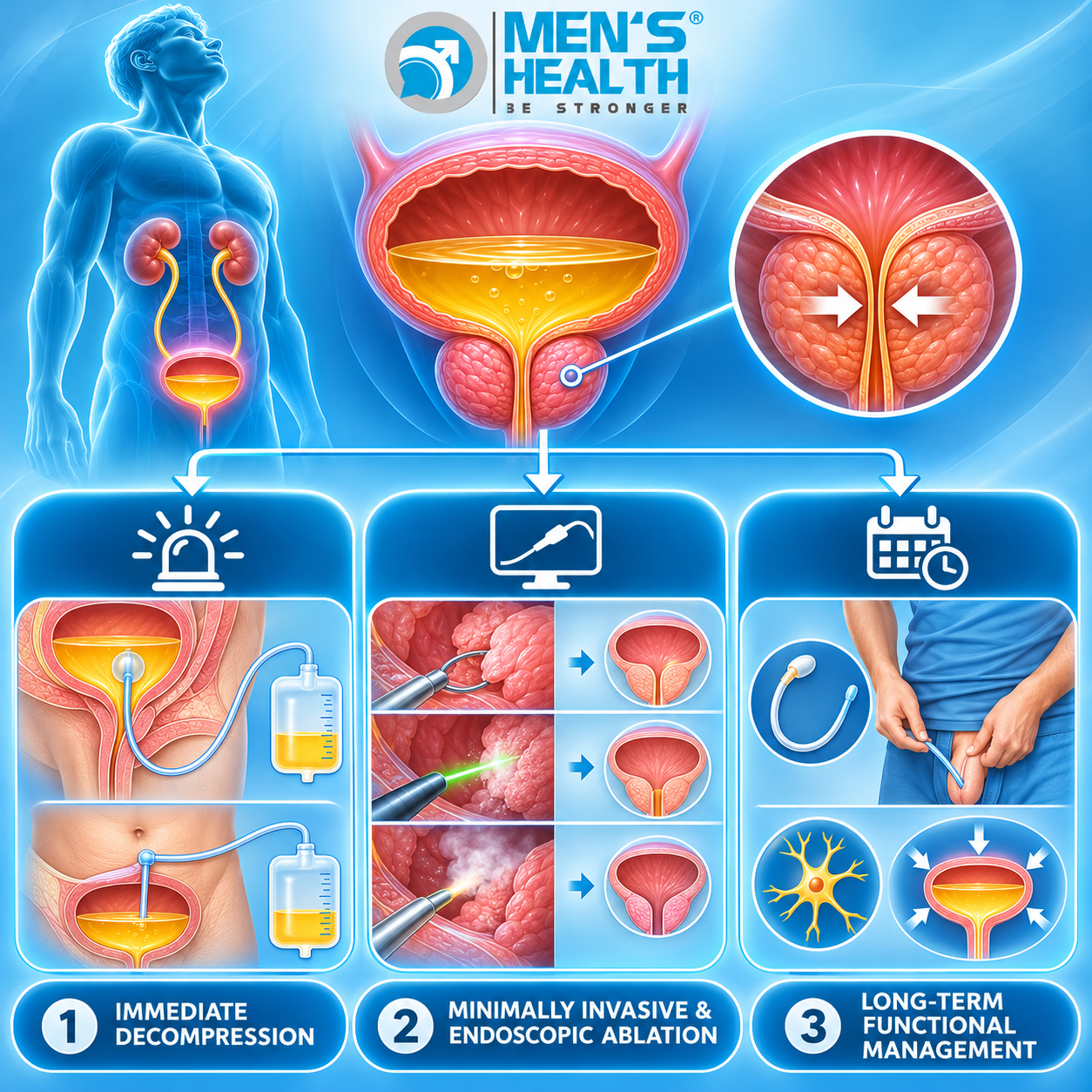
Immediate Decompression Procedures
- Transurethral Catheterization: Placement of a Foley or coudé catheter through the urethra into the bladder. Coudé tip catheters are frequently utilized in male patients to negotiate an elevated prostatic median lobe.
- Suprapubic Cystostomy (SPC): Percutaneous placement of a catheter directly into the bladder through the abdominal wall. Indicated when urethral catheterization fails due to severe false passages, urethral strictures, acute prostatitis, or pelvic trauma.
Definitive Endoscopic and Surgical Resection
- Transurethral Resection of the Prostate (TURP): The historical gold-standard electrosurgical procedure for moderate-sized prostates (30 – 80 g), involving thermal resection of obstructive transition zone adenoma tissue.
- Holmium Laser Enucleation of the Prostate (HoLEP): An advanced endoscopic enucleation technique allowing complete anatomical removal of obstructive prostatic adenoma regardless of prostate size, with minimal bleeding and rapid recovery.
- Thulium Laser Enucleation (ThuLEP): Utilizes continuous-wave thulium laser energy for precise tissue cutting and enucleation with excellent hemostatic properties.
Long-Term Management via Clean Intermittent Catheterization (CIC)
In patients where urinary retention stems primarily from severe detrusor underactivity (neurogenic bladder) rather than mechanical obstruction, surgical resection of the prostate is ineffective. In these cases, clean intermittent catheterization is the preferred long-term management strategy to preserve renal function.
4. Comparative Analysis of Surgical and Procedural Modalities
| Procedure / Modality | Primary Clinical Indication | Mechanism of Action | Key Clinical Benefits | Potential Complications |
| Urethral Catheterization | Acute urinary retention emergency | Immediate mechanical drainage | Rapid relief of bladder distension | Urethral trauma, infection, stricture |
| Suprapubic Cystostomy | Failed urethral catheter / Strictures | Direct percutaneous drainage | Avoids urethral trauma, comfortable | Perforation risk, site infection, leakage |
| TURP (Monopolar/Bipolar) | Obstructive BPH (30 – 80 g) | Electrosurgical tissue resection | Proven efficacy, durable relief | Bleeding, TUR syndrome, retrograde ejaculation |
| HoLEP / ThuLEP | Moderate to very large BPH | Laser enucleation of adenoma | Minimal bleeding, treats large glands | Transient stress incontinence, dysuria |
| Clean Intermittent Catheter (CIC) | Severe detrusor underactivity (DUA) | Periodic volitional emptying | Preserves bladder cycling, low indwelling risk | Urinary tract infections, urethral discomfort |
5. Pre-Surgical Evaluation and Diagnostic Protocols
Prior to performing elective surgery for urinary retention, a thorough diagnostic workup is mandatory to confirm the underlying etiology and assess surgical fitness.
- Post-Void Residual (PVR) and Renal Ultrasonography: Quantifies residual volume and evaluates upper urinary tract integrity for hydronephrosis or parenchymal thinning.
- Urinalysis and Urine Culture: Mandatory to rule out active urinary tract infections before instrumentation or surgical intervention.
- Serum Creatinine and eGFR: Assesses baseline renal function and screens for post-renal azotemia.
- Serum Prostate-Specific Antigen (PSA): Evaluates prostatic volume and screens for adenocarcinoma, keeping in mind that acute retention or catheterization transiently elevates PSA levels.
- Urodynamic Studies (UDS): Pressure-flow studies performed in complex cases to differentiate mechanical bladder outlet obstruction (BOO) from neurogenic detrusor underactivity (DUA).
- Flexible Cystourethroscopy: Endoscopic visualization of the urethral lumen, prostatic urethra, and bladder mucosa to rule out strictures, bladder neck contractures, or intravesical lesions.
6. Post-Intervention Care, Pharmacological Support, and Follow-Up
Following procedural decompression or definitive surgery, structured post-operative care and targeted pharmacotherapy optimize recovery.
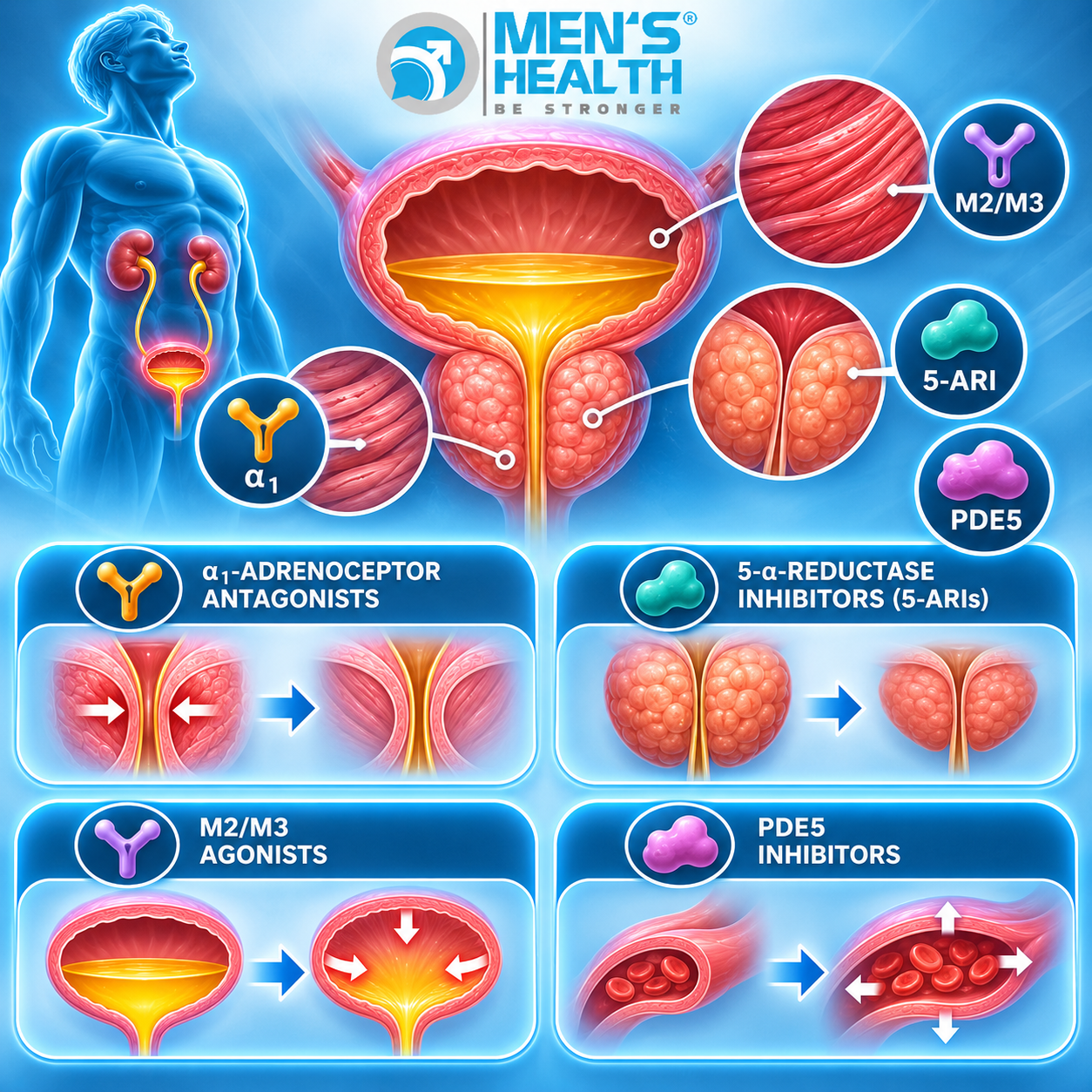
Role of Pharmacotherapy After Procedures
- Alpha-1 Adrenoceptor Antagonists (e.g., Tamsulosin, Silodosin): Frequently prescribed short-term post-operatively or during a Trial Without Catheter (TWOC) to relax remaining smooth muscle tone at the bladder neck and prostatic fossa.
- 5-Alpha Reductase Inhibitors (e.g., Finasteride, Dutasteride): Utilized pre-operatively or long-term post-operatively to reduce microvessel density in the prostate bed, minimizing post-operative hematuria and shrinking residual prostatic tissue.
Managing Post-Obstructive Diuresis
Rapid decompression of high-pressure chronic retention can trigger post-obstructive diuresis – a massive, transient polyuria (>200 mL/hr) resulting from impaired renal concentrating ability and solute washout. Close inpatient monitoring of fluid balance, blood pressure, and serum electrolytes is critical during the initial 24 – 48 hours post-decompression.
7. Comprehensive Urological Care at Men’s Health Center and Men’s Health Pharmacy
Managing acute and chronic urinary retention requires coordinated clinical care, precise diagnostic evaluation, and expert pharmaceutical oversight.

Men’s Health Pharmacy, an integral unit within the Men’s Health Center ecosystem founded by Dr. Tra Anh Duy (MD, PhD, Spec. II), provides specialized clinical pharmacy services for male urological health. At Men’s Health, patients receive clinical consultations from experienced urologists and pharmacists to ensure that prescribed therapeutic regimens – including α1-blockers, 5-ARIs, and supportive urological agents – are tailored to their urodynamic profiles and post-procedural findings. The facility adheres strictly to evidence-based clinical protocols, maintaining complete confidentiality, safety, and individual privacy throughout evaluation, drug delivery, and follow-up.
8. Lifestyle Modifications and Preventive Strategies
- Timed Voiding Schedules: Implementing structured voiding intervals every 2 to 3 hours during daytime to prevent excessive detrusor overdistension.
- Double Voiding Technique: Attempting a second micturition effort 30 – 60 seconds following initial voiding to clear residual intravesical volume.
- Fluid Regulation: Maintaining appropriate daily fluid intake (1.5 – 2.0 L/day) while restricting fluid consumption 2 to 3 hours before sleep to reduce nocturnal volume loading.
- Avoiding Pharmacological Triggers: Refraining from over-the-counter cold preparations containing sympathomimetic decongestants (e.g., pseudoephedrine) or sedating H1-antihistamines without prior urological authorization.
9. Common Clinical Pitfalls in Managing Retention Interventions
- Delaying Surgical Intervention in High-Pressure Chronic Retention: Relying solely on indwelling catheters or medical therapy when bilateral hydronephrosis and progressive renal impairment demand definitive surgical decompression.
- Unmonitored Rapid Decompression: Failing to monitor post-obstructive diuresis following rapid bladder decompression, leading to profound hypovolemic shock and electrolyte derangements.
- Assuming All Retention Responds to Prostate Surgery: Performing prostate resection on a patient whose retention is driven entirely by neurogenic detrusor underactivity rather than mechanical obstruction, resulting in persistent urinary retention post-surgery.
- Improper Timing of Trial Without Catheter (TWOC): Removing catheters prematurely before resolving underlying acute prostatic inflammation or infection, leading to recurrent acute retention episodes.
10. Surgical and Procedural Interventions for Acute and Chronic Urinary Retention and Frequently Asked Questions
When is emergency catheterization required for urinary retention?
Emergency catheterization is required immediately when a patient experiences acute urinary retention characterized by a complete inability to void accompanied by severe, agonizing suprapubic pain and bladder distension.
Can chronic urinary retention be treated with medication alone without surgery?
In selected cases of mild chronic retention where renal function is normal and infection is absent, medical therapy with α1-blockers and 5-ARIs may be attempted. However, significant high-pressure retention with hydronephrosis requires surgical intervention.
What is the difference between TURP and laser enucleation (HoLEP)?
TURP involves electrosurgical resection of obstructive prostate tissue in smaller chunks, whereas HoLEP uses laser energy to enucleate the entire adenoma along surgical planes, making it ideal for very large prostates with lower bleeding risks.
Why do some men still have trouble urinating after prostate surgery?
If urinary retention was caused by neurogenic detrusor underactivity (a weakened bladder muscle) rather than mechanical obstruction alone, relieving the prostate blockage may not fully restore spontaneous voiding, requiring intermittent catheterization.
Is suprapubic cystostomy safer than urethral catheterization for long-term drainage?
Suprapubic cystostomy avoids urethral trauma, stricture formation, and discomfort associated with long-term transurethral indwelling catheters, making it preferred for extended or permanent urinary diversion.
Conclusion and Expert Clinical Advice
Timely procedural decompression and definitive surgical intervention are vital components in managing acute and chronic urinary retention, preventing irreversible renal damage and restoring lower urinary tract function. Whether utilizing emergency catheterization, minimally invasive endoscopic ablation, or laser enucleation, therapy must be guided by rigorous urodynamic and imaging evaluations.
Patients experiencing urinary hesitancy, a weak stream, overflow incontinence, or sudden voiding failure should avoid self-diagnosis and refrain from delaying professional care. Seeking clinical evaluation at a specialized urological facility such as the Men’s Health Center ensures precise diagnostic assessment, specialist surgical management, and dedicated clinical pharmacy support for long-term urological health.