

Urinary retention in men is a major lower urinary tract emergency or chronic pathology, classified into acute and chronic forms, requiring accurate differential diagnosis to prevent upper urinary tract damage and renal failure.
1. Understanding Urinary Retention: Definitions and Clinical Rationale
What is Urinary Retention in Men?
Urinary retention is the inability to completely or partially empty the bladder despite physiological effort. In male patients, this condition primarily stems from anatomical obstruction of the bladder outlet or functional failure of the detrusor muscle.
Urinary retention is divided into two distinct clinical entities:
- Acute Urinary Retention (AUR): A sudden, painful inability to void despite a full bladder, constituting a medical emergency that requires prompt urinary catheterization.
- Chronic Urinary Retention (CUR): A persistent, non-painful or minimally symptomatic state characterized by progressive incomplete bladder emptying, leading to markedly elevated post-void residual (PVR) volumes over time.
Pathophysiological Mechanisms
The physiological balance of normal micturition relies on the coordination of detrusor muscle contraction mediated by parasympathetic cholinergic fibers ( and receptors) and internal/external sphincter relaxation.
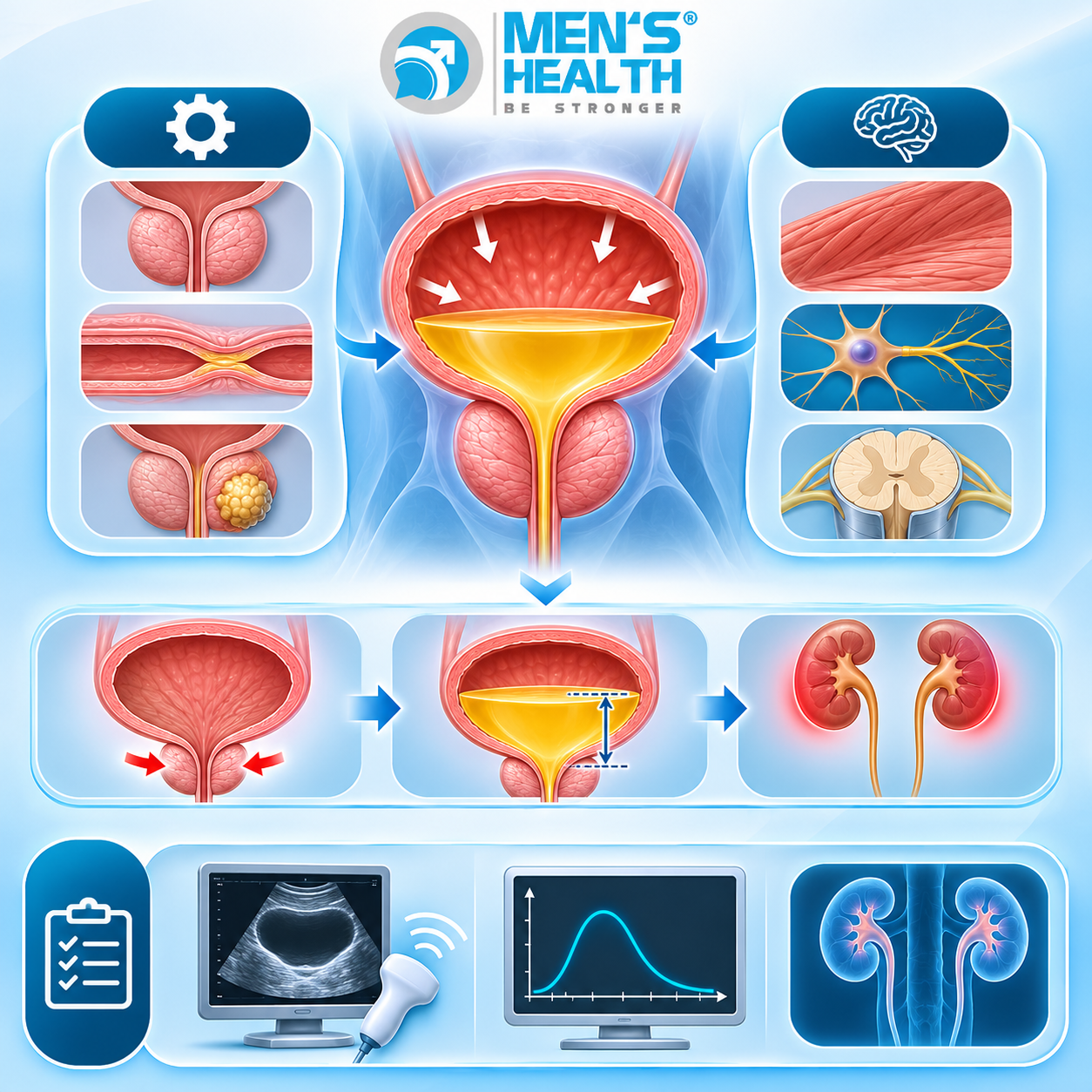
Urinary retention occurs through two main mechanisms:
- Increased Bladder Outlet Resistance (Mechanical Obstruction): Physical narrowing of the prostatic urethra or bladder neck, typically due to adenomatous enlargement of the prostate (BPH), urethral strictures, or pelvic tumors.
- Decreased Detrusor Contractility (Functional/Myogenic Failure): Failure of the bladder wall smooth muscle to generate sufficient intravesical pressure during voiding, often secondary to chronic neurogenic disease, prolonged bladder overdistension, or advanced metabolic disease.
2. Etiology and Risk Factors for Male Urinary Retention
Primary Pathological Causes
- Benign Prostatic Hyperplasia (BPH): The most common etiology in men over 50 years of age. Hyperplasia of the transition zone compresses the prostatic urethra.
- Urethral Stricture Disease: Scar tissue formation within the spongy or membranous urethra resulting from prior trauma, infection (gonococcal urethritis), or iatrogenic instrumentation.
- Prostate Malignancy: Advanced adenocarcinoma of the prostate directly invading the bladder neck or obstructing the urethral lumen.
- Neurological Pathologies: Neurogenic bladder secondary to Parkinson’s disease, spinal cord trauma, multiple sclerosis, stroke, or severe diabetic autonomic neuropathy.
- Prostatitis and Pelvic Infections: Severe inflammatory edema in acute bacterial prostatitis secondary to local tissue swelling.
- Pharmacological Agents: Medications with potent anticholinergic, sympathomimetic, or opioid activity (e.g., first-generation antihistamines, tricyclic antidepressants, decongestants) that impair detrusor contraction or increase bladder neck tone.
Key Risk Factors
- Advanced age ( years).
- Pre-existing lower urinary tract symptoms (LUTS) secondary to untreated BPH.
- Poorly controlled Type 2 Diabetes Mellitus.
- History of transurethral procedures, pelvic surgery, or radiation therapy.
- High alcohol intake or exposure to cold temperatures (triggers sympathetic drive and bladder neck constriction).
3. Clinical Manifestations: Distinguishing Acute vs. Chronic Retention
Recognizing the key clinical differences between acute and chronic presentations is essential for guiding emergency care and long-term treatment strategies.
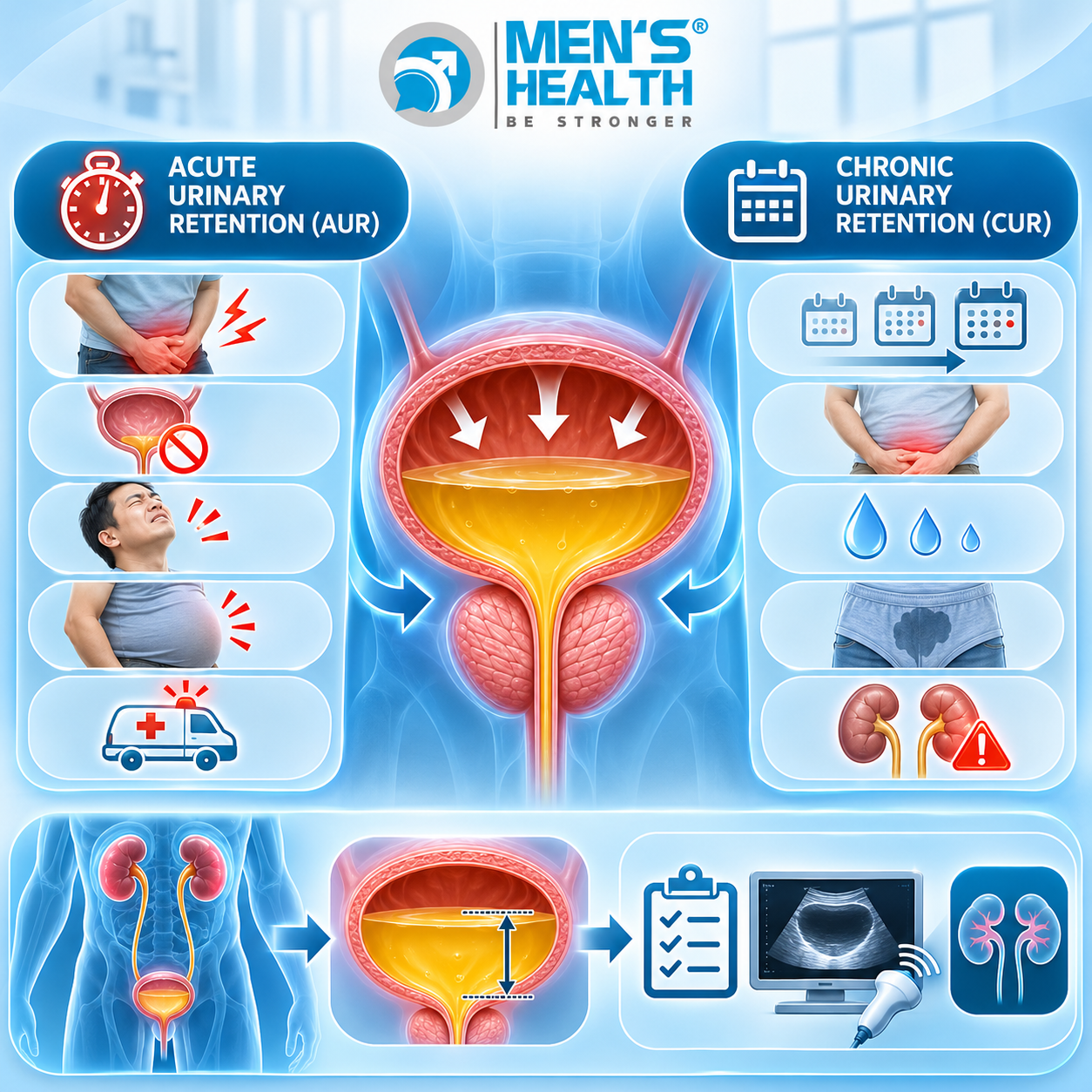
Symptom Comparison
| Feature | Acute Urinary Retention (AUR) | Chronic Urinary Retention (CUR) |
|---|---|---|
| Onset | Sudden, acute hours-long development | Gradual, chronic weeks to months |
| Pain Level | Severe, excruciating suprapubic distress | Minimal discomfort, dull pressure, or painless |
| Ability to Void | Complete inability to pass urine | Able to void small volumes with high residual |
| Incontinence | Absent (complete block) | Paradoxical / Overflow incontinence common |
| PVR Volume | High (500 – 1000 mL) | Markedly high (500 – 2000 mL) |
| Renal Impairment Risk | Transient prerenal stress | High risk of bilateral hydronephrosis & chronic renal failure |
Red Flag Symptoms Requiring Urgent Intervention
- Severe suprapubic pain accompanied by an inability to void.
- Signs of systemic sepsis (fever, rigors, confusion) in a patient with a distended bladder.
- Gross hematuria or purulent urethral discharge.
- Associated neurological deficits (loss of anal sphincter tone, saddle anesthesia, acute lower extremity weakness).
- Elevated serum creatinine or persistent nausea/vomiting indicative of uremic syndrome secondary to post-renal obstruction.
4. Comprehensive Clinical Evaluation and Diagnostic Protocols
Evaluating urinary retention requires a structured diagnostic approach to differentiate mechanical obstruction from neurogenic bladder failure.
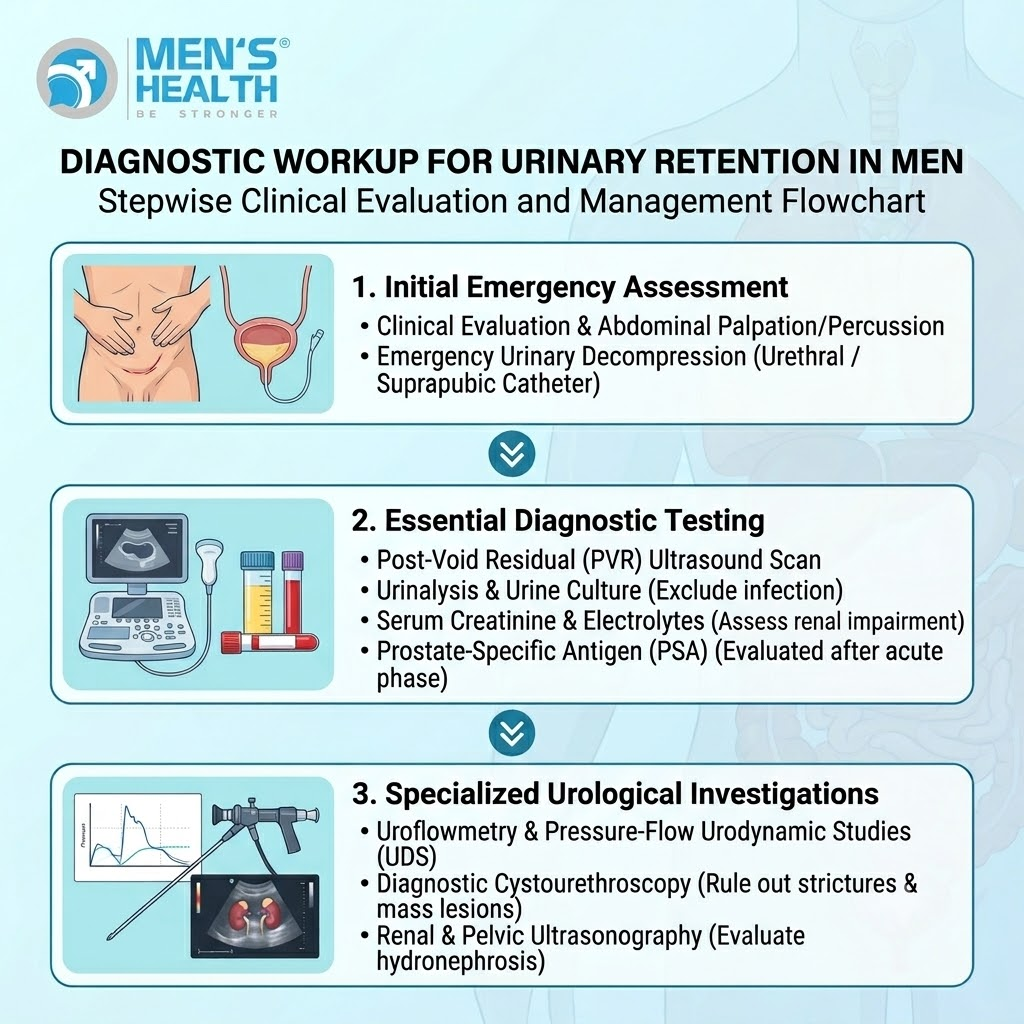
- Physical Examination: Suprapubic palpation and percussion to confirm a dull, distended bladder mass. Digital Rectal Examination (DRE) to evaluate prostate volume, sphincter tone, and nodularity.
- Post-Void Residual (PVR) Ultrasound: Non-invasive imaging measuring residual urine immediately post-voiding. A PVR is generally diagnostic of chronic urinary retention.
- Laboratory Diagnostics: Serum creatinine and blood urea nitrogen (BUN) to rule out post-renal acute kidney injury. Urinalysis and urine culture to exclude urinary tract infections.
- Renal and Pelvic Ultrasound: Evaluates upper tract involvement, detecting upper urinary tract dilation, bilateral hydronephrosis, and parenchymal thinning.
- Multi-Channel Urodynamic Studies (UDS): Performed following acute stabilization to differentiate bladder outlet obstruction (BOO) from detrusor underactivity (DUA).
- Cystourethroscopy: Endoscopic visualization of the urethra, prostate lumen, and bladder mucosa to detect urethral strictures, bladder neck contractures, or bladder calculi.
5. Comparative Management Strategies for Male Retention
Treatment strategies differ depending on whether the retention is acute or chronic. Emergency decompression takes priority in acute cases, whereas definitive restoration of bladder emptying guides chronic management.
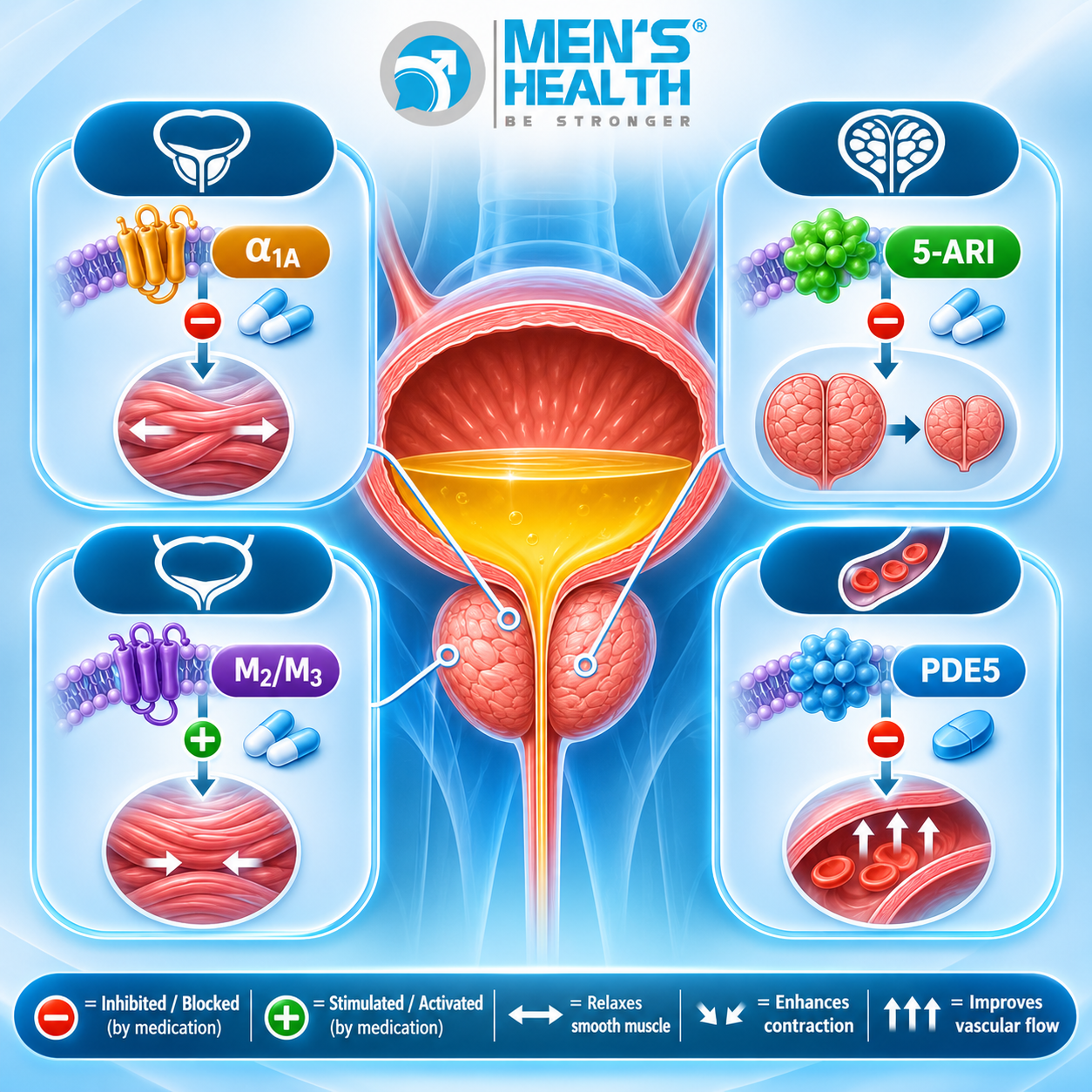
Pharmacotherapy Classes
Alpha-1 Adrenoceptor Antagonists (-Blockers)
- Mechanism: Block -adrenoceptors in the prostate stroma and bladder neck, reducing dynamic muscular tone and urethral resistance.
- Representative Agents: Tamsulosin, Silodosin, Alfuzosin, Doxazosin.
- Clinical Role: First-line medical therapy prior to a Trial Without Catheter (TWOC) following acute retention.
- Adverse Effects: Orthostatic hypotension, dizziness, retrograde ejaculation.
5-Alpha Reductase Inhibitors (5-ARIs)
- Mechanism: Inhibit the conversion of testosterone to dihydrotestosterone (DHT), inducing apoptosis of prostatic epithelial cells and reducing prostate volume over 3 to 6 months.
- Representative Agents: Finasteride, Dutasteride.
- Clinical Role: Reduces long-term risk of recurrent AUR and surgical intervention in men with enlarged prostates (>30 mL).
- Adverse Effects: Decreased libido, erectile dysfunction, gynecomastia.
Cholinergic Agonists (Parasympathomimetics)
- Mechanism: Direct stimulation of muscarinic receptors to promote detrusor smooth muscle contraction.
- Representative Agents: Bethanechol.
- Clinical Role: Limited use in non-obstructive urinary retention secondary to neurogenic detrusor underactivity.
- Adverse Effects & Contraindications: Abdominal cramps, diarrhea, bronchospasm, bradycardia. Strictly contraindicated in mechanical obstruction.
Comparison of Medical Therapies
| Property | α1-Blockers (e.g., Tamsulosin) | 5-ARIs (e.g., Dutasteride) | Cholinergic Agonists (e.g., Bethanechol) |
|---|---|---|---|
| Primary Target | α1A-Adrenoceptors | 5-α Reductase Enzyme | Muscarinic Receptors |
| Primary Site | Prostatic smooth muscle | Prostatic epithelial tissue | Detrusor smooth muscle |
| Mechanism | Relaxes dynamic obstruction | Reduces static prostate size | Increases bladder contraction |
| Onset of Action | 24 to 72 hours | 3 to 6 months | Rapid (Hours) |
| Key Risk / Side Effect | Orthostatic hypotension | Sexual dysfunction, low libido | Abdominal cramps, bronchospasm |
| Use in Mechanical BOO | Recommended | Recommended for large prostates | Strictly Contraindicated |
6. Surgical and Interventional Management
When conservative or pharmacological management fails, procedural interventions are indicated:
- Immediate Catheterization: Transurethral catheterization or suprapubic cystostomy to relieve bladder distension and manage post-obstructive diuresis.
- Transurethral Resection of the Prostate (TURP): Gold-standard surgical intervention for mechanical obstruction secondary to BPH.
- Laser Enucleation / Ablation (HoLEP / ThuLEP): Effective endoscopic procedures for large-volume prostatic obstruction with low bleeding risk.
- Clean Intermittent Catheterization (CIC): Preferred long-term strategy for chronic retention secondary to neurogenic detrusor failure.
7. Professional Support at Men’s Health Pharmacy
Managing acute and chronic urinary retention requires coordinated clinical care, proper diagnostic evaluation, and expert pharmaceutical oversight.

Men’s Health Pharmacy, a core component of the Men’s Health Center ecosystem founded by Dr. Tra Anh Duy (MD, PhD, Spec. II), delivers specialized pharmaceutical support for male urological health. At Men’s Health, patients receive tailored consultations from experienced urologists and clinical pharmacists to ensure that all prescribed medications—including alpha-blockers, 5-ARIs, and targeted urological therapies—align with specific urodynamic and diagnostic profiles. The facility maintains high standards of clinical safety, patient privacy, absolute confidentiality, and evidence-based practice across all stages of treatment and follow-up care.
8. Lifestyle Modifications and Non-Pharmacological Interventions
- Fluid Management: Avoid fluid overloading while maintaining adequate hydration (1.5 to 2.0 L/day) to prevent urinary tract infections.
- Timed Voiding: Implement a strict voiding schedule every 2–3 hours during daytime to reduce strain on an underactive detrusor muscle.
- Double Voiding Technique: Wait 30–60 seconds after initial voiding and attempt to empty the bladder again to reduce post-void residual volume.
- Avoidance of Bladder Suppressants: Minimize intake of alcohol, excessive caffeine, and cold medications containing sympathomimetics or anticholinergics without prior medical approval.
9. Common Clinical Pitfalls in Managing Male Retention
- Prescribing Antimuscarinics Without Measuring PVR: Administering anticholinergic drugs for urgency symptoms in a patient with unsuspected high post-void residual can precipitate acute urinary retention.
- Overlooking Silent Chronic Retention: Mistaking overflow incontinence in painless chronic retention for primary overactive bladder, leading to inappropriate drug therapy.
- Failing to Monitor Post-Obstructive Diuresis: Rapid decompression of long-standing high-pressure chronic retention can trigger severe polyuria, resulting in profound fluid and electrolyte depletion.
- Self-Medication with Non-Prescription Agents: Using over-the-counter herbal remedies or unprescribed drugs without formal diagnostic evaluation risks masking progressive renal failure.
10. Frequently Asked Questions
What is the main difference between acute and chronic urinary retention?
Acute retention is a sudden, painful inability to void that requires immediate emergency catheterization. Chronic retention develops gradually, is often painless, and presents with a high post-void residual volume, sometimes manifesting as overflow incontinence.
Can an enlarged prostate cause silent urinary retention?
Yes. Benign prostatic hyperplasia (BPH) can cause chronic obstruction where the bladder gradually distends without severe pain. Patients may only notice frequency, a weak stream, or urinary leakage, despite carrying over a liter of residual urine.
What is overflow incontinence in chronic retention?
Overflow incontinence occurs when the bladder becomes so distended with residual urine that intravesical pressure exceeds sphincter resistance, causing small amounts of urine to leak out involuntarily.
Is acute urinary retention a medical emergency?
Yes. Acute retention requires immediate bladder decompression via urethral or suprapubic catheterization to relieve severe pain, prevent bladder wall rupture, and avoid post-renal acute kidney injury.
Why shouldn’t men with urinary retention self-medicate?
Urinary retention can stem from underlying mechanical obstruction, neurogenic dysfunction, or malignancy. Taking medications without proper diagnostic evaluation risks worsening obstruction, delaying surgical care, or causing acute renal failure.
Conclusion and Expert Clinical Advice
Urinary retention in men encompasses a clinical spectrum ranging from acute, painful emergencies to chronic, silent conditions that threaten upper tract renal function. Accurate differentiation between mechanical bladder outlet obstruction and functional detrusor failure—supported by post-void residual ultrasound, serum creatinine, and urodynamic testing—is essential for guiding management.
Patients experiencing urinary hesitancy, persistent incomplete bladder emptying, or sudden voiding failure should avoid self-diagnosis or unprescribed medical treatments. Timely evaluation at a specialized facility such as the Men’s Health Center ensures precise diagnostic testing, expert physician management, and comprehensive pharmaceutical support for optimal urological health.