

Acute and chronic urinary retention represent significant lower urinary tract disorders that disrupt normal micturition dynamics. Beyond immediate bladder distress and renal risks, male patients frequently question whether urinary retention and its underlying etiologies impair erectile capacity, seminal emission, and overall reproductive health.
1. What Are Acute and Chronic Urinary Retention? Mechanisms and Definitions
Urinary retention is defined as the inability to completely or partially evacuate urine from the urinary bladder despite active physiological effort. In male clinical practice, this pathology is broadly categorized into two distinct forms based on onset duration, pain intensity, and residual urinary volume:
- Acute Urinary Retention (AUR): A sudden, painful, and complete inability to void despite a maximally distended bladder. It constitutes a clinical emergency requiring immediate catheter decompression.
- Chronic Urinary Retention (CUR): A persistent, often painless or minimally symptomatic condition characterized by progressive, incomplete bladder emptying, leading to markedly elevated post-void residual (PVR) volumes over an extended period.
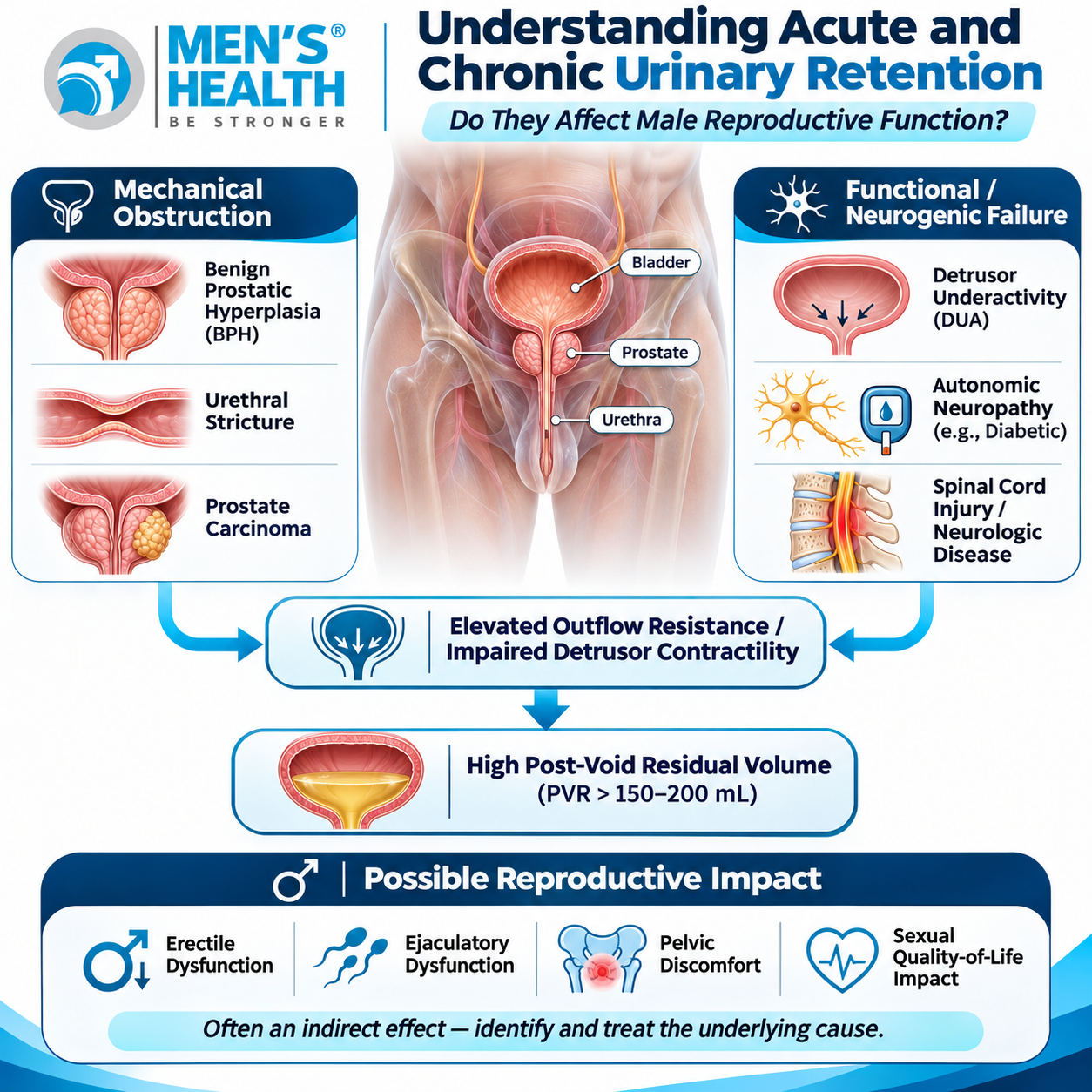
Underlying Pathophysiological Pathways
Normal micturition relies on coordinated parasympathetic cholinergic stimulation via muscarinic (M2 and M3) receptors on the detrusor muscle, paired with sympathetic relaxation of the bladder neck and prostate. Retention occurs through two primary mechanisms:
- Mechanical Obstruction: Physical narrowing of the prostatic urethra or bladder neck, most commonly caused by adenomatous enlargement of the transition zone in Benign Prostatic Hyperplasia (BPH), urethral strictures, or prostatic malignancies.
- Functional and Neurogenic Failure: Impairment of detrusor smooth muscle contractility (Detrusor Underactivity – DUA) resulting from chronic overdistension, autonomic neuropathy (e.g., in uncontrolled diabetes mellitus), or spinal cord pathology.
2. Do Acute and Chronic Urinary Retention Affect Male Reproductive Function?
The anatomical structures governing urination, erection, and ejaculation share close pelvic quarters. Consequently, conditions causing urinary retention—and the physiological strain they impose—can significantly intersect with male sexual and reproductive health.
Impact on Erectile Function and Pelvic Hemodynamics
Erectile dysfunction (ED) frequently coexists with urinary retention and lower urinary tract symptoms (LUTS). The underlying mechanisms linking retention and ED include:
- Vascular Insufficiency: Chronic pelvic atherosclerosis and reduced pelvic microvascular perfusion affect both the bladder base and the cavernous arteries of the penis.
- Nitric Oxide Synthase Downregulation: Chronic bladder outlet obstruction induces localized ischemia and hypoxia within pelvic autonomic nerves and smooth muscle tissue, impairing the nitric oxide-cyclic GMP pathway necessary for achieving rigid erections.
- Psychological Burden: The constant anxiety, sleep disruption from nocturia, and discomfort associated with chronic or impending retention create significant psychological distress, which suppresses libido and erectile performance.
Effects on Ejaculation and Seminal Emission
The prostate gland, seminal vesicles, and ejaculatory ducts are directly compressed or influenced by the pathologies causing urinary retention:
- Anatomical Distortion: Severe prostatic enlargement alters the geometry of the verumontanum and ejaculatory ducts, potentially causing discomfort or altered seminal emission.
- Therapeutic Interventions: Medical therapies (such as α1-blockers or 5-α reductase inhibitors) or surgical procedures (such as Transurethral Resection of the Prostate – TURP) utilized to treat the underlying cause of retention can lead to retrograde ejaculation or anejaculation, impacting natural fertility.
Direct and Indirect Consequences on Male Fertility
While urinary retention itself does not directly destroy germ cells in the testes, it affects reproductive potential through systemic and local pathways:
- Pelvic Inflammation and Infection: Chronic bacterial prostatitis or subclinical urinary tract infections associated with high residual urine can alter seminal fluid composition, increase oxidative stress, and impair sperm motility.
- Endocrine and Systemic Stress: Advanced chronic retention leading to bilateral hydronephrosis and post-renal uremia causes systemic metabolic toxicity, which suppresses the hypothalamic-pituitary-testicular (HPT) axis, reducing testosterone synthesis and spermatogenesis.
3. Primary Causes and Risk Factors of Urinary Retention in Men
Major Etiological Factors
- Benign Prostatic Hyperplasia (BPH): The predominant cause in men over 50 years of age, where transition zone enlargement obstructs urinary flow.
- Urethral Stricture Disease: Scarring of the urethral lumen resulting from prior trauma, instrumentation, or infection.
- Neurogenic Bladder: Conditions like Parkinson’s disease, multiple sclerosis, stroke, or severe diabetic neuropathy disrupting neural control over the bladder.
- Acute Prostatic Inflammation: Severe inflammatory edema secondary to acute bacterial prostatitis.
- Pharmacological Triggers: Administration of medications with anticholinergic properties, sympathomimetic decongestants, or opioids that increase outlet resistance or impair detrusor contractility.
Key Risk Factors
- Advanced age (≥ 60 years).
- Untreated or progressive lower urinary tract symptoms.
- Poorly controlled Type 2 Diabetes Mellitus.
- History of pelvic surgery, radiation, or prior urological instrumentation.
4. Clinical Manifestations and Red Flag Symptoms
Symptom Comparison
| Clinical Feature | Acute Urinary Retention (AUR) | Chronic Urinary Retention (CUR) |
| Onset | Sudden, rapid development over hours | Gradual development over months |
| Pain Intensity | Severe, agonizing suprapubic pain | Minimal or absent pain, dull pressure |
| Voiding Capability | Total inability to pass urine | Able to pass small volumes with high residual |
| Incontinence | Absent (complete obstruction) | Paradoxical / Overflow incontinence common |
| PVR Volume | High (500 – 1000+ mL) | Markedly high (500 – 2000+ mL) |
| Renal Risk | Bladder ischemia & acute distress | Hydronephrosis & chronic renal failure |
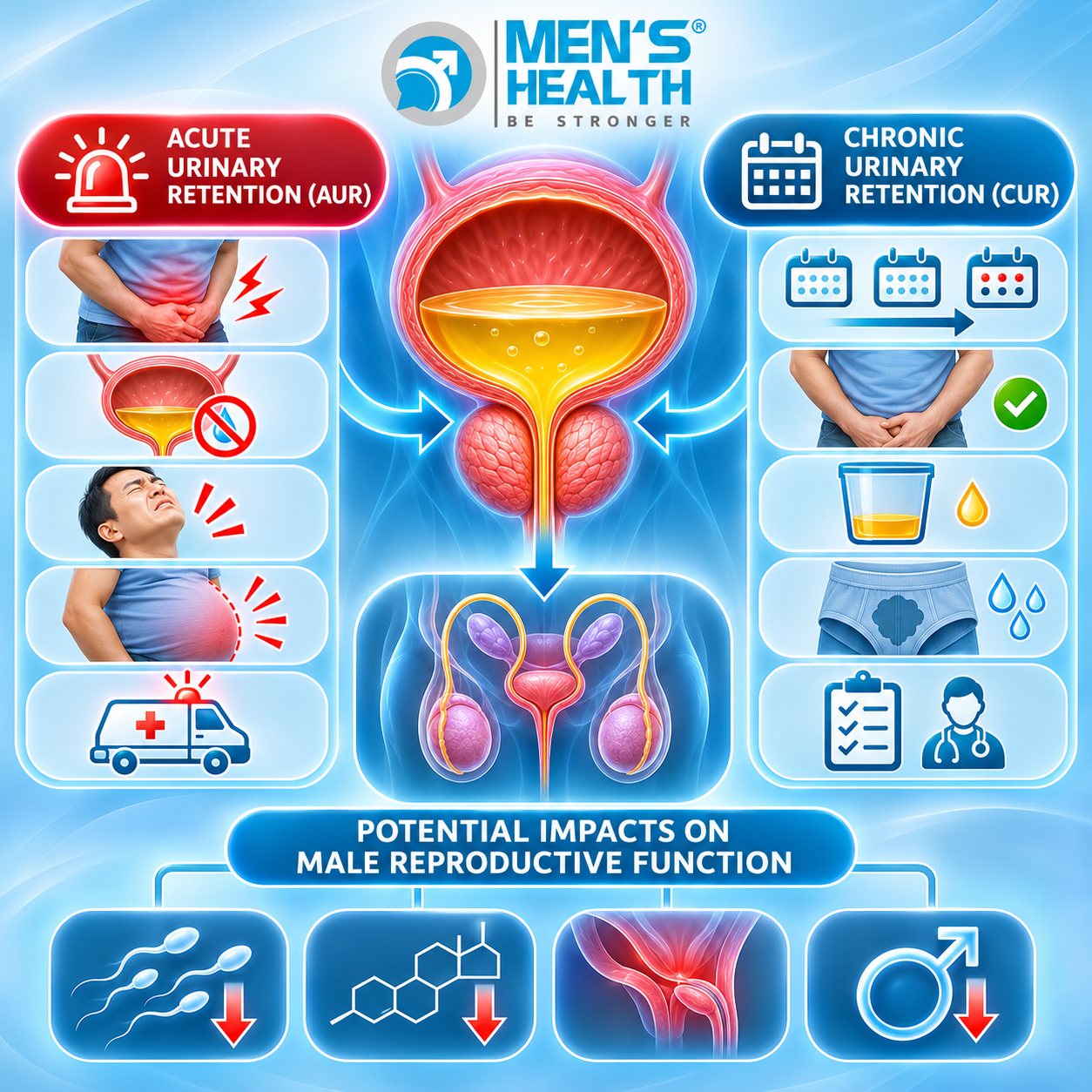
Urgent Red Flag Symptoms Requiring Immediate Care
- Complete inability to void accompanied by severe suprapubic agony.
- Fever, chills, or systemic toxicity suggesting acute infection or prostatitis.
- New-onset neurological deficits such as lower extremity weakness or saddle anesthesia.
- Gross hematuria with clot retention causing acute blockage.
- Unexplained lethargy, nausea, or vomiting indicative of post-renal uremic syndrome.
5. Comprehensive Diagnostic Pathways for Urinary Retention
Establishing the precise etiology requires a structured clinical evaluation moving from non-invasive assessments to specialized diagnostic investigations.
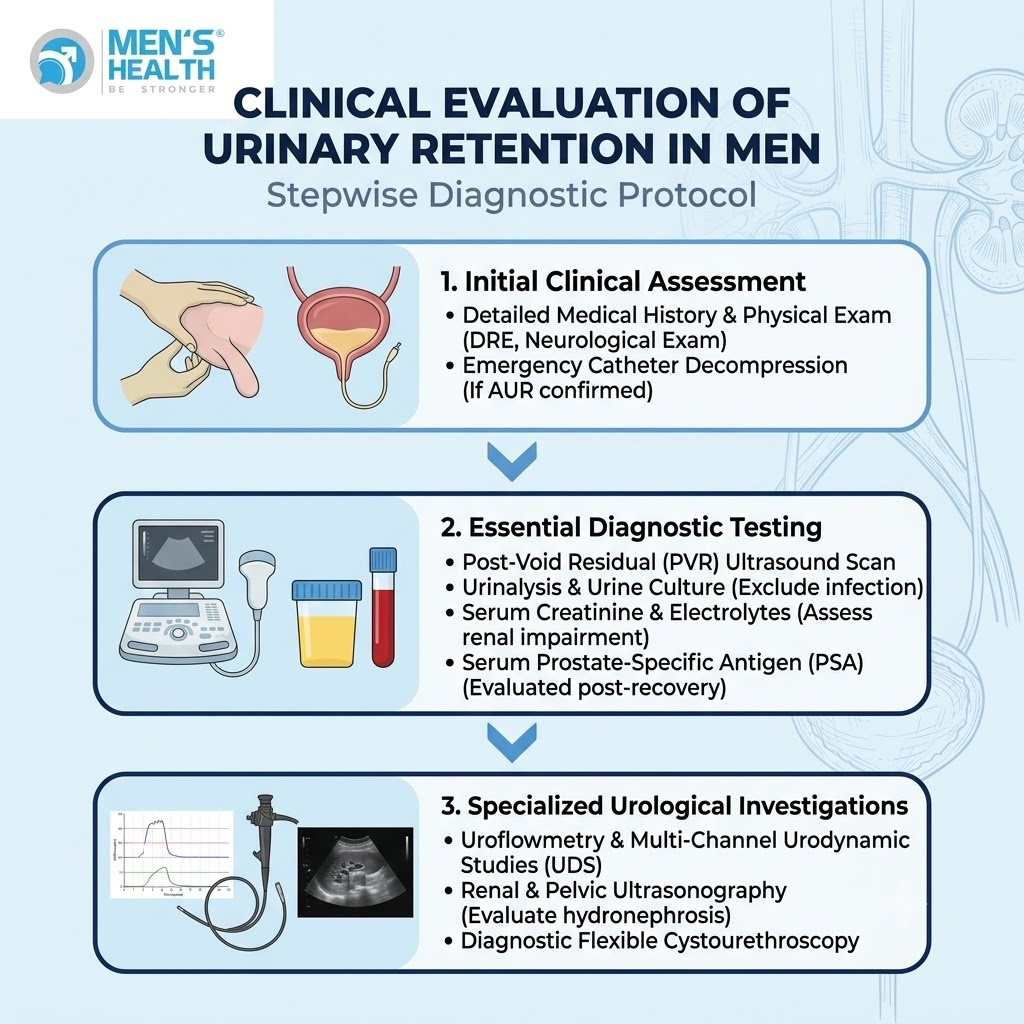
- Physical Examination: Abdominal palpation and percussion to identify a distended bladder. Digital Rectal Examination (DRE) to evaluate prostate volume, consistency, and symmetry.
- Post-Void Residual (PVR) Measurement: Non-invasive transabdominal ultrasound. A PVR > 300 mL is diagnostic of chronic retention.
- Laboratory Diagnostics: Serum creatinine and blood urea nitrogen (BUN) to screen for post-renal acute kidney injury; urinalysis to rule out urinary tract infections.
- Uroflowmetry and Urodynamic Studies: Evaluates maximum flow rate (Qmax) and pressure-flow dynamics to differentiate bladder outlet obstruction from detrusor underactivity.
- Renal and Pelvic Ultrasonography: Assesses upper urinary tract dilation, parenchymal thickness, and bilateral hydronephrosis.
6. Therapeutic Management and the Role of Medical Therapy
Management focuses on relieving urinary obstruction, preserving renal function, and addressing coexisting sexual or reproductive concerns.
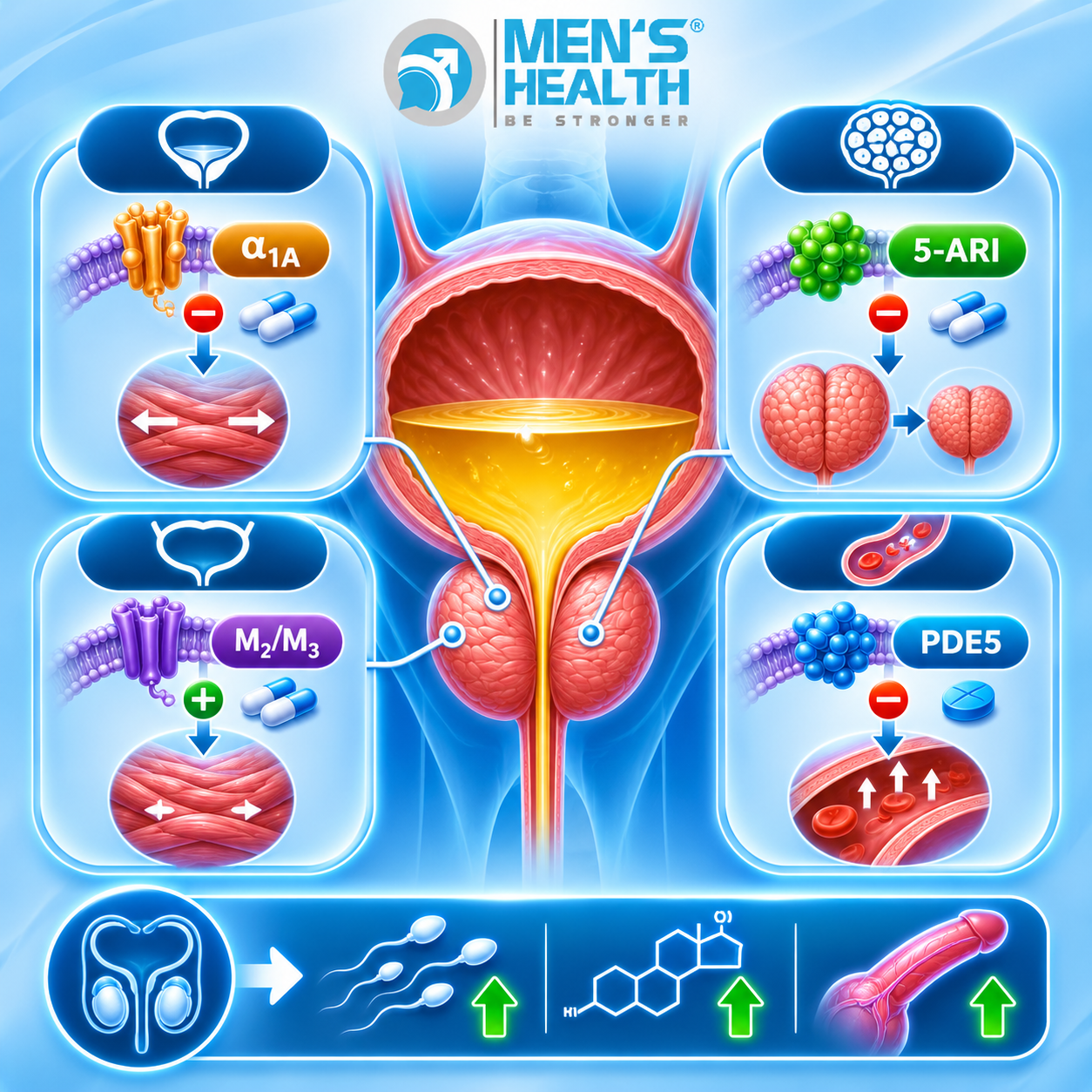
Key Pharmacological Classes
Alpha-1 Adrenoceptor Antagonists (α1-Blockers)
- Mechanism: Block α1A-adrenoceptors in the prostatic stroma and bladder neck, reducing smooth muscle tone and outlet resistance.
- Representative Agents: Tamsulosin, Silodosin, Alfuzosin.
- Clinical Role: First-line medical therapy to facilitate a Trial Without Catheter (TWOC) after acute retention.
- Adverse Effects: Orthostatic hypotension, dizziness, and retrograde ejaculation.
5-Alpha Reductase Inhibitors (5-ARIs)
- Mechanism: Inhibit conversion of testosterone to dihydrotestosterone (DHT), inducing apoptosis of prostatic epithelial cells and reducing prostate volume over 3 to 6 months.
- Representative Agents: Finasteride, Dutasteride.
- Clinical Role: Long-term reduction of urinary retention and surgical risk in men with enlarged prostates (>30 mL).
- Adverse Effects: Erectile dysfunction, decreased libido, gynecomastia.
Comparative Medical Therapy Matrix
| Property | α1-Blockers (e.g., Tamsulosin) | 5-ARIs (e.g., Dutasteride) | PDE5 Inhibitors (e.g., Tadalafil) |
| Primary Target | α1A-Adrenoceptors | 5-α Reductase Enzyme | PDE5 Enzyme |
| Primary Site | Prostatic smooth muscle | Prostatic epithelial tissue | Prostatic & Pelvic Vasculature |
| Clinical Goal | Relaxes dynamic obstruction | Reduces static prostate size | Improves perfusion & LUTS/ED |
| Onset of Action | 24 to 72 hours | 3 to 6 months | Days to weeks |
| Sexual Side Effects | Retrograde ejaculation | Erectile dysfunction, low libido | Mild flushing, headache |
7. Professional Care and Support at Men’s Health Pharmacy
Managing male urinary retention and its complex interplay with sexual and reproductive health requires meticulous medical diagnosis and coordinated pharmaceutical care.
Men’s Health Pharmacy, an integral clinical unit within the Men’s Health Center ecosystem founded by Dr. Tra Anh Duy (MD, PhD, Spec. II), provides specialized pharmaceutical support for male urological and reproductive health. At Men’s Health, patients receive tailored consultations from experienced physicians and clinical pharmacists to ensure that therapeutic choices – including α1-blockers, 5-ARIs, and vascular agents – align precisely with individual diagnostic findings and reproductive goals. The facility prioritizes professional rigor, clinical safety, patient privacy, and absolute confidentiality throughout consultation, prescription dispensing, and long-term follow-up. All prescription therapies require formal medical evaluation to guarantee optimal therapeutic efficacy and safety.
8. Lifestyle Modifications and Preventive Strategies
- Fluid Regulation: Maintain adequate daily hydration (1.5 – 2.0 L/day) while avoiding excessive evening fluid intake to prevent nocturia and bladder overdistension.
- Timed Voiding: Implement a structured voiding schedule every 2–3 hours during the day to prevent excessive detrusor muscle strain.
- Double Voiding Technique: Wait 30–60 seconds after initial micturition and attempt a second voiding effort to minimize post-void residual volume.
- Avoiding Bladder Irritants: Limit caffeine, alcohol, and over-the-counter cold medications containing sympathomimetics or antihistamines that can trigger urinary retention.
9. Common Clinical Pitfalls in Managing Urinary Retention
- Prescribing Antimuscarinics Without Measuring PVR: Administering bladder-relaxing medications for urgency symptoms in a patient with unsuspected high residual volume can precipitate acute urinary retention.
- Overlooking Sexual and Reproductive Comorbidities: Treating urinary retention without evaluating coexisting erectile or ejaculatory dysfunction, missing an opportunity for comprehensive men’s health management.
- Failing to Monitor Post-Obstructive Diuresis: Rapid decompression of long-standing high-pressure chronic retention can trigger severe polyuria, resulting in fluid and electrolyte depletion.
- Self-Medication with Unverified Remedies: Relying on unprescribed herbal supplements or shared prescriptions without formal urological evaluation risks masking progressive structural pathology or renal impairment.
10. Acute and Chronic Urinary Retention and Frequently Asked Questions
Can acute urinary retention cause permanent reproductive damage?
Acute urinary retention itself, when promptly and appropriately decompressed, rarely causes permanent structural damage to reproductive organs. However, if left untreated, severe bladder overdistension, associated infections, or resultant uremia can temporarily suppress endocrine function and impact reproductive wellness.
Does chronic urinary retention affect erectile function?
Yes. Chronic urinary retention is frequently linked to benign prostatic hyperplasia and pelvic vascular insufficiency. The shared mechanisms of chronic pelvic ischemia, autonomic nerve dysfunction, and psychological distress significantly contribute to coexisting erectile dysfunction.
Why does benign prostatic hyperplasia impact both urination and reproduction?
The prostate surrounds the proximal urethra and envelops the ejaculatory ducts. Enlargement of the prostate creates mechanical outlet obstruction affecting urination, while local inflammation, structural distortion, and medical or surgical therapies can influence seminal emission and ejaculation.
Can urinary retention medications cause sexual side effects?
Certain medications used to manage urinary retention and lower urinary tract symptoms – such as α1-blockers (which may cause retrograde ejaculation) and 5-α reductase inhibitors (which can affect libido and erectile function) – have potential sexual side effects. These effects should be discussed with a physician or clinical pharmacist.
Is it safe to self-treat urinary retention symptoms with herbal remedies?
No. Urinary retention can stem from mechanical obstruction, severe neurogenic dysfunction, or malignancy. Self-treating with unverified herbal preparations without professional diagnosis risks delaying critical surgical or medical intervention and precipitating acute renal failure.
When should urinary retention be treated as a medical emergency?
Any sudden, complete inability to pass urine accompanied by severe, agonizing suprapubic pain constitutes a medical emergency requiring immediate catheterization and emergency urological evaluation.
Conclusion and Expert Clinical Advice
Acute and chronic urinary retention in men are complex conditions that extend far beyond urinary difficulties, intersecting directly with pelvic vascular health, erectile function, and reproductive well-being. Achieving optimal clinical outcomes requires precise differential diagnosis, post-void residual measurement, urodynamic evaluation, and individualized medical or surgical management.
Patients experiencing urinary hesitancy, incomplete emptying, or sudden voiding failure should avoid self-diagnosis and refrain from self-medicating with unverified remedies. Timely evaluation at a specialized urological facility such as the Men’s Health Center ensures accurate diagnostic assessment, specialist physician management, and comprehensive pharmaceutical support for long-term health, safety, and reproductive vitality.