

Acute and chronic urinary retention represent distinct clinical entities along the spectrum of lower urinary tract dysfunction. Differentiating between a self-limiting voiding disturbance requiring observation and an acute urological emergency is critical to preventing permanent detrusor injury, post-renal acute kidney injury, and systemic sepsis.
1. Clinical Definitions and Pathophysiology
Urinary retention is defined as the inability to voluntarily evacuate urine from the bladder despite physiological effort. It is broadly categorized into Acute Urinary Retention (AUR) and Chronic Urinary Retention (CUR) based on onset duration, symptom intensity, and residual urinary volume.
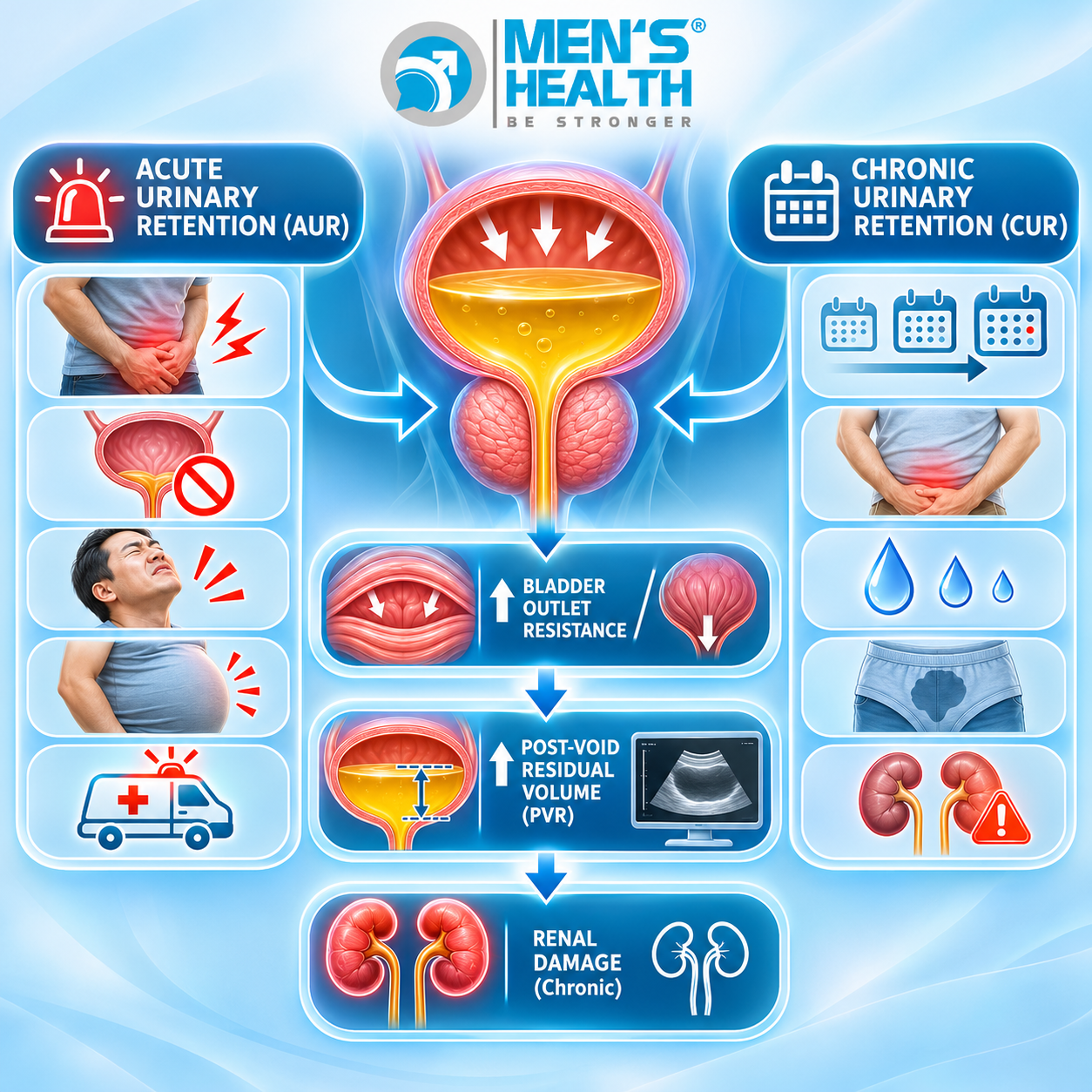
Pathophysiological Breakdown
- Mechanical Obstruction: Physical lumen narrowing within the prostatic urethra or bladder neck. Most commonly caused by transition zone adenomatous enlargement in Benign Prostatic Hyperplasia (BPH), prostate adenocarcinoma, bladder neck contractures, or urethral strictures.
- Functional and Neurogenic Failure: Failure of the detrusor muscle to generate adequate voiding pressure (PdetQmax) due to impaired parasympathetic neural pathways (M2/M3 muscarinic receptor signaling) or direct myogenic degeneration (Detrusor Underactivity – DUA).
2. Etiology and Predisposing Risk Factors
Underlying Causes
- Prostatic Pathology: Adenomatous hypertrophy (BPH), acute bacterial prostatitis, prostatic abscess, or prostatic carcinoma.
- Urethral Pathology: Bulbar or membranous urethral strictures secondary to trauma, iatrogenic catheterization injury, or prior gonococcal urethritis.
- Neurological Impairment: Multiple sclerosis, Parkinson’s disease, acute cerebrovascular accident (CVA), lumbar disc herniation, or diabetic autonomic neuropathy.
- Pharmacological Triggers: Systemic administration of strong anticholinergics, first-generation H1-antihistamines, tricyclic antidepressants (TCAs), α-adrenergic agonists (decongestants), or opioid analgesics.
High-Risk Patient Demographics
- Males aged ≥ 60 years with baseline lower urinary tract symptoms (LUTS).
- Patients with poorly controlled type 2 diabetes mellitus.
- Individuals undergoing major pelvic or orthopedic surgery under spinal/general anesthesia.
3. Symptom Spectrum and Differential Matrix
Clinical Presentation Comparison
| Diagnostic Parameter | Acute Urinary Retention (AUR) | Chronic Urinary Retention (CUR) |
| Symptom Onset | Sudden (hours) | Insidious (months to years) |
| Pain Intensity | Severe, agonizing suprapubic distress | Painless or mild pelvic pressure |
| Voluntary Micturition | Complete absence of voiding | Able to pass small, frequent amounts |
| Incontinence Pattern | Absent | Paradoxical / Overflow Incontinence |
| Typical PVR Volume | 500 – 1000mL | 500 – >2000 mL |
| Primary Complication | Bladder wall ischemia, severe agony | Hydronephrosis, post-renal renal failure |
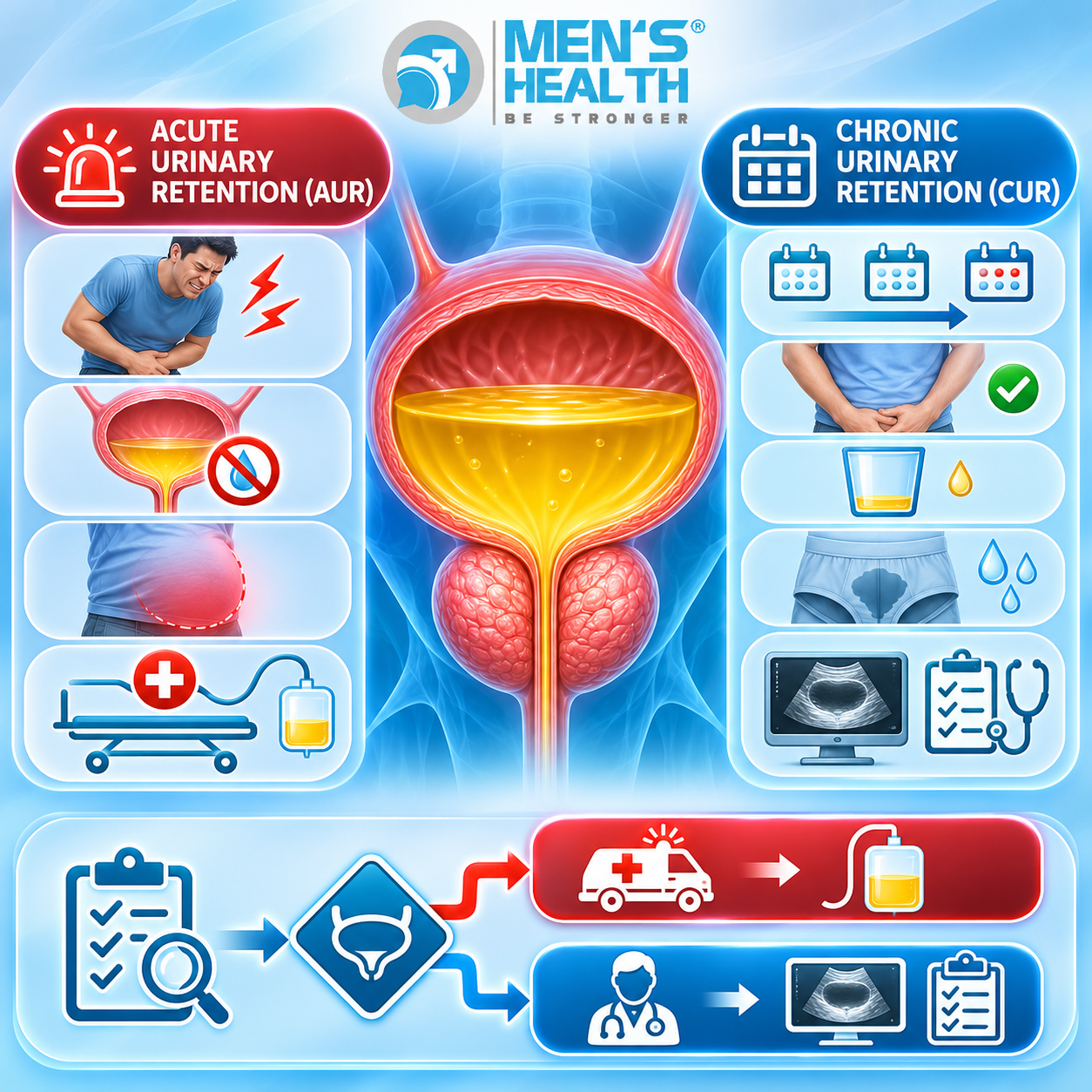
4. Triage Protocol: Self-Observation vs. Immediate Emergency Evaluation
A critical clinical objective is guiding patients on when home monitoring is safe versus when urgent medical evaluation is mandatory.
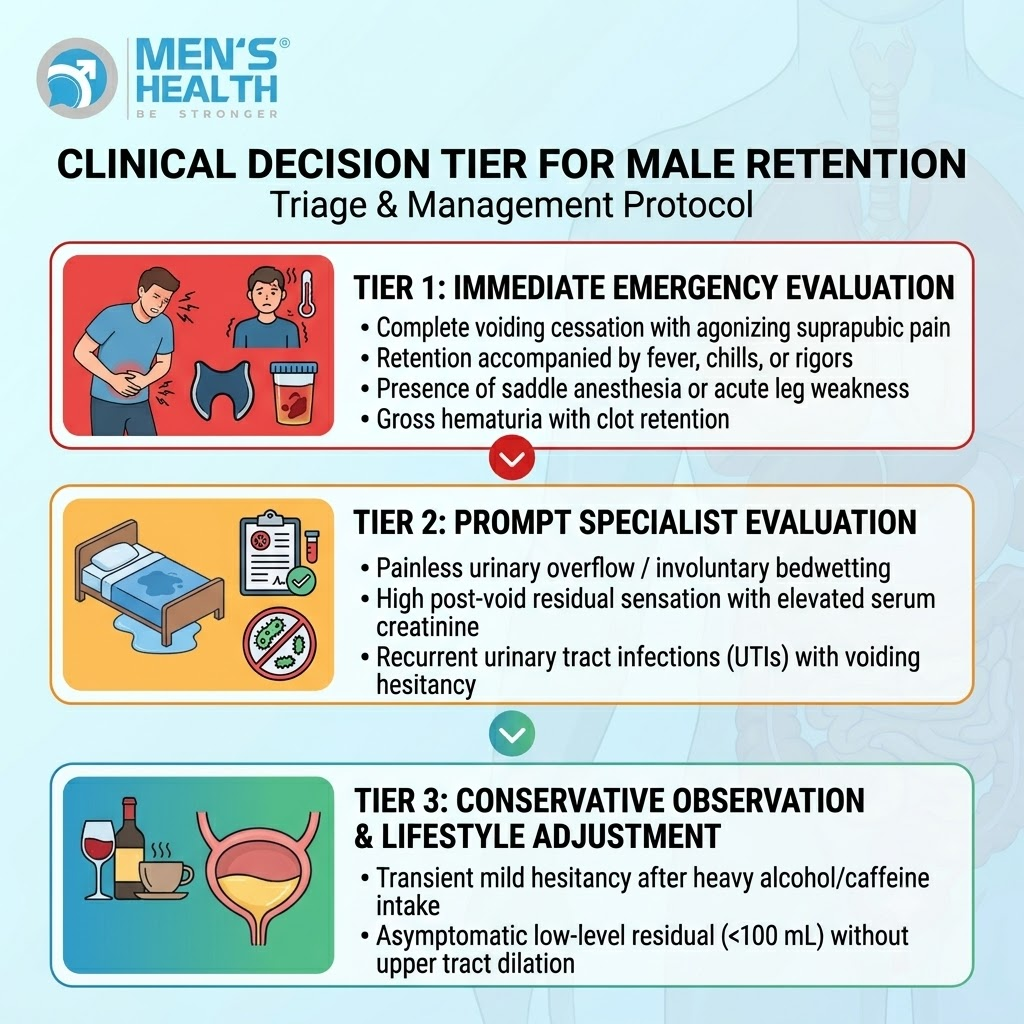
When Self-Observation is Permissible (Tier 3)
Self-observation is acceptable only when all of the following conditions are met:
- The patient experiences transient, mild voiding hesitancy without acute pain.
- The episode is clearly linked to a transient, reversible trigger (e.g., mild dehydration, single dose of a decongestant, post-procedural recovery).
- Ultrasound confirms a Post-Void Residual (PVR) volume < 100-150 mL.
- Serum renal function parameters are completely normal.
Absolute Indications for Immediate Clinical Evaluation (Tiers 1 & 2)
Immediate emergency or urgent specialist evaluation is non-negotiable under the following clinical red flags:
- Total Micturition Cessation: Complete inability to void for > 6-8 hours accompanied by painful suprapubic distension.
- Infectious Signatures: Fever, rigors, flank pain, or systemic inflammatory response (suspected acute pyelonephritis or acute bacterial prostatitis).
- Neurological Deficits: New-onset saddle anesthesia, loss of anal sphincter tone, or acute lower extremity weakness (suspected Cauda Equina Syndrome).
- Silent Uremic State: Unexplained nausea, vomiting, peripheral edema, lethargy, or bilateral hydronephrosis in a patient with painless urinary overflow.
- Gross Hematuria: Visible blood or clot retention leading to mechanical urethral occlusion.
5. Diagnostic Testing Framework
Establishing the precise etiology requires a structured progression from non-invasive diagnostic tools to advanced urodynamic evaluations.
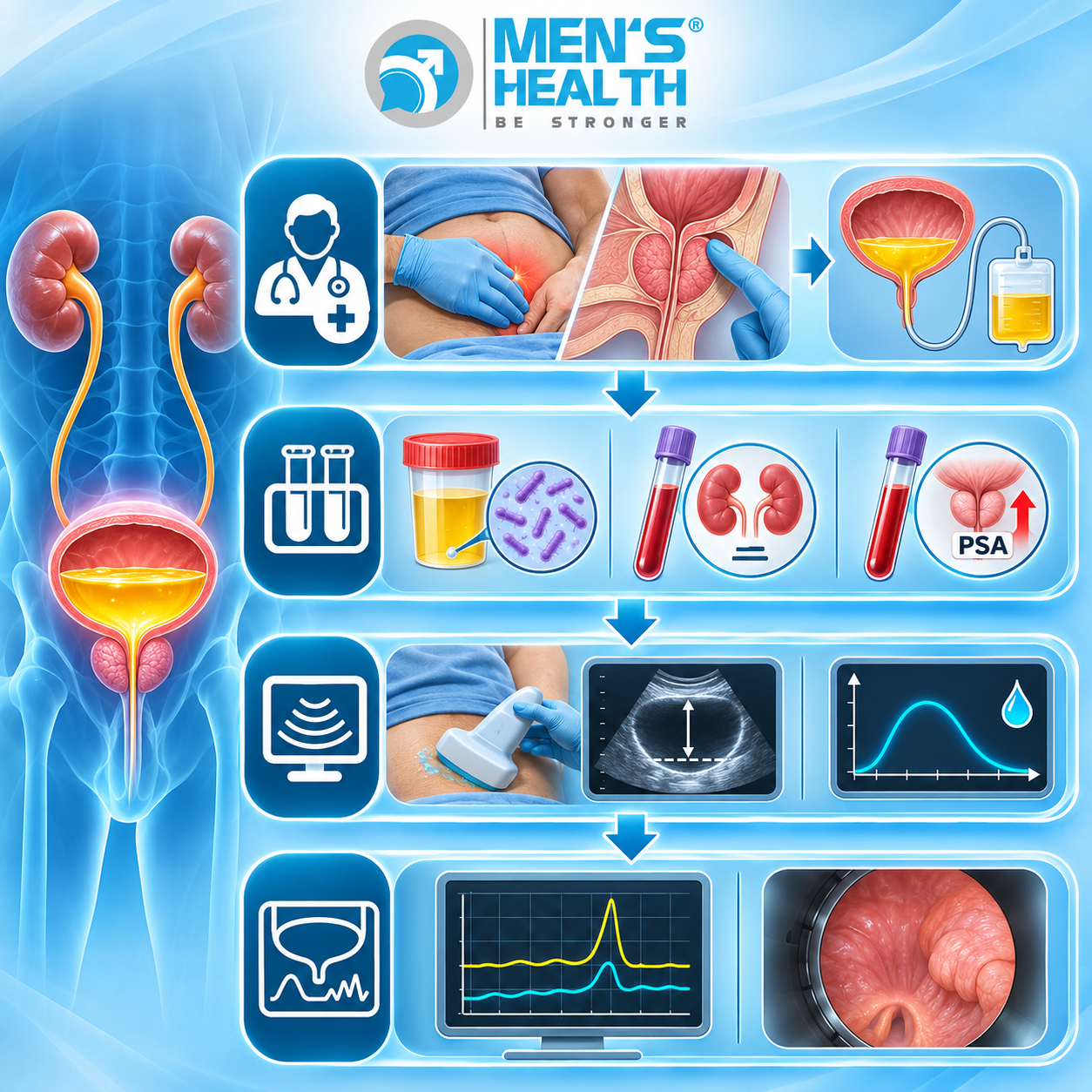
- Post-Void Residual (PVR) Ultrasound: Rapid point-of-care transabdominal ultrasound. A PVR > 150-200 mL is abnormal; a PVR > 300 mL confirms chronic retention.
- Serum Biochemistry: Serum creatinine and BUN assess the presence of post-renal acute kidney injury (AKI) or chronic kidney disease (CKD).
- Uroflowmetry: Measures maximum voiding flow rate (Qmax). A Qmax < 10 mL/s with a voided volume > 150 mL indicates significant outflow obstruction or detrusor weakness.
- Multi-Channel Urodynamic Studies (UDS): Simultaneous measurement of intravesical and intra-abdominal pressures during filling and voiding. It differentiates Bladder Outlet Obstruction (BOO) from Detrusor Underactivity (DUA).
- Flexible Cystourethroscopy: Endoscopic visualization of the urethral passage, bladder neck, prostatic urethra, and mucosal surface to rule out anatomical strictures or masses.
6. Pharmacological Management Strategies
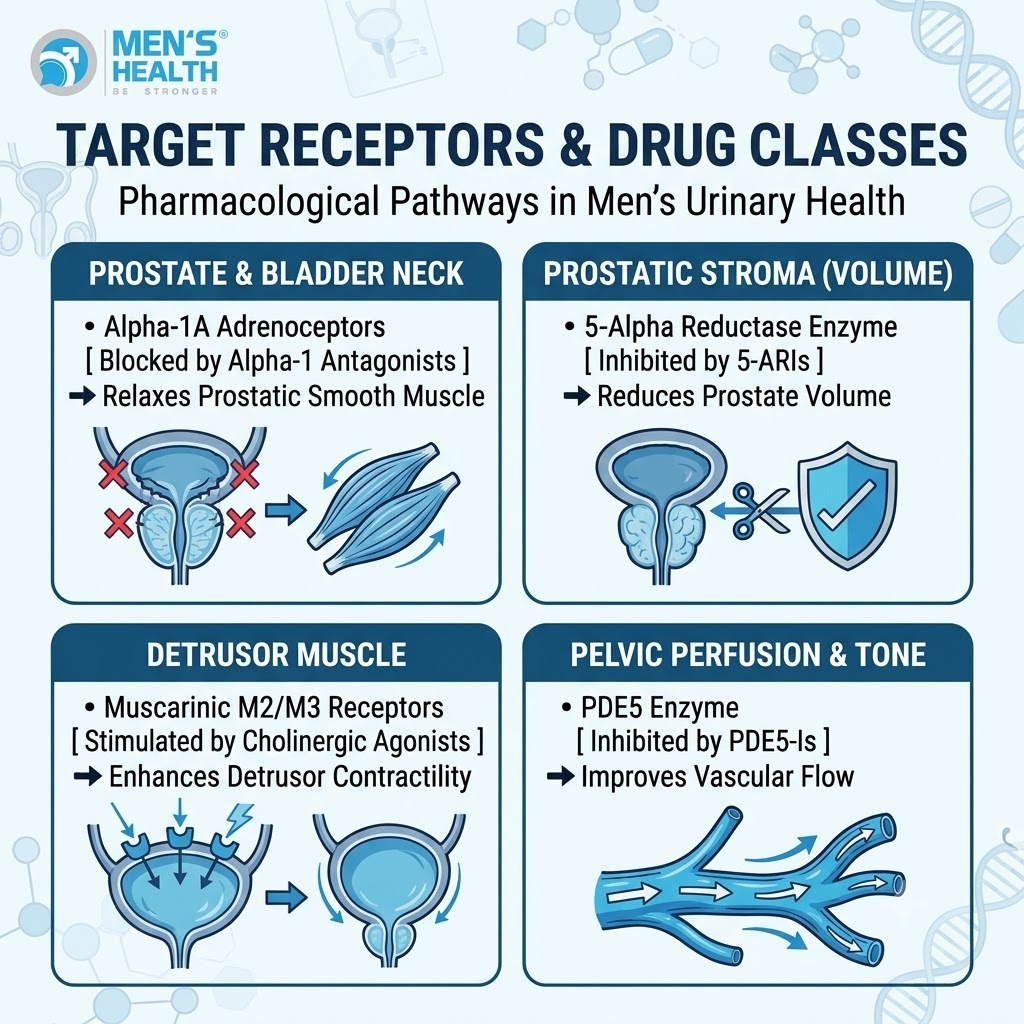
Targeted pharmacotherapy focuses on relieving outflow resistance, shrinking enlarged prostatic tissue, or managing detrusor function.
Key Drug Classes
Alpha-1 Adrenoceptor Antagonists (α1-Blockers)
- Mechanism: Selective inhibition of α1A-adrenoceptors in the prostatic stroma and bladder neck, reducing smooth muscle tone.
- Agents: Tamsulosin, Silodosin, Alfuzosin, Doxazosin.
- Indications: First-line agent for acute retention secondary to BPH prior to a Trial Without Catheter (TWOC).
- Adverse Effects: Orthostatic hypotension, dizziness, retrograde ejaculation, Intraoperative Floppy Iris Syndrome (IFIS).
5-Alpha Reductase Inhibitors (5-ARIs)
- Mechanism: Blocks conversion of testosterone to dihydrotestosterone (DHT), inducing apoptosis of prostatic epithelial cells and reducing prostate volume over 3–6 months.
- Agents: Finasteride, Dutasteride.
- Indications: Long-term reduction of AUR risk and surgical need in men with prostate volume > 30 mL.
- Adverse Effects: Erectile dysfunction, decreased libido, gynecomastia.
Cholinergic Agonists (Parasympathomimetics)
- Mechanism: Direct agonist activity at muscarinic M3 receptors on the detrusor smooth muscle.
- Agents: Bethanechol.
- Indications: Selected non-obstructive urinary retention secondary to neurogenic detrusor underactivity.
- Contraindications: Strictly contraindicated in mechanical obstruction (BPH, strictures) due to risk of bladder wall rupture.
Comparative Drug Matrix
| Property | α1-Blockers (e.g., Tamsulosin) | 5-ARIs (e.g., Dutasteride) | Cholinergic Agonists (e.g., Bethanechol) |
| Primary Target | α1A-Adrenoceptors | 5-α Reductase Enzyme | Muscarinic M3 Receptors |
| Anatomical Site | Prostatic smooth muscle | Prostatic epithelial tissue | Detrusor smooth muscle |
| Primary Clinical Goal | Reduce dynamic obstruction | Reduce static prostate size | Enhance contraction force |
| Onset of Action | 24 to 72 hours | 3 to 6 months | Rapid (Hours) |
| Key Safety Warning | Orthostatic hypotension | Decreased libido/ED | Risk of rupture in obstruction |
7. Professional Support at Men’s Health Pharmacy
Managing male urinary retention requires precise diagnostic workup, individualized prescribing, and expert pharmaceutical oversight.

Men’s Health Pharmacy, an integral unit within the Men’s Health Center ecosystem founded by Dr. Tra Anh Duy (MD, PhD, Spec. II), provides specialized clinical pharmacy services for male urological health. Patients receive clinical consultations from experienced urologists and pharmacists to ensure that prescribed therapeutic regimens—including α1-blockers, 5-ARIs, and specialized agents—are tailored to their urodynamic profiles and diagnostic findings. The pharmacy adheres strictly to evidence-based clinical protocols, maintaining complete confidentiality, safety, and individual privacy throughout evaluation, drug delivery, and follow-up.
8. Lifestyle Interventions and Self-Management Guidelines
Non-pharmacological strategies support recovery and prevent disease progression in appropriate patients:
- Timed Voiding Schedules: Implementing structured voiding every 2–3 hours to minimize detrusor overdistension.
- Double Voiding Technique: Attempting a second voiding effort 30–60 seconds after initial micturition to clear residual urine.
- Fluid Intake Optimization: Maintaining adequate daily hydration (1.5 – 2.0 L/day) while limiting fluid intake 2–3 hours before sleep.
- Avoiding Bladder Triggers: Eliminating cold remedies containing decongestants (pseudoephedrine) or antihistamines without explicit medical authorization.
9. Common Clinical Pitfalls
- Mistaking Overflow Incontinence for Primary Overactive Bladder: Prescribing antimuscarinics to a patient with unrecognized chronic urinary retention and overflow leakage can trigger acute, painful urinary retention.
- Failing to Monitor Post-Obstructive Diuresis: Rapid decompression of long-standing high-pressure chronic retention can precipitate polyuria (> 200 mL/hr), leading to severe electrolyte imbalances and intravascular depletion.
- Ignoring Renal Function Parameters: Managing chronic urinary retention without baseline serum creatinine and upper tract imaging risks missing progressive post-renal renal failure.
- Unsupervised Self-Medication: Relying on unverified herbal supplements or shared prescriptions delays definitive surgical or medical management of prostatic enlargement or stricture disease.
10. Frequently Asked Questions
What is the most critical difference between acute and chronic urinary retention?
Acute urinary retention presents as a sudden, painful inability to pass urine requiring immediate emergency catheterization. Chronic urinary retention develops gradually, is often painless, and manifests as incomplete emptying with high residual volume, frequently complicated by overflow incontinence.
Can an enlarged prostate cause silent chronic urinary retention?
Yes. Benign Prostatic Hyperplasia can cause gradual outflow obstruction. Over time, the bladder wall stretches to accommodate increasing residual volume without causing sharp pain, potentially progressing to silent renal failure.
What is post-obstructive diuresis?
Post-obstructive diuresis is a rapid surge in urine output that can occur after decompressing severe, long-standing chronic urinary retention. It requires close monitoring of blood pressure and fluid-electrolyte balance.
Is it safe to take over-the-counter cold medications if I have prostate enlargement?
No. Many OTC cold medications contain sympathomimetics (e.g., pseudoephedrine) or antihistamines, which contract the bladder neck or inhibit detrusor function, potentially triggering acute urinary retention.
When should a patient undergo urodynamic testing for urinary retention?
Urodynamic studies are indicated when the diagnosis is complex, such as distinguishing mechanical prostate obstruction from neurogenic detrusor failure, or prior to surgical intervention.
Conclusion and Expert Clinical Advice
Differentiating acute from chronic urinary retention is essential to preventing irreversible renal damage and detrusor decompensation. While mild, transient hesitancy without pain may be observed under medical guidance, acute retention characterized by severe pain or chronic retention accompanied by high residual volumes demands immediate diagnostic workup.
Patients experiencing urinary urgency, hesitancy, or involuntary leakage should avoid self-diagnosis and unprescribed therapies. Seeking clinical evaluation at a specialized center such as the Men’s Health Center ensures accurate diagnostic assessment, specialist physician management, and dedicated clinical pharmacy support for long-term urological health.