


Changes in the urinary stream after trauma (such as a weak stream, split stream, intermittent flow, or urinary retention) are direct warning signs of structural damage to the urethra, bladder, or pelvic nerve network. This condition cannot resolve on its own and requires prompt medical intervention to prevent complications like urethral strictures, infections, or a decline in genitourinary function. Accurately identifying the cause and adhering to a specialized treatment protocol are the paramount principles for protecting men’s health.
What is a Change in Urinary Stream After Trauma?
A change in the urinary stream after trauma is the result of sudden mechanical impacts on the lower urinary tract, which disrupt or obstruct the natural flow of urine. According to current medical guidelines, any change in the pressure, direction, or color of the urinary stream following an accident (e.g., a bicycle fall, workplace accident, or sports injury) is classified as a potential urological emergency.
The pathogenesis usually involves compression from hematomas, urethral tearing or crushing, or bladder rupture. When the urinary tract is damaged, the lumen narrows or leaks, leading to abnormal urination.
Causes and Risk Factors for Urinary Stream Abnormalities
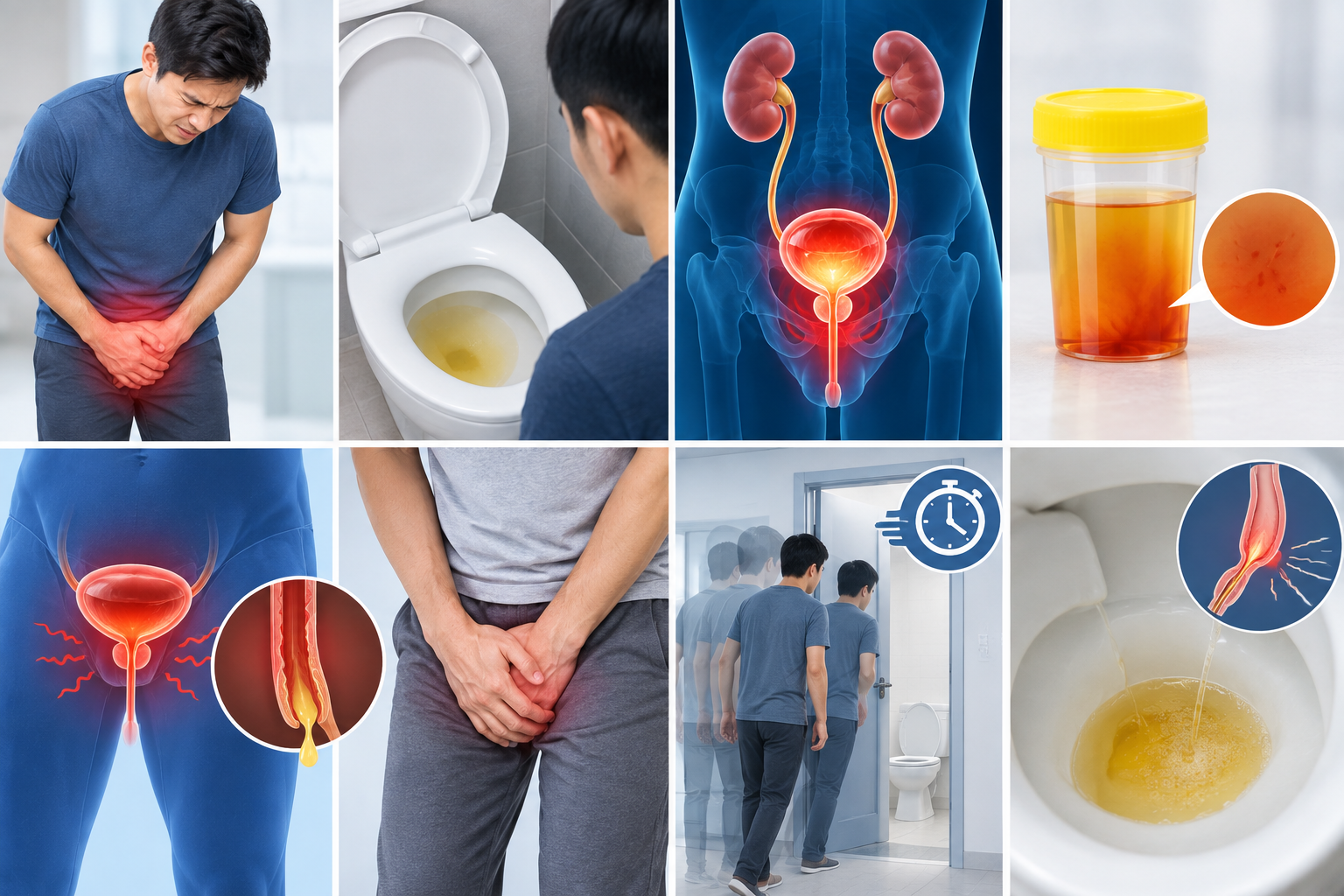
Changes in the urinary stream after an accident can originate from various injury sites along the urinary tract. Distinguishing these causes helps accurately guide the treatment approach.
- Urethral Injury: This is the most common cause of sudden changes in the urinary stream. It typically occurs in:
- Straddle Injury: Occurs when falling and striking the perineum (the area between the scrotum and anus) on a hard object like a bicycle frame, scaffolding, or the edge of a boat. The impact compresses the anterior urethra against the pubic bone, causing it to crush or tear.
- Pelvic Fracture: Severe traffic accidents resulting in pelvic fractures are often accompanied by posterior urethral tears (membranous or prostatic urethra) due to the tearing of pelvic ligaments.
- Bladder Injury: When the bladder is full of urine, a strong impact on the lower abdomen can cause it to rupture. This allows urine to spill into the abdominal cavity or extraperitoneal space. Patients often feel a constant urge to urinate but cannot pass urine, or only pass a few drops mixed with fresh blood.
- Pelvic Nerve Damage: Lumbosacral spine or spinal cord injuries can disrupt the nerve signals controlling the bladder and sphincter. The bladder loses its ability to contract (neurogenic bladder), resulting in complete urinary retention or continuous, passive urine leakage.
Associated Signs and Symptoms to Watch For
Recognizing abnormal symptoms early after trauma helps maximize the preservation of urinary tract function. Key signs include:
- Changes in stream characteristics: Weak stream, difficulty straining to urinate, split stream, dispersed spray, or dribbling.
- Hematuria (Blood in the urine): Urine that is pink, dark red, or contains blood clots. Blood dripping from the meatus (tip of the penis) outside of urination is a hallmark sign of a severed urethra.
- Pain and Swelling: Sharp pain in the lower abdomen, perineum, or scrotum. Large bruises (hematomas) spreading from the perineum to the scrotum or groin.
- Acute Urinary Retention: An intense feeling of bladder fullness, but an inability to urinate despite straining.
When Should You See a Doctor Immediately?
All cases involving changes in the urinary stream after a severe impact require medical evaluation. Patients must go to the emergency room immediately if any of the following “red flags” appear:
- Continuous fresh blood leaking from the urethra.
- Acute urinary retention, accompanied by a distended lower abdomen and agonizing pain.
- Rapidly progressing hematoma or swelling in the scrotum or perineum.
- Signs of shock due to pain or blood loss (e.g., sweating, pale skin, dizziness, lightheadedness).
Diagnostic Methods for Urinary Tract Trauma
Doctors rely on both clinical symptoms and paraclinical tests to determine the extent and location of the injury.
- Clinical Examination: The doctor evaluates the abdomen and examines the genitals and perineum to locate pain points and hematomas. A rectal exam may be performed to assess the prostate.
- Retrograde Urethrography: The “gold standard” for diagnosing urethral trauma. Contrast dye is injected into the urethra through the meatus, and X-rays are taken to detect leaks or segments where the urethra is disrupted.
- Abdominal and Urinary Ultrasound: Helps assess residual urine in the bladder, detects hematomas around the bladder, or identifies damage to other abdominal organs.
- CT Scan: Provides detailed imaging of pelvic and bladder structures, highly valuable in cases of multi-organ trauma.
Treatment and the Role of Medication

The core goals of treatment are to drain urine, stop bleeding, restore urinary tract patency, prevent infection, and avoid long-term sequelae like urethral strictures and erectile dysfunction.
Surgical Interventions and Procedures
Not all cases require open surgery. Depending on the severity of the injury, doctors may:
- Mild Trauma (Contusion): Place a urinary catheter to drain urine, giving the urinary tract time to heal naturally.
- Complete Urethral Rupture: Blindly pushing a catheter is strongly contraindicated as it can worsen the injury. Instead, doctors will perform a suprapubic cystostomy (inserting a drainage tube directly through the abdomen into the bladder) to divert urine. Reconstructive urethroplasty is usually performed months later once scar tissue has stabilized.
The Role of Medication
Medication cannot mend a severed urethra but is essential for symptom control and complication prevention.
Important Note: Urological trauma requires comprehensive evaluation. At the Men’s Health Center (founded by Dr. Tra Anh Duy, MD), patients receive professional, safe, and confidential care. Never use someone else’s prescription or self-medicate with unknown “tonics” or “diuretics” without knowing the extent of your internal injuries.
Common Mistakes in Managing Genitourinary Trauma
Clinical studies show that delays or mistakes in initial first aid significantly increase the rate of urethral stricture complications.
- Straining to urinate: If the tract is blocked by a tear, straining forces urine into surrounding tissues, causing severe inflammation and necrosis in the perineum.
- Underestimating mild trauma: The stream may only seem slightly weak for a few days, but scar tissue can silently form, causing severe strictures months later.
- Applying hot compresses or herbal poultices: Heat dilates blood vessels, worsening bleeding and spreading bruises. Applying unverified herbal remedies to the genitals risks sepsis.
Prevention and Recovery Advice
- Protective Gear: Wear groin protection during contact sports, mountain biking, or when working at heights (e.g., scaffolding).
- Follow-up Appointments: After treatment, regular uroflowmetry tests are needed to detect early signs of recurrent urethral strictures.
- Lifestyle: Drink 2 to 2.5 liters of water daily once a doctor confirms the urinary tract is clear. Do not hold your urine. Avoid activities that compress the perineum (like cycling or horseback riding) for at least 3 to 6 months, as advised by your doctor.
Frequently Asked Questions (FAQs)
Is a split urinary stream after a bicycle fall dangerous?
Yes. A split or dispersed stream after perineal trauma is a classic sign of urethral mucosal contusion. Without anti-inflammatory treatment, the damage can turn into scar tissue, leading to permanent urethral stricture that severely affects urination and ejaculation.
What does it mean if I have painful urination and blood in my urine after an accident?
This is not a common illness; it is an acute symptom of urinary tract trauma (likely a bruised urethra, or bladder/kidney damage). It requires emergency intervention to stop the bleeding and cannot be cured simply by drinking more water.
Does perineal trauma causing urinary retention require immediate surgery?
Not always. Doctors often prioritize a suprapubic cystostomy (tube through the abdomen) to relieve the emergency retention. Reconstructive surgery to reconnect the urethra is usually done in a second stage, 3 to 6 months later, when the crushed tissues have recovered.
Can I buy over-the-counter painkillers or antibiotics for a genital injury?
Absolutely not. Indiscriminate use of painkillers can mask severe progressing symptoms (like a ruptured bladder). Unprescribed antibiotics lead to resistance. All genital injuries must be evaluated by a doctor.
How long after a urinary tract injury can I resume sexual activity?
This depends entirely on the severity of the injury and the treatment. Usually, patients need to abstain for at least 4-6 weeks for mild injuries. For reconstructive surgeries, it may take several months. You should consult your andrology specialist for personalized advice.
Conclusion
A change in the urinary stream after trauma (split, weak, intermittent, or retention) is an urgent medical warning reflecting structural damage to the urinary system. Delayed intervention causes pain and infection, and leaves severe sequelae like urethral strictures and male sexual dysfunction. Patients should never self-diagnose or self-treat at home.
If you experience an accident impacting your pelvis or perineum followed by urinary abnormalities, go immediately to a medical facility with a Urology-Andrology department. At institutions like the Men’s Health Center, highly skilled doctors can accurately assess the damage and support your recovery safely and confidentially. Do not let a preliminary mechanical injury turn into a lifelong health burden.