
The human spermatogenesis cycle lasts approximately 74 days, after which sperm still require additional time to mature and travel through the epididymis. Therefore, about 3 months is generally the first logical milestone to evaluate whether a treatment intervention has genuinely altered a semen analysis. However, this is not a rigid rule for every medication. Endocrine therapy, recovery of spermatogenesis following testosterone/anabolic steroid use, or certain testicular pathologies may require 6 to 12 months or longer. Conversely, hormonal levels can shift much earlier than sperm parameters.

How Long Does the Spermatogenesis Cycle Last?
The creation of a mature sperm cell does not happen in just a few days. From primitive germ cells to the formation of spermatozoa within the seminiferous tubules of the testes takes about 2 to 2.5 months, with 74 days being the most widely cited figure in modern medical literature.
Classical studies previously estimated human spermatogenesis to take about 64 days, indicating that the actual duration should not be viewed as an absolute, day-by-day fixed number.
After being formed in the testes, sperm continue to:
- Enter the epididymis.
- Undergo functional maturation.
- Develop motility capabilities.
- Be stored prior to ejaculation.
Human physiological studies show that transport through the various segments of the epididymis also requires an additional span of time.
Therefore, in clinical practice, it can be understood simply as:
Starting an effect on the testes today $\rightarrow$ a cohort of sperm reflecting that effect relatively fully typically appears in the ejaculate after about 3 months.
This is why numerous studies on medications, antioxidants, lifestyle modifications, or andrological surgeries evaluate semen analyses at the ~3-month mark.

Why Can’t You Conclude Sperm Quality Is Better After Taking Medication for 1–2 Weeks?
Because the vast majority of sperm appearing in the ejaculate after 1–2 weeks have already begun their developmental process before you started taking the medication.
Suppose a person begins treatment on Day 1. The sperm ejaculated on Day 7, Day 14, or even the following several weeks largely belong to germ cell generations that were already quite far along in the spermatogenesis pathway before treatment commenced.
Therefore, if the goal of an intervention is to:
- Enhance spermatogenesis;
- Protect germ cells;
- Improve sperm maturation processes;
- Reduce testicular oxidative stress; or
- Adjust intratesticular testosterone;
…the body needs time to produce a “new generation” of sperm influenced by the therapeutic environment. This is also why checking a semen analysis every week after starting a supplement provides very little information regarding true efficacy.
Does Completing 3 Months of Treatment Guarantee Improved Sperm Quality?
No. Three months is a logical evaluation milestone, not a guarantee of efficacy. A product can be used for 3 months, yet fail because:
- It does not target the root cause;
- The active ingredients lack real efficacy;
- The dosage or formulation is inappropriate;
- The patient has a structural cause such as an obstruction;
- There are genetic abnormalities;
- There is severe testicular failure;
- The patient is still exposed to damaging environmental factors; or
- Simply put, the body does not respond.
This is especially crucial regarding dietary supplements. A randomized controlled trial on antioxidants in infertile men noted no significant difference in sperm concentration after 3 months compared to a control group. Another randomized trial published in 2025 also found no benefit in live birth rates when continuing antioxidant use versus placebo.
Therefore:
“Spermatogenesis takes 3 months” does not mean “every sperm supplement taken for 3 months is effective.”
How Long Do Medications and Supplements Take to Impact Sperm?
The timeline depends entirely on the mechanism of the intervention.
| Intervention | Typical Time to Evaluate Semen Analysis | Key Considerations |
| Dietary, sleep, smoking, heat adjustments | Approx. 3 months | May need to be maintained long-term |
| Vitamins / Antioxidants | Typically studied at 3–6 months | Efficacy is not guaranteed |
| L-Carnitine, CoQ10, and support products | Typically 3–6 months | Does not replace root-cause diagnosis |
| Selective endocrine therapy | 3 months or more | Hormones may shift prior to semen changes |
| Varicocele repair surgery | Evaluated starting from 3 months | Some individuals continue changing thereafter |
| Gonadotropin-stimulated spermatogenesis | Several months to >1 year | Especially in hypogonadotropic hypogonadism |
| Recovery post-testosterone/steroids | Typically several months | May take >6–12 months |
| Recovery post-fever / acute illness | Approx. one spermatogenesis cycle or more | Some cases take 3–5 months |
These milestones are not personalized prescription schedules. Physicians must adjust them based on the underlying etiology, baseline semen analysis, and reproductive goals.

Should “Sperm-Boosting” Dietary Supplements Be Taken for at Least 3 Months?
If a product is considered by a physician to support spermatogenesis, 3 months is generally a reasonable duration before re-evaluating the semen analysis, as it roughly corresponds to one spermatogenesis cycle.
Several studies on CoQ10, antioxidants, and micronutrients also select an intervention window of roughly 3 months prior to re-evaluating semen parameters. For instance, a CoQ10 trial in men with oligoasthenoteratozoospermia noted changes in certain oxidative stress and semen parameters after 3 months.
However, one should not deduce:
“If 3 months isn’t better, just keep taking it for another 6–12 months.”
If semen parameters remain unchanged after a rational trial period, it is necessary to review:
- Initial diagnosis
- Severity of semen abnormalities
- Hormone levels
- Varicocele presence
- Current medications
- Obesity or metabolic disease
- Exogenous testosterone/steroids
- Genetic factors
- Potential obstructions
Prolonging supplementation without re-evaluation wastes precious time for couples, particularly when the female partner’s reproductive age is a limiting factor.
How Long Until Zinc, Selenium, CoQ10, and L-Carnitine Show Efficacy?
These compounds are typically studied over a span of months rather than days, but their levels of evidence vary, and improvements in semen parameters do not automatically equate to increased pregnancy rates.
For example, CoQ10 has been studied at the 3-month mark. Some antioxidant trials also evaluate semen at similar intervals, with some yielding positive results while others find no significant differences.
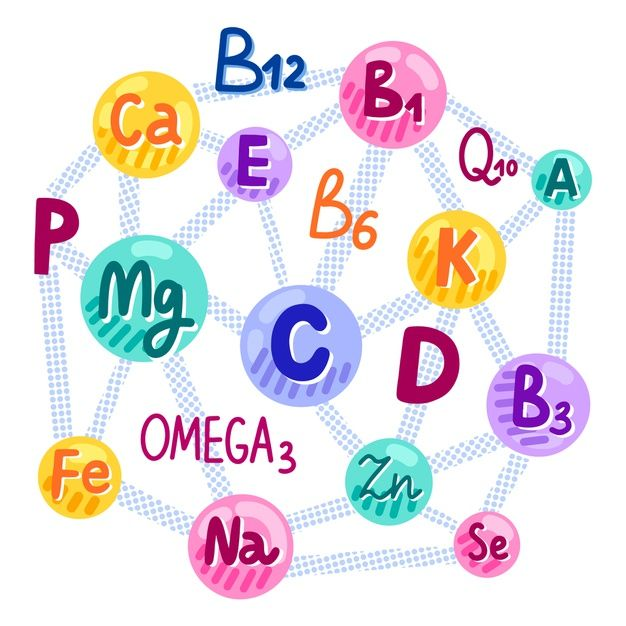
Therefore, when using products containing zinc, selenium, L-Carnitine, CoQ10, vitamin C, vitamin E, folate, or omega-3, do not rely on subjective feelings like “semen feels thicker,” “volume is higher,” or “body feels stronger.” Reproductive efficacy must be assessed using appropriate metrics, of which the semen analysis is a vital component.
Do Hormone Medications Alter Hormone Levels and Sperm Simultaneously?
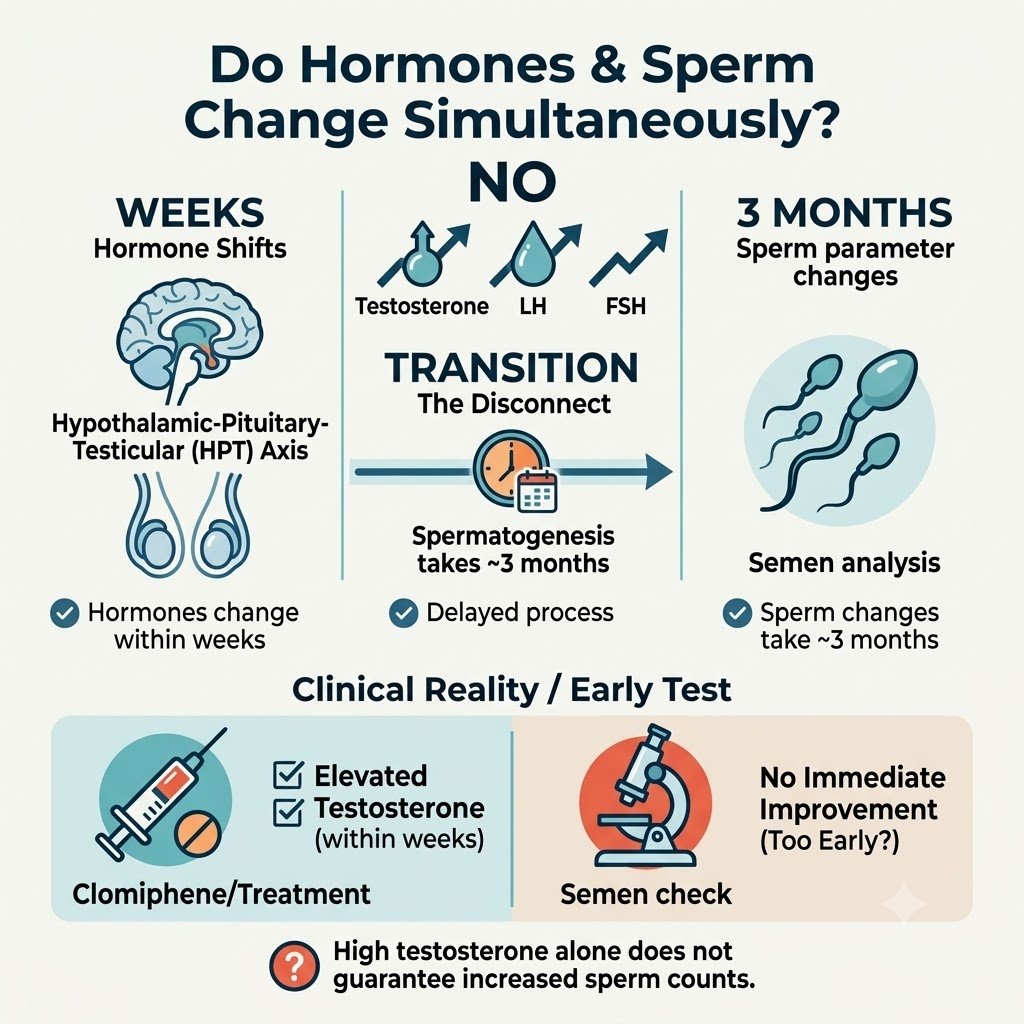
No. Hormones typically change well before sperm parameters do.
For example, a medication acting on the hypothalamic-pituitary-testicular (HPT) axis can alter testosterone, LH, or FSH within weeks. However, for those endocrine shifts to translate into a new generation of sperm, the body must still progress through the entire spermatogenesis process.
A study on clomiphene in men noted sperm parameter changes after approximately 3 months of treatment.
Consequently, a scenario can occur where:
Testosterone has risen after a few weeks, but the semen analysis has not yet shown clear improvement.
This does not necessarily mean the treatment failed; the timing of the semen check may simply be too early. Conversely, elevated testosterone does not guarantee increased sperm counts; male reproductive function relies on far more factors than blood testosterone levels alone.
How Long Does hCG/FSH Stimulation Take to Produce Sperm?
Cases of hypogonadism due to gonadotropin deficiency are classic examples demonstrating that the “3-month rule” does not apply universally. When the testes have not previously been adequately stimulated by LH/FSH, gonadotropin therapy can take many months to jumpstart and sustain spermatogenesis.
In a study of hypogonadotropic hypogonadism patients, the median time to the appearance of sperm during gonadotropin treatment was approximately 13 months, though with massive inter-individual variability.
Therefore, for this group:
3 months may represent merely the early initiation phase of treatment rather than the point to declare failure.
Response times also depend on:
- Baseline testicular volume
- Degree of hormone deficiency
- History of puberty onset
- Duration of the condition
- Etiology of pituitary/hypothalamic dysfunction
- Treatment protocol

How Long After Stopping Testosterone or Steroids Does Sperm Recovery Take?
Typically longer than one spermatogenesis cycle.
Exogenous testosterone and anabolic steroids suppress GnRH, LH, and FSH, causing intratesticular testosterone concentrations to plummet, which subsequently dampens or halts spermatogenesis. After drug cessation, the endocrine axis requires recovery time before the testes can resume sperm production.
A study on infertile men following anabolic steroid/testosterone use utilizing a minimum recovery protocol of 3–6 months showed that many still suffered from severe oligoospermia after 6 months, with some remaining azoospermic.
This indicates one should not assume:
“Stopping testosterone for 3 months will normalize sperm counts.”
In some individuals, recovery may take 6 to 12 months or longer, depending on the duration of past testosterone use, dosage, age, baseline testicular function, and various other factors. Men trying to conceive should never self-administer testosterone or anabolic steroids.
When Do Sperm Parameters Improve After Varicocele Surgery?
Approximately 3 months is commonly used as an initial evaluation milestone, as this roughly corresponds to a new spermatogenesis cycle following the optimization of the testicular environment.
A post-surgical follow-up study noted improvements in sperm concentration and motility at the 3-month mark; notably, that study did not record further statistically significant enhancements in those parameters beyond that milestone. Other studies also document semen changes 3 months post-microsurgical varicocele repair.
However, the magnitude and speed of response vary between individuals. Surgery also does not guarantee normalized semen parameters, as a patient may concurrently harbor other causes of infertility.
How Long Can High Fever Impair Sperm?
Yes. The testes require an ambient temperature lower than core body temperature to function optimally. A bout of high fever can temporarily disrupt spermatogenesis and degrade subsequent semen parameters.
Clinical reports document diminished semen quality following acute febrile episodes followed by gradual recovery. Post-COVID-19 data likewise indicate that semen impacts are generally transient; a 2025 study recorded a median recovery time of approximately 3 months for progressive motility and about 5 months for sperm concentration.
Therefore, when reviewing an abnormal semen analysis, a clinician should ascertain whether the patient experienced any of the following within the preceding 2–3 months:
- High fever
- COVID-19 or other infections
- Surgery
- Severe acute illness
- Significant physiological stress
An abnormal semen analysis following a fever does not necessarily reflect long-term reproductive impairment.
How Long After Quitting Smoking, Reducing Alcohol, and Sleeping Well Do Sperm Parameters Improve?
Biologically, if lifestyle modifications genuinely optimize the spermatogenetic environment, about 3 months is a logical initial observation window for a new wave of sperm.
This applies to:
- Smoking cessation
- Limiting alcohol intake
- Getting adequate sleep
- Weight loss in obese individuals
- Blood sugar control
- Minimizing heat exposure
- Discontinuing anabolic steroids
- Dietary improvements
However, the degree of recovery depends on prior tissue damage and exposure duration. A multi-year smoker or severely obese individual cannot expect every parameter to normalize after precisely 90 days. Lifestyle changes must be viewed as long-term strategies, not a “3-month protocol” meant to be abandoned once finished.
Should a Semen Analysis Be Repeated Exactly at 3 Months?
Roughly 3 months is appropriate for evaluating the biological efficacy of an intervention, but the precise timing must be personalized. It is also important to differentiate between two distinct goals:
Repeating to Confirm an Abnormal Semen Analysis
Semen parameters possess significant natural biological variability. If an initial result is abnormal, a physician may request an early repeat; training materials from the American Urological Association (AUA) state that an abnormal semen analysis is generally repeated about one month later to confirm baseline findings. The goal here is diagnostic confirmation, not assessing treatment efficacy.
Repeating to Evaluate Treatment Efficacy
If an intervention targeting spermatogenesis has been initiated, the ~3-month mark yields much more meaningful clinical data as nearly a full spermatogenesis cycle has elapsed.
Therefore:
- 1 month: Can be used to confirm initial abnormalities.
- ~3 months: Generally more rational for assessing impacts on a fresh generation of sperm.
Why Can Two Semen Analyses Weeks Apart Differ Significantly?
Semen is not a static marker like blood type. Parameters fluctuate due to:
- Duration of sexual abstinence
- Recent fever or illness
- Stress
- Sleep quality
- Sample collection technique
- Partial sample loss
- Time elapsed from collection to analysis
- Natural biological variability
Consequently, the AUA/ASRM guidelines recommend evaluating infertile men using one or more semen analyses and caution against relying on a single isolated parameter to judge fertility potential. Furthermore, an “improved” semen analysis does not automatically prove medication was the cause, especially when comparing only two samples.
What Parameters Should Be Monitored After 3 Months?
Depending on the initial clinical issue, a physician may track:
- Semen volume
- Sperm concentration
- Total sperm count
- Progressive motility
- Total motile sperm count
- Morphology
- Sperm vitality
In selective scenarios, additional tests may be warranted:
- Testosterone
- LH
- FSH
- Prolactin
- Estradiol
- Sperm DNA fragmentation
- Ultrasound or other imaging
More testing is not automatically better. Monitoring must answer a precise clinical question.
Does a Better Semen Analysis Guarantee Increased Pregnancy Rates?
No. A semen analysis provides critical insights into male fertility potential, but it cannot independently predict successful pregnancy with certainty. Achieving pregnancy also depends on:
- Age of both partners
- Ovarian reserve
- Ovulation status
- Fallopian tube patency
- Uterine health
- Duration of infertility
- Frequency and timing of intercourse
- Degree of sperm abnormalities
- Other uncharacterized factors
This is why a dietary supplement might improve sperm motility in a study without necessarily increasing actual live birth rates or clinical pregnancies. Antioxidant trials have demonstrated a profound gap between “improving lab parameters” and “enhancing actual reproductive outcomes.”
When Should You Not Wait 3 to 6 Months?
Not every clinical situation warrants taking pills and waiting. Early specialist evaluation is mandatory if:
- There is complete absence of sperm in the ejaculate (azoospermia)
- Sperm concentration is extremely low (severe oligozoospermia)
- Testicular volume is small or abnormal
- A scrotal mass is present
- Testicular pain or swelling occurs
- Varicocele is suspected
- FSH is significantly elevated or testosterone is low
- History of cryptorchidism (undescended testes)
- History of chemotherapy/radiation therapy
- Current or past use of testosterone or anabolic steroids
- Ejaculatory dysfunction is present
- The couple has suffered prolonged infertility
- The female partner is of advanced maternal age or has diminished ovarian reserve
The AUA/ASRM recommends that men presenting with one or more abnormal semen parameters or suspected male factor infertility receive a comprehensive evaluation by a male reproductive specialist. Waiting six months to “see if a supplement works” can squander valuable treatment windows.
Should You Switch Dietary Supplements After 1 Month If Sperm Counts Haven’t Risen?
Generally, you should not judge a product a failure based solely on a 1-month semen analysis if the target is spermatogenesis. One month is insufficient to generate an entirely new generation of sperm.
However, this does not mean you must blindly persist with any product. You should discontinue and consult a physician or pharmacist if:
- Adverse side effects emerge
- Ingredient concentrations are excessively high
- Drug interaction risks exist
- The product is of unverified origin
- It duplicates multiple vitamins or minerals already taken
- The original diagnosis changes
- A physician determines the product is unnecessary
Crucially, do not simultaneously consume 4–5 different “sperm support” formulas simply to accelerate a biological process that inherently requires multiple months.
Is There Any Way to Shorten the Spermatogenesis Cycle from 3 Months Down to Weeks?
No medication or dietary supplement has been proven capable of shortening the entire human sperm production process down to a few weeks.
Advertisements claiming:
- “Boost sperm in 7 days”
- “Recover sperm in 2 weeks”
- “Create brand new sperm in just 10 days”…must be viewed with extreme skepticism.
Certain ancillary metrics can shift more rapidly. For example, hormones, sleep quality, or inflammatory markers can improve within weeks. Yet, producing a new generation of sperm remains bound by the strict biological limits of spermatogenesis.
Follow-Up Care for Sperm Support Protocols at Men’s Health
When utilizing medications or supplements to support sperm quality, treatment duration must align with the underlying etiology and a clear re-evaluation schedule, rather than consuming products blindly for months without tracking targeted endpoints.
Men’s Health Andrology Pharmacy, a unit within the Men’s Health Center ecosystem founded by Dr. Tra Anh Duy (MD, Specialist Level 2), provides specialized support. For men with abnormal semen parameters, physicians evaluate underlying causes, endocrine profiles, and associated andrological pathologies. Pharmacists assist in auditing medications, vitamins, minerals, and supplements to prevent duplication or unnecessary prolonged use.
For prescription medications such as endocrine modulators or spermatogenesis-stimulating agents, timelines and monitoring protocols must be individualized by a physician. Patients should not copy others’ prescriptions, self-administer testosterone, or alter medication dosages simply because a semen analysis has not improved within a few weeks.
Men’s Health emphasizes close collaboration between physicians and pharmacists, professional standards, safety, complete discretion, confidentiality, and the distinct reproductive goals of each individual.
Frequently Asked Questions (FAQs) About the Spermatogenesis Cycle
1. How many days does the human spermatogenesis cycle last?
Human spermatogenesis is traditionally described as lasting approximately 74 days, after which sperm undergo subsequent maturation and transit through the epididymis. Consequently, roughly 3 months is used as a practical clinical benchmark for assessing changes.
2. Can you see efficacy after 1 month of taking sperm supplements?
Unlikely. One month is insufficient for an entire new generation of sperm to complete its developmental pathway. If evaluating impacts on semen parameters, a ~3-month span is far more meaningful.
3. Why do doctors typically prescribe sperm supplements for 3 months?
Biologically, this timeframe roughly corresponds to one full cycle of spermatogenesis plus sperm maturation phases. However, the 3-month window does not prove the product itself is definitively effective.
4. How long after starting L-Carnitine or CoQ10 should I re-test sperm?
Many clinical studies evaluate these agents after approximately 3 months or longer. The ideal re-testing timeline should be dictated by baseline semen findings and your physician’s therapeutic plan.
5. How long after varicocele surgery should a repeat semen analysis be performed?
Approximately 3 months is the standard milestone utilized to assess a fresh spermatogenesis cycle following surgical correction. Some patients may require ongoing longitudinal monitoring.
6. If testosterone rises after treatment, do sperm counts increase immediately?
No. Hormones can shift first, whereas sperm require many weeks to months to reflect the impact of the new endocrine milieu.
7. How long after stopping testosterone do sperm counts return?
There is no universal timeline. Some men require 6 to 12 months or longer; following prolonged testosterone/steroid use, some patients remain oligospermic or azoospermic even past 6 months of recovery protocols.
8. Can a high fever ruin sperm parameters for 3 months?
Potentially. Fever can transiently impair spermatogenesis, with downstream impacts appearing in the ejaculate. Recovery generally requires at least one spermatogenesis cycle, and in some instances, several months.
9. Does a better semen analysis at 3 months mean the medication definitely worked?
Not necessarily. Semen parameters fluctuate naturally, and multiple other variables can change over a 3-month period. Results must be interpreted alongside treatment adherence, lifestyle shifts, recent illnesses, and prior baseline samples.
10. If sperm parameters haven’t improved after 3 months, should I take them for another 3 months?
Automatic prolongation is discouraged. This juncture serves as the optimal window for a physician to re-examine the etiology, response degree, and whether the current strategy warrants continuation or modification.
Conclusion
The ~3-month mark is a critical milestone when evaluating a protocol targeting sperm parameters because human spermatogenesis takes roughly 74 days, followed by maturation and transport through the epididymis. Therefore, checking a semen analysis after only a few weeks rarely captures the full therapeutic impact on a fresh generation of sperm.
However, “3 months” is not a blanket formula applicable to all scenarios. Following varicocele repair, improvements can manifest around 3 months, whereas stimulating spermatogenesis in hypogonadotropic hypogonadism or recovering post-testosterone/steroid use can require many months to over a year.
Crucially, the spermatogenesis cycle should never be used as a rationale to consume arbitrary dietary supplements for 3 months expecting guaranteed results. Antioxidant trials demonstrate inconsistent findings, and improvements in semen metrics do not guarantee enhanced pregnancy rates.
When facing abnormal semen parameters, the paramount objective remains identifying the root cause. Rather than endlessly cycling through “sperm-boosting” pills, men should establish clear re-evaluation milestones—typically ~3 months for many interventions—while seeking earlier clinical evaluation in cases of azoospermia, severe oligozoospermia, testicular anomalies, endocrine disorders, or high-risk contributing factors.