

A painful erection is a condition in which the penis experiences tightness, stinging, or sharp pain whenever it reaches an erect state. This condition not only severely hinders your sex life but also serves as an alarm for many underlying male genital diseases such as penile curvature, genital infections, or abnormally prolonged erections. Enduring the pain or applying word-of-mouth folk remedies can lead to permanent structural damage, resulting in the loss of physiological function. Correctly identifying the cause and seeking timely medical intervention is the key to protecting sexual function and maintaining quality of life.
What is a painful erection and what is its mechanism?
Painful erections occur when the anatomical structures inside the penis (such as the corpora cavernosa, tunica albuginea, urethra, or the nerve-vascular system) are damaged, inflamed, or compressed.
Under normal physiological conditions, when there is sexual arousal, blood pumps into the two erectile cylinders (corpora cavernosa), stretching the surrounding white fibrous envelope (tunica albuginea) to create a painless erection. However, when the tunica albuginea becomes scarred (fibrosis), blood flow is obstructed, or pelvic sensory nerves are irritated by inflammation, this expansion process creates abnormal pressure on the soft tissues. As a result, the brain registers pain signals instead of pleasure. Depending on the root cause, the pain can be dull, prickly, or excruciatingly sharp.
Common causes of painful erections
To completely resolve the pain, pinpointing the exact cause is the most crucial step. According to current professional guidelines, this condition usually stems from the following physical pathologies:
1. Peyronie’s Disease (Penile Curvature)
Peyronie’s disease is characterized by the formation of abnormal fibrous scar tissue (plaques) under the skin of the penis, specifically in the tunica albuginea. When the penis becomes erect, the healthy tissue expands normally, but the scarred area cannot stretch, leading to bending or deformity of the penis and causing burning pain. This uneven friction or tension is the leading cause of painful erections in middle-aged men.
2. Priapism (Prolonged Erection)
This is a hemodynamic disorder that causes the penis to remain erect continuously for more than 4 hours without any relation to sexual stimulation. This condition is often caused by an obstruction of venous blood flow (ischemic priapism), causing CO2-rich blood to stagnate and leading to tissue hypoxia. The typical sign is a very hard and severely painful penis. This is considered a urological emergency that requires immediate treatment to prevent necrosis of the corpora cavernosa.
3. Urinary and Genital Tract Infections
Sexually transmitted infections (STIs) agents such as Gonorrhea, Chlamydia, or bacteria causing prostatitis and urethritis can spread and irritate sensory nerve endings. During an erection, the pressure inside the urethra increases, rubbing against the inflamed mucosa, creating a stinging, burning sensation along the shaft of the penis, especially during ejaculation or urination.
4. Phimosis or Paraphimosis
- Phimosis: The foreskin is too tight and cannot be retracted. When the penis becomes erect and increases in size, this skin is overstretched, tightly squeezing the glans and causing pain.
- Paraphimosis: The foreskin can be retracted but cannot return to its original position, forming a tight constricting ring just behind the glans. During an erection, this ring obstructs blood circulation, causing the glans to swell and ache severely.
5. Penile Trauma (Penile Fracture)
A “penile fracture” is actually a tear in the tunica albuginea surrounding the corpora cavernosa while the penis is erect (usually due to a wrong sexual position or sudden bending). Patients often hear a “cracking” sound, after which the penis immediately loses its erection, becomes swollen, bruised, and extremely painful.
Signs, Symptoms, and When to Seek Emergency Care?
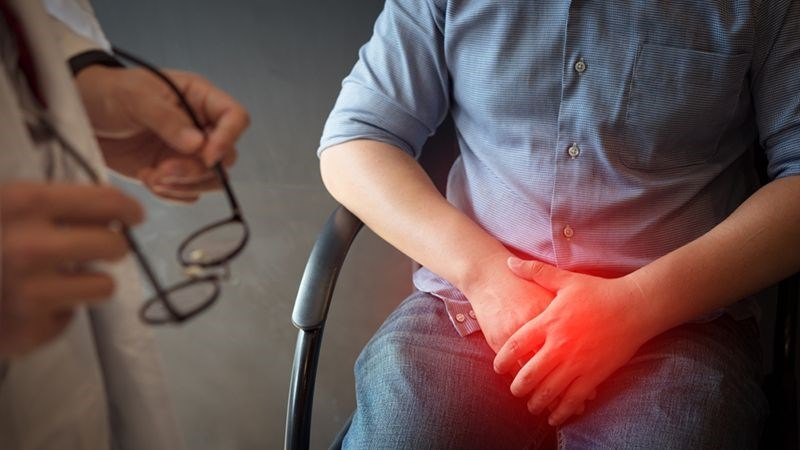
Monitoring accompanying symptoms helps doctors preliminarily determine the cause of the pain. One should not diagnose a disease based solely on a few isolated signs, but patients need to pay special attention to the following symptoms:
| Suspected Condition / Pathology | Typical Accompanying Symptoms |
| Peyronie’s Disease | Palpable hard lumps/plaques under the skin, visible bending during an erection, penile length may be shortened. |
| Priapism | Continuous erection for over 4 hours, no sexual desire, the penile shaft is very hard but the glans may be soft, severe pain. |
| Infections | Painful urination, frequent urination, abnormal discharge/pus at the urethral opening, foul odor, itching, mild fever, or pelvic pain. |
| Trauma / Fracture | Hearing a “crack,” immediate sharp pain, swollen penis (eggplant deformity), spreading bruising, loss of erectile ability. |
🚨 Danger signs requiring immediate medical emergency:
- Continuous and painful erection for more than 4 hours.
- Severe pain after a mechanical trauma, accompanied by rapid swelling and bruising.
- Complete inability to urinate, bleeding from the urethra.
- Pain accompanied by a high fever, chills, and heavy pus discharge.
Diagnostic Methods for Painful Erections
Clinical examination and medical history taking are the first and most important steps. Andrology specialists will never provide a treatment regimen without specific examination data. The diagnostic process usually includes:
- Medical History: The doctor will ask in detail about the onset of pain, the nature of the pain, trauma history, current medications, and sexual habits.
- Physical Examination: Evaluating the penile structure, checking for scar plaques, foreskin conditions, and signs of infection.
- Color Doppler Ultrasound: Assessing blood flow in penile arteries and veins, detecting damage to the tunica albuginea, plaques, or blood circulation stagnation.
- Laboratory Tests: Blood tests, urinalysis, or fresh smear/culture of urethral fluid to look for the presence of infection-causing bacteria.
Treatment for Painful Erections and the Role of Medications
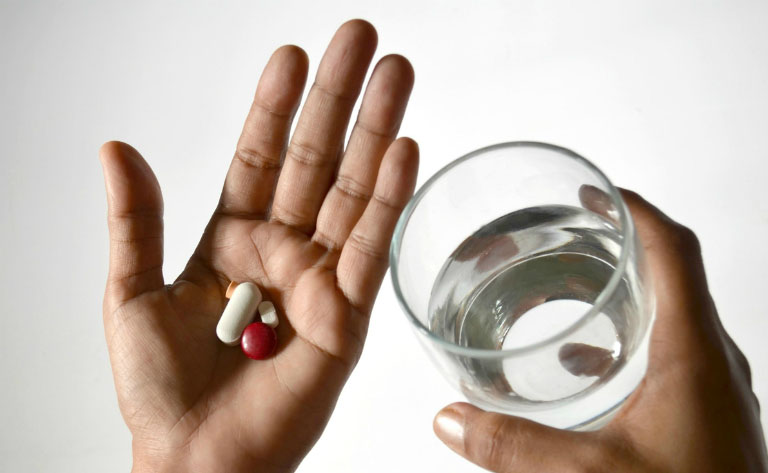
The principle of treating painful erections is to thoroughly address the root cause while controlling pain symptoms to restore physiological function. Patients must absolutely not use someone else’s prescription or buy medications of unknown origin.
- Medical Intervention (Medication)
- Surgical Intervention
Comprehensive Men’s Healthcare with the Men’s Health Ecosystem

In the process of finding a solution for painful erections, choosing a reputable medical facility is a prerequisite. Men’s Health Men’s Pharmacy is a crucial link in the Men’s Health Center for Men’s Health ecosystem, founded and directed by Dr. Tra Anh Duy (MD, PhD, Specialist Level II).
At Men’s Health, patients not only receive thorough examinations for accurate diagnosis but are also always consulted by doctors and pharmacists who explain the role of each medication in detail. All prescription regimens are personalized, based on the actual medical records of each individual. The pharmacy is committed to providing standard medical products and does not encourage the self-purchase of medications without a prescription. In particular, Men’s Health always emphasizes professionalism, safety, a discreet examination environment, and absolute information security, respecting the privacy and personal needs of men throughout the healthcare process.
Common Mistakes When Managing Painful Erections
- Self-medicating with numbing/lubricating sprays: Many mistakenly believe that delay sprays containing Lidocaine/Benzocaine will help “numb” the pain. In reality, this only masks the symptoms, causing men to move more vigorously and severely worsening the penile structural damage.
- Indiscriminate use of physiological enhancement pills: A painful erection does not equate to physiological weakness (erectile dysfunction). Using word-of-mouth “aphrodisiac” products can cause a sudden increase in blood flow, making fibrous plaques tighter or causing infections to flare up fiercely.
- Attempting to have sex despite the pain: This increases the risk of a penile fracture, torn frenulum, or cross-infection to your partner if the cause is bacterial/viral.
Lifestyle Changes and Prevention
- Safe sex: Use condoms to prevent sexually transmitted infections – a common cause of urethritis and prostatitis.
- Avoid dangerous sexual positions: Limit movements with strong impact forces or sudden bending of the penis to prevent corporal fractures.
- Proper personal hygiene: Keep the genital area clean, especially in uncircumcised men, to avoid the accumulation of smegma which can lead to infection.
- Do not use supportive devices arbitrarily: Be cautious with vacuum pumps or constriction rings of unknown origin, as improper use can easily lead to ischemia and prolonged painful erections.
Painful Erections and Frequently Asked Questions
Will a painful erection go away on its own?
Depending on the cause, some mild friction injuries can subside after a few days of rest. However, if the painful erection stems from Peyronie’s disease, phimosis, infection, or priapism, the condition will not resolve on its own and requires medical intervention to avoid complications like penile shrinkage or impotence.
Can I have sex if my erection is painful?
Doctors recommend temporarily stopping sexual intercourse and masturbation while experiencing pain. Continuing to have sex in this state not only causes extreme pain and prevents climaxing but also carries the risk of more severe damage to the corporal structures.
Do numbing sprays help cure a painful erection?
No. Sprays or gels containing topical anesthetics only temporarily trick the sensation on the outer skin layer. They do not resolve the root problem inside the penile structure and may even irritate the mucosa or make the patient careless, leading to heavier injuries because they cannot feel the pain threshold.
Is an erection lasting more than 4 hours dangerous?
Very dangerous. This is diagnosed as Priapism and is a medical emergency. Blood trapped for a long time in the corpora cavernosa will lack oxygen, causing tissue death (necrosis). Without prompt blood aspiration and irrigation, the patient is at a high risk of permanent erectile dysfunction.
How should I prepare for a medical examination for a painful erection?
Patients should abstain from ejaculation (for about 2-3 days) prior to the visit for the most accurate fluid/urine test results (if needed). Remember the time the pain started, the pain intensity, any recently used medications, and trauma history to provide detailed information to the andrology specialist.
Conclusion
A painful erection is a complex clinical sign, reflecting various abnormalities ranging from anatomical structure and blood vessels to male genital infections. The key to overcoming this condition is not enduring it or arbitrarily using word-of-mouth treatments, but finding the exact underlying pathology. Patients must absolutely not self-diagnose or abuse antibiotics or prolonged painkillers without medical indication.
If you are experiencing abnormal pain every time you achieve an erection, seek out a specialist promptly for timely diagnosis and treatment. With criteria of professionalism, safety, and discretion, the Men’s Health Center for Men’s Health ecosystem is always ready to accompany you, providing personalized examination services, medication consultations, and comprehensive andrological health monitoring for men. Don’t let a small barrier affect your masculinity and long-term quality of life!