
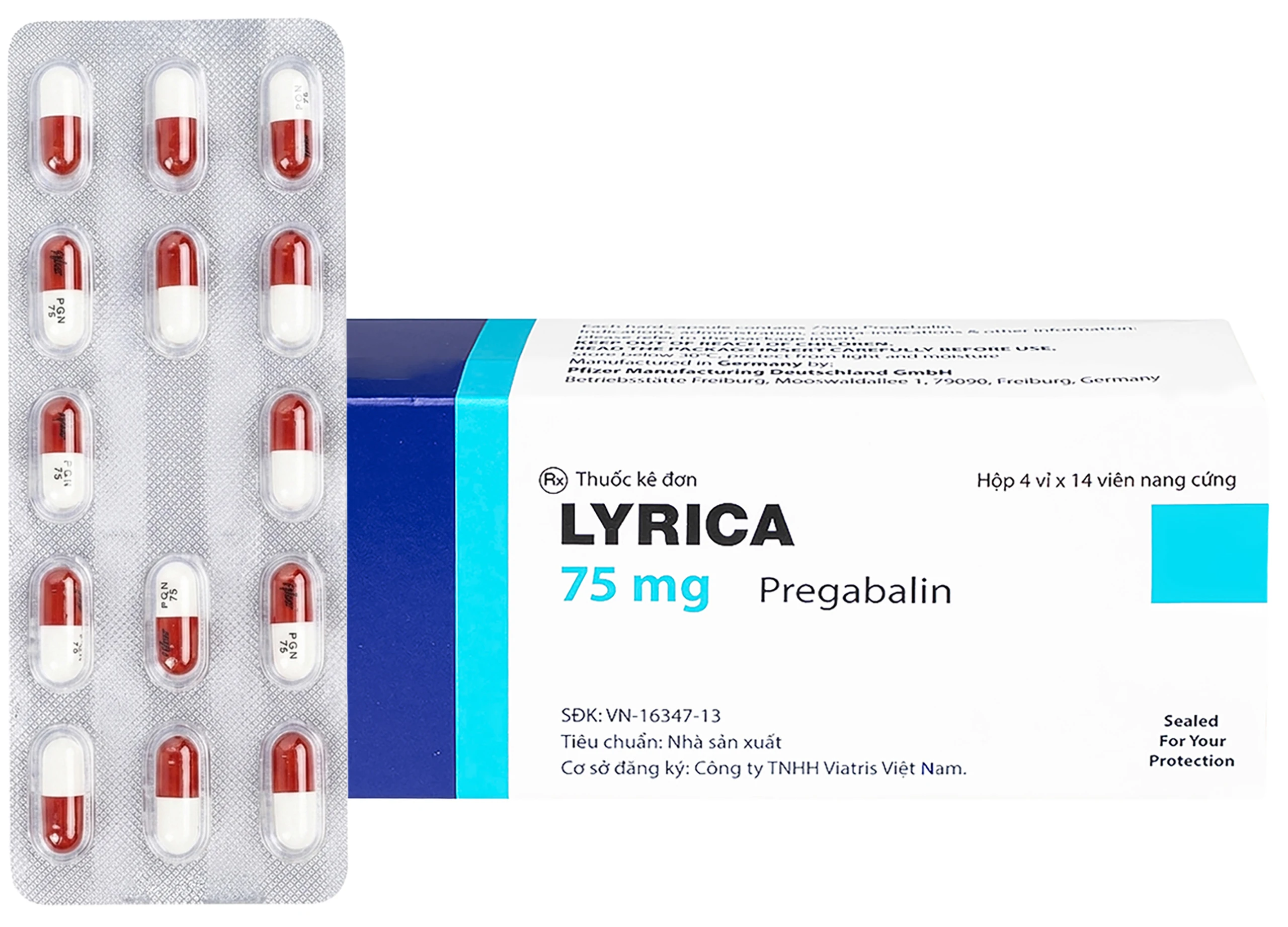
Pregabalin and pelvic pain in men is one of the advanced medical approaches applied to control chronic, persistent neuropathic pain in the perineum, scrotum, penis, or anus. Pregabalin works by modulating hypersensitized nerve signals, thereby reducing burning sensations, sharp pain, and tension caused by pudendal nerve compression or pelvic floor muscle dysfunction. The article below provides comprehensive information regarding its mechanism, uses, safe administration guidelines, and a comprehensive treatment regimen to help men restore their quality of life.
1. Overview of Chronic Pelvic Pain Syndrome in Men
Chronic Pelvic Pain Syndrome (CPPS) in men is defined as pain or discomfort lasting for at least 3 to 6 months in the pelvis, perineum, scrotum, or genitals without evidence of acute bacterial infection. According to the U.S. National Institutes of Health (NIH) classification, this is the most common form of Chronic Prostatitis/Chronic Pelvic Pain Syndrome (CP/CPPS — Category III).
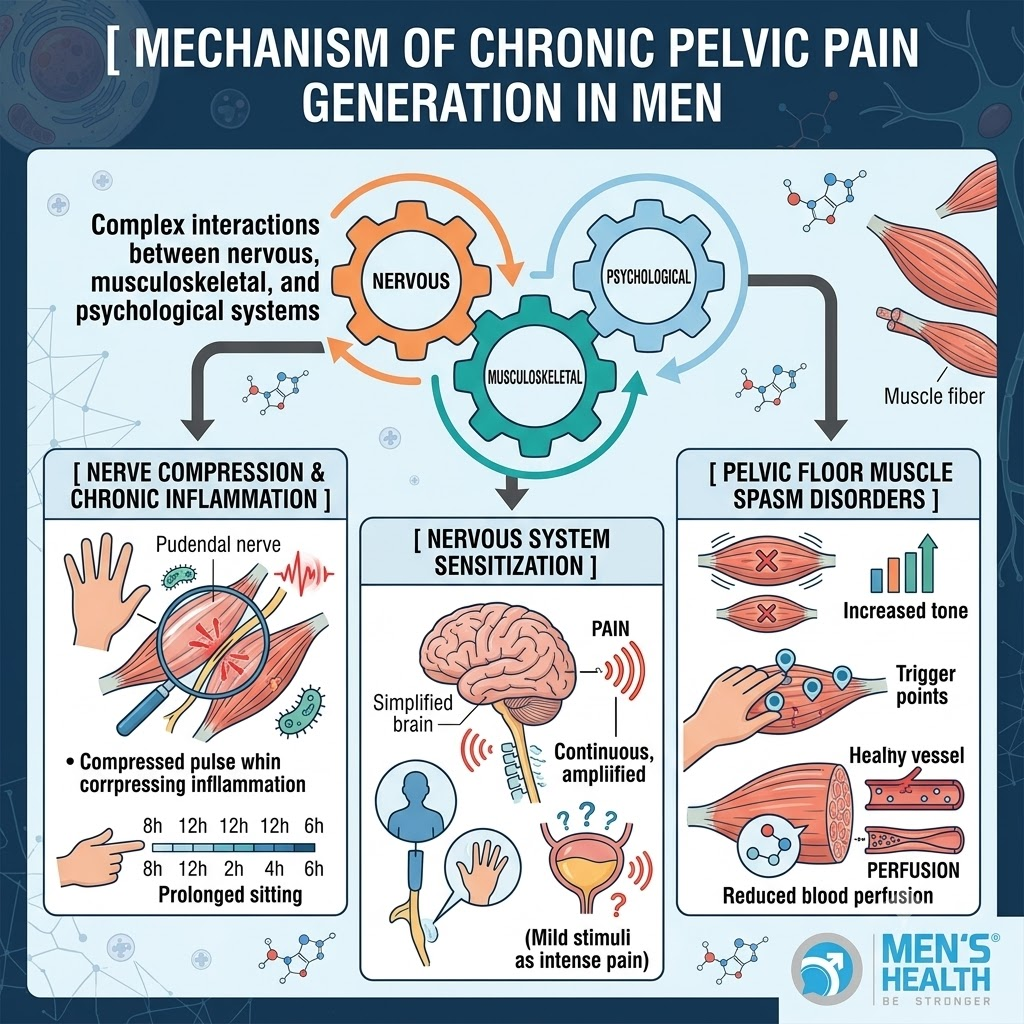
- Mechanism of Pain Generation:Chronic pelvic pain is not merely an injury to a single isolated organ, but rather the result of complex interactions between the nervous, musculoskeletal, and psychological systems:
- Nerve compression and inflammation: The pudendal nerve or pelvic sensory nerve branches are chronically stimulated due to prolonged sitting, trauma, or surrounding muscle spasms.
- Nervous system sensitization: Continuous transmission of pain signals to the spinal cord and brain causes the central nervous system to become “sensitized.” At this point, even very mild stimuli (such as light contact or a slightly full bladder) are interpreted by the brain as intense pain.
- Pelvic floor muscle spasm disorders: Increased muscle tone of the levator ani and pelvic muscles creates Trigger points, reducing local blood perfusion.
2. Identifying Signs and Causes of Pelvic Pain
Early recognition of symptoms enables patients to proactively seek medical examination, avoiding panic or misdirected self-treatment.
- Causes and Risk Factors:
- Lifestyle habits: Sitting continuously for many hours a day (office workers, drivers, long-distance cyclists) places constant pressure on the perineum.
- Mechanical injuries: Perineal trauma, heavy physical activity with improper posture, or complications following groin-pelvic surgeries.
- Chronic psychological stress: Prolonged stress and anxiety activate the sympathetic nervous system, aggravating pelvic floor muscle spasms.
- History of infection: Previous episodes of prostatitis or urinary tract infections that have resolved the infection yet left behind nerve sensitization.
- Characteristic Symptoms:
- Diverse pain sensations: Burning discomfort, electric shock-like sharp pain, chronic compressive pain in the perineum (the area between the base of the scrotum and the anus).
- Radiating pain: Pain can radiate to the lower back, suprapubic region, run along the shaft of the penis, both sides of the scrotum, or the inner thighs.
- Urinary abnormalities: Urinary frequency, nocturia, incomplete emptying sensation, mild burning pain during or after urination.
- Sexual function impacts: Pain during ejaculation, pain persisting for hours after sexual intercourse, decreased libido, or erectile dysfunction due to apprehension of pain.
3. What is Pregabalin and Its Mechanism of Action in Pelvic Pain?
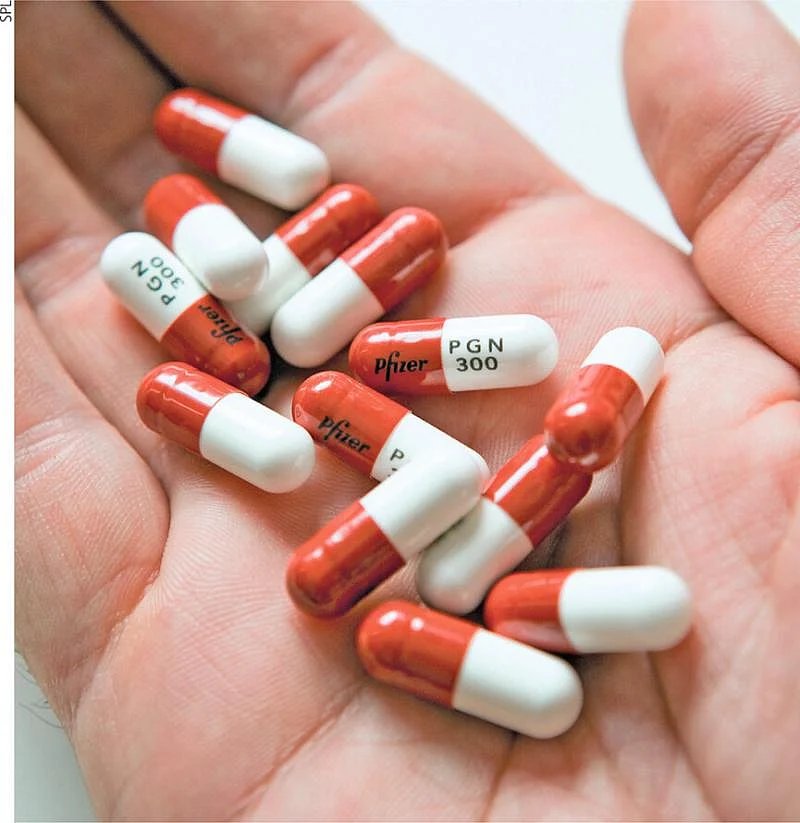
Pregabalin belongs to the class of neuromodulators, approved for treating central and peripheral neuropathic pain disorders, fibromyalgia, and as an adjunctive anti-epileptic therapy.
- Medical Mechanism of Action:The mechanism of action of Pregabalin in treating chronic pelvic pain includes:
- Binding to the α2δ (alpha-2-delta) subunit: Pregabalin binds with high affinity to the auxiliary subunit of voltage-gated Calcium channels on neurons in the spinal cord and brain.
- Reducing pain-mediating neurotransmitters: By modulating Calcium influx into neurons, Pregabalin reduces the release of pain-promoting chemical mediators such as Glutamate, Substance P, and CGRP (Calcitonin Gene-Related Peptide).
- Soothing the sensitized nervous system: The drug helps “turn off” false alarm signals emitted by compressed pudendal nerves, thereby markedly reducing burning and sharp pain sensations in the pelvic region.
- Treatment Goals When Using Pregabalin:
- Reduce pain intensity and frequency of perineal burning episodes.
- Improve patient sleep quality, reducing nighttime awakenings caused by pain.
- Create favorable conditions for patients to undergo physical therapy for pelvic floor muscle rehabilitation.
4. Diagnostic Protocol for Pelvic Pain in Men
Chronic pelvic pain requires a comprehensive diagnostic process to rule out dangerous pathologies such as prostate cancer, urinary stones, or genital infections.
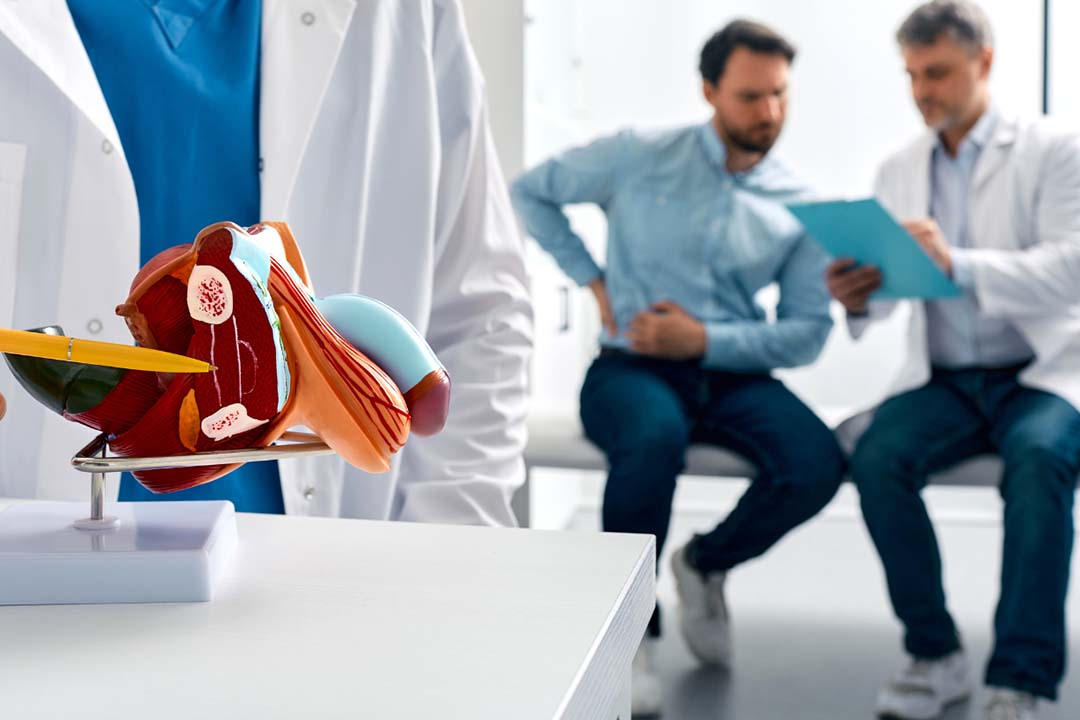
- Clinical examination: The physician examines the lower abdomen, scrotum, perineum, and performs a rectal examination to assess prostate size and sensitivity, as well as identify Trigger points in the pelvic floor muscles.
- CPSI Scoring Assessment (NIH-CPSI): Utilizing a standardized questionnaire to quantify pain severity, urinary impact, and quality of life.
- Urinalysis and secretion tests: Fresh smears, sediment analysis, and bacterial cultures to completely rule out acute urogenital infections.
- Diagnostic imaging: Color Doppler ultrasound of the urogenital system, prostate, and scrotum; Pelvic Magnetic Resonance Imaging (MRI) in cases where deep neural structure compression is suspected.
5. Safe Administration Guidelines for Pregabalin and Medical Cautions
Pregabalin is a STRICTLY PRESCRIPTION MEDICATION. Patients must strictly adhere to specialist physicians’ instructions to achieve optimal efficacy and minimize adverse effects.
- Standard Dosage and Administration:
- Initiation principle: Physicians typically prescribe a low dose at night, then gradually increase it (titration) based on the body’s response and tolerability.
- Timing: The drug can be taken with or without food. It should be taken at a fixed schedule every day to maintain stable blood concentrations.
- Common Adverse Reactions:
- Nervous system: Dizziness, drowsiness, fatigue, loss of balance, decreased concentration (typically appearing in the first weeks of treatment and diminishing over time).
- Metabolic & Gastrointestinal: Increased appetite, weight gain, dry mouth, constipation, mild peripheral edema in feet or ankles.
- Contraindications and Populations Requiring Caution:
- Renal function impairment: Pregabalin is eliminated primarily unchanged through the kidneys. Physicians must calculate dosage adjustments based on Creatinine clearance (eGFR).
- History of substance abuse: Must be used cautiously due to the risk of drug dependence if improperly dosed.
- Elderly individuals: Close monitoring is required regarding the risk of falls due to dizziness and imbalance.
- Drug and Substance Interactions:
- Do not self-combine with Opioids or sedatives: Co-administration with Morphine, Tramadol, or Benzodiazepines increases the risk of respiratory depression, severe respiratory failure, and profound sedation.
- Completely avoid alcohol and beer: Ethanol significantly enhances the central nervous system depressant effects of Pregabalin.
| CRITICAL MEDICAL WARNING |
| • ABSOLUTELY DO NOT STOP PREGABALIN ABRUPTLY. |
| • Abrupt discontinuation of the drug can trigger withdrawal symptoms: insomnia, headaches, nausea, anxiety, sweating, or cause pelvic pain to recur severely. |
| • When wishing to discontinue treatment, the physician will taper the dosage gradually over at least 1 to 2 weeks before stopping entirely. |
| • Do not self-reuse old prescriptions or use someone else’s prescription. |
6. Comprehensive Treatment Regimen for Pelvic Pain in Men
Effective management of chronic pelvic pain requires a multimodal approach. Monotherapy with a single drug such as Pregabalin generally cannot resolve the underlying root cause entirely.
- 1. Multi-Target Pharmacological Combination
- Alpha-1 blockers (Tamsulosin, Alfuzosin): Relax bladder neck and prostate smooth muscle, improving urine flow.
- Muscle relaxants (Baclofen, Eperisone): Assist in reducing chronic spasms in pelvic floor muscle groups.
- Non-Steroidal Anti-Inflammatory Drugs (NSAIDs): Short-term prescription during acute pain flares to reduce mild local inflammation.
- 2. Pelvic Floor Physical Therapy
- Physical therapists apply muscle-relaxation techniques, releasing Trigger points via the rectal route or perineum.
- Biofeedback training helps men learn to voluntarily relax tightening pelvic muscles.
- 3. Lifestyle Changes and Home Care
- Specialized cushions: Use a centrally cutout cushion (doughnut cushion) when sitting at work to reduce pressure on the pudendal nerve.
- Warm sitz baths: Soaking the pelvis in warm water for 15 to 20 minutes daily enhances blood circulation and relaxes muscles.
- Low-irritant diet: Limit alcohol, beer, coffee, excessively spicy foods, or carbonated beverages to prevent bladder irritation.
7. Introduction to the Men’s Health Center Healthcare Ecosystem
Chronic pelvic pain is a sensitive pathology that easily inflicts psychological distress and undermines men’s confidence. Finding a specialized, discreet medical facility with standardized treatment protocols is critically important.
Men’s Health Andrology Pharmacy is a unit within the Men’s Health Center ecosystem founded by Assoc. Prof. Dr. Tra Anh Duy. Here, patients always receive guidance, explanations, and support from physicians and pharmacists in selecting appropriate healthcare solutions. Men’s Health emphasizes professionalism, safety, discretion, information privacy, and respect for individual privacy throughout examination, treatment, and follow-up.
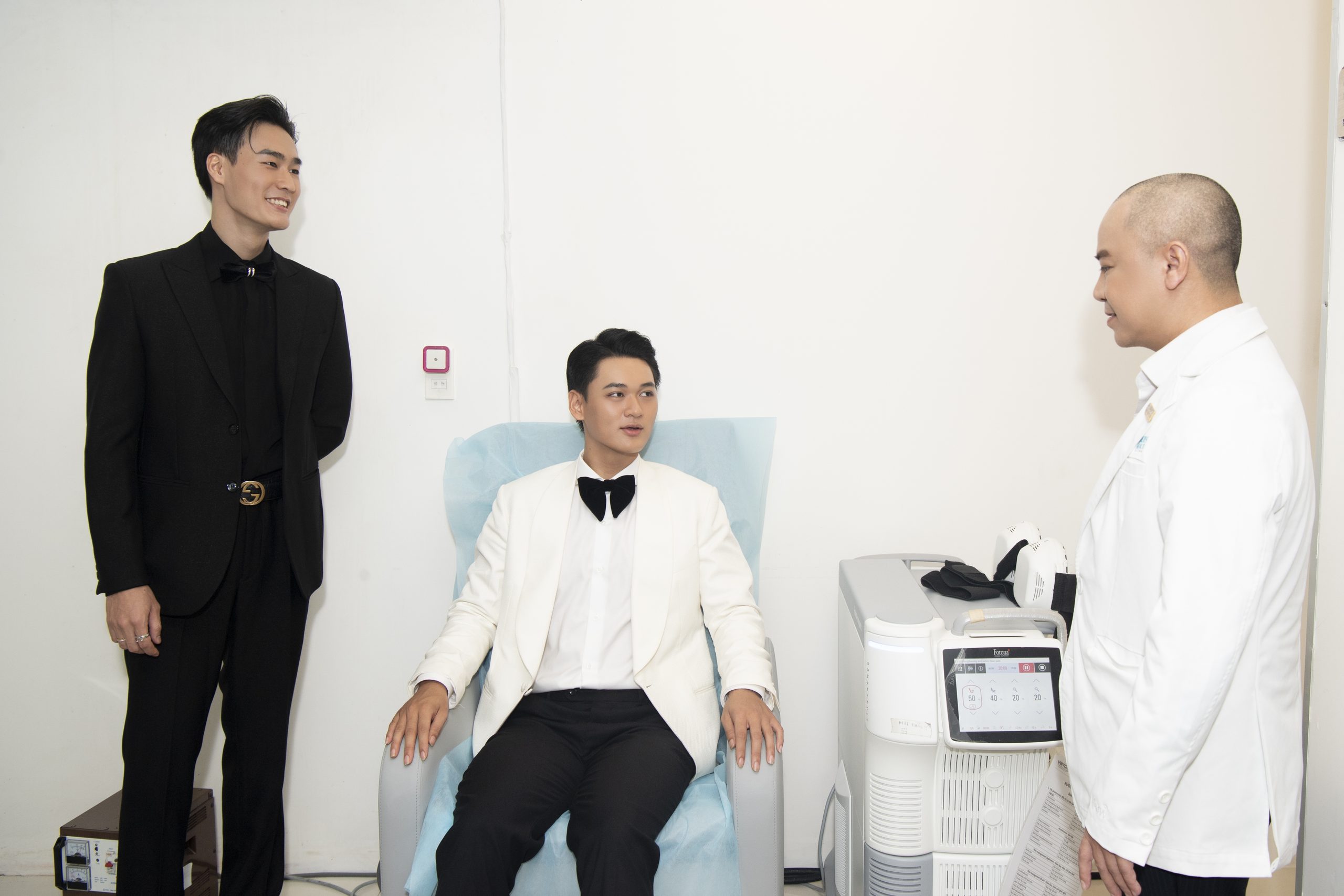
Within the Men’s Health ecosystem, patients with chronic pelvic pain access modern diagnostic workflows, combining andrological examination, neuro-pelvic floor evaluation, and safe neuromodulator counseling to optimize recovery efficacy.
8. Detailed Comparison Table of Drug Classes Used in Pelvic Pain
| Drug Class | Prescription Representatives | Main Treatment Goal | Important Side Effects to Note |
| Neuromodulators (Gabapentinoids) | Pregabalin, Gabapentin | Reduce neuropathic pain, dysesthesia, burning, soothe central sensitization | Drowsiness, dizziness, weight gain, mild edema. Requires gradual tapering. |
| Alpha-1 Blockers | Tamsulosin, Silodosin | Relax bladder neck, improve urinary frequency and hesitancy | Orthostatic hypotension, temporary retrograde ejaculation. |
| Skeletal Muscle Relaxants | Baclofen, Eperisone | Reduce chronic spasms of pelvic floor muscle groups | Fatigue, lethargy, mild muscle weakness. |
| Tricyclic Antidepressants (TCAs) | Amitriptyline | Reduce neuropathic pain, improve sleep, reduce co-occurring anxiety | Dry mouth, constipation, mild urinary retention, daytime drowsiness. |
Pregabalin and Pelvic Pain in Men: Frequently Asked Questions (FAQs)
How long does it take for Pregabalin to improve pelvic pain symptoms?
Neuromodulators like Pregabalin are not immediate fast-acting painkillers. Typically, patients need to use them continuously for 1 to 2 weeks at the prescribed dosage for drug concentrations to reach a steady state and begin recording noticeable pain reduction.
How does Pregabalin differ from Gabapentin in treating pelvic pain?
Both drugs belong to the Gabapentinoids class and share similar mechanisms of action. However, Pregabalin exhibits better gastrointestinal absorption, higher bioavailability (≥ 90%), and a faster time to peak blood concentration compared to Gabapentin, making dosage titration easier.
Does using Pregabalin affect fertility or sperm quality?
Current clinical studies indicate that Pregabalin does not directly impair sperm quality or reduce fertility in men. Common side effects are primarily neurological, such as dizziness and mild drowsiness.
Can I self-purchase Pregabalin at a pharmacy for self-treatment?
Absolutely not. Pregabalin is a strict prescription drug. Self-administration can lead to incorrect dosing, drug toxicity, dangerous drug interactions, or mask serious undiagnosed pathologies.
Does Pregabalin completely cure chronic pelvic pain?
Pregabalin is an effective tool to control and reduce neuropathic pain symptoms. To achieve sustainable recovery, patients must combine it with addressing the root cause, pelvic floor physical therapy, and lifestyle modifications.
Does prolonged office work worsen pelvic pain?
Yes. Prolonged sitting postures increase direct pressure on the perineum, causing local ischemia and pudendal nerve compression. Men should proactively stand up and walk around for 5 to 10 minutes after every hour of work.
Conclusion
Pregabalin and pelvic pain in men represent an important medical solution in controlling persistent chronic neuropathic pain. Thanks to its capacity to soothe nervous system hypersensitivity, Pregabalin helps men alleviate burning sensations, sharp pain, and significantly improves their quality of life.
However, Pregabalin only maximizes its efficacy when prescribed for the right condition, at the correct dosage, and combined within a comprehensive multimodal treatment regimen including physical therapy and lifestyle modifications. Men should never self-diagnose or purchase treatment drugs at home on their own. When persistent pain signs appear in the perineal region or genitals, visit the Men’s Health Center for accurate diagnosis and dedicated, safe, discreet professional support from specialist physicians and pharmacists.