
If a woman accidentally touches the skin where her husband recently applied testosterone gel, she must immediately wash the exposed area thoroughly with soap and water. Testosterone gel can be transferred via skin-to-skin contact, especially if the application site has not been washed or covered by clothing. While a brief, single exposure does not guarantee virilization (development of male physical characteristics), pregnant women or those who may become pregnant must exercise extreme caution and notify their doctor if direct contact with the gel or the application site occurs.
Why Can a Husband’s Testosterone Gel Affect His Wife?
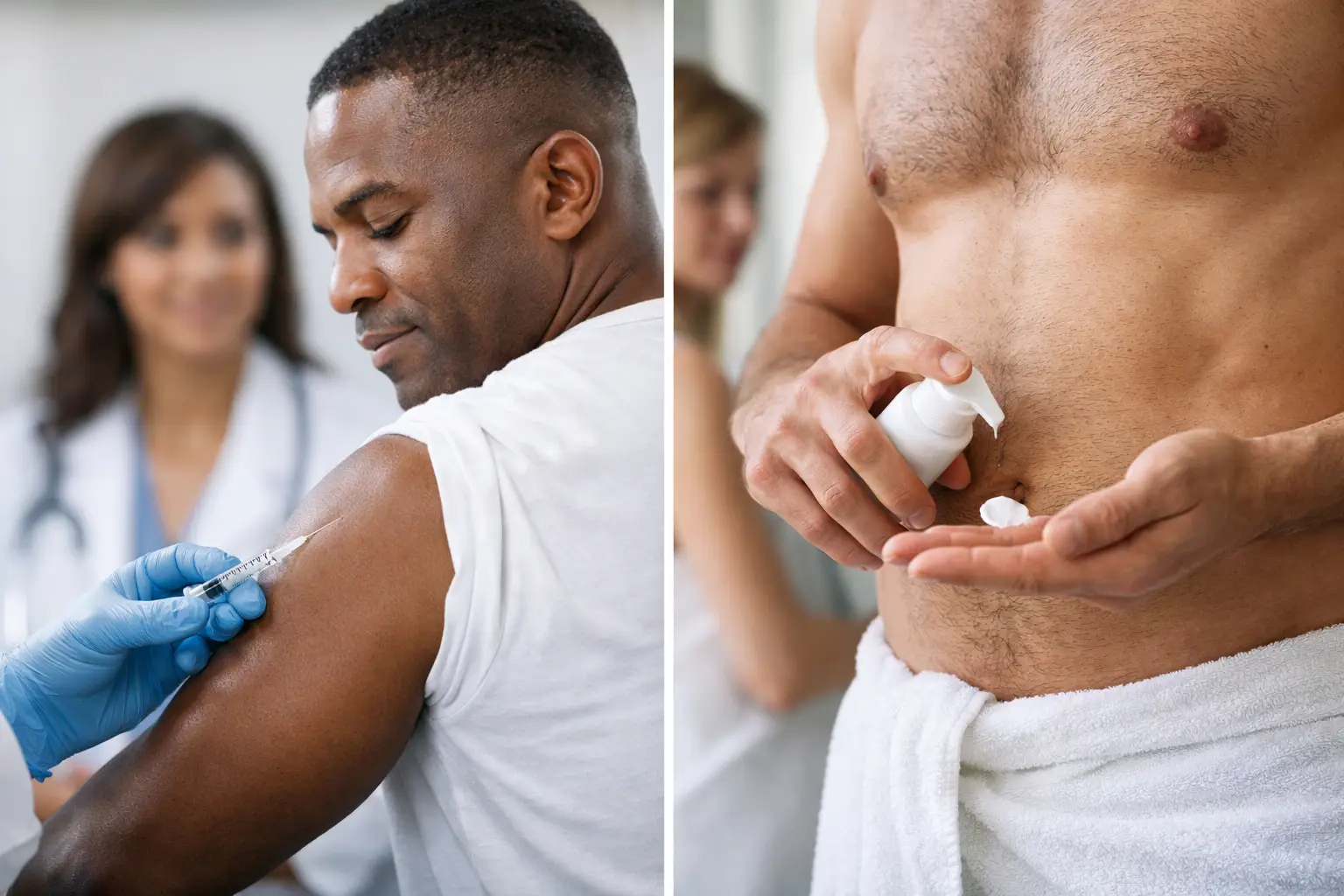
Testosterone gel is a topical hormonal medication. After being applied to the designated area, testosterone absorbs through the user’s skin into the bloodstream. However, a portion of the medication remains on the skin’s surface and can be transferred to others through direct contact.
This phenomenon is known as secondary exposure to testosterone. The FDA requires clear warnings regarding this risk for testosterone gel products because women and children can accidentally touch unwashed or uncovered application sites.
This risk is not merely theoretical. In a study presented in the prescribing information for AndroGel 1.62%, men applied testosterone to their shoulders and upper arms; two hours later, women had direct skin-to-skin contact with the application site for 15 minutes. The women’s average and peak testosterone levels increased significantly above baseline. When the application site was covered by a shirt, the transfer rate was vastly reduced.
This demonstrates that direct contact with unprotected skin can transfer testosterone, while proper covering significantly mitigates the risk.
What Should a Woman Do Immediately After Touching the Gel?
The most critical step is to wash the exposed skin with soap and water as soon as possible. This is the direct instruction outlined in FDA prescribing information for testosterone gels.
Follow these immediate steps:
- Wash immediately: Cleanse the entire suspected contact area with plenty of soap and water.
- Change clothes: If the gel gets on your clothing, change immediately to prevent continuous skin contact with the contaminated fabric.
- Wash your hands: Always wash your hands after handling contaminated clothing or items.
- Avoid further contact: Do not touch the area where your husband applied the medication until it has been washed clean or properly covered according to the product’s instructions.
- Consult a doctor if pregnant: If you are pregnant, suspect you are pregnant, were exposed to a large amount of gel, or experienced repeated exposures, contact a doctor for a specific evaluation.
Note: Do not use rubbing alcohol, harsh solvents, or strong chemicals to “scrub” the testosterone off your skin. Standard soap and water are sufficient and recommended to remove surface testosterone.
Is a Single Touch of Testosterone Gel Dangerous?
A brief touch that is immediately washed off does not mean a woman will definitively experience virilization or complications. The level of exposure depends on:
- The amount of gel remaining on the skin.
- The surface area of contact.
- The duration of contact.
- The location on the body.
- Whether the application site was covered or washed.
Transdermal transfer studies show that transfer rates vary vastly based on contact conditions. For instance, prolonged direct skin contact clearly elevates a woman’s testosterone levels, while covering the site with a shirt significantly reduces transfer.
Therefore, a fleeting touch followed by immediate washing is entirely different from frequently hugging, sleeping skin-to-skin, or having intercourse when the application site is unwashed or uncovered. However, you cannot precisely calculate “how much testosterone was absorbed” from a few seconds of contact. Special circumstances, like pregnancy or repeated exposure, require individual medical assessment.
What Symptoms Might Women Experience After Exposure?
Testosterone is an androgen. When women are exposed to significant amounts or experience repeated exposure over time, they may develop signs of androgenic effects or virilization.
FDA-approved labeling warns that women may experience:
- Changes in body hair distribution (hirsutism).
- A significant increase in acne.
- Deepening of the voice.
- Male-pattern hair loss.
- Menstrual irregularities.
- Clitoral enlargement (clitoromegaly) in cases of substantial, prolonged exposure.
A single, brief exposure is rarely equivalent to chronic exposure. The real danger lies in unrecognized daily contact—such as a wife’s skin repeatedly resting against her husband’s shoulder or arm after he applies the gel.
If a woman develops unusual acne, facial/body hair growth, menstrual changes, abnormal hair loss, or vocal changes while her husband is using testosterone gel, she must notify a doctor and specifically mention the potential for secondary testosterone exposure. The FDA strongly recommends medical evaluation for any signs of virilization in women.
What If a Pregnant Woman Accidentally Touches Testosterone Gel?
Pregnant women must strictly avoid testosterone gel because androgens can harm the fetus, specifically carrying the risk of virilizing a female fetus. FDA prescribing information lists testosterone gel as strictly contraindicated for pregnant women and mandates that they avoid contact with the user’s application sites.
If a pregnant woman accidentally touches the site:
- Wash immediately and thoroughly with soap and water.
- Notify an obstetrician or the doctor prescribing the testosterone to the husband—especially if the gel was still wet, the contact area was large, or the exposure has happened multiple times.
It is crucial not to panic and assume the fetus is definitively harmed from a single touch. Current data does not allow for a precise risk calculation from an accidental, isolated exposure. Contacting the doctor is to evaluate the context of the exposure and determine if further monitoring is necessary.
Is an Immediate Blood Test Necessary for the Wife?
Not every fleeting touch requires an immediate testosterone blood test. The primary action is always washing the site and preventing further exposure.
A doctor may consider testing if the woman exhibits symptoms suggesting androgenic effects, suspects repeated exposure, or has a specific medical context requiring evaluation. A single testosterone test result must be interpreted alongside symptoms, menstrual cycle timing, current medications, and the assay method used.
Therefore, do not continuously self-order blood tests after every accidental touch if there are zero abnormal signs. Conversely, if changes like increased hair, acne, menstrual dysfunction, or vocal changes occur, do not just “wait for it to go away”—seek medical evaluation.
Can Testosterone Be Transferred Through Clothing, Towels, or Bed Sheets?
While direct skin-to-skin contact is the most well-studied route, the use of linens and fabrics requires caution.
In post-marketing reports cited in the AndroGel prescribing information, at least one case of secondary exposure was believed to be related to the shirts, towels, or bed linens of the testosterone gel user.
This does not mean simply touching a husband’s shirt guarantees testosterone absorption. However, households should prevent others from using unwashed towels or clothing that may contain wet gel residues, and medications/related items must be kept out of reach of children.
What Must the Husband Do to Prevent Transferring Testosterone?
Preventing secondary exposure relies entirely on the user’s application habits. The FDA recommends that testosterone gel users:
- Wash hands with soap and water immediately after application.
- Let the gel dry completely.
- Cover the application site with clothing once dry.
- Wash the application site thoroughly before any anticipated skin-to-skin contact with others.
Users must strictly follow the specific product’s instructions, as application sites and required waiting times before showering vary between formulations. For example, AndroGel 1.62% is applied to the shoulders and upper arms and covered with a t-shirt once dry.
Do not independently change the application site to the chest, abdomen, scrotum, or other areas if not permitted by the specific product’s insert. Absorption and transfer risks change depending on the body part.
Does Showering Immediately After Application Ruin the Medication?
Yes, it can. A user should not shower immediately after applying the gel out of fear of transferring it to his wife, unless managing a specific spill/accident.
Each testosterone gel has specific guidelines on the waiting period required before showering or swimming. For AndroGel 1.62%, current prescribing information advises waiting at least 2 hours to ensure proper absorption.
Studies show that washing with soap and water significantly reduces the amount of testosterone left on the outer layers of the skin. Therefore, a balance must be struck: the patient must leave the gel on long enough for therapeutic effect, but must cover it with clothing and wash it off before direct skin contact with a partner or children.
What to Keep in Mind for Sexual Intercourse?
Men using testosterone gel can maintain a normal sex life, but they must prevent the unwashed application site from directly contacting their partner’s skin.
If close physical contact is anticipated, the user should adhere to the product’s required absorption time, then wash the application site thoroughly with soap and water prior to skin-to-skin contact. The FDA also mandates covering the site with clothing once the gel dries to mitigate transfer risks.
Note: Condoms do not prevent this risk if the testosterone was applied to the shoulders, arms, or other areas that will contact the partner’s skin. This is a transdermal (skin) transfer issue, not a semen transmission issue.
Should the Husband Stop Using the Gel After an Incident?
Do not independently stop treatment due to an accidental exposure without consulting a doctor, unless explicitly instructed otherwise.
Testosterone gel is a prescription medication used for specific endocrine indications, requiring ongoing monitoring for efficacy and safety. After an incident, the correct action is to correct the application habits: wash hands, let it dry, cover with clothing, and wash the site before contact.
If the wife has already developed signs of virilization suspected to be from secondary exposure, the FDA advises notifying a physician. Any dosage adjustment or temporary cessation of the husband’s medication must be determined by the doctor after evaluating the cause.
When Should the Woman See a Doctor?
After a brief, immediately washed exposure with absolutely no symptoms, the focus is simply on preventing recurrence. However, contact a doctor if:
- The woman is pregnant or may become pregnant.
- Exposure involved a large amount of gel or occurred repeatedly.
- Signs of virilization appear.
Specifically, changes like severe acne, abnormal body/facial hair growth, menstrual irregularities, or a deepening voice require clinical evaluation, not just at-home monitoring. If young children reside in the home, application habits must be reviewed immediately. Cases of children experiencing virilization from secondary exposure have been reported, prompting prominent FDA warnings for this drug class.
Safe Consultation at the Men’s Health Ecosystem
Testosterone gel offers the advantage of transdermal hormone delivery but demands strict compliance with transfer-prevention protocols. This is critical for men living with female partners, pregnant women, or children.
The Men’s Health Andrology Pharmacy, part of the Men’s Health Center ecosystem founded by Dr. Tra Anh Duy (MD, Specialist Level 2), ensures comprehensive care. When testosterone is indicated, doctors verify the deficiency and monitor the clinical response. Pharmacists play a crucial role in explaining proper application techniques, site locations, showering timelines, and safety measures to protect family members.
Testosterone is a prescription drug and should never be self-purchased, dose-adjusted, or shared. If accidental exposure occurs, consulting our doctors or pharmacists helps identify the breakdown in safety habits and establishes safer usage protocols. Men’s Health prioritizes professional, confidential, and highly personalized care based on each patient’s endocrine profile and living situation.
Frequently Asked Questions (FAQs)
1. Is it bad if a woman touches testosterone gel once? A single touch does not guarantee virilization. Wash the exposed area immediately with soap and water. The risk depends on the amount of medication, contact area, duration, and whether the application site was covered.
2. What should a wife do if she touches her husband’s freshly applied shoulder? The wife must immediately wash her exposed skin with soap and water. The husband must ensure he covers the site with clothing once dry and washes the area prior to future skin-to-skin contact.
3. Is it dangerous if a pregnant woman touches testosterone gel? Testosterone can virilize a female fetus, so pregnant women must strictly avoid contact. If exposure occurs, wash immediately and notify a doctor to evaluate the context; a single touch does not definitively mean the fetus is harmed.
4. Will touching testosterone gel cause a woman to grow a beard? Sufficiently large or prolonged androgen exposure can cause increased hair growth (hirsutism) and other virilization signs. This is generally a concern with repeated, chronic exposure rather than a single brief touch.
5. Can dried testosterone gel still transfer to a wife? Yes. “Dry” does not mean zero risk. FDA guidelines require covering the site with clothing after the gel dries and washing the site with soap and water before anticipated direct skin contact.
6. Does a husband need to shower before sex if he uses testosterone gel? If the application site might contact the partner’s skin, he must wash the site with soap and water before contact. However, he must still adhere to the product’s minimum absorption waiting time before showering.
7. Does the wife need an immediate testosterone blood test? Not for every brief exposure. If exposure is repeated or symptoms like acne, hair growth, or menstrual changes appear, a doctor may order testing to evaluate her endocrine status.
8. Can testosterone transfer through towels and bed sheets? Post-marketing reports suggest potential exposure via shirts, towels, or bed linens of the user. Avoid sharing items that may have unwashed gel residue on them.
9. Can a husband’s testosterone gel affect his wife’s fertility? Fertility cannot be deemed impaired from a single accidental touch. However, prolonged androgen exposure causes endocrine disruptions in women, so the exposure source must be eliminated and any abnormalities medically evaluated.
Conclusion
When a woman accidentally comes into contact with her partner’s testosterone gel, the most critical immediate action is to wash the exposed skin thoroughly with soap and water. Transdermal testosterone can transfer from the user to others, especially during prolonged direct contact with unwashed application sites. Covering the site with clothing after the gel dries and washing the area before skin-to-skin contact drastically reduces this risk.
A brief touch should not automatically be assumed to cause toxicity or virilization. However, women who are pregnant or may become pregnant must be highly vigilant, as testosterone can harm a developing fetus. If a woman develops unusual acne, body hair changes, menstrual dysfunction, or other virilization signs, she must seek medical evaluation and inform the doctor about the partner’s gel use. Husbands should not unilaterally stop, increase doses, or change application sites; safe hormone therapy requires adherence to medical guidelines to achieve treatment goals while protecting household members.