
Age-related physiological testosterone decline and male hypogonadism are often confused because they share many symptoms, such as decreased libido, fatigue, or sexual dysfunction. However, the medical nature of these two conditions is completely different. Physiological decline is an inevitable consequence of the natural aging process as age increases, while male hypogonadism is an actual medical condition caused by dysfunction of the hypothalamic-pituitary-testicular axis. Clearly distinguishing these two concepts helps men avoid confusion, prevents the arbitrary abuse of endocrine drugs, and ensures accurate and timely medical intervention.

Concepts and Pathogenesis
To clearly understand the difference, we need to delve into the nature and mechanisms of each condition.
What is age-related physiological testosterone decline?
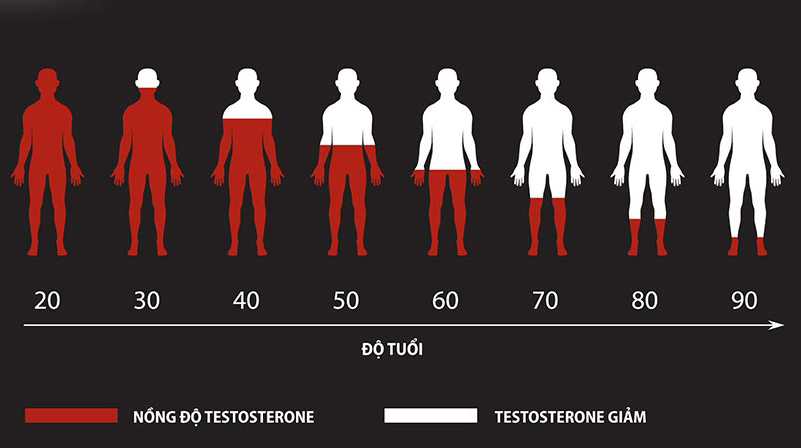
Physiological testosterone decline (often popularly called male menopause or andropause) is the gradual decrease in male sex hormone levels, following the body’s natural aging cycle.
According to current clinical studies, after the age of 30, testosterone levels in men decrease by an average of about 1% to 1.5% per year. This is a normal physiological process. Although the levels decline, the majority of men still maintain testosterone levels within the normal range of the reference chart (about 300 – 1,000 ng/dL) and do not experience overly severe symptoms that affect their daily quality of life.
What is Male Hypogonadism?
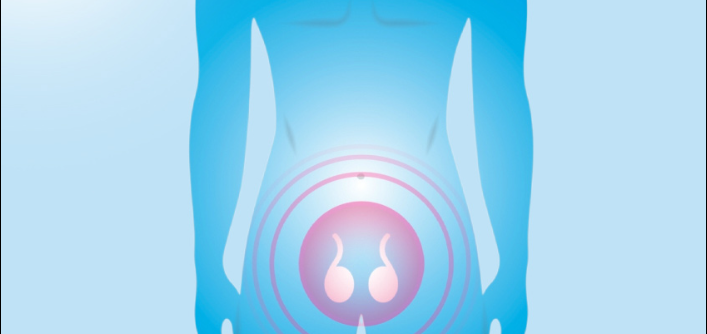
Male hypogonadism is a clinical syndrome characterized by the failure of the testes to produce adequate testosterone, sperm, or both. This is not a natural aging process but an actual medical pathology.
This pathology occurs when there is physical damage or dysfunction in the organs responsible for hormone production. The hormone deficiency in patients with hypogonadism is usually very severe, dropping testosterone levels below the normal physiological threshold regardless of age. The disease can be present from birth, during puberty, or onset in adulthood.
Core Differences Comparison Table
To easily visualize, the table below summarizes the key differences between these two conditions:
| Criteria | Age-Related Physiological Testosterone Decline | Male Hypogonadism |
| Nature | Natural aging of the body. | Actual medical pathology (dysfunction). |
| Age | Usually starts after 30-40 years old, progresses slowly. | Can occur at any age (congenital, puberty, adulthood). |
| Degree of decline | Gradual steady decline (~1-1.5%/year), usually remains within or near the low normal range. | Severe deficiency, testosterone levels below standard (usually < 300 ng/dL). |
| Symptoms | Vague, slow progression, the body can adapt. | Distinct, severely affects physical, mental, and sexual health. |
| Treatment | Prioritizes lifestyle and nutritional changes. Medication is used only when symptoms are severe (LOH). | Mandatory medical intervention (Hormone replacement therapy, treating the root cause). |
Causes and Risk Factors

The causes leading to these two conditions stem from entirely different mechanisms.
Why do men experience physiological testosterone decline?
This decline is simply due to aging. As age increases, two main factors occur:
- Leydig cells in the testes (where testosterone is produced) decline in both quantity and quality of activity.
- Sex Hormone Binding Globulin (SHBG) proteins in the blood increase. SHBG binds to testosterone, reducing the amount of free testosterone (the active form) available in the blood for the body to use.
Risk factors that exacerbate the physiological decline process include: obesity, smoking, alcohol abuse, physical inactivity, and chronic stress.
Causes of Male Hypogonadism
Male hypogonadism is divided into two main groups of causes based on the location of the damage:
- Primary hypogonadism (Testicular): The pituitary gland still sends signals (LH and FSH hormones) to the testes, but the testes are unable to produce enough testosterone.
- Klinefelter syndrome (chromosomal abnormality).
- Undescended testicles, history of mumps complicated by orchitis.
- Testicular trauma or previous pelvic radiation/chemotherapy.
- Secondary hypogonadism (Hypothalamic-Pituitary): The testes are normal, but the brain does not secrete enough stimulating hormones (LH, FSH) to command the testes to produce hormones.
- Pituitary tumors or inflammatory/infectious lesions in the brain.
- Kallmann syndrome (hypogonadism accompanied by loss of smell).
- Long-term use of certain medications (like Opioid painkillers) or abuse of anabolic steroids for bodybuilding.
Signs for Recognition and When to See a Doctor
Monitoring bodily signs is key to a preliminary differentiation and deciding when to see a doctor.
Typical symptoms
Despite some overlap, the severity and speed of symptom onset are very different:
- In men with physiological decline: Symptoms occur very silently. Men may find themselves less active than before, occasionally experience decreased libido, penile rigidity is not as strong as in their youth, easily gain belly fat, and often feel fatigued in the afternoon. However, they still maintain normal daily activities.
- In men with hypogonadism: Symptoms appear dramatically or are very pronounced in young people. Signs include:
- Complete loss or severe reduction of libido.
- Severe erectile dysfunction.
- Muscle atrophy, enlarged breasts in men (Gynecomastia).
- Loss of body and facial hair; shrunken testicles.
- Lack of concentration, depression, or hot flashes (similar to menopausal women).
- If affected since puberty: Voice does not deepen, little muscle mass, underdeveloped genitals.
When to see an andrologist?
You should not self-diagnose based solely on a few symptoms of fatigue or reduced libido. See a specialist immediately if:
- Erectile dysfunction and decreased libido persist continuously, affecting family happiness.
- You feel your testicles have become smaller or have an abnormal lump.
- You experience symptoms like enlarged breasts or extensive body hair loss.
- You have tried lifestyle changes (getting enough sleep, losing weight) but symptoms of fatigue and depression do not improve.
In-depth Diagnostic Methods
An andrologist never diagnoses hypogonadism based solely on a patient’s account. The diagnostic process requires systematic medical tests.
- Clinical examination: The doctor will evaluate overall health, muscle and hair development, and check the size and density of the testicles and breasts.
- Blood hormone tests:
- Test for total testosterone and free testosterone. Crucial note: This test must strictly be performed in the morning (from 7 AM to 9 AM) when hormone levels are at their highest, and usually must be repeated at least twice on different days for an accurate conclusion.
- Measure other hormones such as LH, FSH, Prolactin, and Estradiol to distinguish between primary and secondary hypogonadism.
- Imaging diagnostics: Testicular ultrasound, or brain MRI (if a pituitary tumor is suspected).
- Semen analysis: Evaluates reproductive function if the patient wishes to have children.
Treatment and the Role of Medical Drugs
The treatment goals for these two conditions are not the same. For physiological decline, the priority is to improve the quality of life. For male hypogonadism, the goal is to restore hormone levels to normal.
Treating physiological testosterone decline
If test results show testosterone levels are still in the low normal range and only declining due to age, medical intervention usually does not involve endocrine drugs. The doctor will guide lifestyle changes, manage underlying conditions (diabetes, blood pressure), and may prescribe PDE5 inhibitor erectile dysfunction support medications if there is mild erectile dysfunction, in accordance with the specific cause.
Treating male hypogonadism (Testosterone Replacement Therapy – TRT)
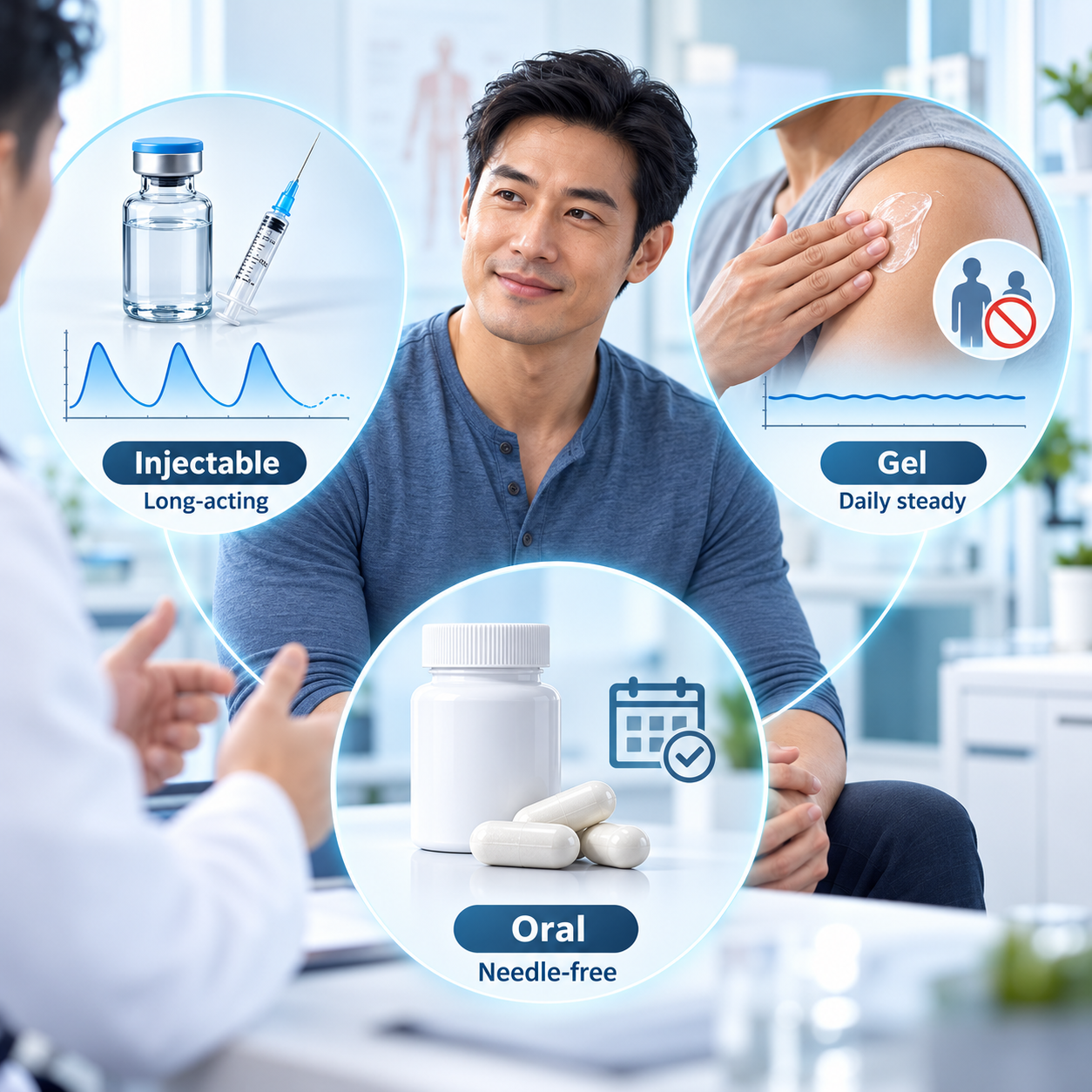
When accurately diagnosed with male hypogonadism, the patient will be prescribed Testosterone Replacement Therapy (TRT). Medication forms include intramuscular injections, topical gels, patches, or oral medications (less commonly used due to liver effects).
Medications for treating male hypogonadism have strict requirements:
- Treatment goals: Supplement the deficient hormone amount, improve libido, erectile function, bone density, and muscle mass.
- Medication nature: Must be prescription drugs, used only under the strict supervision of a specialist.
- Adverse effects: May cause acne, sleep apnea, enlarged prostate, increased red blood cells (risk of blood clots).
- Contraindications: Men with prostate cancer, male breast cancer, severe heart failure, or men desiring to have children (because exogenous TRT will suppress the testicles from producing sperm).
Important Notes When Using Medication and the Role of Men’s Health Pharmacy
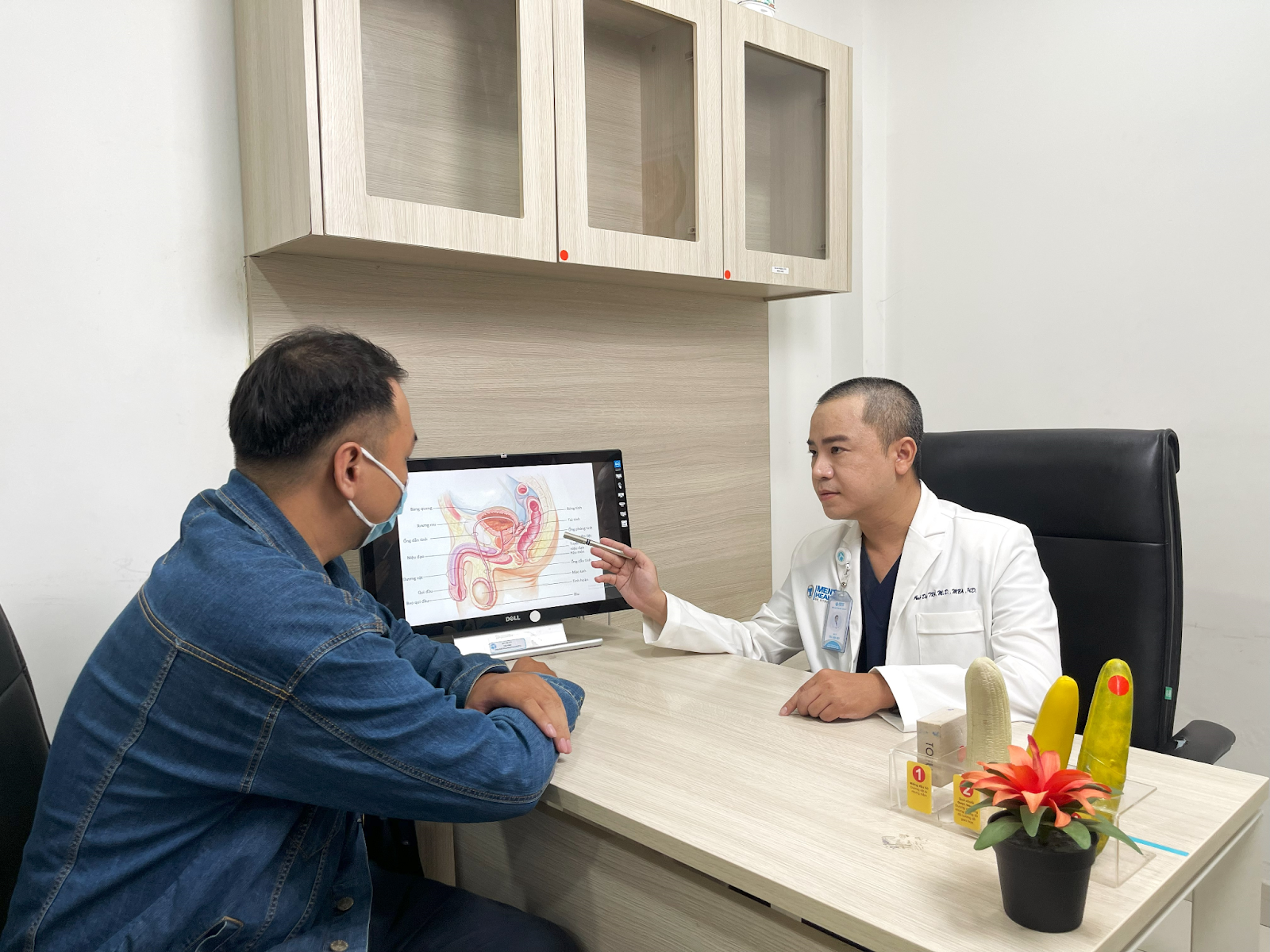
Hormone treatment is not a “magic pill” for virility that can be used arbitrarily. In the healthcare journey, Men’s Health Pharmacy, a unit within the Men’s Health Men’s Healthcare Center ecosystem founded by Dr. Tra Anh Duy, always accompanies men. Here, patients are always consulted, advised, and supported by doctors and pharmacists to choose the appropriate healthcare solutions after a clear diagnosis has been made.
Men’s Health emphasizes professionalism, safety, discretion, confidentiality, and respect for personal needs throughout the examination, treatment, and monitoring process. The medications for treating sexual dysfunction or endocrine disorders at the pharmacy are strictly prescription drugs with clear origins, requiring a specialist’s prescription.
Absolutely remember:
- Do not arbitrarily buy floating, untrustworthy male hormones or “performance-enhancing” products.
- Do not use someone else’s prescription because the constitution, disease cause, and hormone levels of each person are unique.
- Arbitrarily supplementing testosterone when the body does not have actual hypogonadism can cause the testicles to “fall asleep,” permanently shrink, and lose the ability to produce sperm. Stop the medication and contact a doctor immediately if you experience allergic reactions, swelling, or erratic mood swings.
Common Mistakes in Men
- Equating aging with pathology: Many ignore the symptoms of hypogonadism (severe endocrine defects) thinking “it’s just old age,” missing the chance for treatment.
- Abusing dietary supplements: Spending large amounts of money on herbs advertised as “fast testosterone boosters.” Current professional guidelines show that supplements only support overall health and cannot replace medical treatments for those with actual hypogonadism.
- Low self-esteem, hiding the disease: Men’s health issues are often sensitive, causing men to suffer in silence, leading to fractured romantic relationships and severe depression.
Lifestyle Changes: The Foundation of Health for All Men
Whether you are experiencing physiological decline due to age or are undergoing treatment for male hypogonadism, a scientific lifestyle is an inseparable factor:
- Get enough sleep: The majority of testosterone is produced during deep sleep. Sleeping less than 5 hours a night can severely reduce these hormone levels.
- Weight management: Fat cells (especially visceral fat) contain the Aromatase enzyme, which can convert testosterone into Estrogen (female sex hormone). Scientific weight loss helps reverse this process.
- Nutrition and Exercise: Supplement with foods rich in zinc, vitamin D, and Omega-3. Resistance training (weightlifting) is proven to stimulate the body to produce natural male hormones effectively.
Age-Related Physiological Testosterone Decline and Male Hypogonadism: Frequently Asked Questions
Can male hypogonadism be completely cured?
Depends on the cause. If hypogonadism is due to a pituitary tumor that can be surgically removed, or severe obesity that recovers with weight loss, it can be cured. However, with physical damage to the testicles (like Klinefelter syndrome or trauma), patients usually need lifelong Testosterone Replacement Therapy to maintain quality of life. There is no guarantee of a complete cure for every case.
How do I know if I have age-related physiological decline or hypogonadism?
The only and most accurate way is to perform a blood test measuring hormone levels combined with a physical examination by an andrologist. The clinical symptoms between these two conditions can be very similar, so it cannot be diagnosed merely by feeling.
Can young people get male hypogonadism?
Absolutely. Male hypogonadism does not discriminate by age. Male children or young adults can still get the disease due to genetics, congenital defects, orchitis after mumps, or pelvic trauma.
Does Hormone Replacement Therapy (TRT) cause infertility?
Yes. Using exogenous testosterone sends a negative feedback signal to the brain, making the brain mistakenly think the body has enough hormones. As a result, the testicles will stop producing endogenous testosterone and stop producing sperm. If you are planning to have children, the doctor will have to switch to fertility-preserving treatment protocols (like using hCG or SERMs) instead of using direct testosterone.
Should I use animal or plant root-infused wines to increase testosterone?
No. There are no reliable clinical medical studies proving that orally transmitted infused wines actually increase testosterone levels in the blood. Conversely, alcohol abuse is toxic to Leydig cells in the testes and damages the liver, worsening the state of endocrine decline.
Conclusion
Although age-related physiological testosterone decline and male hypogonadism have similar outward manifestations, their medical significance and treatment directions are entirely different. Properly understanding the body helps men proactively protect their health, maintain their form, and prevent dangerous complications from improper self-medication. You should not self-diagnose your condition or use long-term supplements without knowing the cause.
When you notice abnormal signs in your body, such as profound loss of libido, prolonged sexual dysfunction, or debilitating fatigue, quickly seek out specialized medical facilities. For comprehensive accompaniment, you can experience the services at the Men’s Health Men’s Healthcare Center ecosystem, providing professional, safe, and absolutely confidential support for examinations, medication consultations, and health monitoring for all sensitive men’s issues.