

Overactive bladder in men is a clinical syndrome characterized by urinary urgency, often accompanied by frequency and nocturia, with or without urgency urinary incontinence. Managing this condition effectively requires accurate differential diagnosis and customized pharmacotherapy targeting specific lower urinary tract receptors. This comprehensive medical guide details the underlying pathophysiological mechanisms, clinical evaluation protocols, comparative pharmacology of therapeutic agents, lifestyle interventions, and common clinical pitfalls associated with male overactive bladder.
1. Understanding Overactive Bladder in Men: Definition and Mechanisms
What is Overactive Bladder (OAB) in Men?
Overactive bladder (OAB) is defined by the International Continence Society (ICS) as symptom-complex characterized by urinary urgency, usually accompanied by frequency (voiding 8 or more times per 24 hours) and nocturia (waking 1 or more times per night to void), with or without urgency urinary incontinence (UUI), in the absence of urinary tract infection (UTI) or other obvious pathology.
In men, OAB rarely occurs in complete isolation. It frequently overlaps with lower urinary tract symptoms (LUTS) secondary to benign prostatic hyperplasia (BPH) or bladder outlet obstruction (BOO).
Pathophysiological Mechanisms of Male OAB
The hyperactive contraction of the detrusor muscle in men stems from complex myogenic, neurogenic, and urothelial mechanisms:
- Detrusor Overactivity (DO): Involuntary detrusor contractions during the storage phase of the micturition cycle, mediated by acetylcholine binding to muscarinic receptors (M2 and M3) on detrusor smooth muscle cells.
- Neurogenic Dysregulation: Alterations in central or peripheral inhibitory neural pathways, leading to heightened afferent signaling via C-fibers and Aδ-fibers.
- Ischemia and Outlet Obstruction-Induced Changes: Chronic Bladder Outlet Obstruction (BOO) secondary to enlarged prostatic tissue leads to detrusor ischemia, denervation hypersensitivity, and altered structural compliance of the bladder wall.
- Urothelial and Suburothelial Signaling Dysfunction: Increased release of urothelial mediators, such as adenosine triphosphate (ATP) and nerve growth factor (NGF), which sensitize mechanoreceptors and trigger premature voiding reflexes.
2. Etiology and Risk Factors for Male Overactive Bladder
Primary Causes of Male OAB
- Benign Prostatic Hyperplasia (BPH) and BOO: Physical compression of the prostatic urethra leads to secondary detrusor muscle remodeling and hyperactivity.
- Neurological Disorders: Stroke, Parkinson’s disease, multiple sclerosis, spinal cord injury, and diabetic neuropathy compromising central control over micturition pathways.
- Age-Related Degeneration: Senescent structural changes in detrusor smooth muscle cells, diminished elastic fiber content, and reduced bladder capacity.
- Chronic Inflammation: Subclinical urothelial inflammation, metabolic syndrome-associated endothelial dysfunction, and pelvic floor tension.
Key Risk Factors
- Advanced age (significantly increasing after 50 years of age).
- Metabolic syndrome (hypertension, hyperlipidemia, central obesity, dysglycemia).
- Chronic constipation causing mechanical pressure on the bladder base.
- High intake of bladder irritants (caffeinated beverages, alcohol, artificial sweeteners).
- Sedentary lifestyle and pelvic floor muscle weakness.
3. Clinical Manifestations and Red Flag Symptoms
Core Symptoms
- Urinary Urgency: A sudden, compelling desire to pass urine which is difficult to defer.
- Urinary Frequency: Micturition occurring more than 8 times within a 24-hour period.
- Nocturia: Waking one or more times during the main sleep period to void.
- Urgency Urinary Incontinence (UUI): Involuntary leakage of urine preceded by or accompanied by sudden urgency.
Distinguishing OAB from BPH Symptoms
While OAB primarily represents a storage symptom complex, BPH often involves both storage and voiding/post-micturition symptoms:
| Clinical Feature | Overactive Bladder (OAB) | Benign Prostatic Hyperplasia (BPH) |
| Dominant Symptom Phase | Storage phase (Urgency, Frequency, Nocturia) | Voiding phase (Hesitancy, Weak stream, Intermittency) |
| Primary Anatomical Target | Detrusor muscle & Urothelial nerves | Prostatic stroma & Epithelium |
| Incontinence Type | Urgency incontinence (sudden involuntary loss) | Overflow incontinence (in severe obstruction) |
| Post-Void Residual (PVR) | Typically normal or minimally elevated | Frequently elevated |
Red Flag Symptoms Requiring Urgent Evaluation
If any of the following manifestations occur alongside urgency, immediate specialist evaluation is required:
- Gross hematuria (visible blood in urine).
- Dysuria, fever, or flank pain suggesting acute pyelonephritis or prostatitis.
- Acute urinary retention (complete inability to void despite full bladder sensation).
- Progressive neurological deficits (e.g., saddle anesthesia, lower extremity weakness).
- Unexplained weight loss or pelvic pain.
4. Comprehensive Clinical Evaluation and Diagnostic Protocols
A thorough medical assessment is imperative before initiating pharmacological therapy to rule out underlying malignancy, urinary tract infection, or severe bladder outlet obstruction.
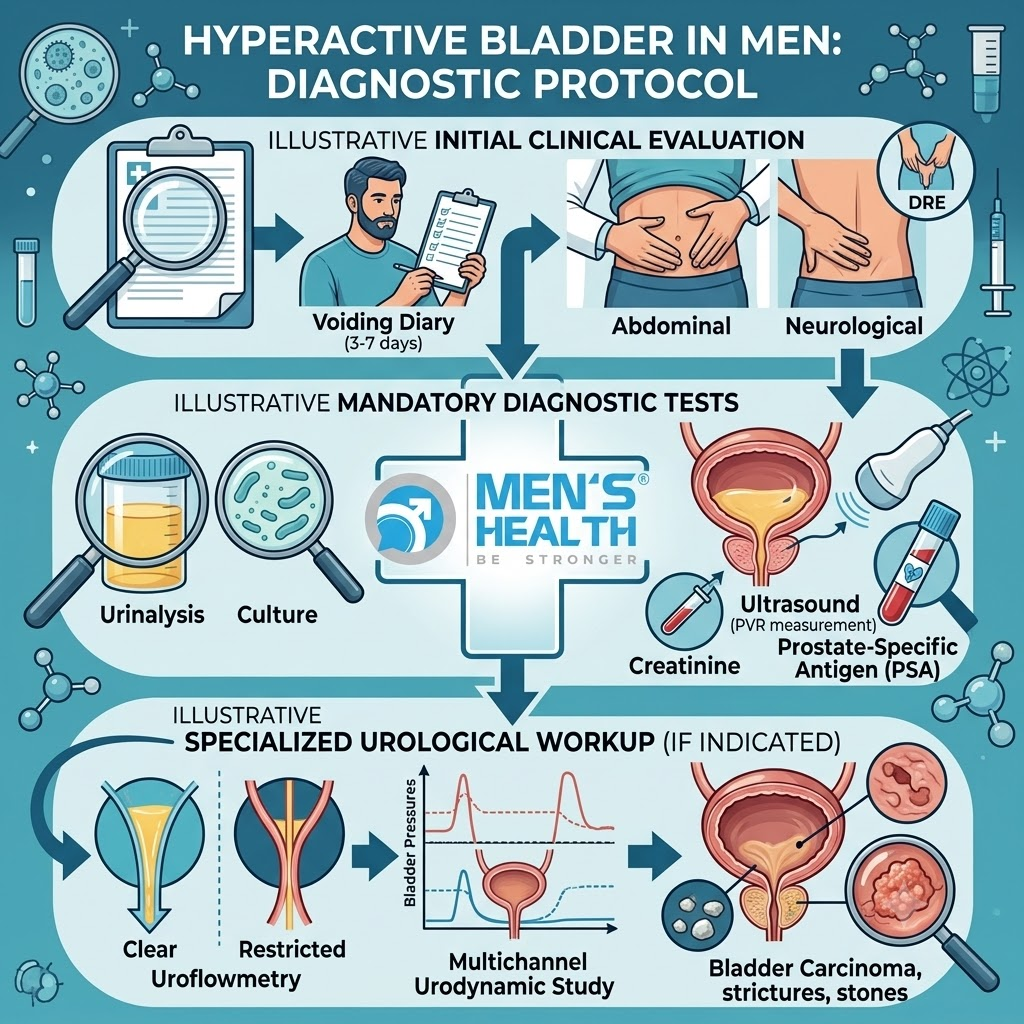
- Detailed History & Voiding Diary: Quantitative recording of fluid intake, voiding volumes, urgency episodes, and incontinence events over 3 to 7 consecutive days.
- Physical Examination: Including Digital Rectal Examination (DRE) to evaluate prostate size, contour, and nodularity; neurological assessment of pelvic reflexes; and abdominal examination for globe vesicale.
- Laboratory Diagnostics: Urinalysis and urine culture to exclude UTI; serum prostate-specific antigen (PSA) to screen for prostatic pathology; serum creatinine to evaluate renal function.
- Post-Void Residual (PVR) Volume: Non-invasive ultrasound measurement. A high PVR (>150-200 mL) warrants extreme caution when prescribing antimuscarinic agents due to the risk of precipitating acute urinary retention.
- Uroflowmetry and Urodynamic Studies: Performed in complex cases, suspected neurogenic bladder, or refractory symptoms to measure maximum urinary flow rate (Qmax), detrusor pressure, and confirm detrusor overactivity.
5. Comparative Pharmacology: How Do OAB Drug Classes Differ?
Pharmacotherapy plays a central role when conservative management fails. Understanding the distinct pharmacological targets, efficacy profiles, and adverse effect profiles of each drug class allows for tailored therapeutic strategies.
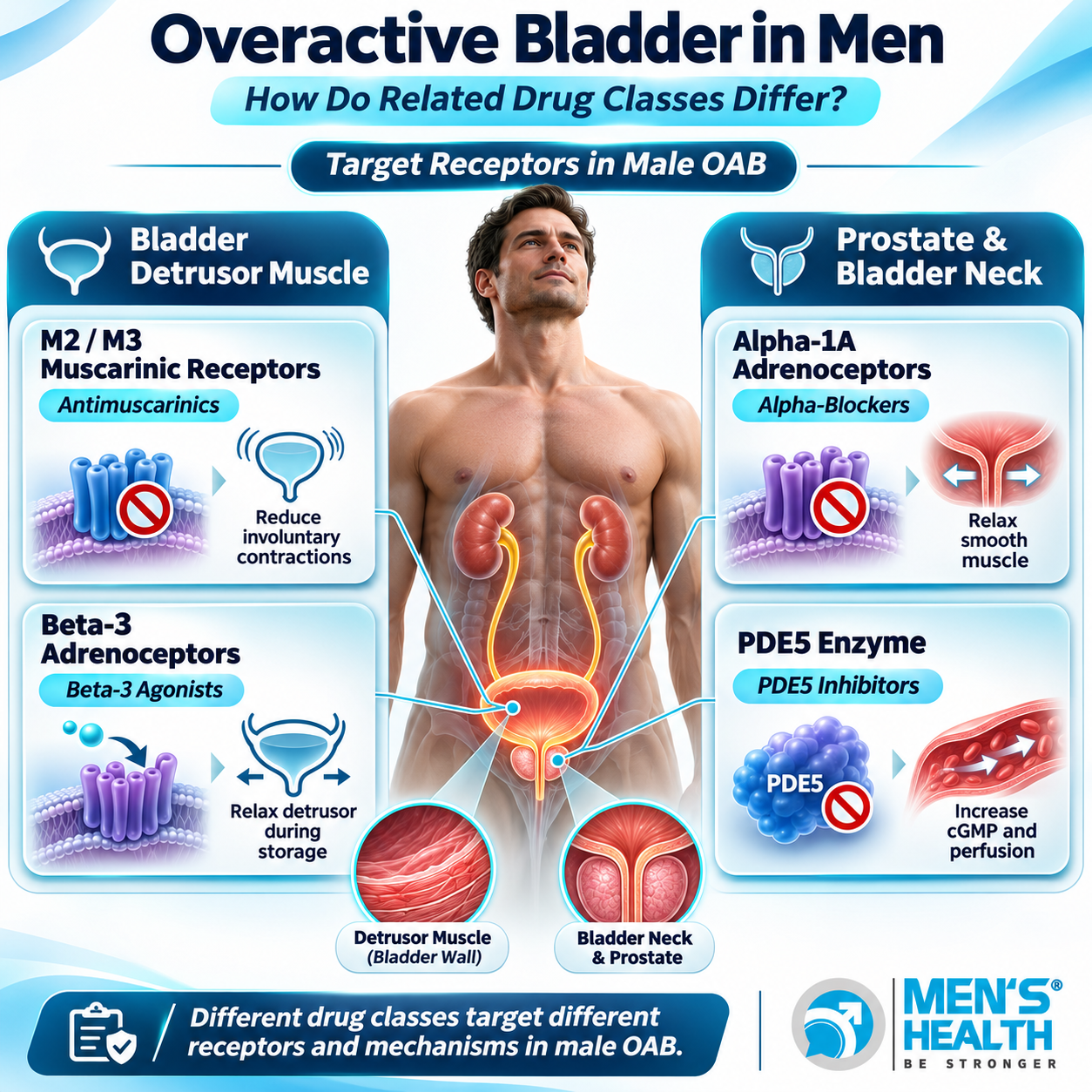
Class 1: Antimuscarinic (Anticholinergic) Agents
- Mechanism of Action: Competitive antagonists at muscarinic acetylcholine receptors (predominantly M2 and M3 subtypes) on the detrusor smooth muscle. By blocking parasympathetic input during the storage phase, they reduce detrusor contraction frequency, decrease urgency, and expand functional bladder capacity.
- Representative Drugs: Solifenacin, Oxybutynin, Tolterodine, Darifenacin, Fesoterodine, Trospium chloride.
- Therapeutic Indications: Moderate to severe OAB with prominent urgency and urgency incontinence without significant urinary retention risk.
- Prescription Status: Strictly Prescription-Only Medications (POM).
- Adverse Effect Profile: Dry mouth (xerostomia), constipation, blurred vision (cycloplegia), somnolence, cognitive impairment, and urinary retention.
- Contraindications & Precautions: Angle-closure glaucoma, severe gastric retention, myasthenia gravis, significant urinary obstruction (PVR > 150-200 mL), and underlying dementia (due to central anticholinergic burden).
Class 2: Beta-3 Adrenoceptor Agonists
- Mechanism of Action: Selective agonists at β3-adrenergic receptors situated on detrusor smooth muscle cells. Activation stimulates adenylyl cyclase, increases intracellular cyclic adenosine monophosphate (cAMP), and promotes detrusor relaxation during the urinary storage phase without impairing normal voiding contraction strength.
- Representative Drugs: Mirabegron, Vibegron.
- Therapeutic Indications: First-line or second-line therapy for OAB, particularly in elderly men, patients vulnerable to anticholinergic side effects, or those with mild-to-moderate BOO.
- Prescription Status: Strictly Prescription-Only Medications (POM).
- Adverse Effect Profile: Hypertension (mild transient blood pressure elevation), tachycardia, nasopharyngitis, urinary tract infection, and headache.
- Contraindications & Precautions: Severe uncontrolled hypertension (systolic ≥ 180 mmHg or diastolic ≥ 110 mmHg), end-stage renal disease, or severe hepatic impairment.
Class 3: Alpha-1 Adrenoceptor Antagonists (Alpha-Blockers)
- Mechanism of Action: Selectively block α1A-adrenoceptors located in the prostate stroma, prostatic capsule, and bladder neck. This decreases smooth muscle tone, reduces outflow resistance, and secondarily alleviates detrusor overactivity caused by chronic obstruction.
- Representative Drugs: Tamsulosin, Silodosin, Alfuzosin, Doxazosin, Terazosin.
- Therapeutic Indications: Male OAB secondary to or coexisting with Benign Prostatic Hyperplasia (BPH/BOO).
- Prescription Status: Strictly Prescription-Only Medications (POM).
- Adverse Effect Profile: Orthostatic hypotension, dizziness, fatigue, nasal congestion, and ejaculatory dysfunction (retrograde ejaculation or anejaculation). Intraoperative Floppy Iris Syndrome (IFIS) during cataract surgery.
- Contraindications & Precautions: Co-administration with potent CYP3A4 inhibitors, severe hepatic dysfunction, or patients scheduled for cataract extraction.
Class 4: Phosphodiesterase-5 (PDE5) Inhibitors
- Mechanism of Action: Inhibit the PDE5 enzyme, preserving cyclic guanosine monophosphate (cGMP) levels. This induces relaxation of smooth muscle tissue in the prostate, bladder neck, and pelvic vasculature, enhancing microvascular perfusion and reducing local afferent nerve activity.
- Representative Drugs: Tadalafil (5 mg once daily).
- Therapeutic Indications: Men suffering from concurrent lower urinary tract symptoms (LUTS/OAB) and Erectile Dysfunction (ED).
- Prescription Status: Strictly Prescription-Only Medications (POM).
- Adverse Effect Profile: Dyspepsia, headache, flushing, back pain, myalgia, and nasal congestion.
- Contraindications & Precautions: Absolute contraindication with nitrates or soluble guanylate cyclase stimulators (risk of severe life-threatening hypotension); caution with concomitant alpha-blockers.
Class 5: Combination Pharmacotherapy Strategies
- Alpha-Blocker + Antimuscarinic (e.g., Tamsulosin + Solifenacin): Highly effective in men with persistent storage symptoms despite alpha-blocker monotherapy, provided post-void residual volume is closely monitored.
- Alpha-Blocker + Beta-3 Agonist (e.g., Tamsulosin + Mirabegron): Offers synergistic benefit by reducing bladder outlet resistance while simultaneously enhancing storage relaxation, with minimal risk of anticholinergic adverse effects or urinary retention.
6. Comprehensive Drug Comparison Matrix
| Property | Antimuscarinics (e.g., Solifenacin) | β3-Agonists (e.g., Mirabegron) | α1-Blockers (e.g., Tamsulosin) | PDE5 Inhibitors (e.g., Tadalafil) |
| Primary Target | M2/M3 Muscarinic Receptors | β3-Adrenergic Receptors | α1A-Adrenoceptors | PDE5 Enzyme |
| Primary Site of Action | Detrusor Muscle | Detrusor Muscle | Prostate & Bladder Neck | Prostate, Bladder, Vessels |
| Main Clinical Goal | Inhibit involuntary contractions | Enhance storage relaxation | Reduce outlet obstruction | Reduce tone & improve flow |
| Effect on PVR | May increase PVR | Minimal effect on PVR | Reduces PVR / Improves flow | Minimal effect on flow rate |
| Cognitive Risk | Yes (CNS anticholinergic load) | Negligible | None | None |
| Key Side Effects | Dry mouth, constipation | Mild BP increase, headache | Orthostasis, retrograde ejaculation | Flushing, headache, myalgia |
| Best Clinical Scenario | Pure OAB / High urgency | OAB + Elderly / Cognitive risk | OAB secondary to BPH | Concurrent OAB & ED |
7. Lifestyle Interventions and Non-Pharmacological Management
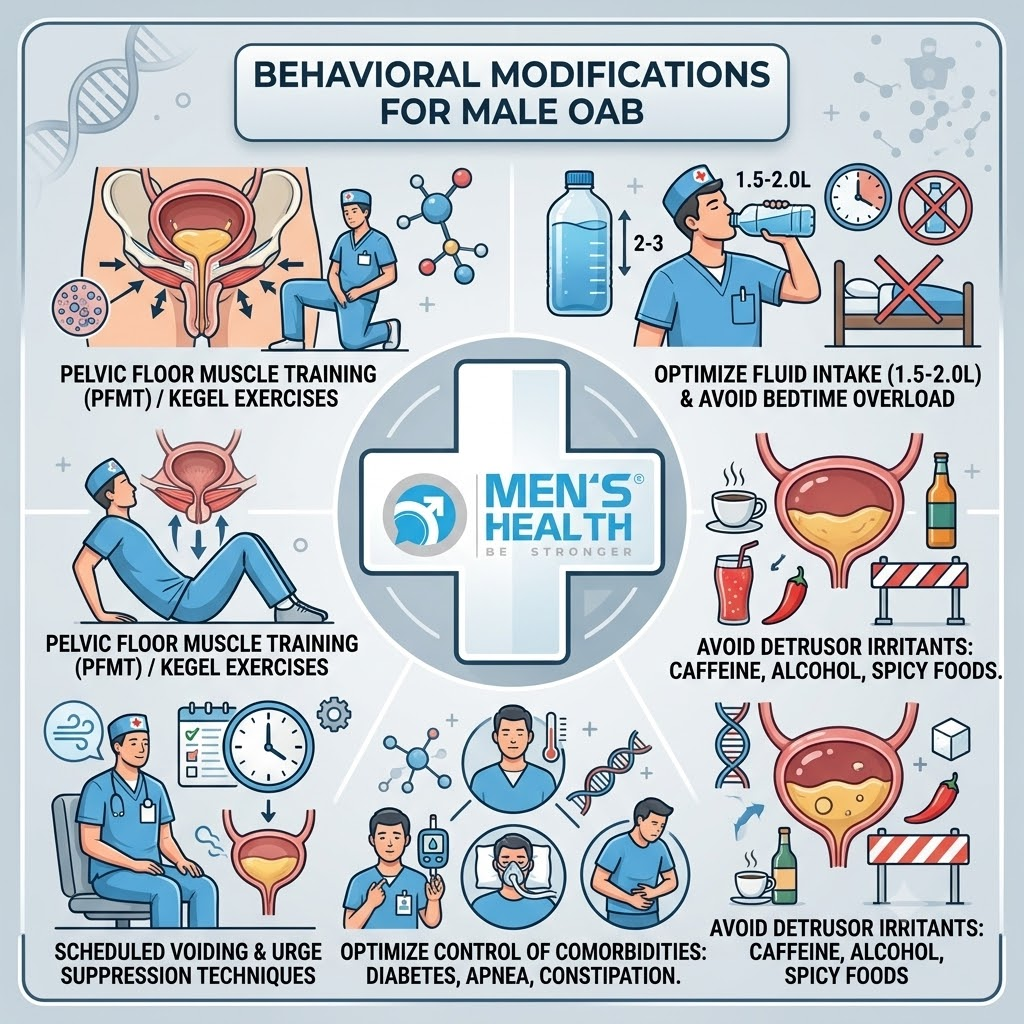
Pharmacotherapy should always be integrated with evidence-based behavioral modifications:
- Fluid Management: Optimize fluid intake (1.5 to 2.0 liters daily). Avoid excessive fluid restriction (which concentrates urine and irritates the urothelium) and fluid overloading, particularly 2–3 hours before bedtime.
- Dietary Modifications: Limit or eliminate detrusor irritants, including caffeine, alcohol, carbonated drinks, highly spicy foods, and artificial sweeteners.
- Bladder Retraining: Scheduled voiding intervals combined with urge suppression techniques (deep breathing, distraction, pelvic contractions) to regain cortical control over micturition reflexes.
- Pelvic Floor Muscle Training (PFMT): Structured Kegel exercises guided by physical therapy or biofeedback to strengthen the striated urethral sphincter and inhibit detrusor contractions through the guarding reflex.
- Management of Comorbidities: Optimize control of type 2 diabetes mellitus, treat obstructive sleep apnea (a major contributor to nocturnal polyuria), and manage chronic constipation.
8. Common Clinical Pitfalls in Managing Male OAB
- Empiric Prescribing Without Assessing PVR: Administering high-dose antimuscarinics to an elderly male with subclinical urinary retention can precipitate complete acute urinary retention requiring catheterization.
- Confusing OAB with Prostate Enlargement Alone: Monotherapy with an alpha-blocker often fails to completely relieve persistent urgency and nocturia if significant detrusor overactivity is present.
- Neglecting Cognitive Assessment: Prescribing non-selective antimuscarinics (such as oxybutynin) to elderly patients with mild cognitive impairment increases the risk of delirium and accelerated cognitive decline.
- Polypharmacy & Drug Interventions: Combining antimuscarinics with other drugs possessing anticholinergic properties (e.g., tricyclic antidepressants, first-generation antihistamines) significantly increases system toxicity.
- Using Borrowed or Unverified Medication: Self-medication based on anecdotal advice without accurate urological workup risks masking underlying prostate adenocarcinoma or urothelial carcinoma.
9. Comprehensive Medical Care at Men’s Health Pharmacy
In the treatment of male lower urinary tract symptoms and overactive bladder, optimal clinical outcomes rely on precision diagnosis, individualized prescription, and collaborative pharmaceutical care.
Men’s Health Pharmacy, an integral unit within the Men’s Health Center ecosystem founded by Dr. Tra Anh Duy (MD, PhD, Spec. II), provides specialized pharmaceutical support for male urological and sexual health. At Men’s Health, patients receive tailored counseling from experienced physicians and clinical pharmacists to ensure that therapeutic choices align strictly with personal health profiles and diagnostic findings. The facility prioritizes professional rigor, clinical safety, patient privacy, and absolute confidentiality throughout consultation, medication dispensing, and long-term follow-up. All prescription therapies – including antimuscarinics, beta-3 agonists, alpha-blockers, and PDE5 inhibitors – require formal physician evaluation to guarantee maximum therapeutic efficacy and patient safety.

Hyperactive Bladder in Men: Frequently Asked Questions
1/ Can overactive bladder in men be caused by an enlarged prostate?
Yes. Benign prostatic hyperplasia (BPH) creates bladder outlet obstruction. The detrusor muscle must generate higher voiding pressures to overcome this resistance, leading to muscle hypertrophy, localized ischemia, denervation sensitivity, and secondary detrusor overactivity.
2/ How do antimuscarinics differ from beta-3 agonists in treating OAB?
Antimuscarinics work by blocking parasympathetic signals that trigger involuntary detrusor contractions during the storage phase. In contrast, beta-3 agonists stimulate sympathetic receptors to relax the detrusor muscle during storage. Beta-3 agonists typically carry a lower risk of dry mouth, constipation, and cognitive impairment compared to traditional antimuscarinics.
3/ Is it safe for men with BPH to take OAB medications?
OAB medications can be safely taken by men with BPH when evaluated and prescribed by a specialist. However, antimuscarinic drugs must be used with caution and monitored via Post-Void Residual (PVR) ultrasound, as excessive suppression of detrusor contractility in severe bladder outlet obstruction can induce urinary retention.
4/ Why shouldn’t men self-medicate with OAB drugs based on shared prescriptions?
Lower urinary tract symptoms in men can stem from diverse conditions, including BPH, neurogenic dysfunction, urinary tract infections, bladder calculi, or urothelial carcinoma. Self-medication without diagnostic evaluation risks selecting inappropriate drug classes, triggering acute urinary retention, or masking serious underlying diseases.
5/ How long does it take for OAB medications to show therapeutic results?
Response times vary by drug class. Alpha-blockers often produce symptom relief within a few days to 1–2 weeks. Antimuscarinic agents and beta-3 agonists generally show initial benefits within 2 weeks, but maximum therapeutic efficacy typically requires 4 to 8 weeks of consistent daily administration alongside lifestyle modifications.
Conclusion and Expert Clinical Advice
Overactive bladder in men is a complex, multifactorial clinical condition that extends beyond simple lower urinary tract discomfort. Achieving meaningful symptom reduction requires a clear distinction between storage and voiding abnormalities, precise diagnostic screening (including post-void residual evaluation), and individualized pharmacological management. Drug selection – whether using antimuscarinics, β3-adrenoceptor agonists, α1-blockers, PDE5 inhibitors, or combination regimens – must take into account patient age, cardiovascular health, baseline cognitive status, and prostate architecture.
Patients should never self-diagnose, initiate over-the-counter regimens, or use unprescribed therapies for urinary urgency and incontinence. Persistent or recurring urinary symptoms warrant timely evaluation by a qualified urologist. Through integrated care ecosystems such as the Men’s Health Center, patients can access comprehensive diagnostic evaluation, expert physician consultations, and professional pharmaceutical guidance, ensuring safe, confidential, and evidence-based therapeutic outcomes.