


Many people wonder whether stress can increase the urge to urinate when they suddenly feel the need to rush to the bathroom repeatedly whenever they are under stress, anxious, or about to enter an important event. From a medical perspective, the answer is yes. The nervous system and urinary system are closely interconnected, so psychological factors can stimulate the bladder, causing frequent urination or an urgent need to urinate. However, this condition may also be a sign of an underlying physical disorder that needs to be ruled out. The following article provides a detailed analysis of the mechanisms, warning signs, and safe, evidence-based approaches to managing stress-related urinary urgency.
The Relationship Between the Nervous System and the Bladder: Why Does Stress Increase the Urge to Urinate?
To understand why psychological factors can affect urinary frequency, we need to look at how the central nervous system controls the urinary system. Normal urination requires coordinated interaction between the brain, spinal cord, and bladder muscles. When psychological stress disrupts this state, this coordination can be affected through several mechanisms:
The “Fight-or-Flight” Response
According to current specialist guidance in neurophysiology, when you experience stress or anxiety, the body activates a natural survival response known as the “fight-or-flight” response.
- The body immediately releases large amounts of stress hormones such as adrenaline and cortisol.
- The sympathetic nervous system becomes strongly activated, increasing heart rate and blood pressure and directing blood toward essential organs such as the brain and muscles to respond to the perceived threat.
- During this process, the bladder may become stimulated to contract, while the urethral sphincter tends to relax, creating an urgent sensation of needing to urinate even when the bladder does not contain much urine.
Pelvic Floor Muscle Tension
Chronic stress often causes the body to unconsciously tense various muscle groups, particularly the neck, shoulders, and pelvic floor muscles. When the pelvic floor muscles, which support the bladder and prostate, remain tense, they can exert physical pressure on the bladder. This pressure stimulates nerve receptors in the bladder wall, sending a “full bladder” signal to the brain and making a person feel the constant need to use the bathroom.
Nervous System Signal Overload and Overactive Bladder (OAB)
Clinical studies show that prolonged anxiety and stress can increase the sensitivity of the central nervous system. As a result, the brain may misinterpret normal signals from the bladder. Even when the bladder contains only a small amount of urine, below the usual stimulation threshold, the brain may interpret it as being full and signal the detrusor muscle to contract, resulting in overactive bladder symptoms associated with psychological factors.
Recognizing Associated Symptoms of Stress-Related Urinary Urgency
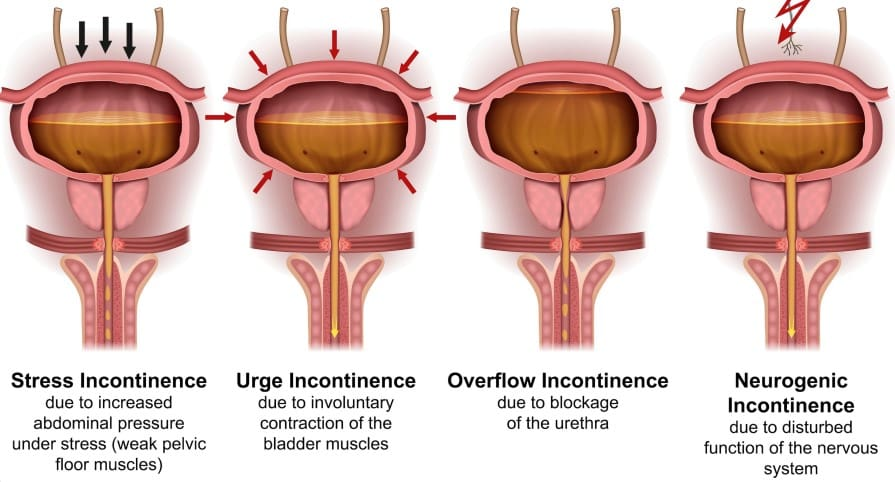
Frequent urination can have many causes. However, when stress increases the urge to urinate, people commonly experience symptoms that occur cyclically and are linked to their psychological state, including:
- Urinary frequency linked to emotions: A sudden urge to urinate occurs immediately before stressful situations such as exams, presentations, meetings, or interviews.
- Frequent urination with small volumes: Each time the person uses the bathroom, only a small amount of urine is passed, but the urge to urinate returns soon after leaving the bathroom.
- No signs of infection: There is no burning or stinging during urination, no pain along the urethra, and no cloudy urine, blood, or unusual odor.
- Improvement with relaxation: Urinary frequency returns to normal when the stressful situation has passed or when the person is deeply asleep. It is very uncommon for someone whose symptoms are caused purely by stress to wake repeatedly at night because of the urge to urinate.
- Other systemic symptoms: These may include a rapid heartbeat, sweating, shallow breathing, restlessness, stomach discomfort, or muscle tension.
Distinguishing Stress-Related Urinary Frequency from Physical Disorders
You should not immediately conclude that every abnormal urinary habit is psychological. Misdiagnosis may allow an underlying condition to worsen. Persistent urinary urgency should be distinguished from:
Urinary Tract Infection (UTI)
Bacterial cystitis and urethritis can also cause frequent urination and urinary urgency. However, UTIs are commonly associated with painful or burning urination, cloudy urine, sometimes blood in the urine, and may be accompanied by fever or lower abdominal discomfort.
Benign Prostatic Hyperplasia (BPH) and Prostatitis
In middle-aged and older men, an enlarged prostate can compress the urethra and irritate the bladder outlet. Typical symptoms include frequent urination during the day and night, difficulty urinating, a weak urinary stream, straining to urinate, or a sensation of incomplete emptying. Prostatitis can cause similar urinary symptoms, along with pain in the perineal or testicular area.
Metabolic and Endocrine Disorders
Diabetes mellitus is a common cause of polyuria, meaning the production of large amounts of urine. When blood glucose levels are high, the kidneys work harder to excrete excess glucose through the urine, resulting in fluid loss and causing increased thirst and fluid intake.
When Should Urinary Urgency Be Evaluated by a Doctor?
Even though stress can be a contributing factor, you should not assume that stress is the sole cause or self-diagnose. Medical evaluation is important to rule out potentially significant underlying conditions. Schedule an appointment with a urology and men’s health specialist if you experience any of the following warning signs:
- Persistent urinary urgency lasting for several days without improvement even after the psychological stress has passed.
- Painful or burning urination.
- Blood, pus, unusual color, or an abnormal odor in the urine.
- Difficulty urinating, urinary retention, a weak urinary stream, or an intermittent stream.
- Frequent nighttime urination that significantly disrupts sleep quality.
- Fever, chills, lower back pain, or lower abdominal pain.
Diagnostic Methods and Safe Treatment Approaches

The evaluation of frequent urination requires careful assessment to identify the underlying cause so that an appropriate treatment plan can be developed.
1. Medical Assessment and Diagnosis
At a healthcare facility, a doctor may perform:
- Medical history: Assessment of stress levels, urinary frequency, daily fluid intake, and medical history.
- Urinalysis: To rule out infection, diabetes, or kidney-related disorders.
- Urinary tract ultrasound: To assess the kidneys and bladder and measure prostate volume in men, as well as evaluate the amount of residual urine after urination.
- Bladder diary: The patient may be asked to record fluid intake and the frequency and volume of urination over 24–72 hours.
2. Lifestyle Changes and Stress Management (Non-Drug Treatment)
If clinical findings confirm that psychological factors are the primary cause and the overactive bladder symptoms are mild, conservative approaches may be prioritized:
- Stress management: Practice relaxation techniques such as meditation, deep breathing, yoga, or consult a mental health professional for cognitive behavioral therapy (CBT) to address the underlying stress.
- Pelvic floor muscle training (Kegel exercises): Helps strengthen the muscles that control the bladder, allowing better control over urination and reducing episodes of urinary urgency.
- Dietary adjustments: Limit bladder irritants such as caffeine (coffee and strong tea), alcoholic beverages, carbonated drinks, and excessively spicy or acidic foods.
- Bladder training: Schedule bathroom visits at fixed intervals and gradually increase the time between urinations to train the bladder to hold more urine.
3. The Role of Medication in Treatment
If lifestyle changes do not provide sufficient relief and urinary urgency significantly interferes with daily activities, a doctor may prescribe medication.
Common medication groups include:
- Anticholinergic medications: Help reduce nerve signals that stimulate bladder contractions. The treatment goal is to reduce urinary frequency and improve control over sudden urinary urgency.
- Beta-3 agonists: Help relax the bladder muscle and increase its urine-storage capacity.
- Anti-anxiety or antidepressant medications (in specific cases): If psychological factors are particularly severe, a neuropsychiatrist may incorporate medication to help regulate the autonomic nervous system.
Important precautions when using medication:
- Prescription medications should only be used under a doctor’s direction: Medications that affect the bladder or nervous system should never be purchased or taken without medical advice or based on someone else’s prescription.
- Adverse effects: Anticholinergic medications may cause dry mouth, constipation, blurred vision, or rapid heartbeat. In older adults, they may affect cognition.
- Contraindications: Particular caution or contraindications may apply to people with angle-closure glaucoma, urinary retention, intestinal paralysis, or impaired liver or kidney function.
- Follow-up: If medication causes difficult-to-tolerate side effects or symptoms do not improve, contact the doctor promptly. Do not increase the dose or stop medication suddenly without medical advice. Close coordination between the treating physician and pharmacist is essential to optimize treatment effectiveness and minimize adverse effects.
The Role of Professional Counseling at Men’s Health Pharmacy

Men’s Health Pharmacy is part of the Men’s Health Men’s Health Center healthcare ecosystem, founded by Dr. Trà Anh Duy, PhD, Specialist Level II. Understanding the difficulties and concerns men may experience when dealing with genitourinary problems, Men’s Health focuses on providing a professional, safe, discreet, confidential healthcare environment that respects each customer’s individual needs.
We do not encourage patients to purchase or use medication on their own before the underlying cause has been identified. Patients receive detailed guidance and explanations from doctors and pharmacists regarding their health condition, helping support the selection of an appropriate care approach. For prescription medications, such as medications for bladder dysfunction, hormonal treatments, or medications for men’s health conditions, a specialist’s prescription is mandatory. Men’s Health Pharmacy supports men through close coordination between doctors and pharmacists, helping ensure that examination, treatment, and follow-up are carried out according to medical safety principles and are personalized to each individual case.
Stress and Increased Urinary Urgency: Frequently Asked Questions (FAQ)
1. Why do I need to urinate repeatedly whenever I am about to take an exam or attend an important meeting?
This is a direct consequence of the “fight-or-flight” response. When you become anxious before an important event, the body releases more adrenaline, stimulating the sympathetic nervous system and causing the bladder muscle to contract more frequently than usual. This can create an urgent sensation of needing to urinate even when the bladder contains very little urine.
2. Can stress-related urinary urgency go away on its own?
This condition is often temporary and improves once the stressful event ends and the person returns to a relaxed state. However, if someone has chronic anxiety, symptoms may persist and require a combination of medical care and psychological management.
3. Should I stop drinking water to avoid needing to urinate when I am stressed?
This is a common mistake. Restricting fluid intake causes the urine to become concentrated. Highly concentrated urine can contain a higher concentration of irritating substances and may irritate the bladder lining more strongly, worsening urinary urgency and frequency. You should maintain adequate hydration and drink in small amounts throughout the day rather than avoiding fluids completely.
4. Can I buy medication for frequent urination caused by stress directly from a pharmacy?
Most medications used to treat overactive bladder or anxiety are prescription medications. They should not be used without medical advice because they can cause adverse effects and potentially significant drug interactions, such as dry mouth, constipation, urinary retention, or increased eye pressure. See a doctor for proper evaluation and an appropriate prescription.
5. How can I tell whether my frequent urination is caused by stress or a urinary tract infection?
Stress-related urinary frequency is usually linked to emotional states and is not accompanied by pain. In contrast, a bacterial urinary tract infection commonly presents with physical symptoms such as painful urination, burning, cloudy urine, an unpleasant odor, sometimes blood in the urine, or fever. If painful urination occurs, you should have a urinalysis promptly.
6. Can Kegel exercises really help reduce psychologically triggered urinary urgency?
Yes. Kegel exercises strengthen the pelvic floor and urethral sphincter muscles. Better pelvic floor control may help suppress sudden bladder contractions associated with altered nerve signaling during stress, thereby increasing the time between bathroom visits.
Conclusion
So, can stress increase the urge to urinate? The answer is yes, based on the natural fight-or-flight response and the close connection between the nervous system and bladder. Although this is often a benign physiological response to psychological pressure, persistent frequent urination can reduce quality of work and life. More importantly, not every urinary abnormality should be attributed to “stress,” because it may conceal underlying physical conditions such as urinary tract infections, prostate enlargement, or diabetes.
The medical advice is to maintain a balanced lifestyle, manage stress, and avoid self-diagnosis or prolonged self-medication. When abnormal urinary habits occur, particularly when accompanied by painful urination or when symptoms persist, specialist evaluation is important. Men’s Health Pharmacy, together with the Men’s Health Men’s Health Center healthcare ecosystem, is ready to provide professional, safe, and discreet healthcare support to help identify the underlying cause, provide appropriate medication guidance, and accompany patients throughout their recovery and urinary and sexual health care journey.