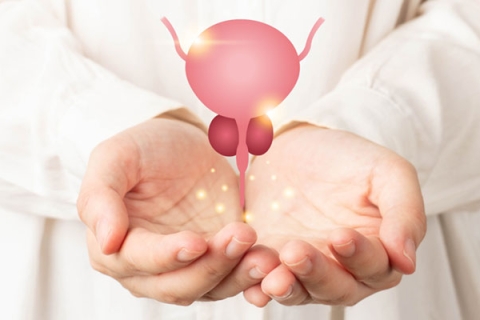


Overactive bladder in men is a multifactorial clinical syndrome characterized by urinary urgency, often accompanied by frequency and nocturia, which stems primarily from bladder outlet obstruction, neurogenic dysregulation, or age-related detrusor remodeling.
1. Understanding Male Overactive Bladder: Definition and Mechanisms
What is Overactive Bladder (OAB) in Men?
Overactive bladder (OAB) in men is defined by the International Continence Society (ICS) as a symptom-complex characterized by urinary urgency, usually accompanied by frequency (voiding ≥ 8 times per 24 hours) and nocturia (waking ≥ 1 time per night to void), with or without urgency urinary incontinence (UUI), in the absence of urinary tract infection (UTI) or other clear pathognomonic lesions.
Unlike in women, male OAB frequently presents concurrently with lower urinary tract symptoms (LUTS) secondary to benign prostatic hyperplasia (BPH) or anatomical bladder outlet obstruction (BOO).
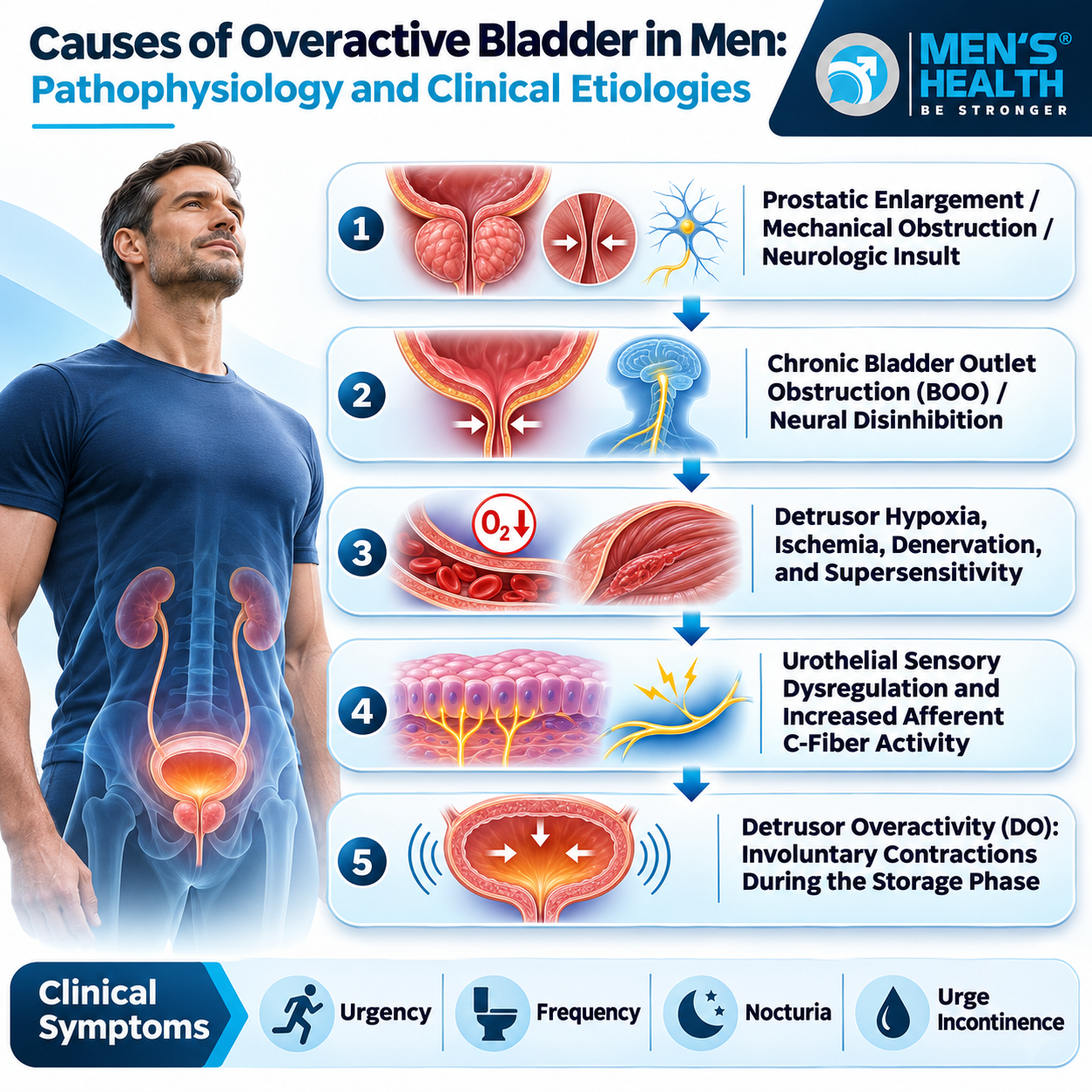
Underlying Pathophysiological Mechanisms
The development of involuntary detrusor contractions during the urinary storage phase involves distinct cellular and neurological pathways:
- Detrusor Overactivity (DO): Spontaneous, involuntary contractions of the detrusor smooth muscle during bladder filling, driven by uninhibited parasympathetic signaling via muscarinic M2 and M3 receptors.
- Myogenic Hypersensitivity: Chronic pressure strain causes structural changes in detrusor myocytes, including cell hypertrophy, altered gap junction coupling, and heightened sensitivity to local depolarizations.
- Afferent Neural Dysregulation: Increased release of urothelial signaling molecules (e.g., adenosine triphosphate [ATP], nerve growth factor [NGF]) sensitizes Aδ- and C-fiber afferent nerves, signaling fullness to the central nervous system at abnormally low bladder volumes.
- Central Disinhibition: Loss of higher cortical or pontine micturition center inhibition, allowing the sacral voiding reflex arc to activate prematurely.
2. Primary Causes of Overactive Bladder in Men
Male OAB rarely occurs without an underlying predisposing factor. The etiology can be broadly categorized into anatomical, neurogenic, functional, and lifestyle-related causes.
Bladder Outlet Obstruction (BOO) and Prostatic Pathology
- Benign Prostatic Hyperplasia (BPH): Adenomatous enlargement of the transition zone of the prostate compresses the prostatic urethra. The detrusor muscle must generate higher intravesical pressures to empty, leading to smooth muscle hypertrophy, suburothelial ischemia, partial denervation, and secondary detrusor overactivity.
- Prostatic Inflammation (Prostatitis): Acute or chronic prostatitis induces local release of inflammatory cytokines (e.g., IL-6, TNF-α), irritating sensory nerve endings at the bladder neck and trigone.
- Urethral Stricture Disease: Scar tissue formation in the urethral lumen causes chronic structural obstruction, generating identical downstream detrusor changes as severe BPH.
Neurogenic Conditions
- Central Nervous System Lesions: Cerebrovascular accidents (stroke), Parkinson’s disease, traumatic brain injury, and intracranial tumors impair cerebral inhibitory pathways over the pontine micturition center.
- Spinal Cord Pathologies: Multiple sclerosis, spinal cord injury, spinal stenosis, and myelopathy interrupt corticospinal tracts, resulting in uninhibited sacral reflex activity.
- Peripheral Neuropathies: Long-standing poorly controlled diabetes mellitus and chronic alcoholism cause axonal degeneration of autonomic nerves supplying the lower urinary tract.
Structural and Urothelial Alterations
- Age-Related Detrusor Remodeling: Senescent structural decline causes collagen deposition between muscle bundles, reducing elastic compliance and lowering the volume threshold for detrusor contraction.
- Chronic Bladder Ischemia: Systemic atherosclerosis reduces pelvic blood flow, leading to cyclic ischemia-reperfusion injury in the bladder wall during fill-empty cycles.
- Urothelial Dysfunction: Loss of mucosal barrier integrity allows urinary solutes (e.g., potassium ions) to penetrate suburothelial layers, directly depolarizing smooth muscle cells and afferent nerves.
3. Risk Factors Associated with Male OAB
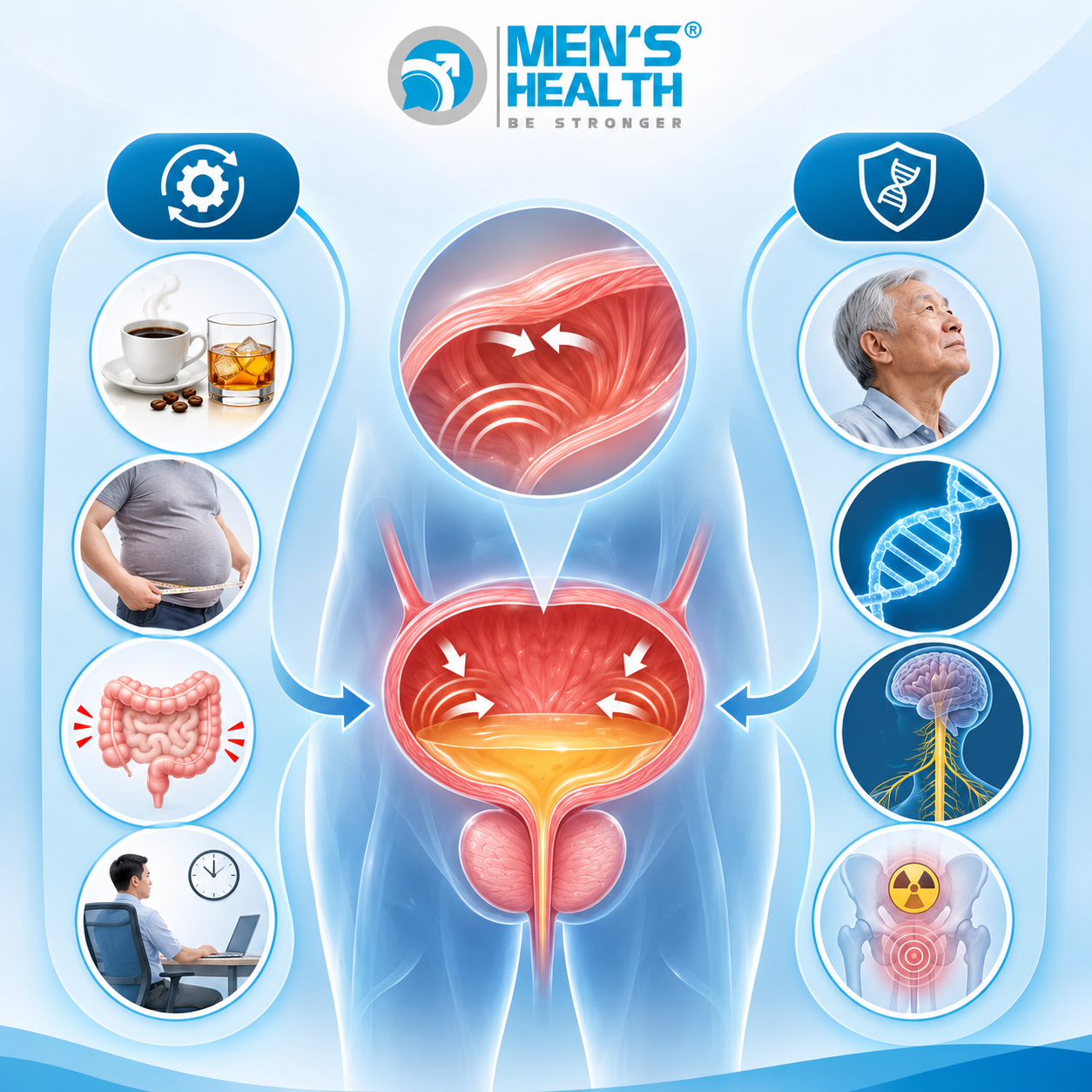
- Advanced Age: Prevalence increases substantially after age 50 due to cumulative prostatic growth, neural degeneration, and altered circulating androgen levels.
- Metabolic Syndrome: Obesity, dyslipidemia, hypertension, and impaired glucose tolerance cause systemic low-grade inflammation and vascular compromise in the pelvic floor.
- Dietary and Behavioral Factors: High consumption of bladder irritants (caffeine, alcohol, acidic foods, artificial sweeteners) directly stimulates urothelial mechanoreceptors.
- Chronic Constipation: Fecal impaction in the rectum mechanically compresses the posterior bladder base and triggers pelvic floor muscle spasm, altering neural reflexes.
4. Clinical Manifestations and Red Flag Symptoms
Symptom Spectrum
- Urinary Urgency: The hallmark symptom; a sudden, compelling desire to pass urine that is difficult to defer.
- Daytime Frequency: Needing to void 8 or more times within a 24-hour period.
- Nocturia: Interruption of sleep one or more times per night to void.
- Urgency Urinary Incontinence (UUI): Involuntary loss of urine preceded by intense urgency.
Storage vs. Voiding Symptoms (OAB vs. BPH Differentiation)
| Clinical Characteristic | Overactive Bladder (Storage Dominant) | Benign Prostatic Hyperplasia (Voiding Dominant) |
| Primary Symptom Phase | Storage phase (Urgency, Frequency, Nocturia) | Voiding phase (Hesitancy, Weak stream, Dribbling) |
| Pathophysiological Target | Detrusor overactivity & Urothelial sensory nerves | Prostatic luminal narrowing & Outlet resistance |
| Incontinence Risk | Sudden urgency leakage | Overflow dribbling (in advanced urinary retention) |
| Post-Void Residual (PVR) | Typically low to mildly elevated | Frequently elevated (>100 mL) |
Red Flag Symptoms Requiring Urgent Urological Workup
- Gross hematuria (macroscopic blood in the urine).
- Dysuria accompanied by fever, chills, or systemic illness (suggesting acute pyelonephritis or prostatic abscess).
- Acute urinary retention (complete inability to void despite maximum urge).
- Rapidly progressive neurological symptoms (saddle anesthesia, bowel incontinence, focal leg weakness).
- Persistent unexplained pelvic or suprapubic pain.
5. Diagnostic Pathways to Identify the Underlying Cause
To accurately pinpoint the etiology of male OAB, clinicians follow a structured diagnostic protocol.
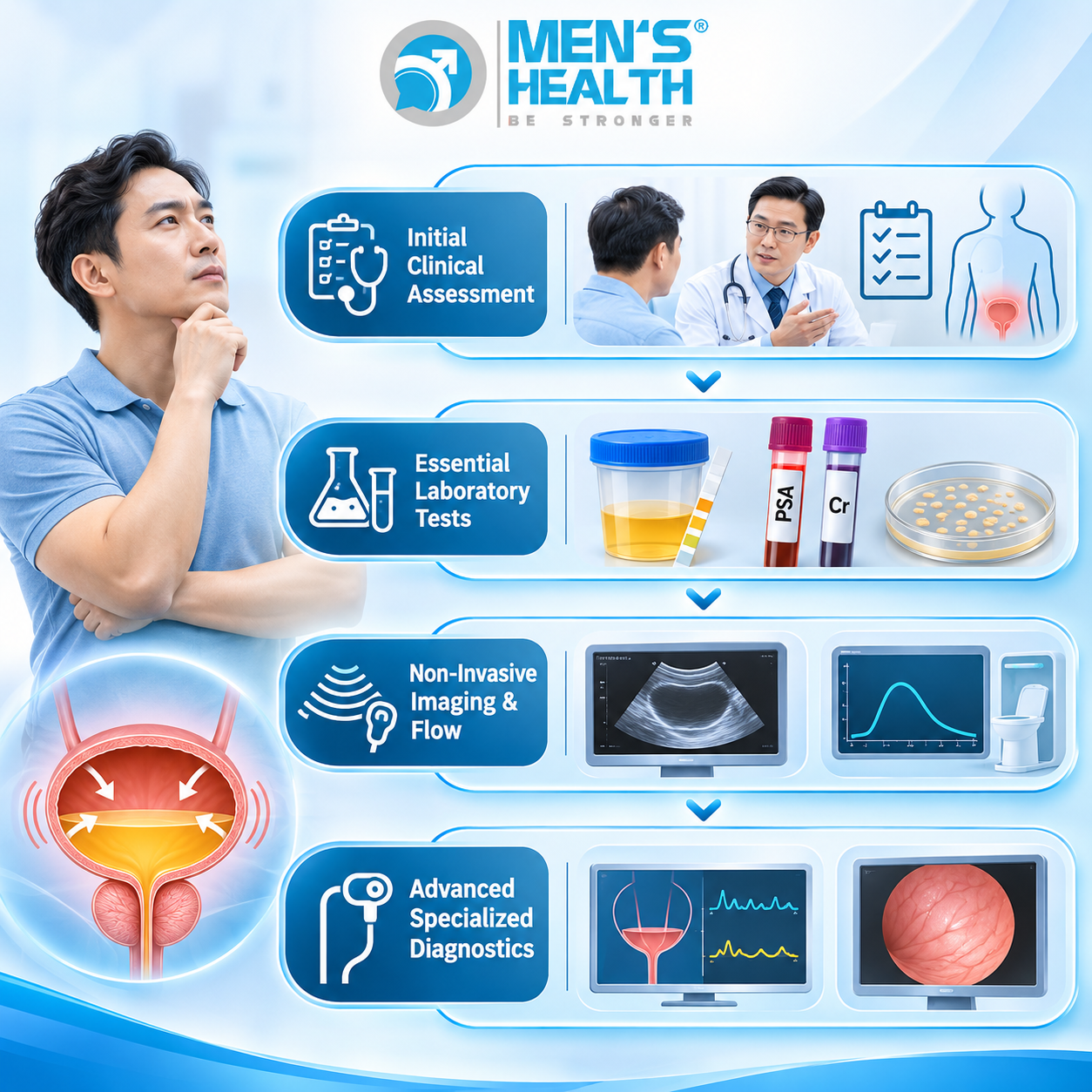
- 3–7 Day Voiding Diary: Objective documentation of fluid intake volume, voiding frequency, urgency severity score, and nocturnal awakenings.
- Digital Rectal Examination (DRE): Evaluates prostate volume, symmetry, tenderness, and rules out suspicious nodules.
- Urinalysis and Urine Culture: Standard screening to rule out bacterial cystitis, pyuria, and microhematuria.
- Serum PSA and Renal Diagnostics: Serum PSA screens for prostatic enlargement or carcinoma in candidates; serum creatinine assesses renal impairment secondary to chronic high-pressure retention.
- Post-Void Residual (PVR) Ultrasound: Measures residual urinary volume post-micturition. A PVR > 150-200 mL signals severe emptying dysfunction, demanding caution before initiating anticholinergic therapy.
- Uroflowmetry: Evaluates maximum flow rate (Qmax) and voiding curve morphology to screen for bladder outlet obstruction.
- Multi-Channel Urodynamic Studies (UDS): Distinguishes detrusor overactivity from detrusor underactivity and quantifies bladder outlet obstruction index (BOOI).
- Diagnostic Cystoscopy: Visual examination of the lower tract to exclude urethral strictures, bladder calculi, bladder carcinoma, or mucosal lesions.
6. Pharmacotherapy and Pharmacological Differentials
When conservative management fails, pharmacotherapy targets specific lower urinary tract receptors based on underlying etiology.
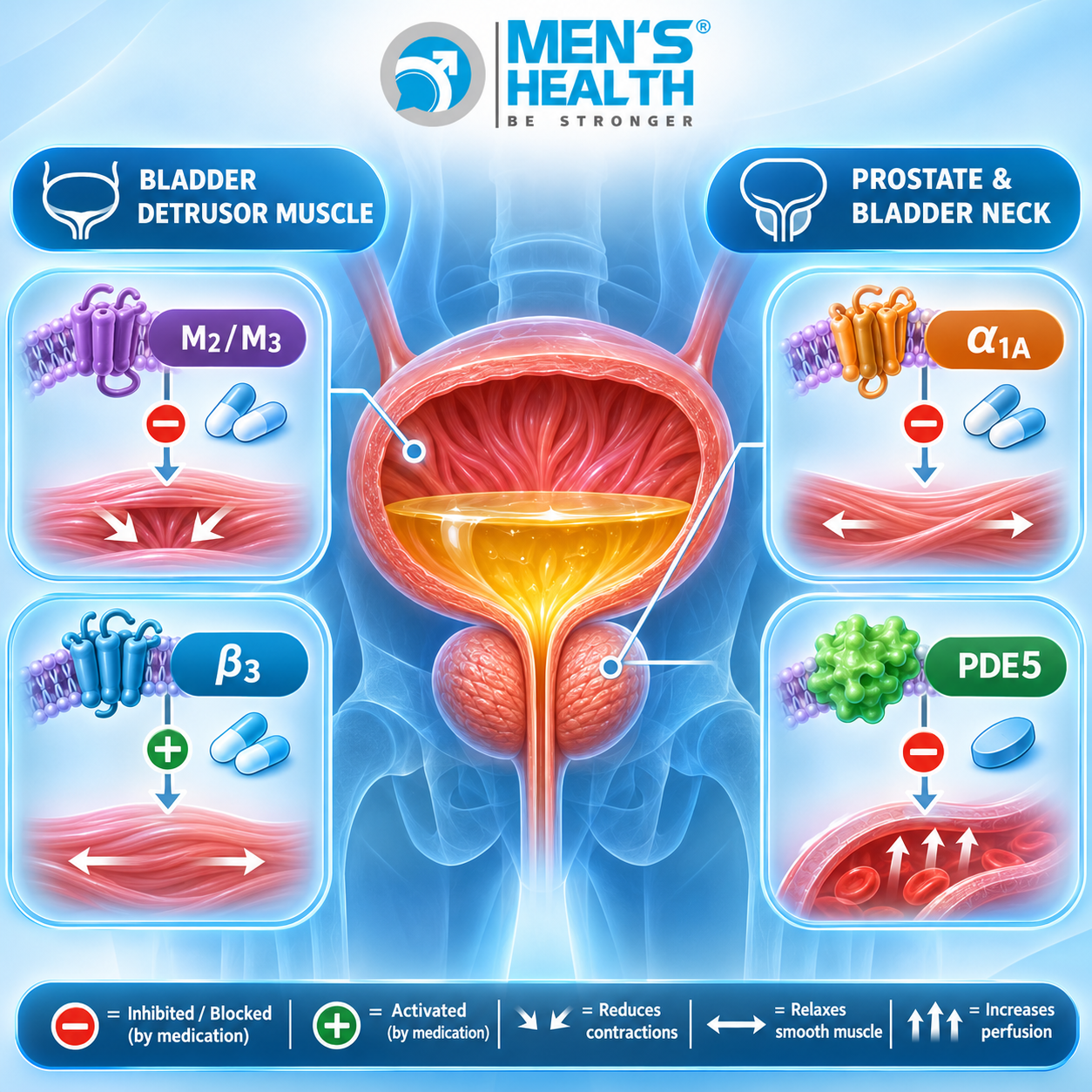
Main Drug Classes
Alpha-1 Adrenoceptor Antagonists (α1-Blockers)
- Mechanism: Block α1A-adrenoceptors in the prostate stroma and bladder neck, reducing smooth muscle tone and outlet resistance.
- Examples: Tamsulosin, Silodosin, Alfuzosin, Doxazosin.
- Indications: Male OAB secondary to BPH/BOO.
- Side Effects: Orthostatic hypotension, dizziness, retrograde ejaculation, Intraoperative Floppy Iris Syndrome (IFIS).
Antimuscarinic (Anticholinergic) Agents
- Mechanism: Competitively inhibit acetylcholine binding at M2/M3 receptors on detrusor smooth muscle, decreasing contraction frequency.
- Examples: Solifenacin, Tolterodine, Oxybutynin, Fesoterodine, Trospium.
- Indications: Primary detrusor overactivity or persistent urgency symptoms.
- Side Effects & Contraindications: Dry mouth, constipation, blurred vision, cognitive decline. Contraindicated in angle-closure glaucoma and elevated PVR.
Beta-3 Adrenoceptor Agonists
- Mechanism: Selectively stimulate β3-adrenergic receptors on detrusor muscle cells, promoting bladder relaxation during filling without weakening micturition contractions.
- Examples: Mirabegron, Vibegron.
- Indications: First-line or second-line OAB therapy, especially in elderly men or those at risk of cognitive impairment.
- Side Effects & Contraindications: Hypertension, tachycardia, headache. Contraindicated in severe uncontrolled hypertension.
Phosphodiesterase-5 (PDE5) Inhibitors
- Mechanism: Preserve cGMP levels, relaxing smooth muscle tissues in the prostate and bladder neck while improving pelvic perfusion.
- Examples: Tadalafil (5 mg daily).
- Indications: Concurrent LUTS/OAB and Erectile Dysfunction (ED).
- Side Effects & Contraindications: Flushing, headache, myalgia. Strictly contraindicated with concurrent nitrate therapy.
Comparative Drug Class Matrix
| Property | α1-Blockers (e.g., Tamsulosin) | Antimuscarinics (e.g., Solifenacin) | β3-Agonists (e.g., Mirabegron) | PDE5 Inhibitors (e.g., Tadalafil) |
| Primary Target | α1A -Adrenoceptors | M2/M3 Muscarinic Receptors | β3-Adrenergic Receptors | PDE5 Enzyme |
| Primary Site | Prostate & Bladder Neck | Detrusor Muscle | Detrusor Muscle | Prostate, Bladder, Vasculature |
| PVR Impact | Decreases PVR | May Increase PVR | Neutral / Minimal Effect | Neutral / Minimal Effect |
| Cognitive Risk | None | Yes (CNS Anticholinergic Load) | Negligible | None |
| Best Scenario | OAB Secondary to BPH | Pure Detrusor Overactivity | Elderly / High Retention Risk | Coexisting OAB & ED |
7. Professional Support at Men’s Health Pharmacy
Managing male overactive bladder requires high-level diagnostic accuracy combined with personalized pharmaceutical care.
Men’s Health Pharmacy, a specialized unit within the Men’s Health Center ecosystem founded by Dr. Tra Anh Duy (MD, PhD, Spec. II), provides clinical pharmacy support for male urological health. At Men’s Health, patients consult with experienced urologists and clinical pharmacists to ensure that every pharmacological regimen—whether involving α-blockers, antimuscarinics, or β3-agonists—is customized to the patient’s diagnostic profile. The pharmacy prioritizes professional safety, patient privacy, absolute confidentiality, and strict adherence to evidence-based prescribing standards.

8. Lifestyle Modifications and Non-Pharmacological Management
- Fluid Regulation: Maintain optimal daily fluid intake (1.5 to 2.0 liters). Avoid excessive evening fluid intake (2–3 hours before sleep) to diminish nocturia.
- Elimination of Bladder Irritants: Reduce or avoid caffeine, alcohol, carbonated beverages, spicy foods, and artificial sweeteners.
- Bladder Retraining: Scheduled voiding regimes combined with urge suppression maneuvers (deep breathing, pelvic floor contraction) to increase bladder capacity.
- Pelvic Floor Muscle Training (PFMT): Kegel exercises to strengthen sphincter tone and activate reflex detrusor inhibition during urgency episodes.
9. Common Clinical Pitfalls in Managing Male OAB
- Initiating Antimuscarinics Without Measuring PVR: Prescribing bladder suppressants to men with occult urinary retention can precipitate complete acute urinary retention.
- Treating OAB as Pure Prostate Enlargement: Administering α-blockers alone often fails when persistent detrusor overactivity is the primary driver of urgency.
- Ignoring Central Anticholinergic Burden: Using non-selective anticholinergic drugs in elderly men increases the risk of acute delirium and long-term cognitive deterioration.
- Self-Medication and Prescription Sharing: Using non-prescribed medications without formal urological evaluation risks delaying the diagnosis of prostate malignancy or neurogenic disorders.
10. Frequently Asked Questions
Can benign prostatic hyperplasia (BPH) directly cause overactive bladder symptoms?
Yes. Prostatic obstruction forces the detrusor muscle to contract harder to void, causing smooth muscle hypertrophy, localized ischemia, and secondary detrusor overactivity.
How do doctors determine if male OAB is caused by a nerve issue or a prostate problem?
Clinicians use urodynamic pressure-flow studies, neurological examinations, post-void residual measurements, and uroflowmetry to distinguish neurogenic bladder dysfunction from bladder outlet obstruction.
Why is post-void residual (PVR) testing critical before taking OAB medications?
If a patient has impaired bladder emptying, taking medications that relax the detrusor muscle (such as antimuscarinics) can completely prevent voiding, resulting in acute urinary retention.
Are β3-agonists safer than antimuscarinics for older men with OAB?
Yes. β3-agonists (e.g., Mirabegron) do not cross the blood-brain barrier to cause cognitive decline, nor do they carry the high risks of dry mouth, severe constipation, or urinary retention associated with antimuscarinics.
How long does it take for OAB treatments to demonstrate efficacy?
Lifestyle changes and α-blockers may improve symptoms within 1 to 2 weeks, whereas antimuscarinics and β3-agonists typically achieve peak clinical efficacy within 4 to 8 weeks.
Conclusion and Expert Clinical Advice
Overactive bladder in men is a complex symptom complex driven by diverse etiologies, including prostate enlargement, neurological impairment, and age-related physiological changes. Achieving effective long-term symptom relief requires an accurate diagnostic evaluation, including voiding diaries, ultrasound residual assessments, and targeted pharmacological selection. Patients experiencing urgency, frequency, or nocturia should refrain from self-medication or unverified therapies. Seeking direct medical consultation at a specialized urological facility, such as the Men’s Health Center, guarantees accurate etiology identification, professional physician oversight, and safe pharmaceutical management tailored to individual health needs.