
Overactive bladder (OAB) in men is a prevalent lower urinary tract syndrome characterized by urinary urgency, frequently accompanied by daytime frequency and nocturia, which requires careful clinical differentiation from other urological pathologies with overlapping manifestations. Because storage symptoms such as urgency and frequency are not pathognomonic for OAB alone, mistaking it for other conditions can lead to ineffective management and delayed treatment of underlying structural or malignant diseases.

What Is Overactive Bladder and Why Is Differential Diagnosis Essential in Men?
Overactive bladder (OAB) in the male population is clinically defined by the International Continence Society (ICS) as a storage disorder involving involuntary detrusor contractions during the bladder filling phase, resulting in a sudden and compelling desire to pass urine.
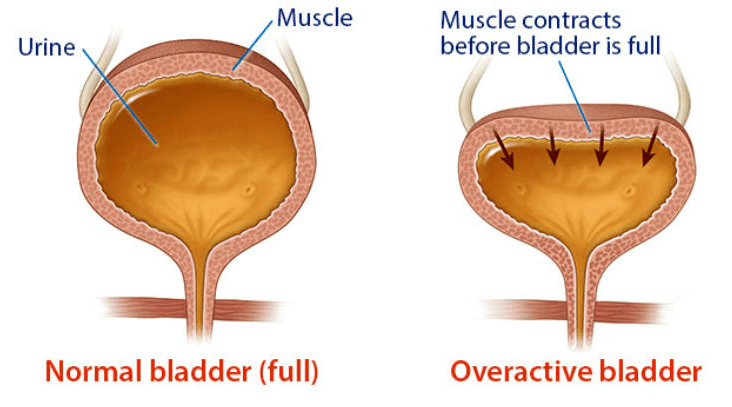
The essential nature of a rigorous differential diagnosis stems from several key clinical factors:
- Symptom Overlap Among Lower Urinary Tract Conditions: Multiple urological disorders share common manifestations, including increased urinary frequency, nocturia, and urgency, making subjective symptoms alone insufficient for a definitive diagnosis.
- Prevention of Mismanagement: Initiating OAB-specific therapies (such as antimuscarinics or beta-3 agonists) without ruling out obstructive, infectious, or malignant etiologies can worsen urinary retention or obscure progressive diseases.
- Identification of Root Causes: Accurate evaluation ensures that primary structural or neurological drivers—such as prostate obstruction or urothelial malignancy—are properly addressed alongside secondary storage dysfunctions.
Common Urological Conditions That Mimic Overactive Bladder in Men
Several distinct urological pathologies present with storage symptoms that closely resemble overactive bladder, requiring systematic clinical evaluation by a urologist.
1. Benign Prostatic Hyperplasia (BPH) and Bladder Outlet Obstruction (BOO)
Benign Prostatic Hyperplasia is the most frequent anatomical mimic and coexisting condition of OAB in aging men. As the prostate enlarges, it creates mechanical resistance at the bladder outlet, leading to compensatory detrusor hypertrophy and secondary detrusor overactivity. While BPH classically presents with voiding symptoms (such as weak stream, hesitancy, and straining), the resulting structural changes in the bladder wall frequently induce secondary storage symptoms of urgency and frequency that mimic primary OAB.
2. Urinary Tract Infections (UTI) and Prostatitis
Bacterial infections of the lower urinary tract, including acute cystitis and bacterial prostatitis, irritate the urothelium and suburothelial sensory nerve endings. This acute inflammatory response triggers premature sensory signaling and involuntary bladder contractions, resulting in sudden urgency, frequency, and dysuria. Unlike chronic OAB, infectious mimics typically present with acute onset, burning discomfort during micturition, and cloudy or malodorous urine.
3. Urothelial Carcinoma (Bladder Cancer) and Carcinoma in Situ (CIS)
Malignant lesions within the bladder lumen or mucosal lining can severely irritate adjacent smooth muscle and sensory receptors. Carcinoma in situ (CIS), a flat, high-grade malignancy, frequently presents with severe irritative voiding symptoms—including prominent urgency, frequency, and irritative dysuria—that are clinically indistinguishable from severe refractory OAB.
4. Urolithiasis (Bladder Stones)
The presence of calcified calculi within the bladder cavity or lower ureter causes mechanical friction against the sensitive urothelial lining. This constant physical irritation provokes uninhibited detrusor contractions, leading to sudden urgency, terminal hematuria, and sharp, position-dependent pelvic pain during voiding.
5. Neurogenic Lower Urinary Tract Dysfunction
Neurological conditions—such as Parkinson’s disease, cerebrovascular accidents (stroke), spinal cord lesions, or diabetic neuropathy—disrupt the normal supraspinal coordination and inhibitory pathways of micturition. This neurogenic dysfunction leads to neurogenic detrusor overactivity, presenting clinically with storage symptoms identical to idiopathic OAB.
Key Clinical Differences: OAB Versus Mimicking Pathologies
Differentiating OAB from other lower urinary tract disorders requires careful synthesis of symptom profiles, physical examination findings, and diagnostic evaluations.
| Condition | Primary Symptom Presentation | Key Differentiating Clinical Features | Diagnostic Indicator |
| Overactive Bladder (OAB) | Sudden urgency, frequency, nocturia, with or without urgency incontinence. | Absence of anatomical obstruction, infection, or malignancy; storage symptoms predominate. | Normal urinalysis, normal post-void residual (PVR), confirmed detrusor overactivity on urodynamics. |
| Benign Prostatic Hyperplasia (BPH) | Weak stream, hesitancy, straining, alongside secondary urgency and frequency. | Voiding symptoms typically precede or coexist prominently with storage symptoms. | Enlarged prostate on digital rectal examination, elevated PVR, uroflowmetry obstruction curve. |
| Urinary Tract Infection / Prostatitis | Acute onset of urgency, frequency, dysuria, and pelvic discomfort. | Presence of systemic or local signs of inflammation, fever, or painful ejaculation. | Pyuria, bacteriuria on urinalysis and culture; positive response to targeted antimicrobial therapy. |
| Bladder Cancer / CIS | Irritative storage symptoms (urgency/frequency) and microscopic or gross hematuria. | Often painless gross hematuria; symptoms unresponsive to standard OAB pharmacotherapy. | Hematuria on urinalysis, identification of mucosal lesions via cystoscopy and urinary cytology. |
| Bladder Stones (Urolithiasis) | Intermittent urgency, terminal hematuria, pain aggravated by physical movement. | Sudden interruption of urinary stream or pain correlated with postural changes. | Radiopaque or hyperechoic structures visualized via bladder ultrasound, X-ray (KUB), or CT scan. |
When to Seek Immediate Medical Evaluation
While storage symptoms are common, certain clinical warning signs indicate potentially serious underlying pathology that requires prompt urological investigation.
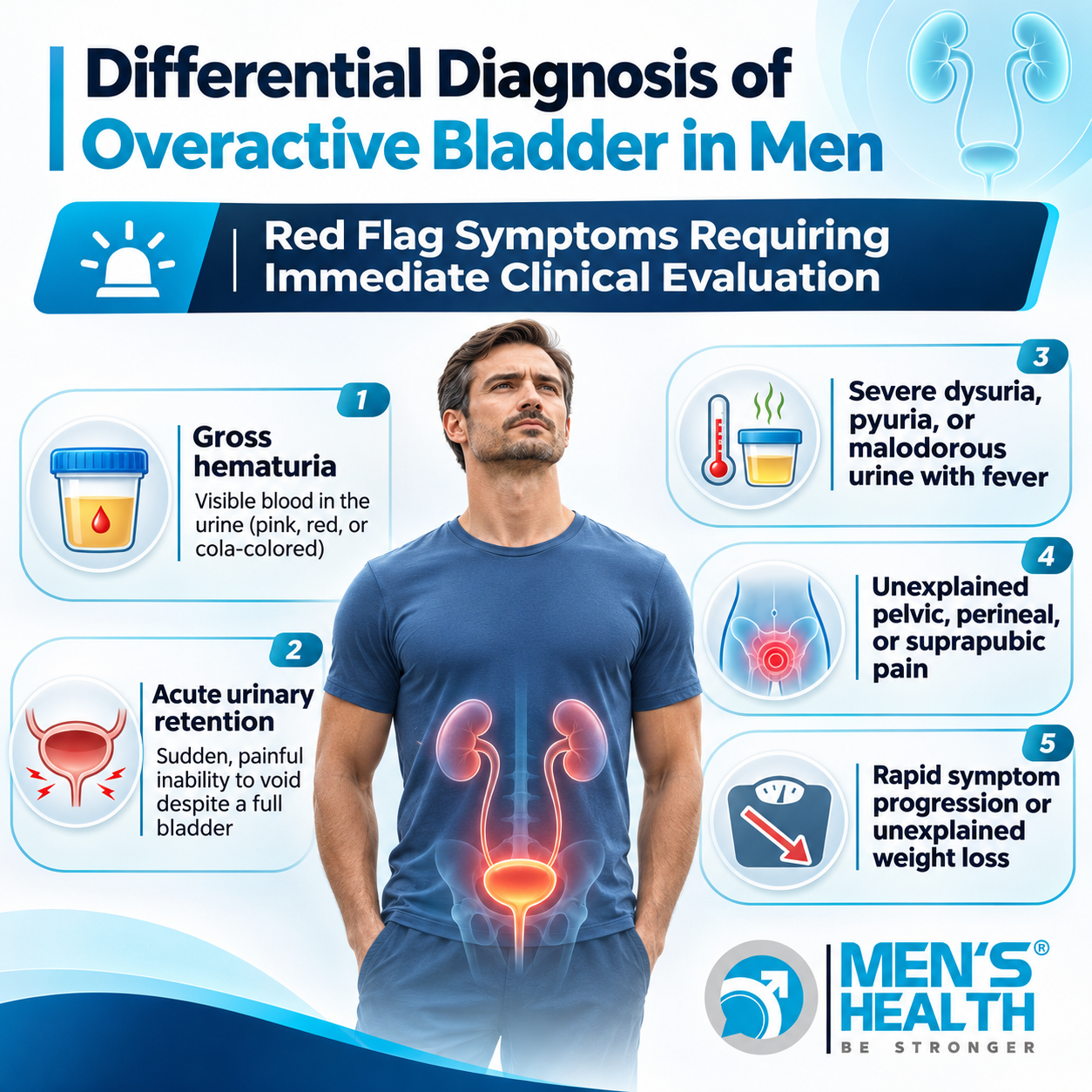
Clinical Warning: The presence of gross hematuria alongside urinary urgency or frequency is a critical red flag that demands immediate professional urological workup to exclude urothelial malignancy or significant urolithiasis.
Diagnostic Approach to Differential Diagnosis in Men
To establish an accurate diagnosis and differentiate OAB from mimicking conditions, urologists utilize a structured, multi-step clinical evaluation.
Diagnostic Workup Procedures
- Comprehensive Clinical History and Questionnaires: Evaluation of symptom duration, voiding patterns, neurological history, and utilization of validated scoring instruments like the International Prostate Symptom Score (IPSS).
- Detailed Bladder Diary: A 3-day prospective log documenting fluid intake volumes, voided volumes, urgency episodes, and leakage events to characterize daily storage dynamics.
- Physical Examination: Focused digital rectal examination (DRE) to assess prostate size, consistency, and contour, alongside targeted neurological examination of the lower extremities and perineum.
- Urinalysis and Urine Culture: Essential laboratory testing to detect micro-hematuria, pyuria, bacteriuria, glucosuria, or proteinuria.
- Post-Void Residual (PVR) Measurement: Transabdominal ultrasound assessment to quantify bladder emptying efficiency and rule out significant urinary retention secondary to BOO.
- Cystoscopy and Imaging: Direct visualization of the bladder mucosa and upper tract imaging (ultrasound or CT urography) when hematuria, treatment resistance, or structural abnormalities are suspected.
- Urodynamic Testing: Comprehensive assessment of detrusor pressure and urine flow during filling and voiding phases, reserved for complex diagnostic dilemmas or surgical planning.
Treatment Principles and the Role of Pharmacotherapy
Management is strictly guided by the confirmed diagnosis. While OAB is treated with behavioral therapy and neuromodulating agents, mimicking conditions require specific medical or surgical interventions.
Therapeutic Strategies Based on Diagnosis
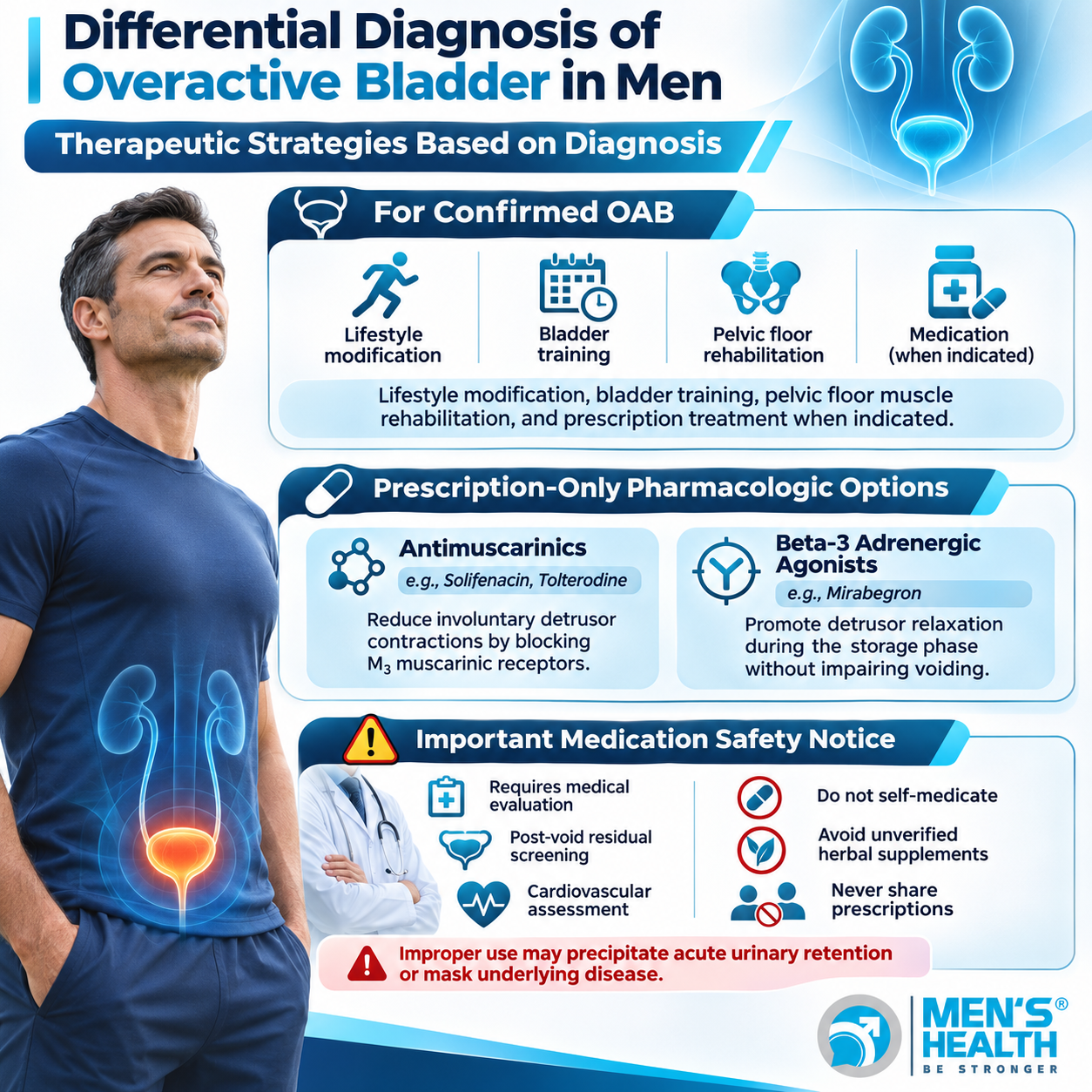
- For Confirmed OAB: Management focuses on lifestyle modifications, bladder training, pelvic floor muscle rehabilitation, and second-line prescription medications.
- Pharmacological Options for OAB (Prescription-Only):
- Antimuscarinics (e.g., Solifenacin, Tolterodine): Inhibit M3 muscarinic receptors on the detrusor muscle to reduce involuntary contractions.
- Beta-3 Adrenoceptor Agonists (e.g., Mirabegron): Stimulate β3 receptors to promote detrusor relaxation during the storage phase without impairing voiding.
- Important Safety Notice on Medications: These agents are prescription medications requiring precise medical evaluation, post-void residual screening, and cardiovascular assessment before initiation. Patients must never self-medicate, use unverified herbal supplements, or share prescriptions, as inappropriate use can precipitate acute urinary retention or mask underlying disease.
Adverse Effects, Contraindications, and Pharmacological Safety
Targeted pharmacological therapies for lower urinary tract symptoms carry distinct safety profiles requiring careful clinical monitoring.
| Drug Class / Agent | Therapeutic Objective | Notable Adverse Effects | Contraindications & Precautions |
| Antimuscarinics (Solifenacin, Tolterodine) | Inhibit detrusor smooth muscle contractions during bladder filling | Dry mouth, constipation, blurred vision, urinary retention, cognitive dulling | Uncontrolled narrow-angle glaucoma, severe urinary retention, myasthenia gravis |
| Beta-3 Agonists (Mirabegron) | Activate $\beta_3$ receptors to enhance bladder storage capacity | Nasopharyngitis, elevated blood pressure, headache, tachycardia | Severe uncontrolled hypertension (≥ 180/110 mmHg), end-stage renal disease |
Essential Medication Safety Rules
- Individualized Dosing: Pharmacotherapy must be tailored to the patient’s baseline renal and cardiac status.
- Adherence and Supervision: Patients should not alter dosing schedules or abruptly discontinue therapy without professional guidance.
- Avoidance of Unverified Products: Over-the-counter remedies claiming immediate relief lack scientific backing and safety validation.
Lifestyle Modifications and Preventive Strategies
Integrating structured daily habits supports overall lower urinary tract health and optimizes therapeutic outcomes:
- Dietary Calibration: Minimize intake of bladder irritants such as caffeine, alcohol, artificial sweeteners, and highly spicy foods.
- Hydration Management: Maintain adequate daily fluid intake (1.5 – 2.0 L/day) distributed evenly, avoiding excessive evening consumption.
- Weight Control: Managing body weight reduces intra-abdominal pressure and pelvic floor strain.
- Bowel Regularity: Prevent chronic constipation, as rectal distension mechanically compresses the bladder base and exacerbates urgency symptoms.
Common Misconceptions Regarding Lower Urinary Tract Symptoms
Misunderstandings often delay accurate diagnosis and appropriate medical care among male patients:
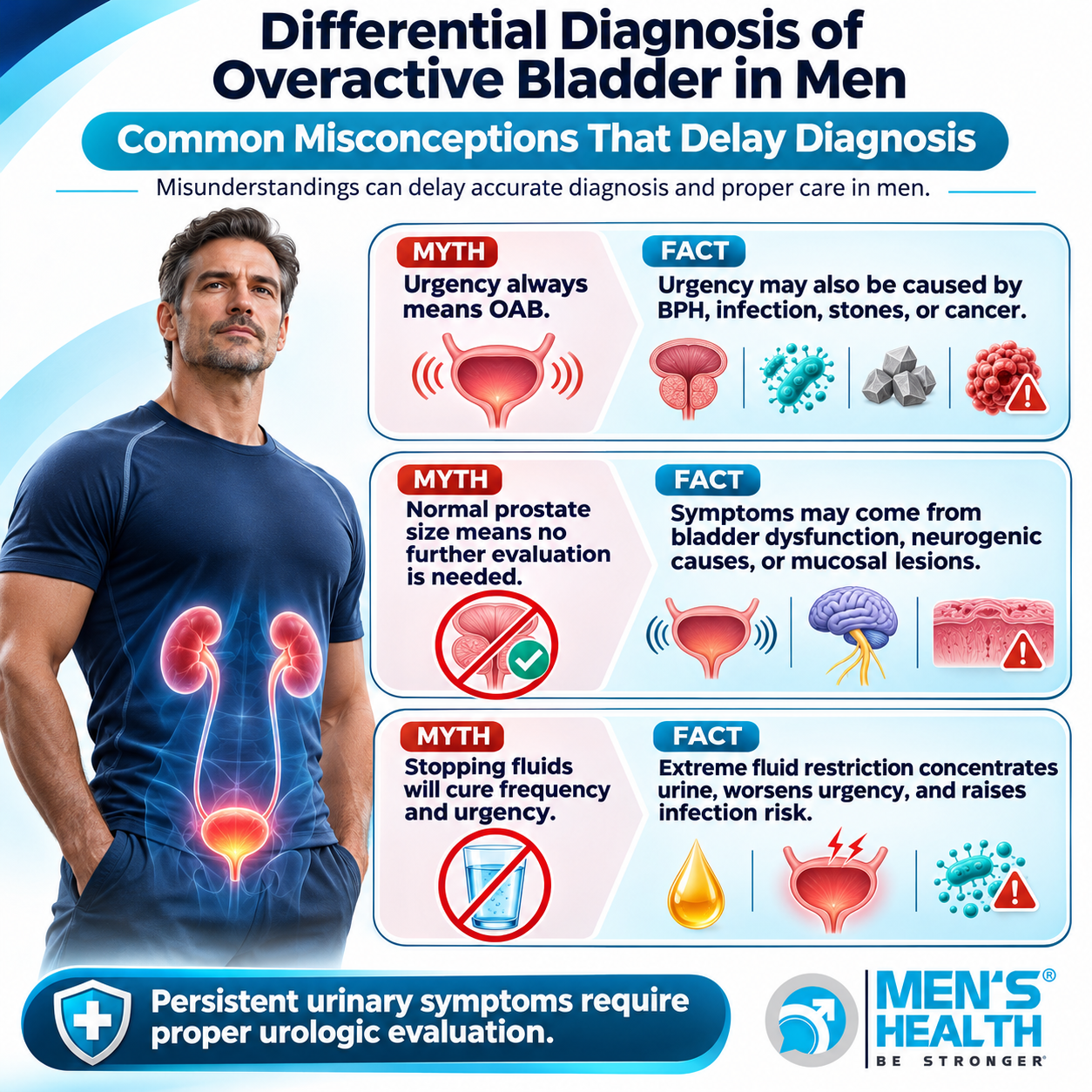
- Misconception 1: “All male urinary urgency is simply an overactive bladder.”
- Fact: Urgency is a symptom shared by many pathologies, including BPH, infections, bladder stones, and malignancies. A professional urological evaluation is essential to identify the true root cause.
- Misconception 2: “If prostate size is normal, urinary symptoms do not need investigation.”
- Fact: While prostate enlargement causes BPH, storage symptoms can stem from primary bladder dysfunction, neurogenic conditions, or mucosal lesions requiring distinct diagnostic workups.
- Misconception 3: “Stopping fluid intake completely will cure frequency and urgency.”
- Fact: Extreme fluid restriction concentrates urine, irritating the urothelium and paradoxically worsening urgency while increasing infection risk.
Overactive Bladder and Differential Diagnosis: Frequently Asked Questions
1. How does an overactive bladder differ from an enlarged prostate in terms of symptoms?
OAB primarily presents with storage symptoms such as sudden urgency, daytime frequency, and nocturia. In contrast, BPH predominantly presents with voiding symptoms like weak stream, hesitancy, and incomplete emptying, though advanced BPH can secondarily induce OAB-like storage symptoms.
2. Could a urinary tract infection be mistaken for an overactive bladder?
Yes. Acute urinary tract infections and prostatitis cause significant urothelial irritation, producing sudden urgency, frequency, and dysuria that closely mimic OAB. Urinalysis and urine culture are essential to differentiate infection from primary OAB.
3. Why are an ultrasound and a urinalysis necessary before diagnosing OAB?
Urinalysis rules out infection, hematuria, and metabolic disorders, while post-void residual (PVR) ultrasound evaluates bladder emptying completeness. These tests ensure that obstruction or infection is not misdiagnosed as functional OAB.
4. Can bladder stones cause symptoms similar to an overactive bladder?
Yes. Bladder stones mechanically irritate the bladder wall, triggering involuntary detrusor contractions that manifest as sudden urgency, terminal hematuria, and pain during physical activity.
5. Can men purchase medication for OAB on their own when experiencing symptoms of urinary urgency?
No. Effective OAB medications (antimuscarinics and beta-3 agonists) are prescription drugs. Using them without diagnosing underlying obstruction or infection can lead to acute urinary retention or delayed cancer detection.
Conclusion and Expert Medical Recommendations
Differentiating overactive bladder from other mimicking urological conditions in men is a complex clinical process that requires professional medical evaluation rather than self-diagnosis or unverified treatments. Persistent lower urinary tract symptoms, such as sudden urgency, frequency, or nocturia, should prompt a comprehensive urological assessment to rule out obstructive, infectious, or malignant pathologies.
Patients are advised against relying on unverified remedies, self-medication, or extreme dietary restrictions. Seeking timely consultation at a specialized medical facility ensures an accurate diagnosis, safe prescription management, and personalized care.
Comprehensive Men’s Health Ecosystem: Men’s Health Center & Pharmacy
Navigating the complexities of lower urinary tract symptoms requires a coordinated, multidisciplinary medical approach that integrates advanced diagnostics with expert pharmaceutical oversight.

The Men’s Health pharmacy is part of the Men’s Health Center ecosystem, founded by Dr. Tra Anh Duy, MD, PhD, a specialist with extensive clinical expertise. Here, patients receive guidance from doctors and pharmacists who explain their options and assist them in selecting the most appropriate healthcare solutions. Men’s Health prioritizes professionalism, safety, discretion, and strict confidentiality, while ensuring that individual needs are respected throughout the entire process of consultation, treatment, and follow-up care.
Through the collaborative efforts of expert urologists and clinical pharmacists, Men’s Health ensures that every prescription therapy—whether targeting bladder overactivity, prostatic obstruction, or related conditions—is tailored to individual patient profiles, guaranteeing adherence, safety, and optimal long-term health outcomes.