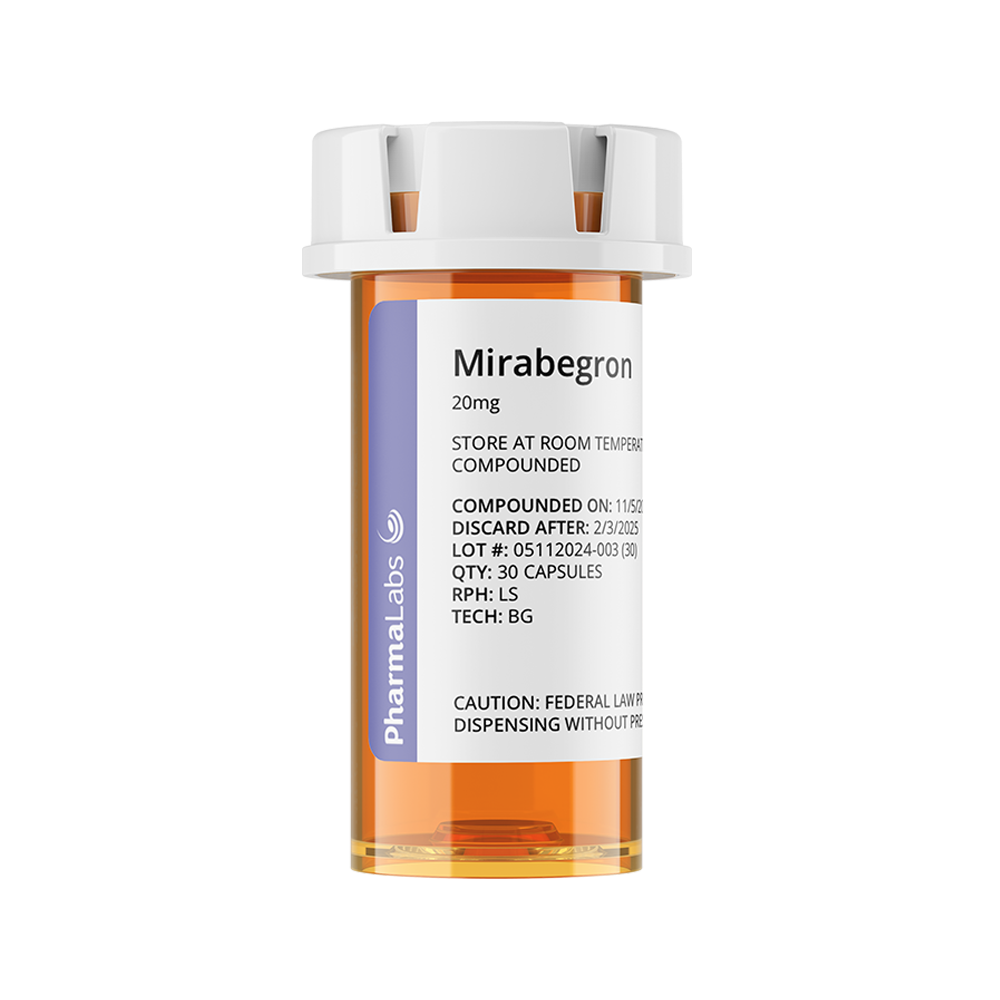

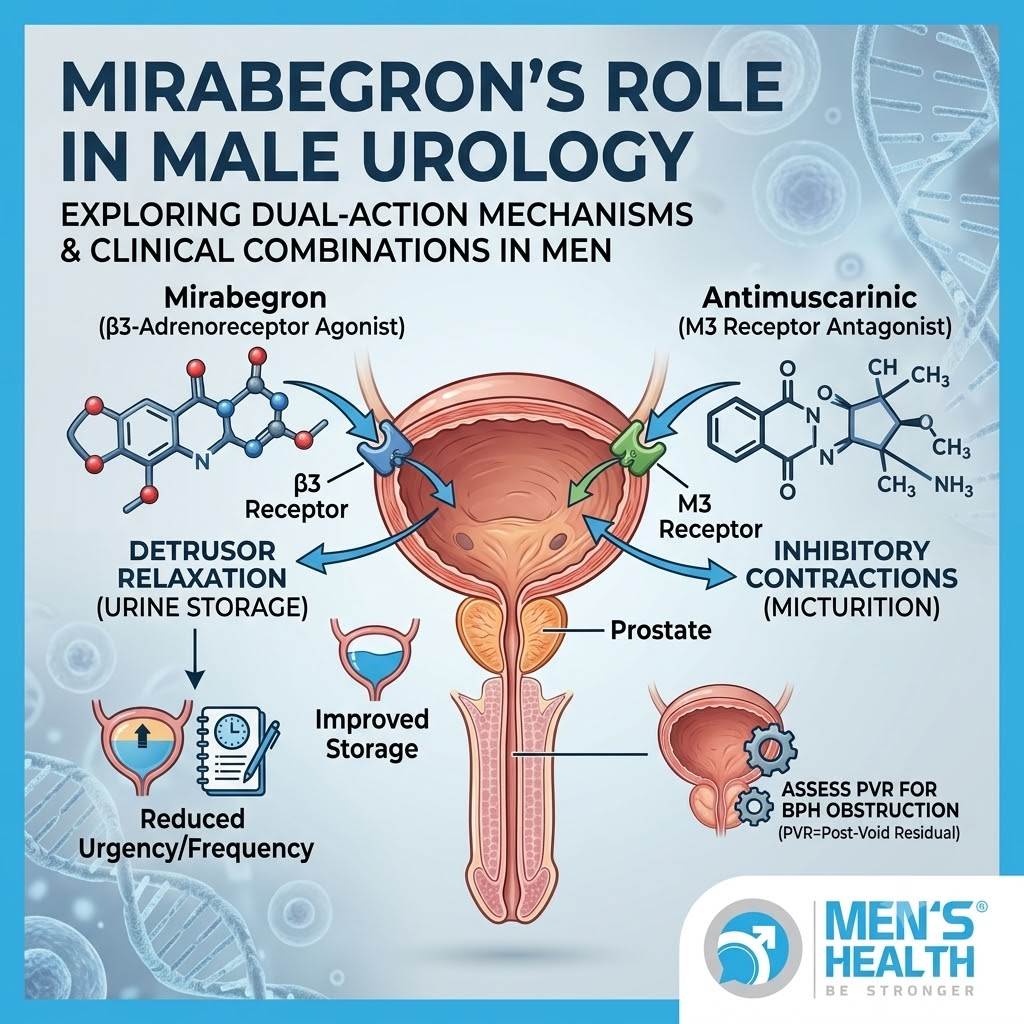
Combining mirabegron with an antimuscarinic agent offers an effective, synergistic pharmacological approach for men suffering from persistent overactive bladder (OAB) symptoms and lower urinary tract symptoms (LUTS) that do not adequately respond to monotherapy. By concurrently targeting beta-3 adrenergic receptors to enhance detrusor relaxation and blocking muscarinic receptors to inhibit involuntary bladder contractions, this dual-mechanism treatment significantly improves urinary urgency, voiding frequency, and urge incontinence. Understanding the underlying physiology, clinical indications, risk profiles, and safety precautions is essential for optimizing therapeutic outcomes in male urological care.
Mirabegron combined with an antimuscarinic (such as solifenacin, succinate, or fesoterodine) is indicated for men experiencing refractory storage LUTS or overactive bladder symptoms. This combination acts via complementary pathways: mirabegron stimulates beta-3 adrenoreceptors to increase bladder storage capacity, while the antimuscarinic selectively blocks acetylcholine at $M_2$ and $M_3$ receptors to reduce detrusor instability. When properly managed alongside male-specific evaluation for prostate enlargement, this strategy offers superior symptom relief with an acceptable tolerability profile.
1. Physiological Mechanism: Dual Target Receptor Strategy
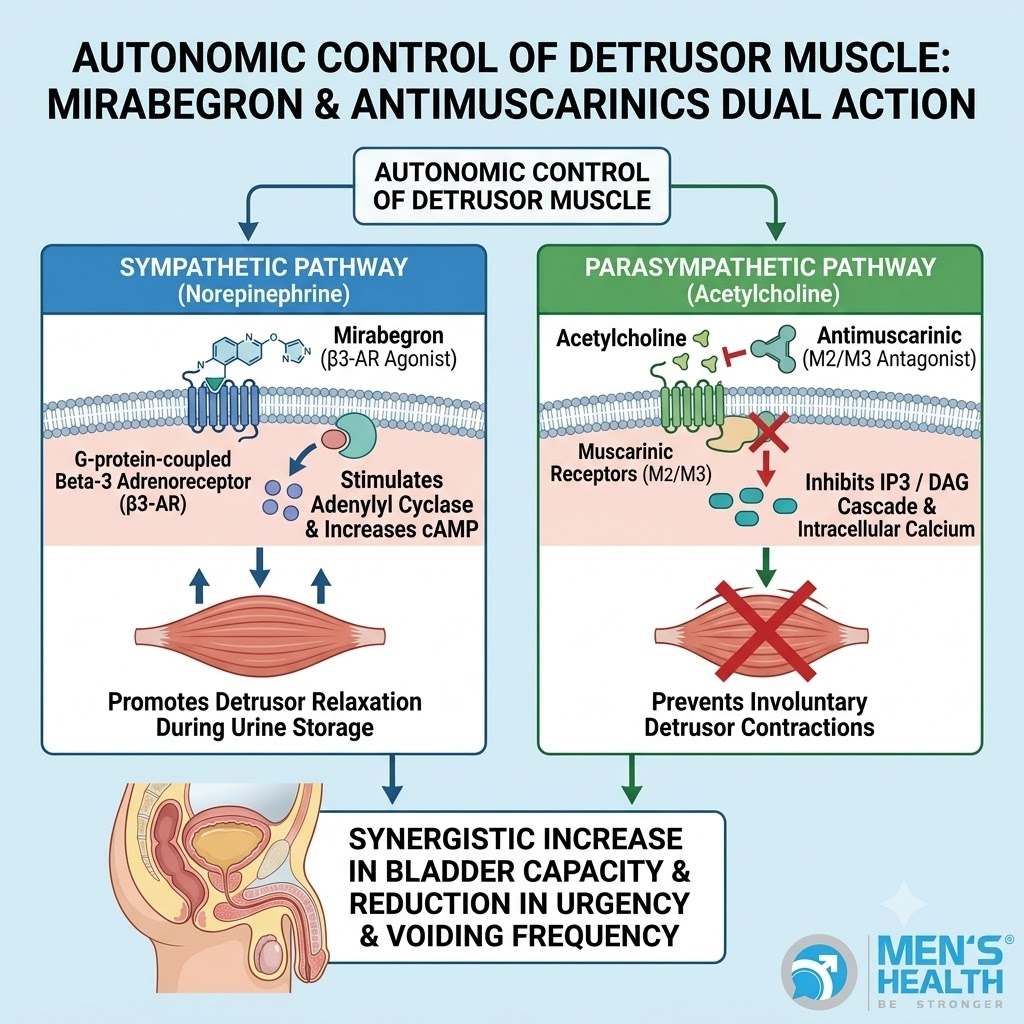
The human bladder detrusor muscle expression is regulated by both sympathetic and parasympathetic autonomic pathways. Combining a selective beta-3 adrenoreceptor agonist with a muscarinic receptor antagonist achieves a dual relaxation effect through distinct signaling cascades.
Beta-3 Agonism (Mirabegron)
Mirabegron selectively binds to β3-adrenoreceptors on detrusor smooth muscle cells. Activation of these receptors stimulates adenylyl cyclase, converting ATP to cyclic adenosine monophosphate (cAMP). Elevated cAMP levels relax the detrusor muscle, expanding bladder volume during the storage phase without impairing voluntary micturition power.
Muscarinic Receptor Antagonism (Antimuscarinics)
Antimuscarinics (e.g., solifenacin, tolterodine, darifenacin) competitively block muscarinic acetylcholine receptors—predominantly M2 and M3 subtypes—in the bladder wall. M3 receptors directly mediate detrusor contraction, while M2 receptors oppose sympathetically mediated relaxation. Inhibiting these pathways suppresses uninhibited parasympathetic stimulation, stopping involuntary detrusor contractions during filling.
2. Indications and Clinical Rationale for Male Patients
In male urological practice, lower urinary tract symptoms often represent a overlap between Benign Prostatic Hyperplasia (BPH) and detrusor overactivity.
Persistent Storage Symptoms Despite Monotherapy
Many men treated with an alpha-1 blocker (such as tamsulosin or silodosin) for prostatic obstruction continue to suffer from persistent storage symptoms—specifically urinary urgency, nocturia, and high voiding frequency. When monotherapy with either mirabegron or an antimuscarinic alone fails to achieve symptom resolution, combination therapy is indicated.
Complementary Efficacy Without Doubling Adverse Effects
Clinical trials show that combining low-to-standard doses of mirabegron (25 – 50 mg) with an antimuscarinic (e.g., solifenacin 5 mg) yields superior improvements in mean voided volume per micturition, reduction of urgency episodes, and decreased incontinence events compared to escalating antimuscarinic monotherapy, while avoiding the severe anticholinergic side effects associated with high-dose antimuscarinics.
3. Male-Specific Safety Considerations: Urinary Retention and BPH
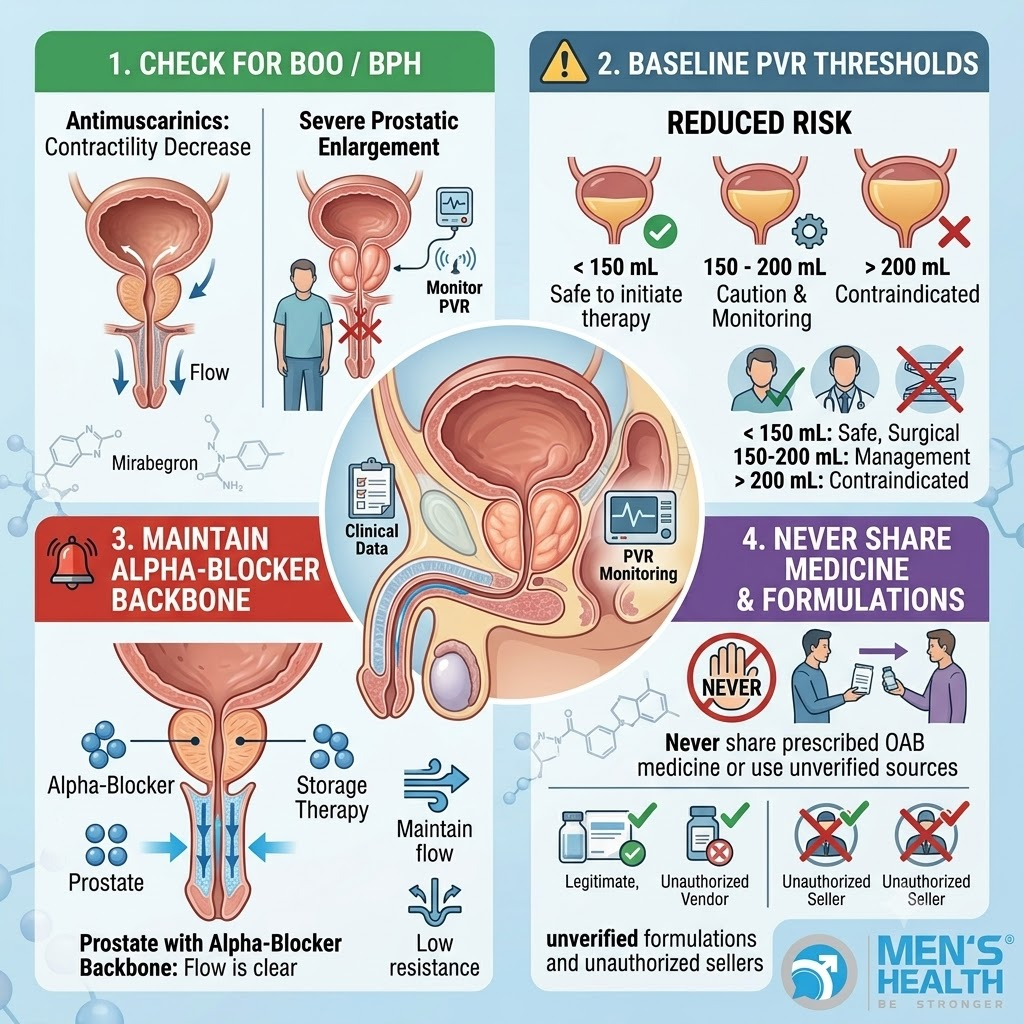
A major clinical consideration when prescribing OAB pharmacotherapy to men is the risk of acute urinary retention (AUR) or worsening voiding dysfunction due to underlying bladder outlet obstruction (BOO).
4. Cardiovascular, Cognitive, and Systemic Risk Profile
Both drug classes possess distinct side-effect profiles that require clinical oversight when administered concurrently.
Cardiovascular Safety
- Blood Pressure and Heart Rate: Mirabegron can cause slight dose-dependent increases in blood pressure and pulse rate due to low-level activation of vascular and cardiac beta-receptors.
- Tachycardia: Antimuscarinics can cause sinus tachycardia via vagal inhibition at cardiac M2 receptors.
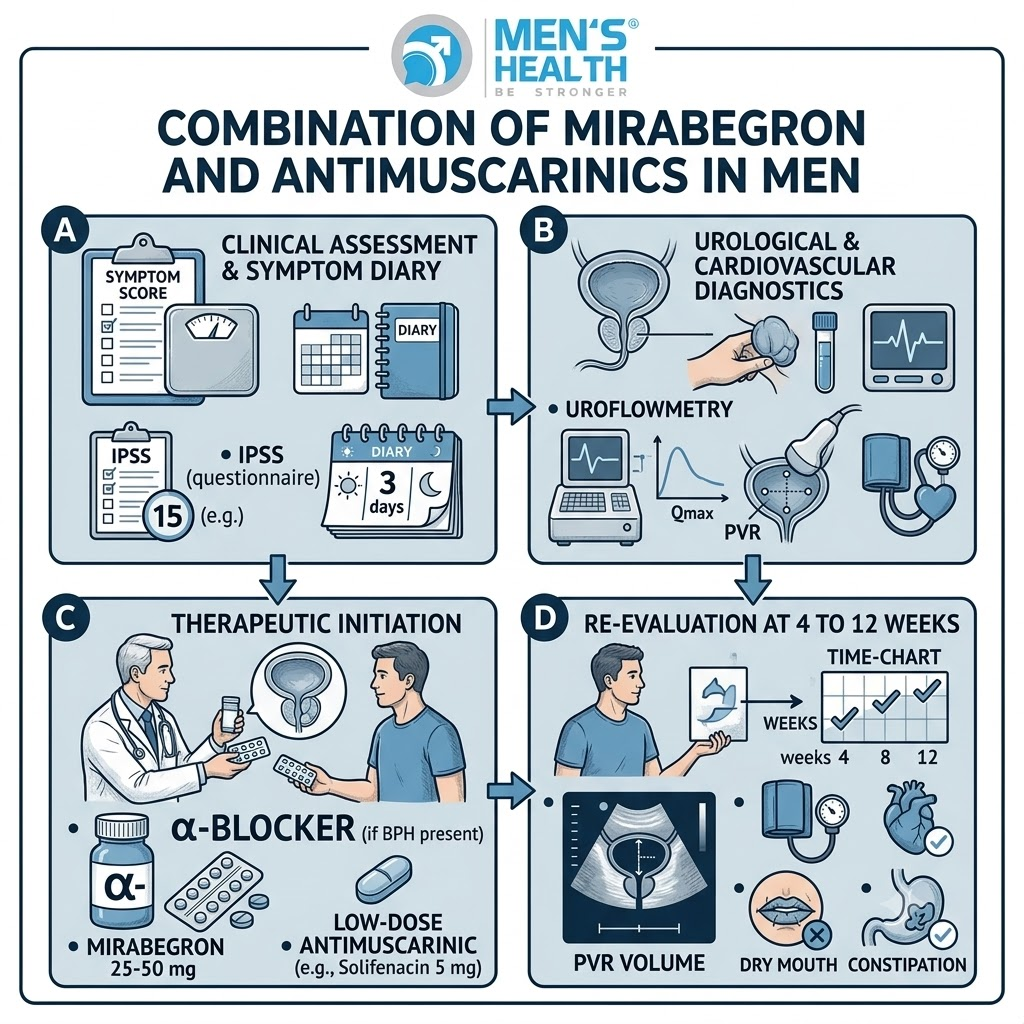
- Combined Monitoring: Male patients with baseline hypertension or heart rate abnormalities must have their blood pressure and pulse measured at baseline and periodically during combined therapy.
Cognitive and Anticholinergic Burden
- Central Nervous System (CNS) Effects: Antimuscarinic agents that cross the blood-brain barrier can block central M1 receptors, contributing to cognitive decline, memory impairment, and confusion—especially in elderly males.
- Minimizing Anticholinergic Load: Combining mirabegron with a lower, uro-selective antimuscarinic dose preserves cognitive safety compared to high-dose antimuscarinic monotherapy.
5. Diagnostic Evaluation and Clinical Workflow
Before prescribing a combination of mirabegron and an antimuscarinic, a comprehensive urological workup is necessary to establish safety and baseline parameters.
6. Adverse Effects, Contraindications, and Drug Interactions
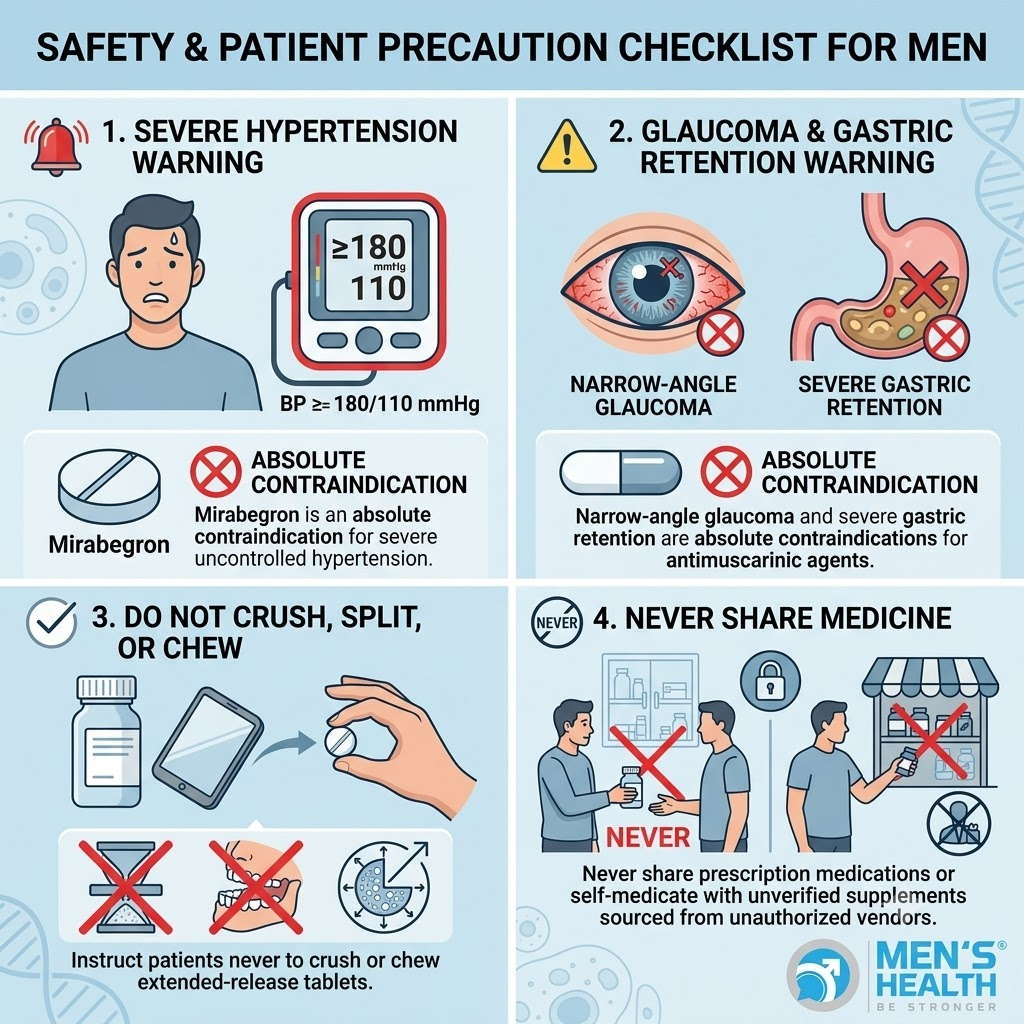
Understanding potential adverse events and pharmacokinetic interactions prevents complications during long-term therapy.
Common Adverse Reactions
- Anticholinergic Effects: Dry mouth, constipation, dry eyes, and dyspepsia (primarily driven by the antimuscarinic component).
- Cardiovascular Effects: Mild hypertension, palpitations, and tachycardia.
- Urological Effects: Dysuria, urinary hesitation, or increased post-void residual volume.
Drug Interactions
- CYP2D6 Inhibition: Mirabegron is a moderate CYP2D6 inhibitor. Co-administration with antimuscarinics metabolized by CYP2D6 (such as tolterodine or fesoterodine) or cardiac drugs (like metoprolol) can increase systemic drug levels, requiring careful dose selection.
- CYP3A4 Substrates: Antimuscarinics like solifenacin are metabolized by CYP3A4. Concomitant use with strong CYP3A4 inhibitors (e.g., ketoconazole, itraconazole) requires restricting the antimuscarinic dose.
7. Role of Men’s Health Pharmacy in Male Urological Care
Managing complex male lower urinary tract symptoms, overactive bladder, and prostatic health requires a multidisciplinary, patient-centered approach.
Men’s Health Pharmacy is an integral unit within the Men’s Health Center ecosystem founded by Dr. Tra Anh Duy (MD, PhD, Spec II). In this clinical setting, patients receive comprehensive guidance where experienced urologists and clinical pharmacists collaborate to select appropriate pharmaceutical regimens, review potential drug interactions, and monitor long-term safety. Men’s Health prioritizes professional excellence, patient safety, utmost discretion, strict confidentiality, and personalized care throughout diagnosis, treatment, and follow-up.

When male patients require combination therapy for persistent OAB, specialists at Men’s Health perform thorough diagnostic evaluations—including uroflowmetry, post-void residual measurement, and cardiovascular screening—before dispensing prescription medications.
8. Lifestyle Modifications and Behavioral Therapy
Pharmacotherapy yields optimal clinical results when integrated with evidence-based lifestyle changes and bladder re-training:
- Fluid Management: Regulate daily fluid intake (1.5 – 2 liters/day). Limit fluid consumption 2 – 3 hours before bedtime to mitigate nocturia.
- Elimination of Bladder Irritants: Reduce intake of dietary irritants including caffeine, alcohol, artificial sweeteners, carbonated drinks, and spicy foods.
- Bladder Training: Practice urge-suppression techniques and scheduled voiding intervals to retrain detrusor reflexes.
- Pelvic Floor Exercises: Perform structured Kegel exercises to strengthen pelvic floor muscles, aiding voluntary urinary control during sudden urgency surges.
- Weight and Bowel Management: Maintain a normal Body Mass Index (BMI) and manage chronic constipation, as straining and intra-abdominal pressure exacerbate bladder instability.
9. Common Misconceptions Regarding Combination OAB Therapy in Men
- Believing combination OAB therapy shrinks an enlarged prostate: Combination therapy with mirabegron and antimuscarinics targets detrusor storage dysfunction; it does not reduce prostate volume or inhibit 5-alpha reductase activity.
- Assuming antimuscarinics always cause urinary retention in men: While the risk exists, careful baseline evaluation of post-void residual volume and concurrent use of alpha-blockers make combination therapy safe for most men with mild-to-moderate BPH.
- Discontinuing medication once symptoms improve: Overactive bladder is a chronic condition. Abruptly stopping combination therapy leads to symptom relapse.
- Expecting immediate results on day one: While initial effects may be noticed within 1 – 2 weeks, maximal clinical benefit usually develops after 4 – 12 weeks of continuous use.
10. Comparative Overview of Pharmacotherapy Options for Male LUTS/OAB
| Treatment Regimen | Primary Mechanism of Action | Main Clinical Indications | Key Side Effects / Considerations |
| Alpha-1 Blocker Monotherapy | Relaxes prostatic smooth muscle (α1-AR) | Voiding LUTS due to BPH | Orthostatic hypotension, retrograde ejaculation |
| Mirabegron Monotherapy | Selective β3-AR agonist; relaxes detrusor | Storage LUTS / OAB symptoms | Mild BP elevation, headache; low retention risk |
| Antimuscarinic Monotherapy | Competitive M2/M3 receptor antagonist | Storage LUTS / OAB symptoms | Dry mouth, constipation, urinary retention risk |
| Mirabegron + Antimuscarinic Combination | Dual β3 activation & M2/M3 blockade | Persistent/refractory OAB symptoms | Synergistic efficacy; requires PVR & BP monitoring |
| Alpha-Blocker + OAB Combination | Relaxes prostate outlet & detrusor muscle | Combined voiding & storage LUTS | Comprehensive LUTS relief; requires urological baseline |
Combination of Mirabegron and Antimuscarinics in Men and Frequently Asked Questions
Is the combination of mirabegron and an antimuscarinic safe for long-term use in men?
Yes, clinical trials and long-term extensions demonstrate that combination therapy is generally safe and well tolerated for long-term use in men, provided that baseline post-void residual (PVR) volume and blood pressure are monitored regularly.
Can a man with Benign Prostatic Hyperplasia (BPH) safely start this combination therapy?
Yes, men with BPH can safely receive combination therapy if their post-void residual urine volume is low (< 150 mL) and they are concurrently taking an alpha-blocker to maintain low bladder outlet resistance.
How does combination therapy affect cognitive function in older men?
Mirabegron does not cross the blood-brain barrier and has no anticholinergic effects. By combining mirabegron with a low dose of a selective antimuscarinic (such as solifenacin), clinicians achieve bladder relaxation while minimizing total anticholinergic burden and central nervous system risk.
What should a patient do if he experiences difficulty urinating while on combination therapy?
If a patient notices urinary hesitation, a significantly weakened stream, or an inability to pass urine, he should immediately stop taking the antimuscarinic component and contact his attending urologist for evaluation of post-void residual volume.
Can over-the-counter cold medications be taken with mirabegron and antimuscarinic combinations?
Caution is required. Over-the-counter decongestants (such as pseudoephedrine) and antihistamines with anticholinergic properties can exacerbate blood pressure elevation, dry mouth, or urinary retention when taken with combination OAB therapy.
How quickly does combination therapy improve overactive bladder symptoms?
Initial symptom relief is often observed within 1 – 2 weeks, with progressive improvement in bladder capacity and reduction of urgency episodes occurring over 4 – 12 weeks of consistent daily administration.
Conclusion
The combination of mirabegron and antimuscarinics in men offers an effective, evidence-based strategy for managing persistent overactive bladder and storage LUTS that fail to respond to single-agent therapy. By combining the complementary mechanisms of detrusor relaxation via beta-3 adrenoreceptor agonism and inhibition of involuntary contractions via muscarinic receptor blockade, this approach achieves superior bladder control and improved quality of life.
Patients must refrain from self-diagnosis, self-medication, or adjusting dosages without medical supervision. Comprehensive urological assessment—including post-void residual measurement, prostate evaluation, and cardiovascular screening—is mandatory before initiating dual therapy. For specialized diagnostic and therapeutic care, men experiencing bothersome urinary urgency, frequency, or voiding difficulties are encouraged to consult with experts at Men’s Health Center, where clinical specialists deliver accurate diagnostics, individualized treatment protocols, and discreet, confidential care.