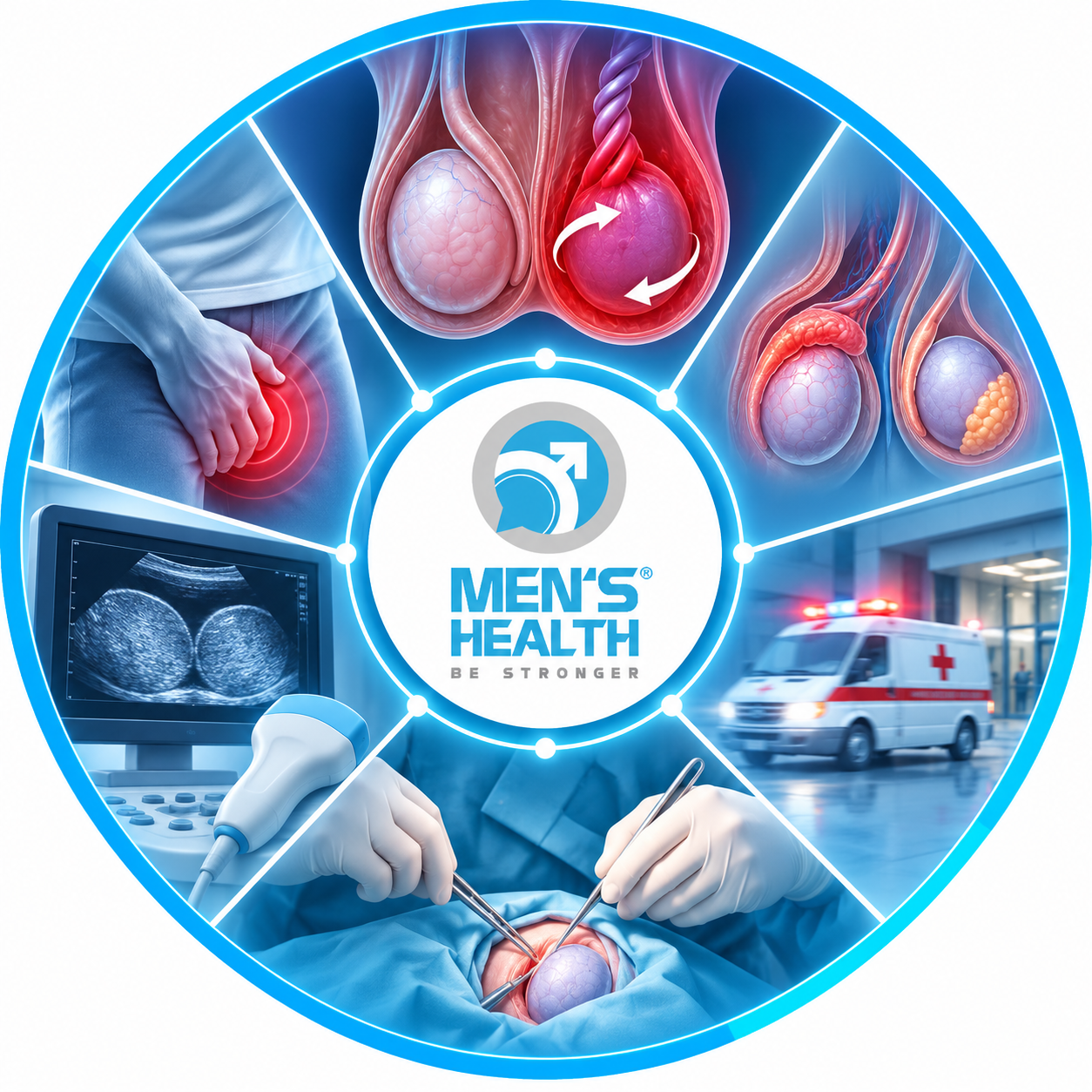


Cryptorchidism (undescended testis) and testicular maldescent anomalies represent the most frequent congenital malformations of the male genitourinary tract. Occurring in up to 3% to 5% of full-term male infants and up to 30% of premature neonates, these conditions involve an interruption or deviation in the complex, hormone-driven anatomical migration of the testis from the retroperitoneum to the scrotum. Early clinical detection and timely intervention are essential to preserve spermatogenesis, prevent endocrine dysfunction, mitigate the risk of testicular malignancy, and avoid acute surgical complications like testicular torsion.
1. Clinical Overview and Embryological Pathophysiology
Understanding Cryptorchidism and Maldescent
Cryptorchidism is defined as the failure of one or both testes to descend completely into the anatomical base of the scrotum. Testicular maldescent encompasses a broader spectrum of developmental anomalies, including ectopic testes, ascending testes, and hyperactive retractile testes.
Embryological Mechanics of Testicular Migration
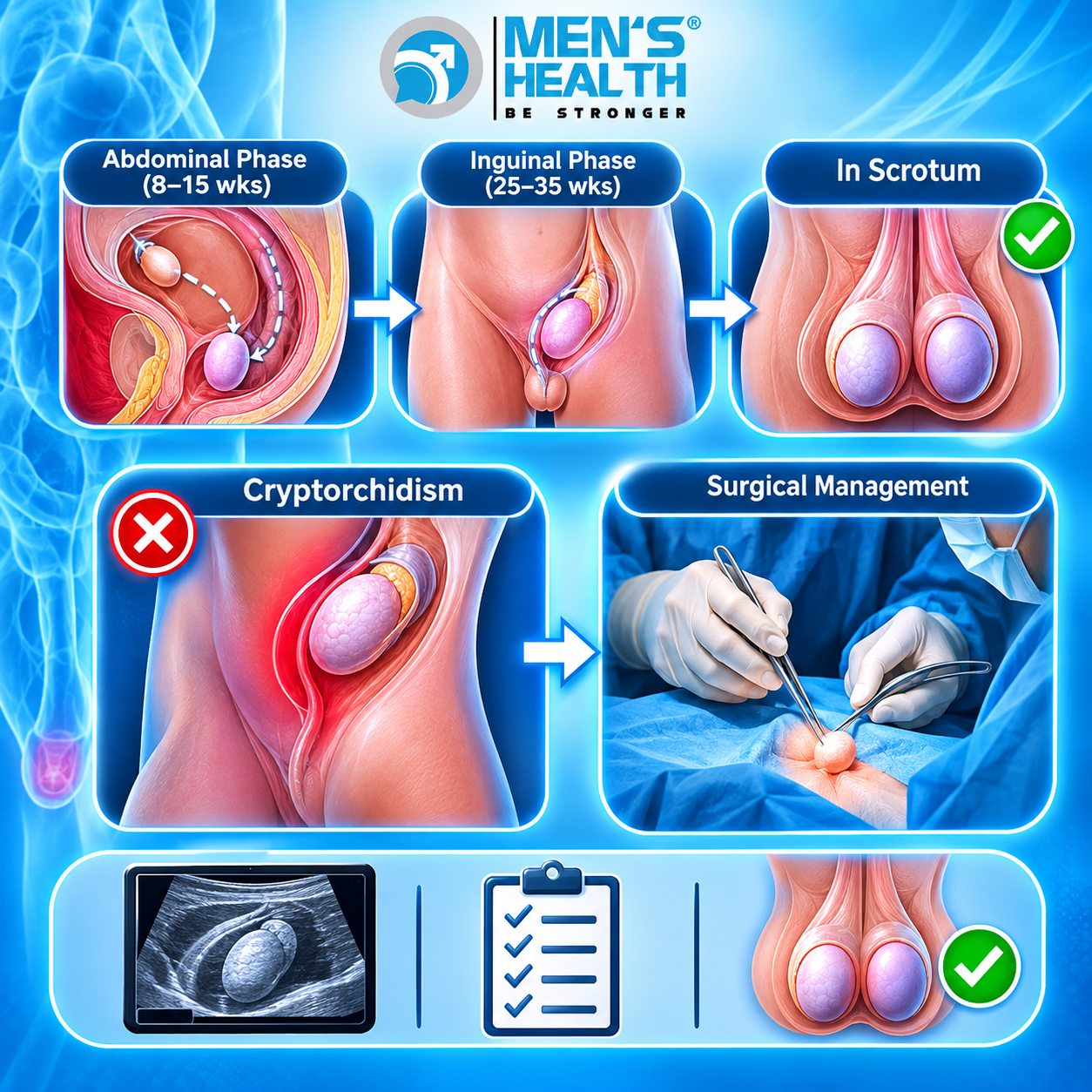
Normal testicular descent proceeds via a regulated two-stage process during fetal development:
- Trans-abdominal Phase (8th to 15th gestational week): Mediated primarily by Insulin-Like Peptide 3 (INSL3) secreted by fetal Leydig cells. INSL3 induces swelling and thickening of the gubernaculum (the caudal genital ligament), anchoring the testis near the internal inguinal ring while the fetal abdomen expands.
- Trans-inguinal Phase (25th to 35th gestational week): Driven by androgen signaling (testosterone converted to dihydrotestosterone) and neuromuscular mediation via calcitonin gene-related peptide (CGRP) released from the genitofemoral nerve. The gubernaculum shortens and guides the testis through the inguinal canal into the hemiscrotum.
Interruption of these pathways causes the testis to halt along its natural migration trajectory (true cryptorchidism) or deviate into an abnormal anatomical compartment (ectopic testis).
2. Classification Spectrum of Testicular Positioning Anomalies
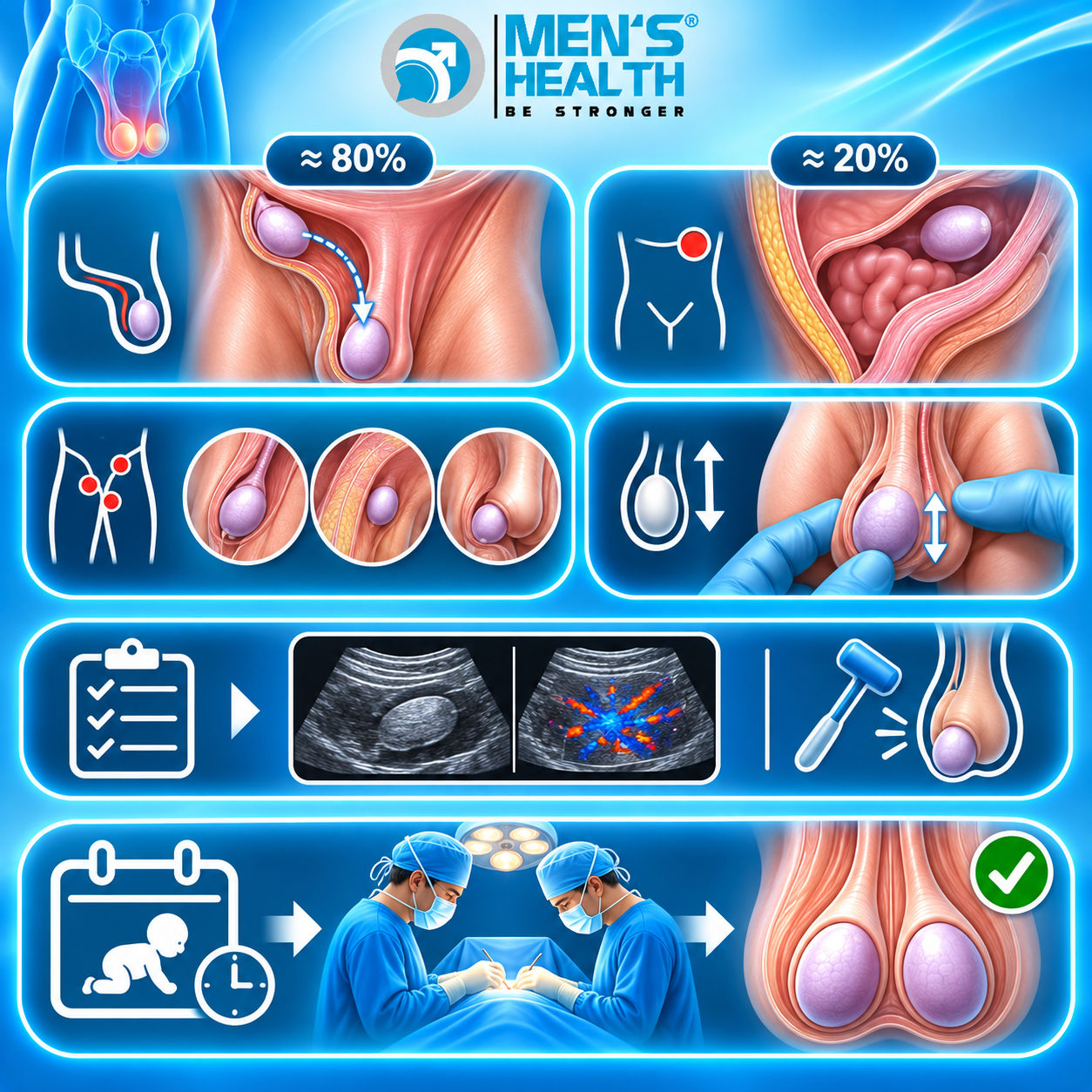
1. True Undescended Testis (Cryptorchidism)
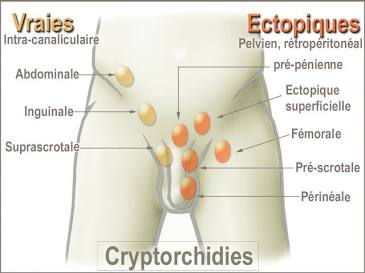
The testis is arrested at a point along its normal path of descent. It may reside in the retroperitoneum (intra-abdominal), within the inguinal canal (intra-canalicular), or just outside the external inguinal ring (suprascrotal).
2. Ectopic Testis
The testis descends through the inguinal canal but strays from the normal path after exiting the external ring. Common ectopic locations include:
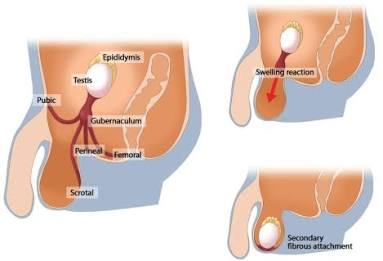
- Superficial Inguinal Pouch (Pouch of Denis-Browne): The most common ectopic site ( >75%).
- Perineal Ectopia: Located between the scrotum and anus.
- Femoral / Scarpa’s Triangle: Positioned in the upper thigh.
- Pubopenile / Suprapubic Ectopia: Resting at the base of the penis.
3. Retractile Testis
A hyperactive cremasteric reflex pulls the testis out of the scrotum into the superficial inguinal area. During examination in a warm environment, retractile testes can be manually brought into the lower scrotum without tension and will remain there temporarily after release. Retractile testes represent a physiological variation, though up to 20% may undergo secondary ascending (“acquired cryptorchidism”) due to persistent fibrous remnants.
4. Non-Palpable Testis (Intra-Abdominal or Vanishing Testis)
In approximately 20% of cryptorchid cases, the testis cannot be felt on clinical palpation. This signifies an intra-abdominal location, profound hypoplasia, or a “vanishing testis” – where intrauterine vascular accident (prenatal testicular torsion) led to ischemic necrosis and complete tissue atrophy.
3. Etiology and Risk Factor Profile
Cryptorchidism stems from a combination of genetic, maternal, environmental, and anatomical factors:
Maternal and Perinatal Risk Factors
- Prematurity and Low Birth Weight: Birth before 37 weeks or weight under 2.5 kg is the strongest risk factor. Trans-inguinal testicular descent occurs late in the third trimester; premature infants have incomplete hormonal exposure.
- Maternal Smoking and Alcohol Consumption: Exogenous nicotine and alcohol exposure disrupt fetal Leydig cell steroidogenesis.
- Endocrine-Disrupting Chemicals (EDCs): Maternal exposure to phthalates, pesticides, or organochlorines interferes with androgen synthesis and INSL3 production.
- Gestational Diabetes and Maternal Obesity: Associated with disturbed maternal-fetal hormone regulation.
Genetic and Syndromic Etiologies
Cryptorchidism occurs in several chromosomal and congenital malformation syndromes:
- Prader-Willi Syndrome, Kallmann Syndrome: Hypogonadotropic hypogonadism impairs androgenic stimulation.
- Klinefelter Syndrome (47,XXY): Primary gonadal dysgenesis.
- Persistent Müllerian Duct Syndrome (PMDS): Mutations in Anti-Müllerian Hormone (AMH) or its receptor prevent regression of female internal structures, physically trapping the testes.
- Prune Belly Syndrome (Triad Syndrome): Abdominal wall muscle deficiency, urinary tract dilation, and bilateral intra-abdominal cryptorchidism.
4. Clinical Features and Diagnostic Evaluation
Physical Examination Protocol
Clinical diagnosis relies primarily on physical examination performed in a warm environment to minimize cremasteric contraction.
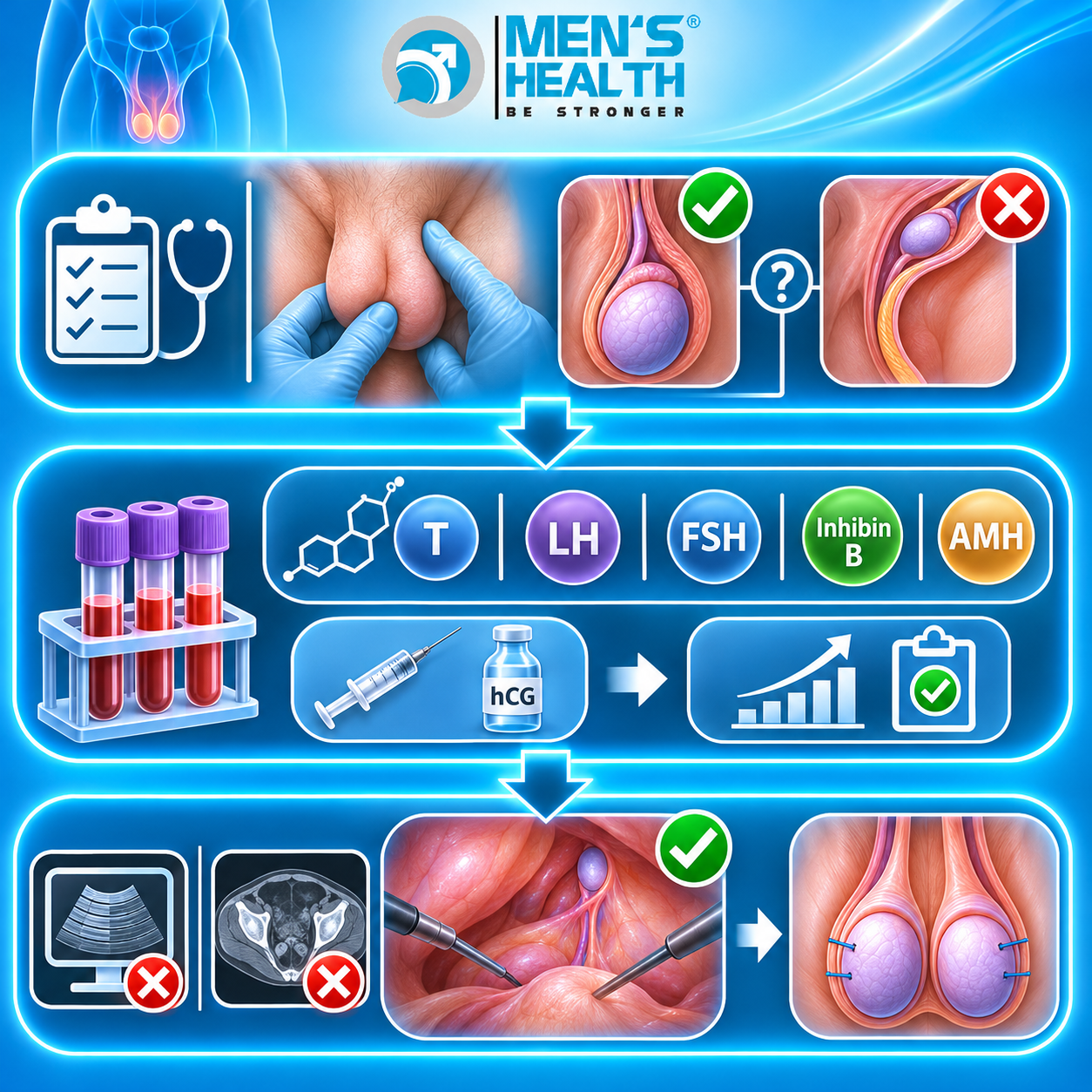
- Scrotal Inspection: Asymmetry, flattened hemiscrotum, or rugal fold loss indicates an empty scrotal sac.
- Bimanual Inguinal-Scrotal Palpation: The clinician sweeps fingers along the inguinal canal from the anterior superior iliac spine down toward the pubis. If a testis is felt, gentle traction is applied to guide it into the scrotum.
- If it moves into the scrotum without resistance and remains after release: Retractile Testis.
- If it resists movement, snaps back immediately upon release, or causes discomfort: True Cryptorchidism.
Laboratory and Endocrine Diagnostics
Laboratory testing is indicated primarily for bilateral non-palpable testes to rule out Disorders of Sex Development (DSD) or congenital anorchia:
- Serum AMH and Inhibin B: Secreted by Sertoli cells; measurable levels confirm the presence of viable testicular tissue.
- Basal LH, FSH, and Testosterone: High LH/FSH with undetectable testosterone suggests bilateral anorchia (vanishing testes).
- hCG Stimulation Test: Administering human chorionic gonadotropin measures Leydig cell capacity to produce testosterone. A failure of testosterone to rise confirms anorchia.
- Karyotype Analysis: Mandatory in bilateral non-palpable testes or when accompanied by hypospadias to rule out 46,XX congenital adrenal hyperplasia or DSD.
Imaging vs. Diagnostic Laparoscopy
Standard imaging modalities (ultrasound, CT, MRI) have limited sensitivity ( <45%) for non-palpable testes and should not be used routinely to guide surgical decisions. Diagnostic laparoscopy is the gold standard for non-palpable testes, providing 99% diagnostic accuracy and allowing immediate therapeutic intervention.
5. Differential Diagnostic Matrix
| Clinical Variant | Scrotal Appearance | Palpation Findings | Response to Manual Traction | Recommended Management |
| True Cryptorchidism | Hypoplastic hemiscrotum, minimal rugae | Testis felt in canal or suprascrotal area | Cannot reach base or snaps back immediately | Surgical Orchiopexy (at 6–18 months of age) |
| Retractile Testis | Normal scrotal development | Testis felt in high scrotum / suprascrotal | Moves easily to scrotal base, remains after release | Annual observation until puberty |
| Ectopic Testis | Empty hemiscrotum | Testis felt in pouch of Denis-Browne, femoral, perineal area | Fixed in abnormal pocket, cannot be guided to scrotum | Surgical Ectopic Orchiopexy |
| Intra-Abdominal Testis | Hypoplastic hemiscrotum | Non-palpable on physical exam | Unexaminable via physical traction | Diagnostic Laparoscopy & Staged Fowler-Stephens Orchiopexy |
| Bilateral Anorchia | Bilateral severe scrotal hypoplasia | Non-palpable bilaterally | Unexaminable; undetectable AMH/Inhibin B | Hormone Replacement Therapy (at puberty), Prostheses |
6. Long-Term Complications of Untreated Cryptorchidism
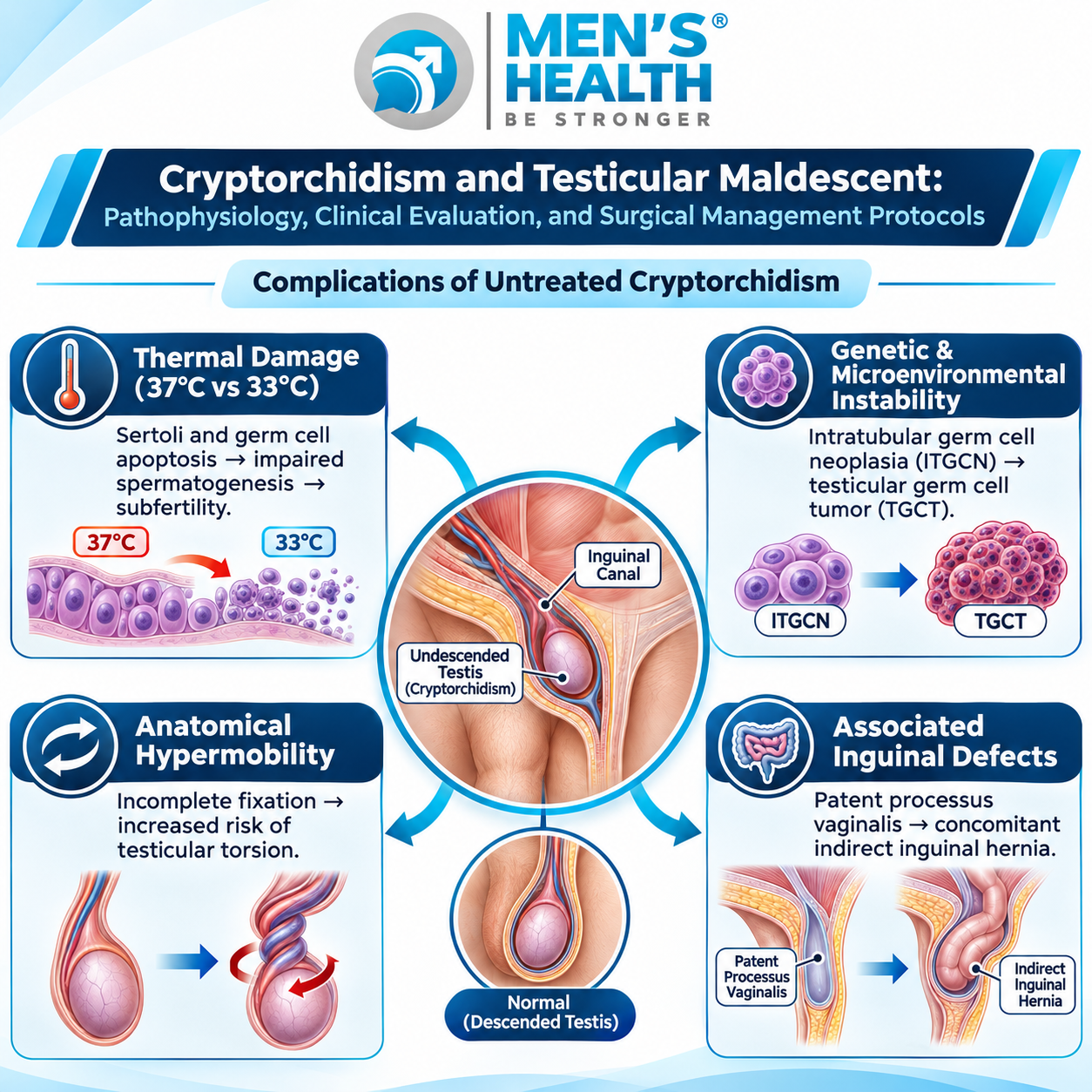
Failure to bring the testis into the cooler scrotal environment (33oC – 34.5oC, compared to core body temperature of 37oC) leads to progressive cellular degradation.
1. Infertility and Impaired Spermatogenesis
The higher temperature of the inguinal canal or abdomen causes progressive degeneration of Sertoli cells and loss of primary spermatogonia starting as early as 6 to 12 months of age. Men with untreated unilateral cryptorchidism experience subfertility rates of 30% – 40%, while untreated bilateral cryptorchidism results in azoospermia or severe oligospermia in up to 89% of cases.
2. Testicular Malignancy (Testicular Germ Cell Tumors – TGCT)
Men with a history of cryptorchidism face a 4 to 10 times higher risk of developing testicular cancer, most commonly seminoma. The risk is highest for intra-abdominal testes. Performing surgical orchiopexy before 12 to 18 months significantly reduces (though does not eliminate) this risk and places the testis in a palpable position for self-examination and surveillance.
3. Testicular Torsion
An undescended testis exhibits abnormal mobility along the spermatic cord, increasing the risk of acute testicular torsion, severe ischemia, and necrosis.
4. Concomitant Inguinal Hernia
Over 90% of cryptorchid testes are accompanied by a patent processus vaginalis, creating a persistent connection between the peritoneal cavity and the inguinal canal that predisposes to indirect inguinal hernia formation.
7. Surgical and Pharmacological Management Protocols
Modern guidelines from the European Association of Urology (EAU) and the American Urological Association (AUA) emphasize early surgical correction, ideally completed between 6 and 18 months of age.
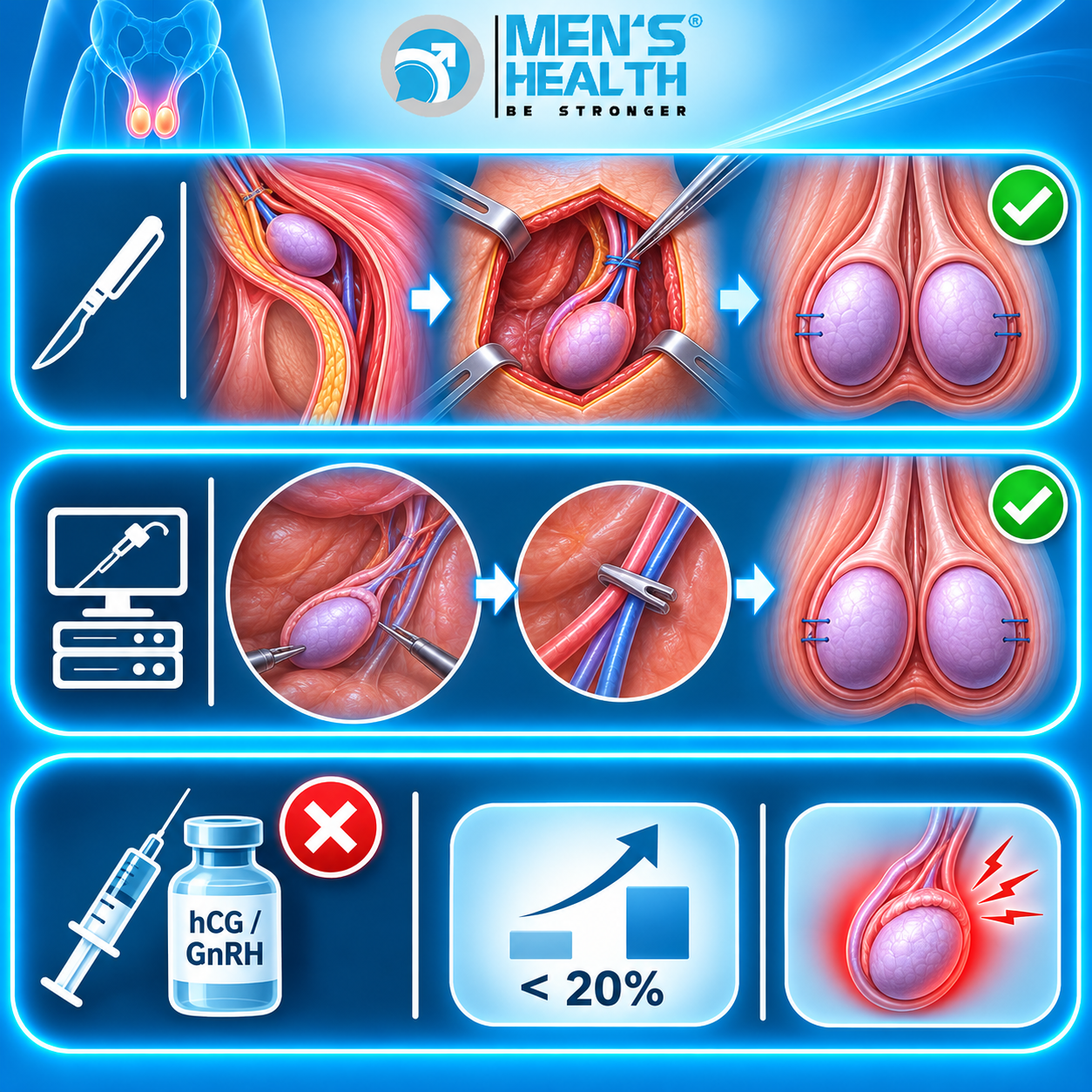
1. Open Inguinal Orchiopexy (Palpable Testis)
- Technique: Performed via an inguinal incision. The surgeon mobilizes the spermatic cord, releases cremasteric fibers, dissects retroperitoneal attachments to gain adequate length, ligates the patent processus vaginalis, and secures the testis within a subdartos pouch in the scrotal wall.
- Success Rate: >95% anatomical success with low complication rates.
2. Laparoscopic Orchiopexy (Non-Palpable Testis)
- Diagnostic Phase: Laparoscopy inspects the internal inguinal rings. If testicular vessels and vas deferens enter the ring, a small inguinal incision is made. If vessels terminate blindly (“blind-ending vessels”), a vanishing testis is confirmed.
- Therapeutic Phase (Fowler-Stephens Orchiopexy): For high intra-abdominal testes that cannot reach the scrotum, the Fowler-Stephens procedure divides the main testicular vessels, allowing the testis to survive on collateral blood supply from the deferential artery (artery to the vas deferens) and cremasteric vessels. This can be performed in a single stage or staged across 6 months.
3. Limited Role of Pharmacotherapy / Hormonal Therapy
Hormonal therapy using hCG (human chorionic gonadotropin) or GnRH (gonadotropin-releasing hormone) analogs was historically used to stimulate endogenous testosterone production and induce descent. Modern clinical guidelines do not recommend routine primary hormone therapy due to low long-term efficacy (<15\%-20%), high recurrence rates, and potential adverse effects on testicular germ cells (inducing premature apoptosis).
8. Pharmacological Management in Post-Operative Recovery
Pharmacotherapy plays an important supportive role in post-operative orchiopexy care:
Post-Operative Pain and Inflammation Management
- Analgesics: Acetaminophen (Paracetamol) combined with NSAIDs (e.g., Ibuprofen) provides effective multimodal analgesia for pediatric patients post-orchiopexy.
- Local Anesthetic Blocks: Intra-operative ilioinguinal/iliohypogastric nerve blocks or caudal blocks reduce post-operative systemic opioid requirements.
- Prophylactic Antibiotics: Short-course prophylactic antimicrobials may be administered in complex or re-do cases to prevent surgical site infections.
9. Comprehensive Care at Men’s Health Center and Men’s Health Pharmacy
Navigating congenital urological anomalies, surgical planning, and long-term reproductive follow-up requires specialized medical and pharmaceutical care.
Men’s Health Andrology Pharmacy, an integral unit within the Men’s Health Center ecosystem founded by TS.BS.CK2 Trà Anh Duy (Dr. Tra Anh Duy, MD, PhD, Spec. II), provides dedicated clinical pharmacy support for male reproductive and urological health. At Men’s Health, patients and families receive personalized consultations from experienced urologists and clinical pharmacists who provide clear guidance on post-operative recovery, medication compliance, and long-term reproductive tracking. The facility maintains strict clinical safety, privacy, absolute confidentiality, and evidence-based practice across all stages of care. Prescription medications and post-operative regimens are dispensed strictly under physician supervision, emphasizing the essential collaborative role between physicians and clinical pharmacists in ensuring optimal patient safety and therapeutic outcomes.

10. Common Diagnostic and Clinical Pitfalls
- Confusing Retractile Testes with True Cryptorchidism: Subjecting boys with normal retractile testes to unnecessary surgical operations, or failing to schedule annual follow-ups to monitor for acquired cryptorchidism.
- Relying on Routine Scrotal Ultrasound: Ordering routine ultrasound for non-palpable testes, which cannot reliably identify intra-abdominal tissue and delays definitive diagnostic laparoscopy.
- Delaying Referral Beyond 6 to 12 Months of Age: Waiting for spontaneous descent beyond 6 months of age, exposing germ cells to thermal damage and increasing infertility and malignancy risks.
- Over-relying on Hormonal Therapy: Attempting repeated courses of hCG or GnRH injections instead of scheduling definitive surgical orchiopexy.
Cryptorchidism and Testicular Maldescent: Frequently Asked Questions
What is the ideal age for surgical correction (orchiopexy) of an undescended testis?
International urological guidelines recommend performing orchiopexy between 6 and 18 months of age. Operating within this window minimizes progressive heat-induced germ cell damage and improves long-term fertility outcomes.
Can an undescended testis descend on its own after birth?
Spontaneous descent frequently occurs during the first 3 to 6 months of life in response to a temporary postnatal surge in gonadotropins and testosterone (“mini-puberty”). However, spontaneous descent is rare after 6 months of age.
Is an undescended testis the same as a retractile testis?
No. A retractile testis can be manually brought into the lower scrotum during physical examination and will remain there without tension after release. True cryptorchidism involves a testis that cannot be brought into the scrotal base or immediately snaps back into the groin upon release.
Does cryptorchidism cause permanent infertility?
Untreated cryptorchidism – especially bilateral cases – significantly increases the risk of impaired spermatogenesis and infertility. However, early surgical orchiopexy before 12 to 18 months helps preserve germ cells and improves future fertility potential.
Why does an undescended testis increase the risk of testicular cancer?
The higher temperature of the groin or abdominal cavity disruptions germ cell maturation, predisposing cells to intratubular germ cell neoplasia (ITGCN). Surgical orchiopexy facilitates clinical surveillance and self-examination, allowing early detection if a mass develops.
Conclusion and Expert Medical Advice
Cryptorchidism and testicular maldescent are common congenital conditions that require early recognition, accurate classification, and timely surgical intervention. Differentiating true undescended testes from retractile variants ensures that patients receive appropriate monitoring or surgical correction within the recommended 6- to 18-month window, protecting future fertility and lowering long-term malignancy risks.
Parents who observe an empty scrotal sac or asymmetrical scrotum in an infant should avoid delay or unverified treatments. Seeking clinical evaluation at a specialized center such as the Men’s Health Center ensures accurate diagnostic assessment, expert surgical guidance, and professional pharmaceutical support within a safe, professional, and supportive environment.