
Direct Answer: Initial changes in secondary sex characteristics from hormone therapy typically begin to appear within 1 to 3 months. However, achieving complete and maximal development generally requires 2 to 5 years of continuous, consistent therapy. This timeline depends significantly on the specific treatment protocol, individual genetic makeup, and age. Attempting to accelerate the process by arbitrarily increasing the dosage will not speed up physical changes and poses life-threatening medical risks. A safe, effective, and personalized regimen requires thorough evaluation, strict medical supervision, and proper prescriptions from endocrinologists or male health specialists.

What is Hormone Therapy and What Are Its Goals?
Definition of Hormone Therapy
Hormone therapy (or endocrine therapy) is a medical treatment using synthetic hormones to regulate hormone levels in the body. It is widely used in medicine to treat conditions related to hormone deficiency (such as male hypogonadism or male menopause/andropause), or most commonly as Gender-Affirming Hormone Therapy (GAHT) for transgender and gender-diverse individuals.
Goals of Hormone Usage
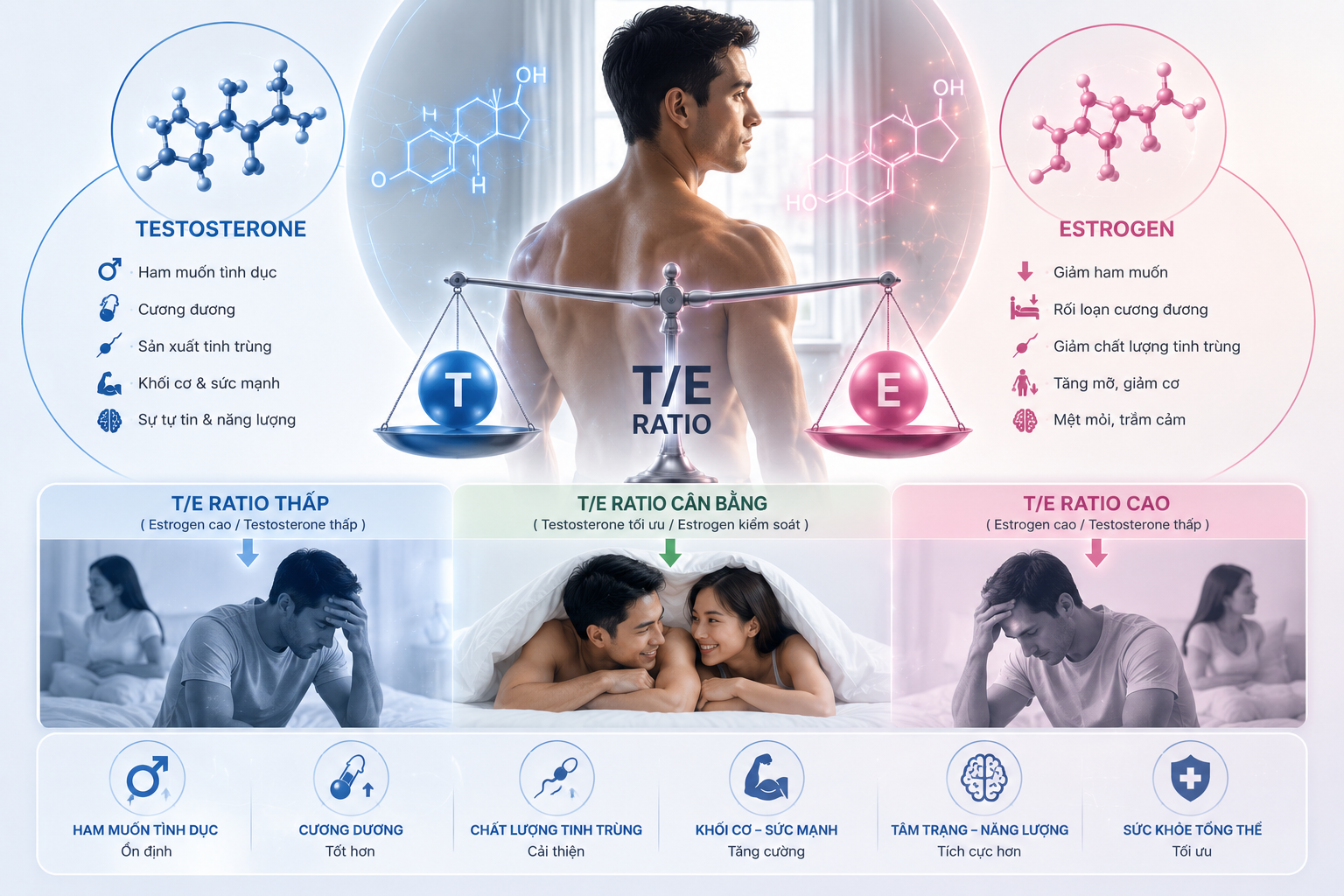
The core objective of hormone therapy is to suppress the secondary sex characteristics of the assigned sex at birth while stimulating the development of desired secondary sex characteristics.
- For hypogonadal men: The goal is to restore blood testosterone to physiological levels to maintain vitality, muscle mass, and sexual function.
- For transgender individuals: Treatment synchronizes physical appearance with gender identity, improving psychological well-being, alleviating gender dysphoria, and enhancing overall quality of life.
How Long Does It Take to See Changes in Secondary Sex Characteristics?
Changes in secondary sex characteristics do not happen overnight; it is a long-term journey. The body requires time to remodel under the influence of new sex hormones. Based on current clinical guidelines, the timeline for physical changes is categorized into two main protocols:
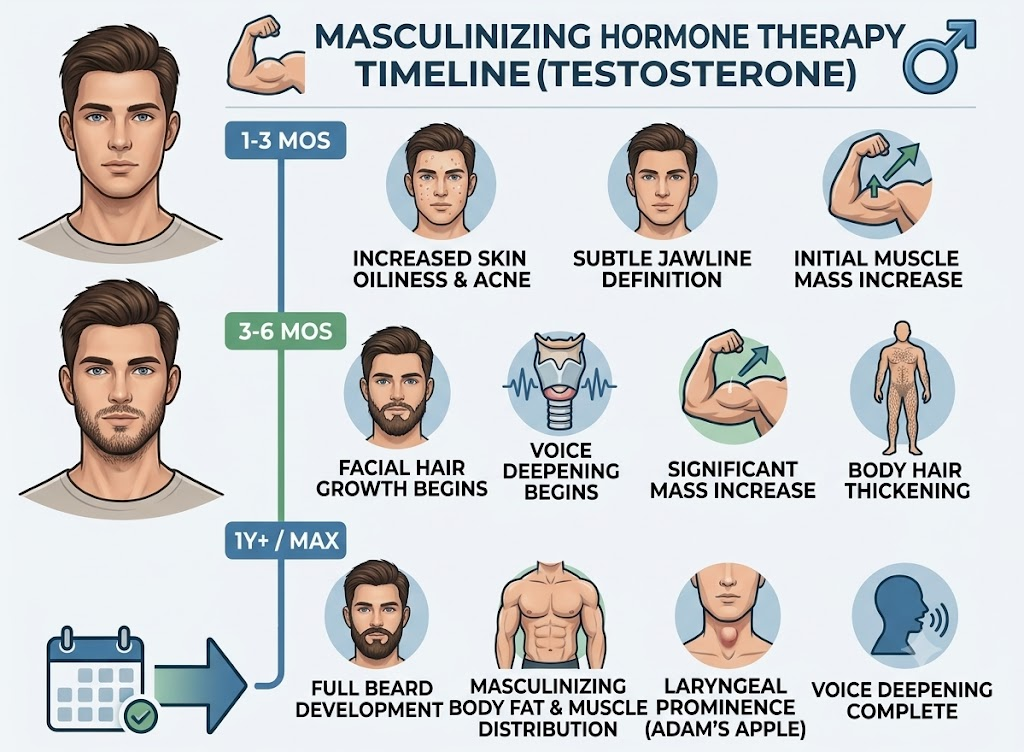
Timeline for Masculinizing Hormone Therapy (Testosterone)
This therapy is prescribed to develop male physical characteristics. Average expected milestones include:
- 1 to 3 Months: Initial subtle changes occur. Skin becomes oilier, and acne may develop. Clitoral enlargement begins, and libido typically increases. Menstruation starts to decrease or ceases (usually taking 2–6 months to stop completely).
- 3 to 6 Months: The voice begins to deepen as vocal cords thicken. Facial and body hair grows thicker and darker. Muscle mass increases, while body fat redistributes—decreasing around the hips/thighs and accumulating more around the abdomen.
- 1 to 2 Years up to Maximum (2–5 Years): Voice deepening reaches completion (irreversible). Facial and body hair reaches maximum potential based on genetics. Muscle structure and fat distribution fully take on masculine characteristics. Prominence of the thyroid cartilage (Adam’s apple) may become noticeable in some individuals.
Timeline for Feminizing Hormone Therapy (Estrogen & Anti-Androgens)
This therapy aims to suppress masculine characteristics and develop feminine characteristics.
- 1 to 3 Months: Decreased libido and changes in erectile function are experienced. Testicular volume begins to slightly decrease.
- 3 to 6 Months: Body fat redistributes toward the hips, buttocks, and thighs, while muscle mass gradually decreases. Skin becomes softer and less oily, and body hair growth slows down and becomes finer. Breast tissue development begins (often accompanied by mild nipple tenderness).
- 1 to 2 Years up to Maximum (2–5 Years): Breast tissue reaches maximum growth (final size depends heavily on genetic factors). Testicles reach maximum atrophy. Facial and body hair reduces significantly but rarely disappears completely (may require laser hair removal). Voice pitch does not change under the influence of estrogen, requiring voice therapy or vocal surgery.
Factors Influencing the Rate of Physical Changes
The rate and extent of changes vary among individuals. Key deciding factors include:
- Genetics: The ability to grow facial hair, final breast size, or male-pattern baldness are predetermined by an individual’s genetic code. Hormones merely act as the key to “unlock” these traits.
- Age at Initiation: Individuals who start therapy earlier (before or during puberty) often experience more pronounced changes and favorable skeletal alignment compared to those who start after epiphyseal closure (after age 25).
- Hormone Receptor Sensitivity: Receptor responsiveness varies per person. Taking higher doses does not translate to faster changes; hormone receptors can only absorb a specific amount, and excess hormones are converted into potentially harmful compounds.
Safe Usage Guidelines for Hormone Therapy Medications
Hormone therapy relies on specialized prescription medications. Understanding these medications protects users from dangerous complications.
Medication Classes and Treatment Goals
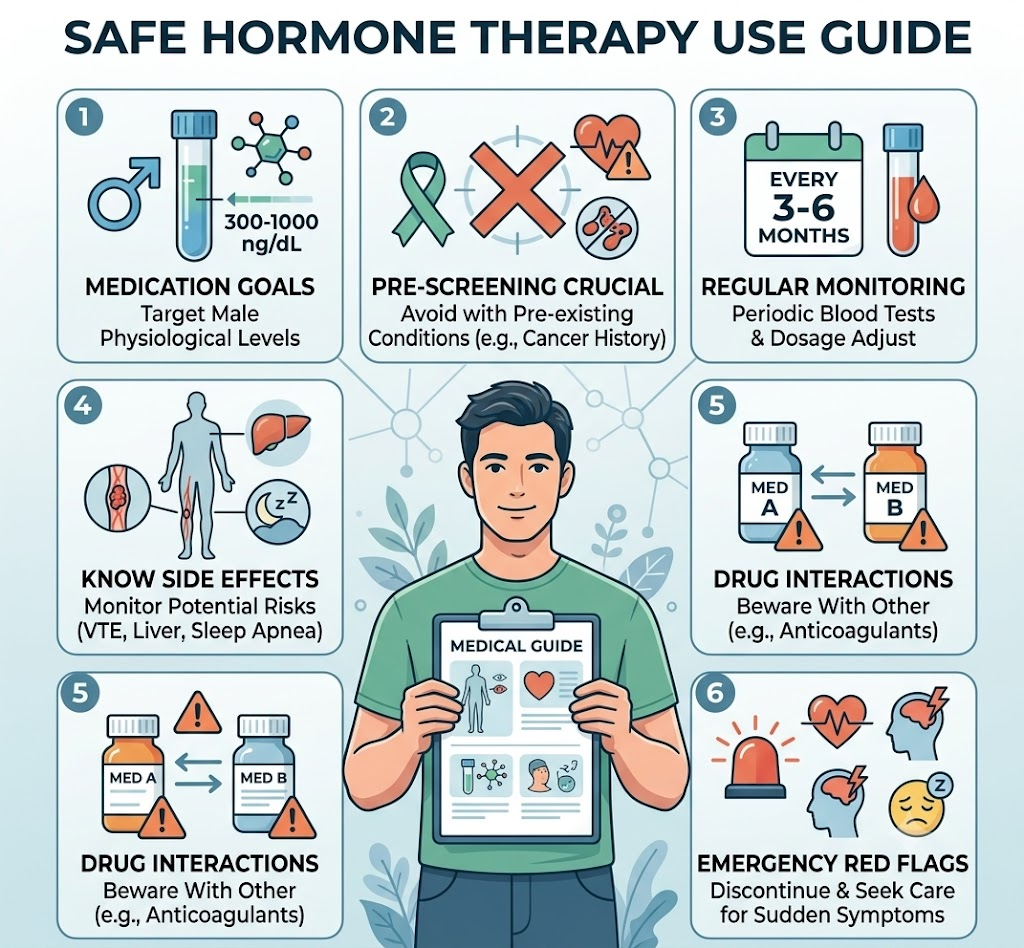
- Testosterone (Injectable, Transdermal Gel, or Oral): Strictly controlled prescription medications. The goal is to bring serum testosterone to healthy male physiological levels (typically 300–1000 ng/dL) to promote masculinization.
- Estrogen (Oral, Injectable, or Transdermal Patch): Prescribed to achieve serum estradiol levels within the female physiological range (typically 100–200 pg/mL) to foster feminization.
- Anti-Androgens (e.g., Spironolactone, Cyproterone Acetate): Used alongside Estrogen to block testosterone receptors or suppress testicular testosterone production.
Potential Side Effects
- Testosterone Therapy: May cause erythrocytosis (thickening of the blood, increasing thrombosis risk), elevated liver enzymes, severe acne, obstructive sleep apnea, and male-pattern hair loss.
- Estrogen & Anti-Androgen Therapy: Increased risk of venous thromboembolism (blood clots), gallstones, weight gain, and elevated liver enzymes. Spironolactone can cause dangerous hyperkalemia (high blood potassium) if dietary intake is unmonitored.
Contraindications and Cautions
- Absolute Contraindications (Requires Pre-Screening): Individuals with a history of breast cancer, prostate cancer, severe cardiovascular disease, myocardial infarction, stroke, or congenital blood clotting disorders.
- Use with Caution: Patients with hepatic impairment, renal failure, obesity, hypertension, or diabetes mellitus require periodic blood test monitoring every 3 to 6 months.
Important Drug Interactions
Hormones can interact with medications used for underlying health conditions. Examples include anticoagulants, antihypertensives, or medications for erectile dysfunction and premature ejaculation. Unmonitored concurrent use can alter drug blood concentrations, leading to internal bleeding or uncontrolled blood pressure.
When to Discontinue Medication and Seek Immediate Medical Care
Emergency medical care must be sought immediately and hormone therapy paused if any of the following occur:
- Severe chest pain, shortness of breath, or coughing up blood (signs of pulmonary embolism).
- Unilateral swelling, warmth, redness, or pain in a calf (signs of deep vein thrombosis).
- Severe sudden headache, blurred vision, or weakness/paralysis on one side of the body (signs of a stroke).
- Jaundice (yellowing of skin/eyes) accompanied by extreme fatigue (signs of liver toxicity).
Dangerous Misconceptions When Self-Administering Hormones
- Copying Someone Else’s Regimen: Liver function, kidney health, and cardiovascular status differ per individual. A dose that is safe for one person may cause severe toxicity in another.
- Purchasing Black-Market or Unverified Products: Buying imported or unregulated products carries high risks of receiving counterfeit, low-quality, or toxic additive-containing drugs.
- Arbitrarily Increasing Doses to “Speed Up Results”: The human body has protective metabolic mechanisms. When testosterone levels become excessively high, the body automatically converts the surplus into estrogen via the aromatization process, counteracting masculinization. Similarly, excessive estrogen drastically spikes the risk of life-threatening blood clots.
Safe Care with the Men’s Health Center Ecosystem
Hormone therapy is not merely buying and consuming medication; it is a profound medical intervention that requires ongoing monitoring of blood biochemistry, liver/kidney function, and cardiovascular health.
Men’s Health Andrology Pharmacy is a specialized unit within the Men’s Health Center ecosystem, founded by Dr. Tra Anh Duy (MD, Specialist Level 2). Patients receive direct consultation and guidance from physicians and clinical pharmacists to select safe, personalized healthcare solutions, particularly regarding male endocrine therapies.
Self-medication or purchasing hormones based on word-of-mouth is strictly discouraged. For prescription medications, Men’s Health pharmacists dispense products only with valid prescriptions and clear diagnostic lab results provided by treating physicians. Close collaboration between clinical doctors and specialized pharmacists ensures precise regimen personalization while prioritizing professionalism, safety, discretion, confidentiality, and respect for individual needs throughout the consultation, treatment, and follow-up process.
Frequently Asked Questions (FAQs)
How long does it take for hormone therapy to change the voice?
Under masculinizing therapy (testosterone), the voice begins to deepen after approximately 3 to 6 months and reaches complete development in 1 to 2 years. Under feminizing therapy (estrogen), medication cannot alter a vocal cord structure that has already undergone male puberty; voice training therapy or vocal cord surgery is required.
Can increasing the hormone dose speed up secondary sex changes?
No. Raising hormone dosages beyond physiological levels does not accelerate physical changes. Instead, it overburdens the liver, increases the risk of blood clots and stroke, and may trigger aromatization (converting excess testosterone into estrogen).
Does hormone therapy alter bone structure?
If hormone therapy is initiated before puberty completes (before epiphyseal plate closure in bones), it can influence height, shoulder width, and hip width. If started in adulthood, therapy cannot alter existing bone structure; it can only modify muscle mass and fat distribution.
Are the effects of hormone therapy permanent?
Certain characteristics are irreversible (permanent), such as voice deepening, facial/body hair growth, and clitoral enlargement in masculinizing therapy, or breast glandular tissue development in feminizing therapy. Other traits, such as fat distribution, muscle mass, and menses suppression, are reversible if treatment is discontinued.
What should I do if I experience side effects while on hormone therapy?
For mild side effects like acne or mild mood swings, report them to your physician at your next scheduled follow-up for dosage adjustments. For severe symptoms like chest pain, shortness of breath, or leg swelling, stop taking the medication immediately and go to the nearest emergency room.
Medical Conclusion and Advice
Hormone therapy is a transformative medical intervention that adjusts secondary sex characteristics to align physical appearance with gender identity or treat endocrine deficiency disorders. However, it demands patience, typically taking 2 to 5 years to achieve complete and optimal physical transformation.
Clinical studies emphasize that safety relies entirely on adhering to physiological dosages and undergoing routine medical monitoring. Avoid self-diagnosis, sharing prescriptions, or purchasing unverified hormones. If you experience unusual symptoms or wish to begin hormone therapy, seek care at an accredited medical facility. The Men’s Health Center ecosystem provides specialized endocrine consultations, diagnostic testing, and professional pharmacy support to safely guide you through your health journey.