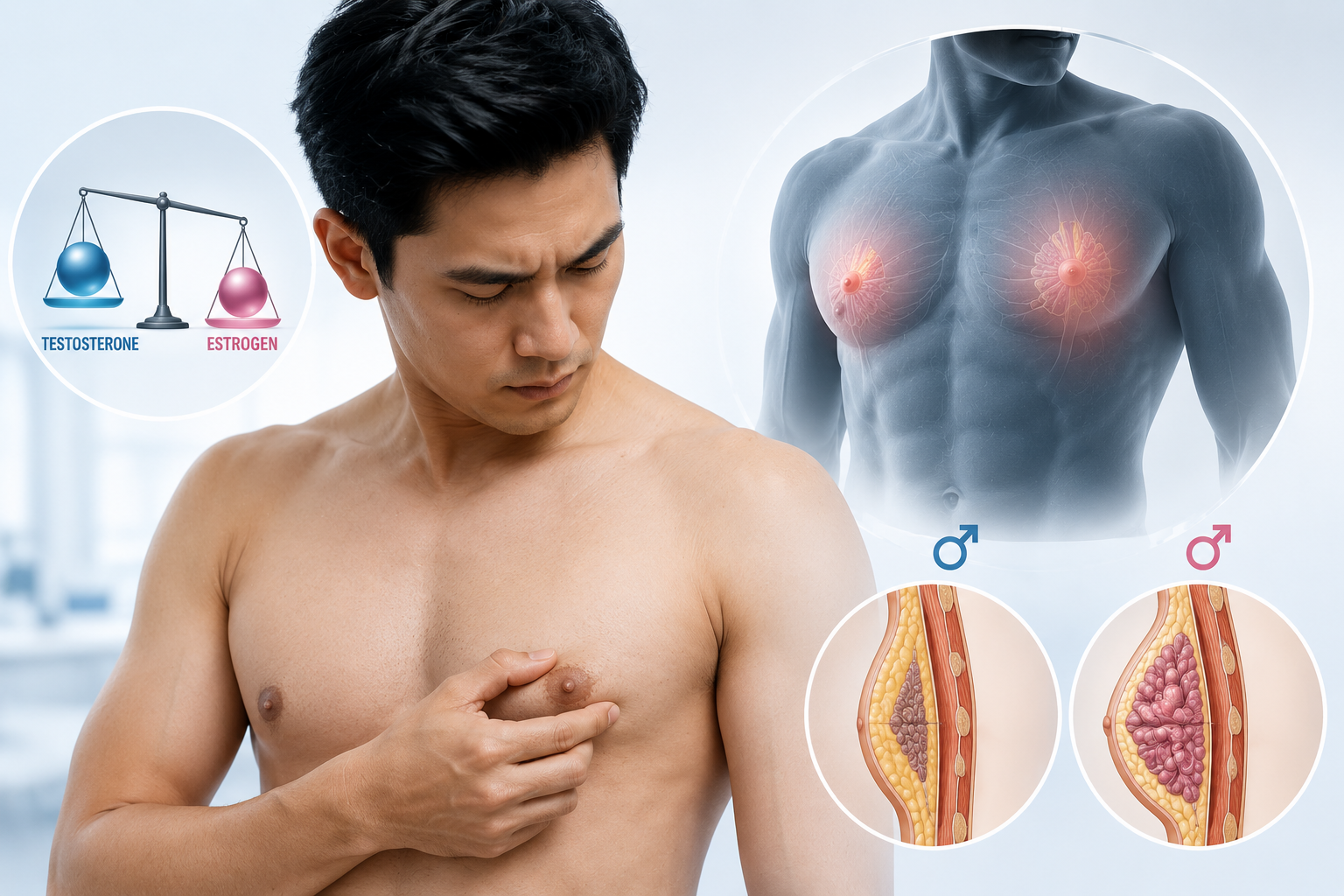

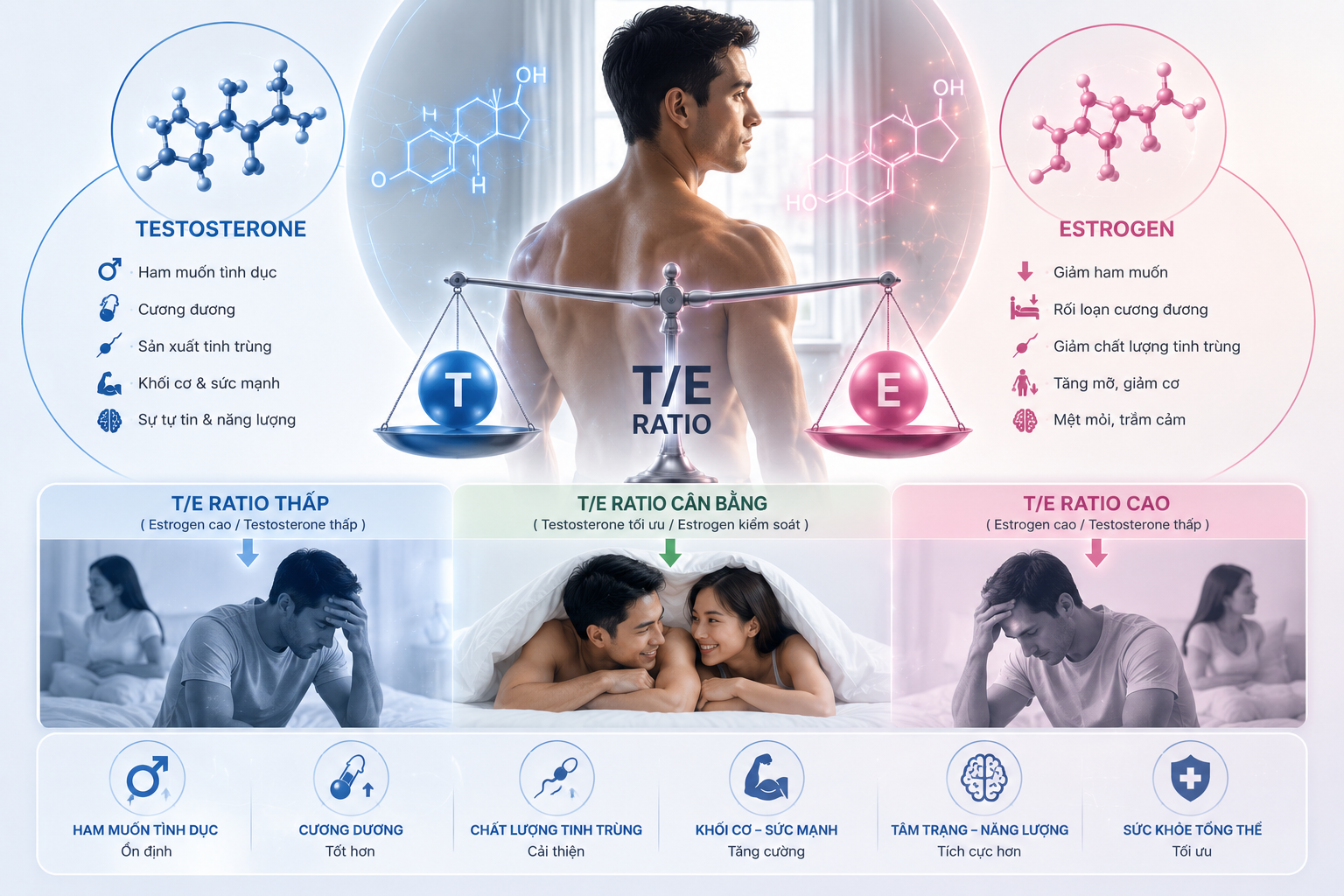
The Testosterone-to-Estrogen ratio (T/E ratio), commonly understood as the correlation between testosterone and estradiol (E2), partly reflects the balance between androgens and estrogens in men. Testosterone plays a vital role in libido, erectile function, muscle mass, and spermatogenesis, while physiological levels of estradiol are also essential for libido, sexual function, bone health, and endocrine axis regulation. Therefore, male physiology does not depend on testosterone being “as high as possible” or estrogen being “as low as possible,” but rather requires a balance tailored to each individual body.
What is the T/E Ratio?
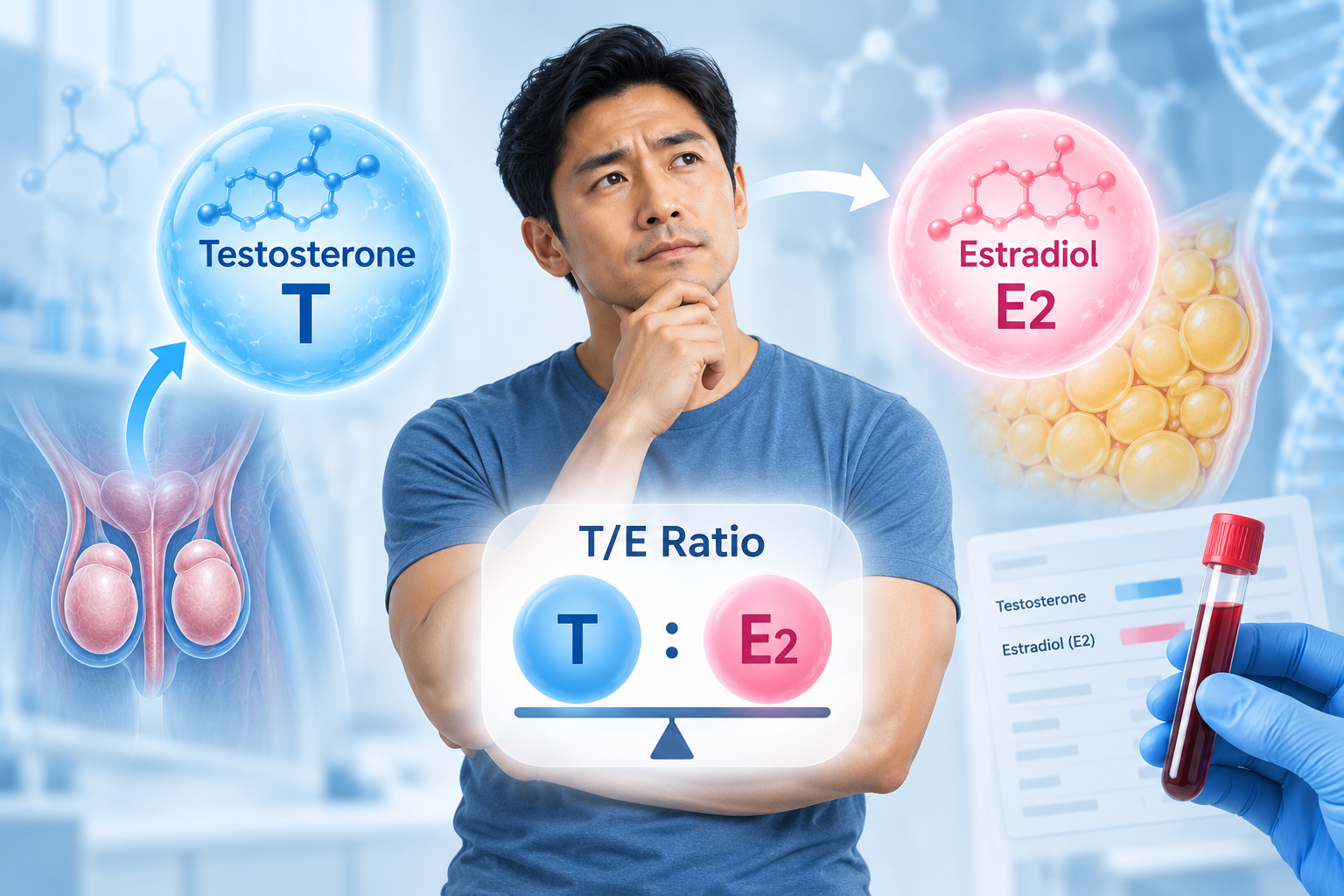
The T/E ratio is the ratio between testosterone and estradiol concentrations in the blood. This index is sometimes used in andrology, endocrinology, and particularly in certain studies on male infertility to evaluate the correlation between two critical sex hormones.
In men, testosterone is primarily produced in the Leydig cells of the testes. A portion of this testosterone is subsequently converted into estradiol by the aromatase enzyme within adipose tissue, the testes, the brain, and various other tissues. Consequently, testosterone and estrogen do not operate independently; they are closely intertwined.
A common formula used in some studies is:
$$\text{T/E2 ratio} = \frac{\text{Total Testosterone (ng/dL)}}{\text{Estradiol (pg/mL)}}$$
For example, if testosterone is 500 ng/dL and estradiol is 25 pg/mL, the T/E2 ratio according to this calculation is 20. However, this number is only meaningful when the laboratory units are explicitly known. If testosterone and estradiol are reported in different units, two figures cannot simply be divided directly and compared against thresholds found in literature. More importantly, modern medicine has not established a single “optimal” T/E ratio that applies universally to all men.
Both Testosterone and Estrogen Are Essential for Male Physiology
Male sexual function requires both androgens and a physiological amount of estrogen. The notion that estrogen is entirely “bad” for men is incorrect.
The Role of Testosterone
Testosterone participates in numerous functions, including:
- Maintaining sexual desire (libido).
- Supporting spontaneous erections and sexual function.
- Maintaining male secondary sexual characteristics.
- Supporting muscle mass and physical strength.
- Maintaining bone mineral density.
- Participating in the regulation of erythropoiesis (red blood cell production).
- Supporting psychological well-being and energy levels in individuals with testosterone deficiency.
- Playing a critical role in providing the endocrine environment necessary for spermatogenesis.
When testosterone is genuinely low, men may experience decreased libido, reduced spontaneous erections, lowered energy, and changes in body composition. However, these symptoms are non-specific. Erectile dysfunction or low libido does not automatically mean testosterone is low.
The Role of Estradiol in Men
Estradiol is frequently referred to as the “female hormone,” yet men require it as well. In males, estradiol plays a role in:
- Regulating sexual desire.
- Supporting components of erectile function.
- Maintaining bone mineral density.
- Regulating lipid metabolism.
- Regulating the hypothalamic-pituitary-testicular axis.
- Bone health and skeletal maturation.
- Numerous neurological and metabolic functions.
A classic interventional study on adult men demonstrated that when the conversion of testosterone to estradiol is blocked using an aromatase inhibitor, libido and erectile function can further decline even while testosterone is supplemented. This indicates that physiological levels of estradiol are not the “enemy” of male sexual physiology.
How Does the T/E Ratio Relate to Libido?
Libido does not depend solely on the T/E ratio; it is influenced by testosterone, estradiol, prolactin, psychological health, sleep quality, current medications, underlying medical conditions, and relationship dynamics.
Significantly low testosterone is commonly linked to reduced libido. Testosterone therapy in properly diagnosed hypogonadal men can improve libido in a proportion of patients. However, excessively low estradiol can also suppress libido. This is particularly noteworthy for men undergoing testosterone therapy who self-administer aromatase inhibitors in an attempt to drive estrogen down.
In such cases, laboratory tests may show:
- Relatively high testosterone.
- Extremely low estradiol.
- A sharply elevated T/E ratio.
Looking strictly at the ratio, some might assume this represents an “optimal” state. In reality, the patient may still suffer from low libido, difficulty achieving erections, or a diminished sense of well-being due to excessive estrogen suppression. Therefore, a higher T/E ratio does not equate to stronger sexual potency.

How Does the T/E Ratio Affect Erectile Function?
Both testosterone and estradiol can impact sexual function, but the T/E ratio is not a standard diagnostic test for erectile dysfunction (ED). Erection is a complex process simultaneously involving:
- The vascular system.
- Vascular endothelium.
- The nervous system.
- Testosterone.
- Psychological factors.
- Sleep quality.
- Metabolic diseases.
- Current medications.
- Relationship quality and sexual stimulation.
Cardiovascular disease, hypertension, diabetes, obesity, smoking, depression, or medication side effects typically play a much more significant role than a single T/E ratio. In individuals with true testosterone deficiency, restoring testosterone to a physiological level can support sexual function. However, for someone with normal testosterone whose ED stems from vascular disease, attempting to manipulate the T/E ratio will not necessarily resolve the issue.
Can Excessively Low Estrogen Impair Erections?
Yes. Human physiological studies show that estradiol has an independent, specific contribution to libido and erectile function. When the generation of estradiol from testosterone is strongly suppressed, sexual function can deteriorate. Thus, the objective of treatment is not to purge estrogen from the male body.
What Does a Low T/E Ratio Signify?
A low T/E ratio can occur when testosterone is low, estradiol is relatively high, or both conditions coexist. Associated situations include:
- Obesity.
- Male hypogonadism.
- Elevated aromatase activity.
- Certain testicular pathologies.
- Specific endocrine disorders.
- The use of certain medications.
- Certain chronic illnesses.
- Inappropriate use of hormones or anabolic steroids.
However, a low T/E ratio is not a standalone disease, nor can the root cause be identified by looking at the ratio alone. For instance, two individuals could both have a T/E ratio of 8 under completely different circumstances: the first might have significantly reduced testosterone with normal estradiol, while the second has normal testosterone alongside elevated estradiol. The diagnostic approach and treatment strategy for these two scenarios differ entirely.
Is a Low T/E Ratio Linked to Obesity?
There is a notable physiological link between obesity, testosterone, and aromatase. Aromatase is the enzyme that converts androgens into estrogens and is present in adipose tissue. When fat mass increases, peripheral aromatase activity can rise, contributing to an accelerated conversion of androgens into estradiol.
Simultaneously, obesity is linked to reduced testosterone via multiple mechanisms, including alterations in SHBG and regulation of the hypothalamic-pituitary-testicular axis. Consequently, some obese men may experience:
$$\text{Decreased Testosterone} \rightarrow \text{Relatively Increased Aromatization} \rightarrow \text{Estrogenic Impact Becomes Dominant} \rightarrow \text{Lower T/E Ratio}$$
However, this does not mean that obesity guarantees high estrogen. In many individuals, estradiol remains within the reference range while testosterone drops, shifting the inter-hormonal correlation. Recent endocrine guidelines emphasize that for overweight or obese men with low testosterone who lack clear pituitary, hypothalamic, or testicular disease, weight loss and addressing reversible causes are critical initial steps before considering testosterone therapy.
Can a Low T/E Ratio Cause Gynecomastia?
An estrogen-to-androgen impact ratio skewed toward estrogen can contribute to gynecomastia, but a T/E ratio cannot be used to diagnose gynecomastia. Gynecomastia is the genuine proliferation of male breast glandular tissue. The mechanism typically relates to estrogenic actions at the breast tissue becoming relatively stronger than androgenic actions. This can occur when:
- Estradiol increases.
- Testosterone decreases.
- Aromatization increases.
- Androgenic effects decrease.
- Certain medications alter hormonal balance.
However, current research has not proven that any specific T/E ratio threshold can accurately predict who will develop gynecomastia. Therefore, men with enlarged breasts should not simply test their T/E ratio and self-prescribe estrogen-lowering drugs.
What Is the Link Between the T/E Ratio and Male Fertility?
The T/E ratio is studied more extensively in the field of male infertility than in the diagnosis of erectile dysfunction. Estradiol participates in a negative feedback mechanism targeting the hypothalamus and pituitary gland. If the relative estrogenic impact is high, the endocrine signaling regulating LH and FSH can shift.
LH stimulates Leydig cells to produce testosterone, while FSH, alongside intratesticular testosterone, supports Sertoli cells and spermatogenesis. Some studies on infertile men note that a low T/E ratio is more frequently observed in certain cohorts with impaired spermatogenesis. Therefore, the T/E2 ratio is occasionally utilized as part of patient selection when considering aromatase inhibitors for male infertility treatment.
A threshold frequently cited in research literature is a T/E2 ratio < 10 (when testosterone is measured in ng/dL and estradiol in pg/mL). However, this figure must be interpreted correctly.
Is a T/E Ratio Below 10 Definitively Abnormal?
A T/E2 ratio < 10 should not be viewed as a universal diagnostic standard for all men. This threshold primarily originates from studies involving specific groups of infertile men and has been utilized to select patients in aromatase inhibitor trials. It does not serve as a universal benchmark to:
- Diagnose hypogonadism.
- Diagnose erectile dysfunction.
- Evaluate sexual “performance.”
- Decide who requires estrogen-lowering medication.
- Adjust testosterone in every patient.
Recent overviews on the T/E ratio emphasize that insufficient data exists to establish a unified optimal ratio for male health.
What T/E Ratio Is “Best” for Male Physiology?
Specialty guidelines currently recognize no single “best” T/E ratio for all men. Some research literature cites common T/E2 ranges or suggests ratios between 10 and 30 may correlate with favorable physiological outcomes (when testosterone is expressed in ng/dL and estradiol in pg/mL). However, this range should not be turned into a rigid “treatment target” for several reasons:
- Estradiol assays vary in accuracy, particularly at the low concentrations found in men.
- Testosterone fluctuates throughout the day.
- SHBG significantly influences the amount of bioidentical, active testosterone.
- Identical ratios can be produced by completely different absolute values of testosterone and estradiol.
- The correlation between the T/E ratio and libido, erections, bone health, and fertility is not uniform.
- Sufficient robust trials proving that forcing all men toward a specific T/E ratio improves sexual function do not exist.
Consequently, treating a laboratory number rather than treating the patient can lead to hormone misuse.
Is a Higher T/E Ratio Always Better?
No. An extremely high T/E ratio can occur when testosterone is high, but it can also result from estradiol being suppressed to overly low levels. In the latter scenario, patients may experience:
- Decreased libido.
- Discomfort or an altered sense of well-being.
- Impaired sexual function.
- Compromised bone health if estrogen suppression is prolonged.
Estrogen plays a particularly critical role in male bone mineral density. Therefore, self-administering prolonged courses of aromatase inhibitors solely to elevate the T/E ratio can yield consequences opposite to health goals. There is no clinical basis for attempting to drive estrogen close to zero.
Can the T/E Ratio Diagnose Low Testosterone?
No. Current specialty guidelines diagnose male hypogonadism based on two primary components:
- Symptoms or clinical signs consistent with testosterone deficiency.
- Unambiguously low testosterone confirmed consistently via appropriate laboratory testing.
Typically, morning total testosterone levels require re-verification. In select cases, physicians may evaluate free testosterone, SHBG, LH, FSH, and other tests to uncover the root cause. The T/E ratio does not replace these steps. Thus, an individual with a “pristine” T/E ratio can still suffer from hypogonadism if testosterone is genuinely low alongside matching clinical manifestations. Conversely, a low T/E ratio does not automatically dictate a need for testosterone.
When Should Doctors Test Estradiol in Men?
Not every man presenting with low libido or erectile dysfunction requires an estradiol test. Physicians may consider E2 depending on the clinical context, such as:
- Presence of gynecomastia.
- Undergoing testosterone therapy while developing symptoms suggestive of estrogen-related issues.
- Unexplained endocrine abnormalities requiring evaluation.
- Workup for specific male infertility cases.
- Suspected increased aromatization.
- Testicular pathologies or unique hormonal disorders.
Other tests may include total testosterone, free testosterone when appropriate, SHBG, LH, FSH, prolactin, and assays investigating suspected root causes. An isolated T/E ratio is rarely sufficient to direct treatment decisions.
Why You Should Not Self-Prescribe “Estrogen-Lowering” Drugs to Boost the T/E Ratio
Excessively low estrogen is detrimental to men, and aromatase inhibitors are not casual performance-enhancing drugs. Medications like anastrozole or letrozole inhibit the aromatase enzyme, thereby reducing the conversion of testosterone to estradiol. While specialist andrologists or endocrinologists may consider this drug class in unique clinical scenarios, their use in many male populations falls outside approved indications and requires rigorous patient selection.
Self-medicating simply because estradiol rests in the “upper half” of the reference range or because the T/E ratio falls short of a desired target can result in severe estrogen suppression. Patients must avoid:
- Buying aromatase inhibitors independently.
- Using medications sourced from gym acquaintances.
- Adjusting drugs based on a “feeling of high estrogen.”
- artificially inflating testosterone to force a higher T/E ratio.
- Combining testosterone and estrogen blockers based on word-of-mouth formulas.
- Using someone else’s prescription.
Any medication altering sex hormones can disrupt numerous organ systems far beyond sexual function.
Does Exogenous Testosterone Alter the T/E Ratio?
Yes. Exogenous testosterone can elevate blood testosterone levels while simultaneously supplying additional substrate for aromatase to convert into estradiol. The magnitude of estradiol elevation varies by individual, depending on:
- The dose and formulation of testosterone.
- The achieved testosterone concentration.
- Adipose tissue mass.
- Aromatase activity.
- Age.
- Individual physiology.
- Comorbidities.
An increase in estradiol during testosterone therapy does not automatically mandate the use of estrogen-blocking medications. Physicians must evaluate symptoms, targeted estradiol levels when indicated, and the complete clinical context before deciding to modify treatment.
Does Exogenous Testosterone Improve Fertility If the T/E Ratio Looks Better?
Do not assume this. Exogenous testosterone can suppress GnRH, LH, and FSH, crashing intratesticular testosterone and halting spermatogenesis. Consequently, men using testosterone may exhibit favorable blood testosterone levels yet suffer from a severe drop in sperm count, potentially progressing to azoospermia. This serves as a classic illustration of why the T/E ratio cannot represent overall male reproductive health. Men wishing to father children must clearly state their fertility plans to their doctor prior to starting testosterone.
How to Naturally Maintain Testosterone and Estrogen Balance?
The appropriate goal is not to “boost the T/E ratio” at all costs, but rather to correct reversible factors undermining the endocrine axis. Beneficial measures include:
- Maintaining an optimal body weight and waist circumference.
- Weight loss in the presence of obesity.
- Combining strength training with aerobic physical activity.
- Securing adequate sleep and treating obstructive sleep apnea when indicated.
- Limiting alcohol abuse.
- Avoiding anabolic steroids.
- Refraining from self-prescribed testosterone.
- Controlling diabetes and metabolic syndromes.
- Reviewing medications that affect hormones with a physician.
- Ensuring proper nutrition instead of relying on unverified “testosterone booster” products.
For overweight or obese men experiencing functional low testosterone, weight loss can improve endogenous testosterone and metabolic health without requiring hormonal intervention in many instances.
When Should Men Seek Medical Attention?
Men should undergo evaluation when symptoms persist, recur, or severely impact their quality of life. Signs include:
- Prolonged reduction in libido.
- Recurrent erectile dysfunction.
- Pronounced reduction in morning erections.
- Persistent fatigue accompanied by signs suggestive of androgen deficiency.
- Unexplained loss of muscle mass.
- Gynecomastia.
- Small testicles or abnormal structural changes.
- Difficulty conceiving.
- Developing adverse side effects while on testosterone therapy.
- Prior anabolic steroid use with incomplete endocrine recovery.
Physicians must determine whether the issue originates from testosterone, estradiol, the vascular system, metabolism, psychology, medications, or alternative causes prior to treatment.
The Role of Doctors and Pharmacists in Managing Male Hormones
Evaluating the T/E ratio is only meaningful when contextualized within an individual’s comprehensive health profile. Treatment should never rely on forcing a lab ratio to match a number shared online.
Within the Men’s Health Center ecosystem, founded by Dr. Tra Anh Duy (MD, Specialist Level 2), physicians evaluate symptoms, sexual function, fertility goals, and endocrine testing prior to selecting a management plan. Pharmacists support patients by clarifying administration protocols, identifying drug interactions, managing adverse effects, and ensuring treatment adherence.
The Men’s Health Andrology Pharmacy operates within this ecosystem to ensure interdisciplinary physician-pharmacist collaboration, delivering professional, safe, confidential, and privacy-respecting care. Prescription drugs such as testosterone, aromatase inhibitors, or other endocrine agents must never be self-purchased merely to “optimize the T/E ratio”; they require strict medical indications and ongoing clinical tracking.
Frequently Asked Questions (FAQs)
1. What is the T/E ratio?
The T/E ratio is the proportion between testosterone and estradiol. This index partially reflects androgen-estrogen correlation but does not fully represent male physiological function.
2. What is a “good” T/E ratio?
There is currently no universally recognized optimal T/E ratio for all men. Thresholds utilized in research—particularly infertility studies—should not be applied as general treatment targets.
3. Does a T/E ratio below 10 mean estrogen is too high?
Not necessarily. A low ratio can stem from low testosterone, relatively high estradiol, or a combination of both. The sub-10 threshold is primarily studied in specific infertile male cohorts and depends heavily on assay methods and units.
4. Does a low T/E ratio cause sexual dysfunction?
It may correlate with certain endocrine disorders, but erectile dysfunction or low libido cannot be diagnosed based on a T/E ratio alone. Sexual function relies heavily on vascular, neural, psychological, metabolic, and pharmacological factors.
5. Is lower estrogen always better for male physiology?
No. Men require physiological amounts of estradiol to maintain libido, sexual function, and bone health. Excessively low estrogen causes adverse effects.
6. Do high testosterone and high estrogen impact sexual function?
Depending on the degree and underlying cause, an elevated estradiol level alone does not mandate lowering estrogen. Physicians evaluate symptoms, testosterone, current medications, and other elements concurrently.
7. Is the T/E ratio linked to sperm parameters?
Some evidence indicates a low T/E ratio is observed in certain cohorts with reduced spermatogenesis, and it is utilized in specific infertility treatment trials. However, this ratio does not replace a semen analysis or a comprehensive infertility evaluation.
8. Should I take Anastrozole if my T/E ratio is low?
Do not self-administer. Aromatase inhibitors are suitable only for specific clinically selected scenarios and can drive estradiol excessively low if misapplied.
9. Does taking testosterone improve the T/E ratio?
Not necessarily. Exogenous testosterone can simultaneously elevate testosterone and estradiol. More importantly, exogenous testosterone can suppress sperm production despite raising blood testosterone.
10. Is a T/E ratio test necessary for erectile dysfunction?
Not in all cases. ED evaluations primarily rely on medical history, physical exams, cardiometabolic risk assessments, and targeted testing. Testosterone carries greater clinical weight, while estradiol is tested under specific indications.
Conclusion
The Testosterone-to-Estrogen ratio partly reflects the balance between androgens and estrogens in men, yet it is not a “performance score” nor is there an ideal T/E ratio applicable to everyone. Testosterone is necessary for libido, sexual function, and male biological traits, while physiological estradiol supports libido, erectile function, and bone health. Thus, maximizing testosterone or minimizing estrogen does not equate to superior sexual health.
While the T/E ratio holds notable applications in specialized andrology and infertility practice, it does not replace the independent evaluation of testosterone, estradiol, LH, FSH, SHBG, semen analysis, and clinical status. Men experiencing reduced libido, erectile dysfunction, gynecomastia, or fertility struggles must avoid self-diagnosing “T/E imbalances” and self-medicating with testosterone or aromatase inhibitors. Identifying the true root cause prior to treatment prevents the trap of fixing a lab number while throwing a delicately coordinated endocrine network into chaos.